Ontario moves to restore vehicle lanes on Toronto streets as legal battle over bike lanes ends
The Ford government begins implementing its plan to remove bike lanes on major Toronto corridors after a court ruling affirmed provincial authority over road redesigns, sparking debate over urban mobility and municipal rights.
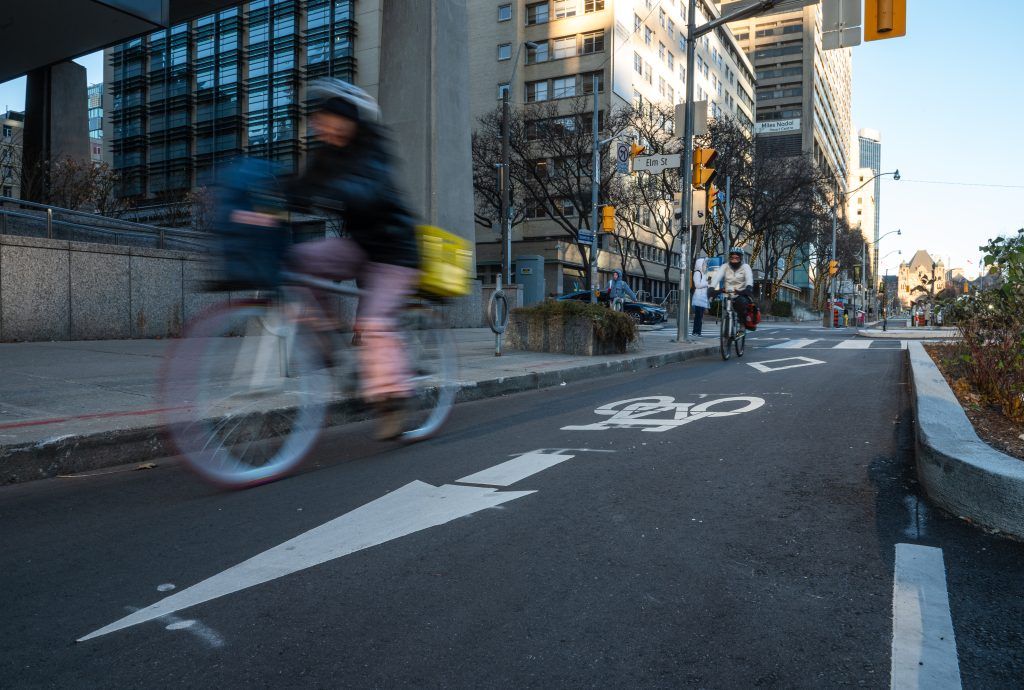
The Ontario government has launched its plan to restore motor vehicle lanes on several of Toronto's busiest streets, including Bloor Street, Yonge Street and University Avenue, following a decisive court ruling that settled a years-long legal battle over cycling infrastructure in the city. This move marks a significant shift in transportation policy that will reshape how Torontonians handle key arteries across the city.
The immediate changes
Work has already begun on Bloor Street West, where crews are restoring vehicle lanes east of a 600-metre stretch near Clissold Road that saw one driving lane reinstated in December 2025. This initial phase maintained a bike lane while adding back car capacity, suggesting the province may pursue a hybrid approach in some locations. The restoration project spans six major corridors that serve as critical transit routes for both vehicles and cyclists: Bloor Street, Yonge Street, University Avenue, Queen's Park, Queen's Park Crescent and Avenue Road.
The province issued a comprehensive request for proposals (RFP) to study and design lane restorations across these routes. Transportation Minister Prabmeet Sarkaria framed the move as fulfilling an election promise, saying in a statement: "We're keeping our promise. Under Premier [Doug] Ford's leadership, we're getting people and goods moving again and giving commuters back more of their time." The government's position reflects its longstanding view that bike lanes contribute significantly to urban congestion.
The legal backdrop
The lane restoration plan follows a recent Ontario Court of Appeal decision that overturned a lower court ruling blocking the province from removing protected bike lanes along 19 kilometres of key routes. The appeal court affirmed the validity of two provincial laws passed in 2024 and 2025 that give the government authority over roadway designs and require specific Toronto streets to prioritize motor vehicle traffic. This ruling represents a substantial expansion of provincial powers over municipal infrastructure decisions.
At the heart of the legal dispute was the 2024 Reducing Gridlock, Saving You Time Act, which mandated municipal approval for new bike lanes that reduce car lanes and empowered the province to remove existing cycling infrastructure. The Ford government has consistently argued that bike lanes exacerbate congestion, citing a Canadian Centre for Economic Analysis report estimating gridlock costs Ontario $56 billion annually in lost productivity and economic activity. The second law, the 2025 Plan to Protect Ontario Act, further solidified the province's authority to implement these changes.
Cycling community backlash
The court decision and subsequent lane restoration plans have drawn fierce opposition from cycling advocates who view this as a regression in road safety and active transportation policy. Hundreds protested at an August 28 rally downtown, where lawyer David Shellnutt of The Biking Lawyer LLC told attendees: "We got a pretty scathing decision from the Court of Appeal of Ontario that said Doug Ford can rip out existing bike lanes, that our safety doesn't matter, and people take that really personally. They're just trying to get home safe, take their kids to school, so I can expect a lot of people to be up in arms about that."
Cyclists argue the changes will reverse years of progress on safer infrastructure and increase dangers for vulnerable road users. The province says the RFP will explore options to retain or reconfigure bike lanes "where they make sense and do not make gridlock worse," but advocates remain skeptical given Ford's personal opposition to lanes near his Etobicoke home. The cycling community points to international examples where protected bike lanes have improved safety without causing significant traffic disruptions.
Municipal-provincial tensions
Toronto Mayor Olivia Chow issued a sharp rebuke of the province's actions, accusing the government of picking "endless political fights" instead of focusing on pressing issues. In her statement, Chow said: "The Province of Ontario and the Minister of Transportation should be laser focused on dealing with Trump and helping workers and families through these uncertain times, not picking endless political fights with the City of Toronto." Her comments reflect broader frustrations with provincial intervention in municipal affairs.
Chow continued: "I believe strongly in Toronto's autonomy and right to govern itself. I resist any argument that pits road users against each other because it makes everyone less safe. Pedestrians, cyclists and drivers all deserve safety on our roads." The mayor pledged alternative congestion solutions including hiring more traffic agents, accelerating construction projects and transit investments. Her statement underscores ongoing tensions between the progressive city leadership and conservative provincial government over urban planning priorities and the appropriate balance between different transportation modes.
Business community support
The lane restoration plan has found backing from some business owners and industry groups who argue the changes will improve access and economic activity. Sam Pappas, who operates The Crooked Cue on Bloor Street, welcomed the changes: "The removal of the bike lanes on Bloor Street will restore access and beauty that was lost. As a business owner and long-time resident, I am grateful that we will get back to a system that works for the majority." His comments reflect concerns from some retailers about reduced customer access due to bike lanes.
The Residential and Civil Construction Alliance of Ontario also endorsed the province's approach. Their support aligns with Ford's frequent framing of the issue as prioritizing the movement of goods and workers over cycling infrastructure. Business groups have generally supported measures they believe will reduce congestion and improve commercial vehicle access, though some studies have shown bike lanes can actually increase retail activity in certain areas.
Implementation and next steps
While immediate work continues on Bloor Street West, the RFP process will determine how and when lane restorations proceed across the six identified corridors. The province has not provided a complete timeline but emphasized urgency in addressing congestion. The Bloor Street West project offers a potential model - maintaining some cycling access while adding vehicle capacity - that could be replicated elsewhere.
However, cycling advocates warn that piecemeal solutions may create inconsistent safety standards across the city's bike network. The RFP will need to address complex engineering challenges in redesigning these major arteries while potentially maintaining some cycling infrastructure. Transportation planners will have to balance competing demands for limited road space in one of Canada's most congested urban areas.
Broader implications
This conflict represents more than a dispute over pavement markings - it reflects fundamental disagreements about urban mobility, municipal autonomy and transportation priorities in Canada's largest city. The court's affirmation of provincial authority sets a precedent that could influence future infrastructure battles across Ontario, potentially affecting everything from transit projects to pedestrian safety initiatives.
The outcome will shape Toronto's streetscape for years, testing whether vehicle capacity improvements actually reduce congestion as promised or simply induce more car traffic through a phenomenon transportation experts call "induced demand." Meanwhile, the removal of protected bike lanes risks undermining climate goals and active transportation targets at a time when cities worldwide are expanding cycling infrastructure to meet environmental commitments and public health objectives.
The political fallout may also influence ongoing negotiations over the city-province relationship and transportation funding. As Toronto continues to grow, finding solutions that accommodate all road users safely while maintaining efficient movement of people and goods remains one of the city's most pressing challenges. This debate will likely continue as the province moves forward with its lane restoration plans and the city explores alternative approaches to managing its transportation network.