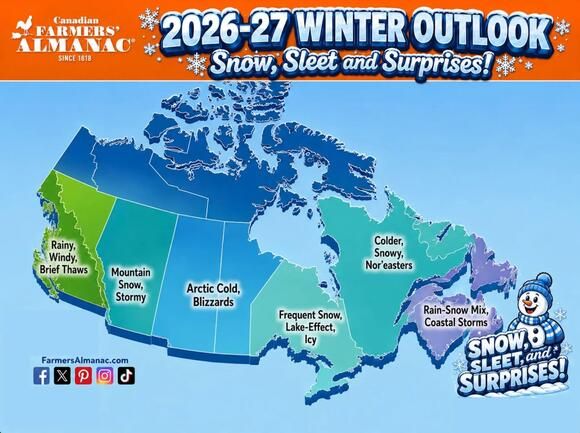
Canada's Fall Weather Forecast Predicts Early Snow for Multiple Provinces
The Old Farmer's Almanac predicts unseasonably early snowfalls across southern Canada this autumn, with some regions seeing flurries as soon as October.
Canadians should prepare for an early taste of winter this fall, according to new weather predictions from the Canadian edition of the Old Farmer's Almanac. The seasonal forecast indicates snowfall will arrive weeks ahead of schedule in several provinces, despite overall warmer-than-average temperatures expected across most of the country. This unusual weather pattern suggests a volatile transition period between seasons, where brief cold snaps interrupt generally mild autumn conditions.
First Snowfalls Expected in October
Southern regions of the Prairies and Ontario could see their first snow showers as early as mid-October, marking a significant departure from typical seasonal patterns. The forecast predicts rain and snow showers across the Prairies from October 8 to 20, creating challenging conditions for farmers completing harvest operations. Another round of wintry precipitation is expected between November 23 and 30 as temperatures drop further, potentially impacting late-season agricultural activities and early winter transportation networks.
Ontario residents should brace for mixed rain and snow between October 15 and 21 in western parts of the province, with these early flurries serving as a warning to complete outdoor home maintenance tasks. Quebec joins the early snowfall club with precipitation expected to transition from rain to snow between October 11 and 17 in southern areas. The province will see multiple rounds of wintry weather throughout November, including significant snow and rain periods from November 11 to 16 and again from November 21 to 23, creating a staggered introduction to winter conditions.
November Brings Widespread Snow
By November, snowfall will expand across western and central Canada, affecting regions that typically experience milder autumn weather. Southern British Columbia is predicted to get its first snow between November 1 and 3 in northern areas, with rain and snow showers continuing through most of the month. This early mountain snow could benefit ski resorts preparing for the winter season, while potentially creating hazardous driving conditions on high elevation roads.
Ontario will experience its snowiest period between November 18 and 22, followed by colder temperatures and flurries in late November. This concentrated burst of winter weather may catch some residents unprepared if mild conditions persist through early November. The Atlantic provinces will be the last to join the winter weather party, with their first significant snow not expected until the week of November 21-26. This follows the regional pattern of maritime climates delaying winter's arrival compared to inland areas, though even this timeline represents an early start for some coastal communities.
Warmer Overall Trends With Cold Exceptions
While the forecast calls for early snow in several regions, the broader seasonal outlook still suggests warmer-than-average temperatures across most of Canada. This creates potential for volatile weather patterns where brief cold snaps bring snowfall, followed by rapid melting during warmer periods. Such conditions can be particularly hazardous for road maintenance, as freeze-thaw cycles create icy patches and potholes.
The Almanac's week-by-week breakdown reveals these temperature fluctuations will be particularly pronounced in southern Ontario and Quebec, where residents may experience dramatic swings between autumn rains, early snowfalls, and unseasonably warm days throughout October and November. This unpredictability makes seasonal planning challenging for municipalities, farmers, and homeowners alike.
Regional Breakdown of Fall Snow
British Columbia's snowfall will be concentrated in northern and inland areas during November, with coastal regions likely seeing more rain than snow. This precipitation pattern reflects the province's diverse microclimates and elevation differences. The Prairies face the earliest winter weather, with October snow showers potentially affecting harvest operations and early winter preparations. These early snow events could shorten the autumn construction season and accelerate the transition to winter driving conditions.
Central Canada's snow timeline shows Ontario and Quebec on similar schedules, though Quebec may see slightly earlier accumulation. Both provinces face multiple snow events before December, unlike the single late-November snowfall predicted for Atlantic Canada. This staggered approach to winter's arrival means Canadians will experience vastly different weather conditions depending on their location, with some regions dealing with snow while others enjoy extended autumn weather.
Preparation Recommendations
With snow predicted weeks ahead of historical averages in many regions, the forecast suggests Canadians should consider early winter preparations. This includes checking winter tires earlier than usual, preparing home heating systems, and ensuring proper outdoor equipment is accessible before the typical November-December timeframe. Municipalities may need to review their winter maintenance schedules and ensure snow removal equipment is ready for early deployment.
Gardeners and farmers may need to accelerate harvests and winterizing activities given the potential for early ground frosts accompanying these snow events, particularly in the Prairies and southern Ontario. Early snow can damage crops left in fields too long and complicate livestock management practices. Homeowners should complete fall yard work and exterior home maintenance before the first snow arrives to avoid working in cold, snowy conditions.
Historical Context and Climate Patterns
The early snowfall predictions continue a trend of increasingly volatile seasonal transitions observed across Canada in recent years. While the Old Farmer's Almanac uses traditional forecasting methods, its predictions align with broader climate patterns showing more extreme weather events. The forecast's emphasis on early snow despite warmer overall temperatures reflects the complex interplay between global warming and regional weather systems.
Historical weather data shows that early snowfall events have become more frequent in some parts of Canada, particularly in the Prairies and central regions. However, these early snows often melt quickly, creating challenging conditions for agriculture and transportation. The prediction of early snow followed by warmer periods suggests this pattern may continue, with winter making brief appearances before settling in for good later in the season.
Why It Matters
These early snowfall predictions carry significant implications for transportation, agriculture, and energy use across Canada. Municipalities may need to allocate winter maintenance resources earlier than budgeted, potentially straining municipal finances. Retailers could benefit from extended sales seasons for winter gear, though consumers may face higher prices if demand spikes unexpectedly early.
The forecast also highlights how climate change is creating more volatile seasonal transitions, with traditional weather patterns becoming less predictable. While overall temperatures trend warmer, the increased frequency of early cold snaps demonstrates how climate disruption affects seasonal norms in complex ways that require adaptation from both individuals and institutions. This weather pattern may become the new normal, requiring Canadians to remain flexible in their seasonal preparations and expectations.