Canadian Boxing Legend George Chuvalo, Who Never Hit the Canvas, Dies at 89
George Chuvalo, the iconic Canadian heavyweight boxer renowned for his iron chin and legendary fights against Muhammad Ali, has died at age 89. The Toronto-born fighter compiled a 73-18-2 record with 64 knockouts during a 22-year career where he was never knocked down.
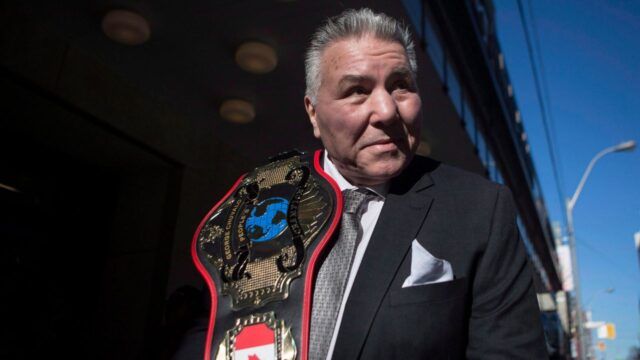
George Chuvalo, the Canadian heavyweight boxing legend who gained international fame for his epic battles with Muhammad Ali and never being knocked down in his 93-fight professional career, has died at age 89. The Toronto-born fighter passed away on Saturday, leaving behind a legacy as one of boxing's most durable warriors who stood toe-to-toe with the greatest heavyweights of his era while representing Canadian boxing at its highest level.
The Indestructible Champion
Chuvalo compiled a remarkable professional record of 73-18-2 with 64 knockouts during a career that spanned from 1956 to 1978. What made his record truly extraordinary was that in all those bouts against some of history's hardest hitters, including Joe Frazier and George Foreman, he was never once knocked to the canvas. His granite chin became legendary in boxing circles, earning him recognition as having "the best chin in boxing" according to many contemporaries. Even when fights were stopped due to cuts or other injuries, as happened against Frazier and Foreman, Chuvalo remained standing throughout his career.
The World Boxing Council (WBC) paid tribute to Chuvalo, calling him "Canada's greatest warrior" and praising his "unrelenting courage and legendary iron chin." WBC President Mauricio Sulaimán extended condolences to Chuvalo's family, recognizing his enduring impact on the sport. Chuvalo's ability to absorb punishment while continuing to press forward became the hallmark of his career, making him one of the most respected fighters of his generation despite never capturing a world title.
Legendary Showdowns with Ali
Chuvalo's career was defined by his two fights against Muhammad Ali - first in 1966 at Toronto's Maple Leaf Gardens, then again in 1972 at Vancouver's Pacific Coliseum. The first bout became particularly famous for Chuvalo's ability to withstand Ali's relentless assault over 15 rounds despite having only 17 days to prepare after Ali's original opponent Ernie Terrell pulled out. Ranked 10th among heavyweight contenders at the time, Chuvalo entered as a 6-1 underdog against the undefeated Ali, who had won all 21 of his fights with 18 knockouts.
Ali himself called Chuvalo "the toughest guy I ever fought," high praise from a man who faced the likes of Joe Frazier and George Foreman. The 1966 fight saw Chuvalo employ a brutal body attack strategy that sent Ali to the hospital afterwards with internal bleeding, while Chuvalo famously went dancing with his wife. Toronto Star columnist Milt Dunnell captured the spectacle perfectly: "They had a contest between a bull and a bumblebee at Maple Leaf Gardens last night - with the usual result. The bull came out of it with his face looking like a bucket of balls at a golf driving range." The judges scored it decisively for Ali (73-65, 74-63, 74-62), but Chuvalo's performance earned him lasting respect.
More Than Just a Tough Guy
While Chuvalo acknowledged his reputation as boxing's ultimate tough guy, he often pointed out that his career involved much more than just absorbing punishment. "I had close to 100 fights. The perception of me is as a tough guy who could take a shot," he once said. "It clouds my other abilities." Indeed, Chuvalo was a skilled technician who developed his craft through 19 amateur fights before turning professional at age 17.
Chuvalo took pride in having more knockouts than legends Joe Louis and Jack Dempsey - and noted that his knockout total exceeded the combined fight totals of Ali, Frazier, Rocky Marciano and Mike Tyson. In his 2013 autobiography "Chuvalo: A Fighter's Life," he wrote: "I'll be remembered as a guy who fought the best of his time, beat a lot of them and lost to some others." This balanced perspective reflected Chuvalo's understanding that his legacy extended beyond just durability to include significant victories against top contenders like Jerry Quarry in 1969.
A Canadian Boxing Pioneer
Born in Toronto to immigrant parents - his mother worked as a chicken plucker at Royce Poultry Packers and his father as a cattle skinner at Canada Packers - Chuvalo discovered boxing through a copy of The Ring magazine. He began training at age 10 at a local church that offered boxing training and had his first organized fight that same year. By 15, he was competing as a 198-pound heavyweight in amateur bouts.
Chuvalo became a five-time Canadian heavyweight champion during an era when that title still carried weight. He fought nine times at New York's Madison Square Garden against elite competition including Frazier, Foreman and Floyd Patterson. His 1965 bout with Patterson was named Fight of the Year by The Ring magazine, showcasing Chuvalo's ability to compete at the highest levels of the sport despite often being the underdog.
Triumphs and Missed Opportunities
Despite never winning a world title, Chuvalo compiled an impressive resume that saw him ranked as high as No. 2 in the world. His 1965 title fight loss to Ernie Terrell left him convinced the bout was fixed by mobsters. He also felt slighted by never getting a Commonwealth title shot against English champion Henry Cooper, believing the Canadian Boxing Federation failed to advocate for him.
Chuvalo had a famously sardonic sense of humor about boxing politics. Regarding missing a fight with Sonny Liston, he joked: "The only guy I really missed was Sonny Liston, because when I signed to fight him he'd been dead for a week." This dark humor belied his frustration at various points in his career when major fights slipped through his grasp due to circumstances beyond his control.
Life After Boxing
Chuvalo retired in 1978 after stopping Canadian contender George Jerome in two brutal rounds at Toronto's St. Lawrence Market, earning just $7,500 for what would be his final fight. Outside the ring, he was known as a gregarious storyteller who loved making jokes, but his personal life was marked by profound tragedy. He lost three sons and his first wife Lynne to drugs and suicide, pains he said dwarfed anything he experienced in the ring.
As he wrote in his autobiography: "I guess I was lucky, because I never had to deal with getting back on my feet. Not in the ring, anyway. Outside the ropes has been a different story." This poignant reflection captures the dichotomy of Chuvalo's life - a man who could withstand the most brutal physical punishment but faced even greater challenges outside the boxing ring.
The Legacy of George Chuvalo
George Chuvalo embodied the fighting spirit of Canadian boxing during its golden age, serving as a bridge between the classic era of boxing and the modern heavyweight division. In an era when heavyweight boxing captured the world's imagination, Chuvalo proved that Canadian fighters could stand toe-to-toe with the very best. His legendary durability against Muhammad Ali and other greats made him a national icon whose reputation extended far beyond boxing circles.
Beyond his in-ring accomplishments, Chuvalo's life story resonates as one of tremendous resilience - both the physical kind that made him boxing's ultimate iron man, and the emotional kind that saw him endure unimaginable personal losses. His legacy extends beyond sports as a testament to human toughness in all its forms. For future generations of Canadian athletes, Chuvalo remains the standard of what it means to never back down from a challenge, whether inside the ring or in life's difficult moments.