London surgeons complete world's first AI-assisted brain tumour removal in breakthrough procedure
Neurosurgeons at a London hospital have successfully removed a pituitary gland tumour using real-time AI analysis, marking a medical first that preserved the patient's vision.
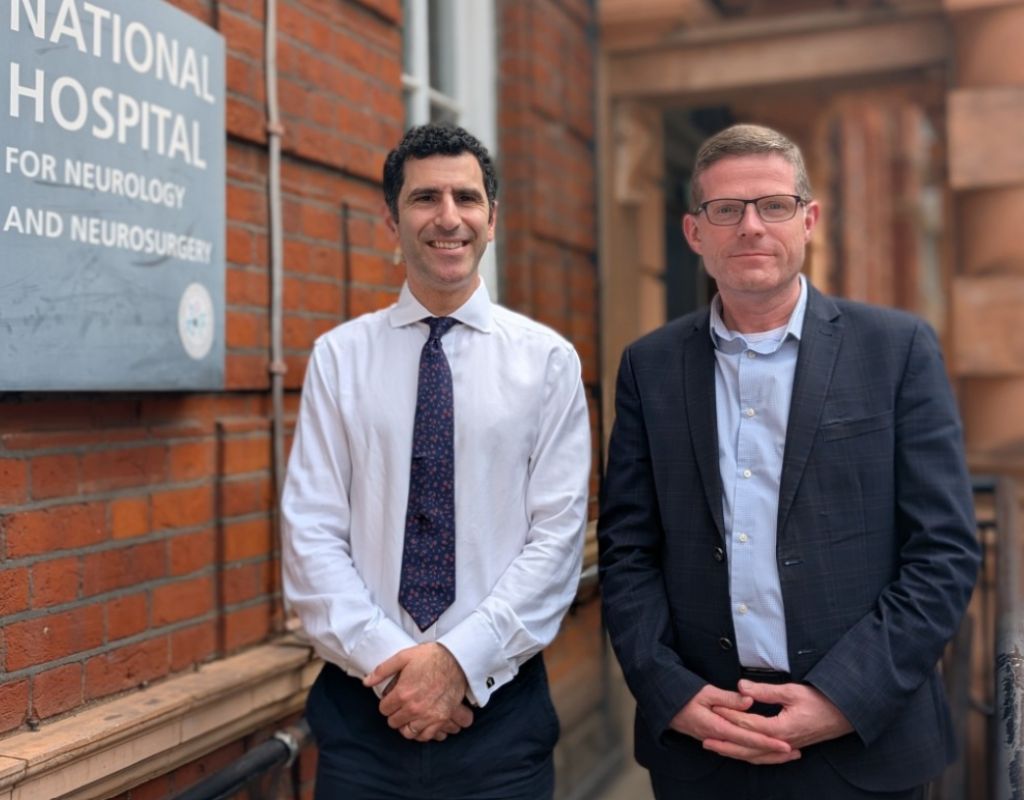
In a medical milestone that could reshape the future of neurosurgery, neurosurgeons at London's National Hospital for Neurology and Neurosurgery have performed the world's first AI-assisted brain tumour removal. The groundbreaking operation successfully restored the vision of 48-year-old Rhys Hibbert while demonstrating how artificial intelligence can enhance surgical precision in one of medicine's most delicate specialties.
Precision in the most delicate brain region
The surgical team faced extraordinary challenges removing a tumour from Hibbert's pituitary gland, a structure no larger than a marble located at the brain's base. This critical area contains the optic nerves and is surrounded by a dense network of blood vessels that supply the brain. According to the hospital, the margin for error was less than one millimeter - a miscalculation could have resulted in blindness, stroke or even death.
The AI system developed by University College London's Hawkes Institute provided continuous analysis of live surgical footage during the procedure. Unlike traditional navigation systems that rely solely on pre-operative scans, this technology could identify and flag critical structures in real time as tissue moved during the operation. This allowed surgeons to safely remove more of the tumour while avoiding damage to surrounding nerves and vessels.
A patient's journey from diagnosis to recovery
Rhys Hibbert, a customer services manager and community volunteer from Greater London, became the first human subject for this experimental surgical approach. His pituitary tumour had been progressively threatening his vision, with doctors warning that without intervention, he would eventually lose his sight completely.
Following his full recovery, Hibbert reflected on participating in medical history at an institution with its own groundbreaking past.
"The National Hospital for Neurology and Neurosurgery was founded in 1859 and was the world's first dedicated neurosurgical hospital. So to me, it seems very fitting that the same hospital should also be the world's first to carry out an AI-assisted neurosurgery,"he told the hospital foundation.
The surgical team behind the breakthrough
The operation was led by consultant neurosurgeon Hani Marcus from the National Hospital for Neurology and Neurosurgery, working alongside lead surgical resident Danyal Khan. Professor Marcus, who also serves at the UCL Queen Square Institute of Neurology, emphasized how the AI system functioned as an intelligent assistant rather than replacing human judgment.
The technology's ability to track surgical instruments and analyze their interaction with brain tissue in real time provided an unprecedented level of situational awareness. This proved particularly valuable when handling the pituitary region, where blood vessels and nerves can become obscured by the tumour itself during removal.
Government support for medical innovation
UK Health Innovation Minister James Frith celebrated the achievement as evidence of AI's potential to transform patient care when properly implemented.
"This is an example of AI at its best: patients getting care previously deemed unimaginable thanks to the latest groundbreaking technology,"Frith stated. He noted the procedure resulted from government-funded research aimed at developing tomorrow's treatments today.
The minister balanced enthusiasm for technological progress with assurances about safety protocols, stating
"AI needs proper safeguards and we will always ensure that safety is taken seriously. But we will also ensure we benefit from the opportunities it brings to deliver faster and more effective care."He framed this breakthrough as part of broader efforts to modernize the NHS for future challenges.
Technical innovations in surgical AI
The UCL-developed system represents a significant advance over previous surgical navigation tools. Traditional systems rely on static pre-operative scans that cannot account for tissue shifts during surgery. The new platform continuously compares live endoscopic video with 3D models reconstructed from MRI scans, creating a dynamic map that updates as the operation progresses.
This capability proved crucial when dealing with Hibbert's pituitary tumour. The gland's proximity to the optic chiasm meant surgeons needed millimeter-perfect precision to remove tumour tissue without damaging the nerves responsible for vision. The AI's real-time alerts helped the team identify and preserve these critical structures even when they became obscured during dissection.
Expanding the frontiers of neurosurgery
While this initial application focused on pituitary tumours, the underlying technology has broader implications for brain surgery. The system's ability to track instruments and analyze tissue interactions could eventually assist with various intracranial procedures, from aneurysm repairs to deep brain stimulation for Parkinson's disease.
In teaching hospitals, such AI systems may revolutionize surgical education by providing objective feedback on trainee performance. The technology's capacity to document every decision and instrument movement creates opportunities for enhanced postoperative review and quality improvement initiatives.
Balancing innovation with patient safety
The success of this first AI-assisted brain surgery demonstrates how carefully implemented technology can augment rather than replace human expertise. The surgical team maintained full control throughout the procedure while benefiting from the AI's real-time analysis and warnings. This collaborative approach between human and artificial intelligence may serve as a model for integrating advanced computing into other high-stakes medical specialties.
For patients like Rhys Hibbert, these innovations promise safer surgeries with better outcomes, particularly for conditions requiring operations in the brain's most sensitive regions. As regulatory frameworks evolve to evaluate such technologies, this case shows how rigorous clinical trials can responsibly introduce AI into operating rooms while prioritizing patient safety above all else.
A new era of surgical precision
This landmark procedure marks more than a technical achievement - it represents a fundamental shift in how surgeons approach complex operations. By combining human experience with AI's analytical capabilities, medical teams may soon tackle conditions previously considered inoperable due to anatomical risks.
The breakthrough also validates the UK's strategy of fostering innovation through partnerships between academic institutions and the National Health Service. As similar systems develop worldwide, patients everywhere may benefit from neurosurgical procedures that are both more effective and less risky than current standards of care.