Experts say federal budget offers little direct help for retired Canadians facing high costs
Financial advisors say retirees are disproportionately hit by grocery inflation, and new budget measures provide limited relief.
Financial experts say the standard Consumer Price Index fails to capture the true inflation burden on retired Canadians, who spend a larger share of their budget on groceries. The federal budget's affordability measures provide limited direct assistance to this group, leaving financial advisors to help clients manage rising costs. Advisors note that while government pensions are indexed to CPI, retirees face a higher effective inflation rate due to their spending patterns. Chris Warner, a wealth advisor at Nicola Wealth, compared cumulative inflation figures to illustrate the disparity. "Headline CPI over those five years was 19 per cent. Grocery inflation was almost 30 per cent," Warner said. "There’s a tax on retirees that’s happening that nobody voted for, because they spend more of their income on groceries which don’t get indexed the way other things do." He monitors multiple indicators, including grocery and gas prices, to gauge the real cost increases affecting his retired clients.
Sustaining a retirement income becomes challenging when portfolio returns struggle to outpace inflation, particularly for essentials. Warner described a client family withdrawing five percent annually from their savings, a rate that requires investment growth to exceed rising living costs. Extended periods of high inflation, especially for food, can diminish both their capital and their confidence in its longevity. Older investors also have less time to recover from significant market losses, making aggressive investments riskier.
Financial pressures on retirees often extend beyond their personal expenses, as many provide financial support to younger relatives. Advisors must factor these intergenerational transfers into long-term sustainability plans. Warner emphasizes creating detailed budgets with clients to track spending accurately and identify necessary adjustments. He sometimes reviews credit card statements to get a clear picture of cash flow needs.
READ MORE: Seniors discounts provide financial relief for Canada's wealthiest generation
READ MORE: Ottawa parents face long waitlists and high costs despite federal child-care funding
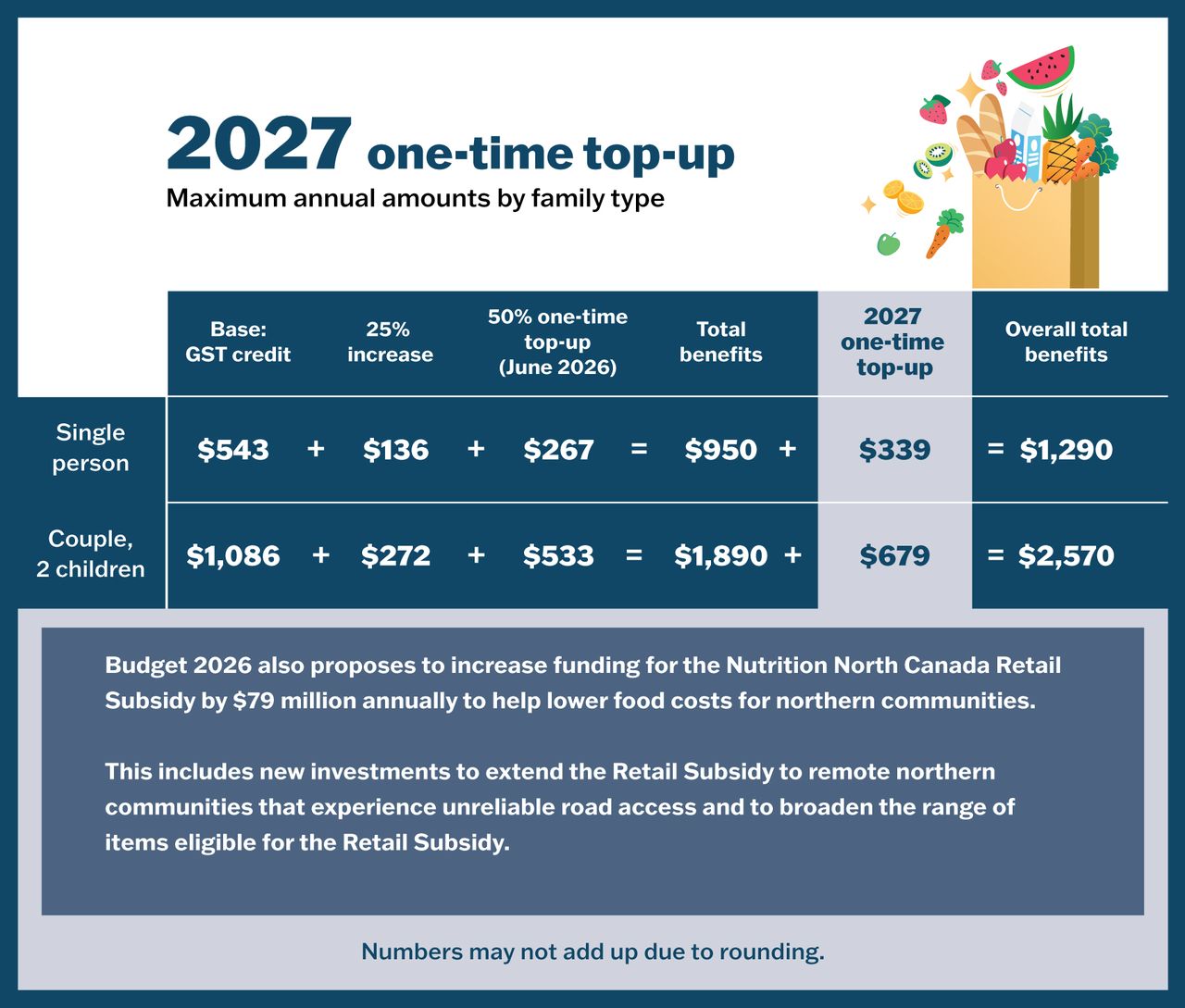
The recent federal budget introduced measures like an enhanced grocery benefit and a refundable caregiver credit. Warner observed that higher-net-worth retirees likely will not qualify for the grocery supplement, though the caregiver change may assist families. He noted that the budget avoided changes to tax rates or core pension benefits, which he views as avoiding a negative outcome for his clients. Paul Taylor of Mackenzie Investments gave the budget's affordability efforts a modest grade. "I would say the affordability measures in the budget get a C or a C-plus," Taylor said.
Taylor acknowledged the expanded grocery benefit will help lower-income Canadians but argued more comprehensive action was needed given how food prices affect all households. The psychological impact of steep grocery bills, like paying $7 for eggs, compounds the financial strain for retirees. Warner said advisors must address both the numerical reality and the anxiety these costs generate. He incorporates inflation assumptions above two percent into all financial plans, even during calm economic periods. With the Bank of Canada projecting inflation around three percent into 2027, Warner conducts sensitivity analyses to test clients' resilience to prolonged high costs. He also focuses on tax-efficient account structures, ensuring income-producing assets are held appropriately to avoid pushing clients into higher tax brackets. The Old Age Security recovery tax, which begins clawing back benefits at an income threshold of $95,323 in 2026, is another critical consideration for withdrawal strategies.
Warner described the advisory role as part financial planner and part counsellor. "You approach these concerns the way you do with all client concerns, you play a little bit of therapist. You listen, you hear them, and you talk them through it," he said. Providing historical context, such as using the Bank of Canada's inflation calculator, can help clients view current price increases in a broader, less daunting perspective.
With files from Wealth Professional
Isabelle Moreau is the editor of Novello Desserts and writes about family life and everyday living in Canada. The editor signs off on corrections and editorial standards.