The surprising comeback of seasonal colour analysis, and why it's changed since the 1980s
The 1980s fashion trend of seasonal colour analysis is making a modern resurgence with updated methods and a more inclusive approach that focuses on undertones rather than ethnicity.
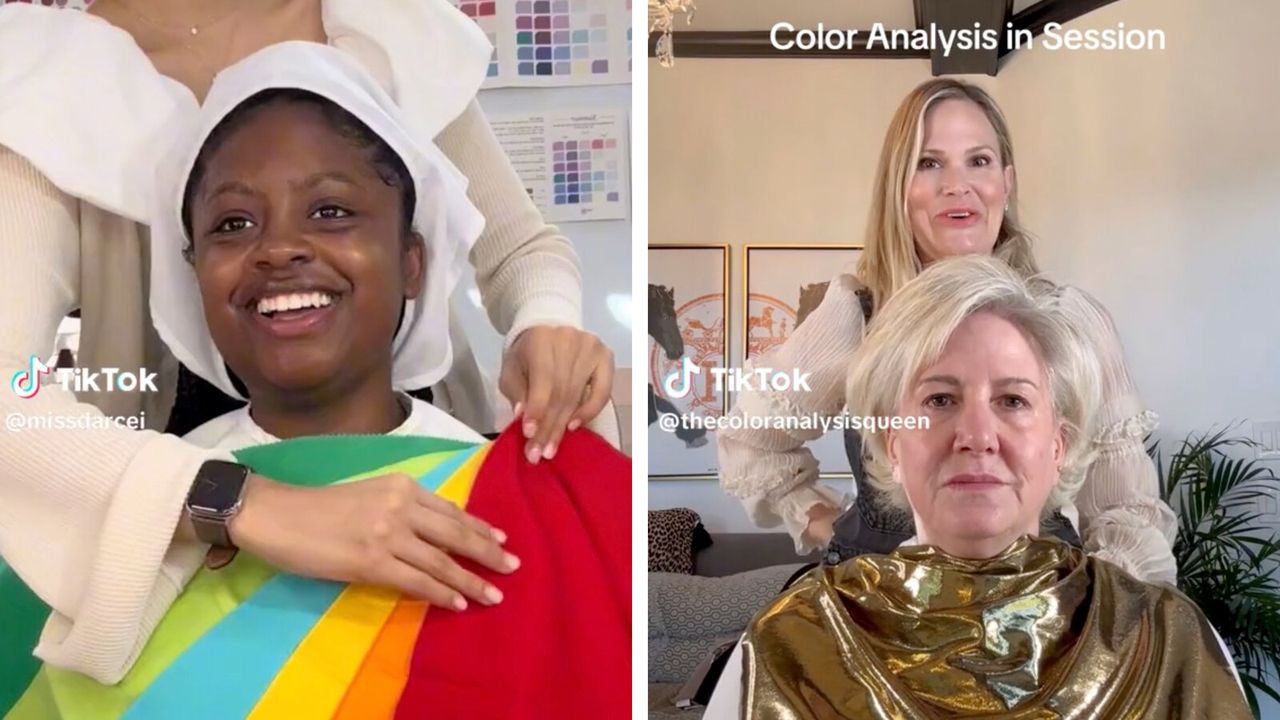
When Lori reunited with an old friend recently, her dramatic style transformation sparked immediate curiosity. The woman who had historically favored dark clothing and black outfits now stood before them in a surprisingly flattering mauve ensemble, her hair several shades darker than usual without a trace of grey showing. This wasn't just a random fashion experiment - it was the result of a professional colour analysis, reviving a practice many associate with the peak of 1980s style culture.
The evolution from four seasons to twelve
The original colour analysis system that dominated the 1980s operated on a straightforward four-season model. Consultants would physically drape clients with fabric swatches to determine whether they fit into the Spring, Summer, Autumn or Winter categories based on observable characteristics like natural hair colour, eye colour and skin tone. The bestselling book Color Me Beautiful became the bible of this movement, offering readers a way to identify their ideal colour palette through simple self-assessment.
The contemporary version of colour analysis has undergone significant refinement. Modern experts like Francesca Cairns, who has built an Instagram following of nearly half a million people interested in colour theory, now employ a nuanced 12-season system. This expanded framework introduces subcategories such as Soft Summer, Deep Autumn and Bright Spring to account for more subtle variations in personal colouring. The analysis now examines three specific dimensions: undertone (whether someone's complexion leans warm, cool or neutral), value (the lightness or depth of their overall colouring), and chroma (whether they suit brighter or more muted shades). A Winter classification from the 1980s might now be specified as Bright Winter, True Winter or Deep Winter depending on these finer distinctions.
Technology meets tradition in modern analysis
While the core concept of draping with fabric swatches persists, the methods of conducting colour analysis have adapted to contemporary lifestyles. Cairns explains that much of her client work now happens digitally, with clients submitting photographs taken in consistent natural daylight rather than sitting beneath the ring lights that characterized 1980s consultations. These images allow her to carefully assess how different colours interact with the client's skin tone and natural contrast levels before determining which palettes make their complexion appear clearest and their features most vibrant.
The quality of the analysis depends on the stylist rather than if the consultation happens in a studio or online,Cairns notes, emphasizing that the consultant's expertise matters more than the physical setting. This shift to digital consultations has made professional colour analysis more accessible while maintaining the precision of traditional methods.
A more inclusive approach to colour theory
One of the most significant improvements in modern colour analysis is its move away from outdated assumptions about ethnicity and skin depth. The original system often struggled to accurately assess people of colour, sometimes defaulting to blanket categorizations based on superficial observations.
Today we look at actual undertone, contrast and how colours interact with the skin, not ethnicity or depth of skin,Cairns explains. This refined approach allows for more accurate and personalized analysis across all skin tones and ethnic backgrounds.
The updated methodology recognizes that two individuals with similar skin darkness might have completely different undertones and therefore require different colour palettes. Similarly, it acknowledges that people with lighter complexions might actually have warm undertones better suited to Autumn colours rather than the stereotypical Summer palette. This nuanced understanding has helped colour analysis shed its reputation as a one-size-fits-all system.
How our colours change with age
An often overlooked aspect of colour analysis is its dynamic nature over a person's lifetime. The article cites the example of a woman who was classified as a Winter during the height of the 1980s trend when she had dark brown hair and eyes. Decades later, with her hair now threaded with grey and considerably lighter, she finds herself gravitating toward Summer tones as the vivid Winter colours no longer complement her changed appearance.
Cairns confirms this phenomenon, noting that while a person's fundamental undertone typically remains stable, the greying or lightening of hair combined with natural changes in skin texture and pigmentation can significantly alter which colours prove most flattering.
Someone analyzed as a Winter in the '80s may still be in the Winter family, but a softer or slightly different sub-season can work better once the hair lightens and greys,she observes. This understanding helps explain why some people instinctively shift their colour preferences as they age.
The psychology and practicality of colour analysis
Beyond its aesthetic applications, colour analysis offers tangible psychological and practical benefits that explain its enduring appeal. Cairns highlights how the system reduces decision fatigue in daily life:
It takes the guesswork out of dressing. The right colours make you look more radiant, hide tiredness and make shopping simpler and cheaper because you only buy what actually works.For many clients, this translates to increased confidence and reduced stress when assembling outfits or making clothing purchases.
Lori's experience demonstrates how colour analysis can expand rather than limit one's fashion options. Where she once avoided entire colour families like yellow based on assumptions about what suited her, the professional analysis revealed unexpected possibilities.
Instead of feeling confined by my palette, it opened up new options. It's a cheat code for easier dressing, feeling more put together and not overwhelmed,she explains. This sense of discovery counters the common misconception that colour analysis creates rigid fashion rules.
The cultural significance of colour analysis's revival
The resurgence of colour analysis speaks to broader societal shifts in how we approach personal identity and self-presentation. In an era characterized by overwhelming consumer choice and constant visual stimulation through social media, having a scientifically-grounded colour palette provides a welcome anchor. The system offers a counterbalance to fast fashion trends by encouraging thoughtful, personalized selections that stand the test of time.
Moreover, the updated methodology reflects contemporary values of inclusivity and individuality. By focusing on how colours interact with each person's unique characteristics rather than relying on stereotypes, modern colour analysis helps people develop styles that feel authentic rather than prescriptive. The ultimate goal, as the article poignantly notes, isn't to have people notice your outfit but to notice you - a philosophy that resonates deeply in today's image-conscious world.