Trump prioritizes AI competition with China over regulation amid growing industry warnings
President Trump emphasized maintaining U.S. AI dominance against China while downplaying immediate regulatory needs, despite mounting concerns from tech executives about safety risks from uncontrolled artificial intelligence development.
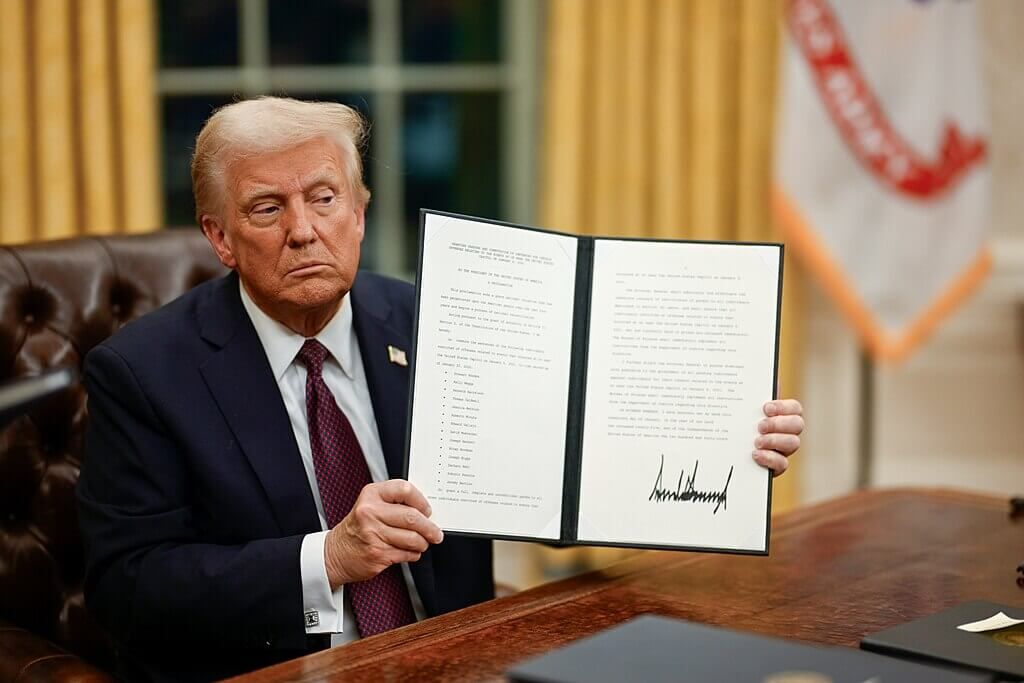
President Donald Trump framed artificial intelligence development as a critical geopolitical competition with China during his weekend trip to Ireland, prioritizing American technological leadership over immediate regulatory intervention. His remarks came as leading AI executives issued increasingly urgent warnings about the need to slow development to address safety concerns, creating tensions between the administration's strategic priorities and industry calls for caution.
Trump's vision for American AI dominance
At his Doonbeg resort during the Irish Open, Trump articulated a clear stance on artificial intelligence that centered on maintaining U.S. technological superiority against China rather than implementing immediate safeguards. While conceding some need for oversight, the president offered no concrete regulatory proposals and characterized certain warnings about uncontrolled AI advancement as alarmist. "We can put guardrails, we can do this and that, but I think you have a lot of negative forces that are bringing it up that ... shouldn't be bringing it up," Trump told reporters, dismissing concerns from unidentified sources that he suggested were exaggerating potential risks.
The president repeatedly emphasized the strategic imperative of AI leadership in starkly competitive terms. During multiple exchanges with reporters, including on his return flight to Washington, Trump framed AI development as a winner-takes-all scenario, stating "whoever wins with AI wins" as a defining principle of his approach. When pressed about whether he was underestimating AI's risks, Trump maintained "I'm not downplaying," while expressing confidence that the technology's benefits would substantially outweigh any negative consequences.
Industry leaders sound alarm
Trump's comments followed a series of unusually candid warnings from prominent figures in the AI sector about the potential dangers of unchecked technological advancement. Dario Amodei, CEO of artificial intelligence company Anthropic, had publicly called for the industry to slow its rapid development pace to allow safety measures to catch up. His concerns found support from influential tech leaders including Elon Musk and OpenAI CEO Sam Altman, suggesting growing unease within the sector about its own products' potential impacts.
Jacob Coxon, a former Anthropic employee who resigned over AI safety concerns, provided one of the most detailed warnings about the risks of developing superhuman AI capabilities without adequate safeguards. "You're building a human-level or superhuman-level mind, without understanding what it wants, or thinks, or the way it thinks," Coxon told NBC and ABC, articulating concerns about creating intelligent systems whose decision-making processes might become opaque or uncontrollable. His comments reflected deepening ethical concerns within parts of the AI community about the technology's trajectory.
Political divisions on regulatory approach
The debate over AI regulation revealed sharpening political divisions as Democrats positioned themselves as advocates for more urgent oversight. Former President Barack Obama suggested his party should make AI safety a central campaign issue during an event with House Democratic leader Hakeem Jeffries. "I would talk about this, and I would say, 'Here's our plan for safety, here's our plan for making sure our kids are not corrupted by this,'" Obama said according to a transcript from his office, framing the issue in terms of both technological governance and economic policy.
Jeffries amplified these concerns by criticizing Republican leadership for allowing congressional recess rather than addressing AI issues immediately. "We should take decisive action now so that we can slow down, as the CEOs have recently acknowledged, ... the pace of development in order to protect the American people," Jeffries told ABC, signaling Democratic intentions to push for regulatory measures. These statements contrasted sharply with the Trump administration's more measured approach focused on maintaining competitive advantage.
Congressional activity and challenges
Republican House Speaker Mike Johnson attempted to handle between these positions by acknowledging the need for AI safeguards while emphasizing the importance of U.S. technological leadership. During appearances on CNN and NBC, Johnson proposed convening industry leaders and lawmakers for comprehensive discussions, describing AI policy as a "top priority" while cautioning against overreaction. His comments revealed the complex political calculus surrounding the issue, as congressional efforts to regulate technology have repeatedly stalled despite bipartisan recognition of potential risks.
White House economic adviser Kevin Hassett indicated the administration was preparing to engage more actively with the issue, telling CNN's State of the Union about upcoming meetings involving officials responsible for cyber and science policy. "I think the president wants to hear from them as well," Hassett said regarding potential discussions with congressional leaders, suggesting the administration might be moving toward developing a more structured policy position.
Geopolitical implications with China
The AI debate acquired additional urgency ahead of Chinese President Xi Jinping's scheduled White House visit later in September, where the technology was expected to feature prominently in discussions. Trump consistently framed AI development as a zero-sum competition between the two nations, telling reporters in Ireland that "the United States is leading China in the development of AI and frankly, I want to keep it that way." This perspective treated AI advancement primarily through the lens of national security and economic competitiveness rather than as a shared technological challenge requiring international cooperation.
Coxon offered an alternative vision by advocating for U.S.-China collaboration on AI safety despite escalating geopolitical tensions between the two countries. His warning about the dangers of an uncontrolled development race suggested some within the tech community view international coordination as essential for managing AI's risks. "We risk running the same race with China, which could be equally dangerous," Coxon said, proposing "mutual slowing" of advancement as a potential path forward that could balance competitive pressures with safety considerations.
Questions of industry responsibility
David Sacks, a White House science and technology adviser and prominent tech investor, challenged AI executives to take greater responsibility for managing development risks rather than waiting for government intervention. In a social media post responding to industry safety concerns, Sacks pointedly noted that companies themselves control the pace of innovation, writing "The easiest way not to build superintelligence is for you to agree not to build it." This critique underscored ongoing debates about whether the tech sector can effectively self-regulate or requires external oversight to address the societal implications of its products.
Broader policy context
The administration's approach to AI reflects broader tensions between promoting technological innovation and addressing its potential disruptive consequences. While Trump emphasized maintaining American leadership in a field seen as critical to future economic and military power, his reluctance to pursue immediate regulatory measures contrasted with growing calls from both industry figures and political opponents for more structured oversight. This debate occurs against a backdrop of increasing public awareness about AI's transformative potential and possible risks, from economic displacement to more existential concerns about advanced systems' behavior and control.