Slim-fit pants
Slim-fit pants, also known as skinny jeans, drainpipes, or stovepipes, are trousers characterized by a snug fit through the legs and a small leg opening. This style has cycled through fashion for centuries, from Regency pantaloons to 1950s rock and roll attire, before becoming a dominant global trend in the late 2000s and 2010s. In Canada, slim-fit pants became a wardrobe staple for both men and women, reflecting broader North American fashion movements and youth culture. While their popularity has waned in favour of straight-leg and wider fits in the mid-2020s, they remain a significant and recognizable style in the history of modern dress.
Historical Evolution and Style Definitions
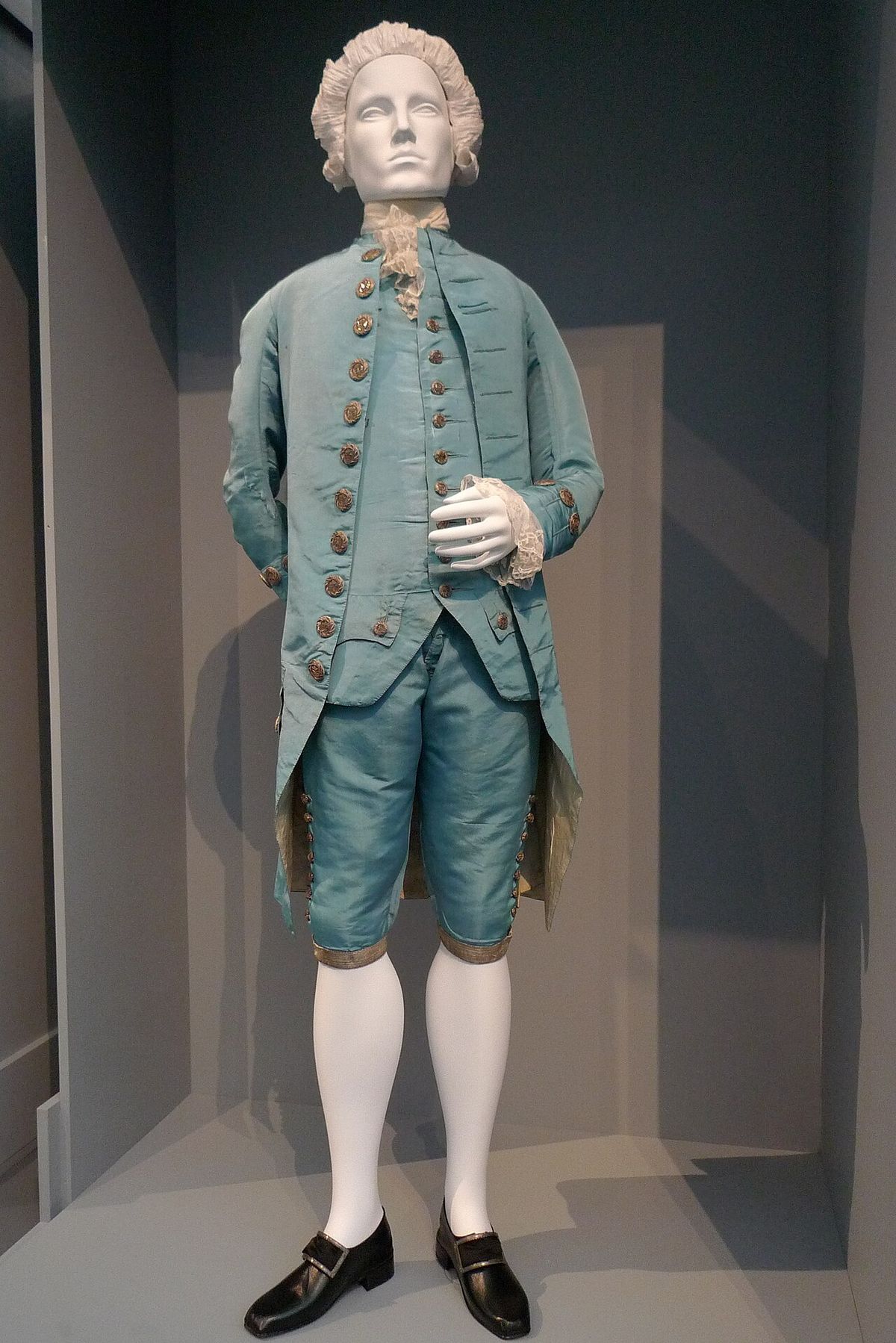
The concept of tight-fitting legwear has a long history in Western fashion. Before the 18th century, European men wore breeches and hose, with tight breeches becoming fashionable in the 1660s, popularized at the French court of Louis XIII. These were part of a three-piece suit that included a frock coat, waistcoat, wig, and tricorne hat. From 1805 to 1850, tight-fitting pantaloons were in vogue, worn high on the waist and often tucked into boots, as popularized by English dandy Beau Brummell. These trousers descended from the loose work trousers worn by French revolutionaries known as Sans-Culottes. The style declined from the 1840s onward with the rise of mass production and was largely replaced by baggier trousers like Oxford bags in the early 20th century.
The modern slim-fit pant re-emerged in the 1950s, worn by Western film stars like Roy Rogers and rock and roll figures like Elvis Presley. In the 1960s, drainpipe trousers were adopted by The Beatles, The Rolling Stones, and fashion figure Audrey Hepburn, becoming associated with mod and greaser subcultures. The 1970s saw the style embraced by glam rock and punk bands like the Ramones and Sex Pistols, often in red tartan. Throughout these periods, the specific cut varied, with terms like drainpipe sometimes referring to pants that were skinny but straight at the lower leg, whereas skinny jeans typically taper completely at the ankle. Some very skinny styles require zippers at the leg opening to facilitate putting them on.
The late 20th century saw slim fits cycle in and out of mainstream fashion. Skin-tight, often acid-washed jeans were popular in the 1980s thrash metal scene with bands like Metallica and Slayer, as well as with pop stars like Michael Jackson. The 1990s initially saw form-fitted jeans worn by glam metal bands, but the style was largely supplanted by baggy carpenter jeans and flared fits associated with grunge and hip hop. The contemporary skinny jean was reintroduced specifically for women in 2005, initially sold only online before gaining mainstream traction in stores by 2006. Men's skinny jeans followed in the late 2000s, becoming a norm by 2009 and a defining fashion piece of the 2010s for both genders.

Materials, Fit and Contemporary Variations
Slim-fit pants are constructed from a variety of materials, with denim being the most common. The advent of stretch denim, incorporating anywhere from 2% to 4% spandex or elastane, was crucial for achieving a super-slim fit that maintained comfort and mobility. This fabric innovation was pioneered in the United States by designers like Steven Kohn and Sal Parasuco in the 1980s and was being sold by retailers like Sears as early as 1962. Beyond denim, the style expanded to include chino trousers, often in colours like khaki, brown, or white, and made from cotton blends with elastane for stretch. For summer wear, lightweight materials like linen, seersucker, and poplin are used in slim cuts to offer breathability.
The defining characteristic of slim-fit pants is the cut, which is tapered through the thigh and calf to create a close fit that skims the leg. In menswear terminology for 2026, a true slim fit is distinct from both skinny and straight fits. The leg opening measurement is a key differentiator, with a slim fit typically having an opening between 7 and 7.5 inches. This creates a clean, modern, and tailored silhouette without being restrictive. The style is often recommended for individuals with lean or athletic builds. Variations include high-waisted versions, which became stylish for women in the mid-2010s, and pants with features like drawstring waistbands that blend casual comfort with a tailored look.
In the current fashion landscape, the dominance of the skinny silhouette has receded. Trend analysis for 2026 indicates a strong movement toward straight-leg and wider fits, driven by a desire for comfort and a shift in aesthetic preferences. Retail data from 2025 shows that while searches for wide leg trousers increased dramatically, the best-selling fits for mainstream brands like J.Crew and Bonobos remained in the straight-leg category. The recommended sweet spot for a modern, timeless leg opening in 2026 is between 7.5 and 9 inches. This represents a move away from the extreme slimness of the previous decade toward a more balanced and classic proportion.
Cultural and Subcultural Associations
Their adoption often signified rebellion against mainstream fashion norms. In the 1950s, they were emblematic of the rock and roll revolution, famously worn by Elvis Presley. The 1960s mod subculture, with its clean, tailored aesthetic, embraced drainpipe trousers, as seen on bands like The Who. The punk movement of the late 1970s adopted tight, often ripped jeans and tartan trousers as a uniform of anti-establishment sentiment, worn by bands such as The Clash. In the 1980s, the style was claimed by the heavy metal and thrash metal scenes, with bands like Anthrax and Megadeth favouring skin-tight, acid-washed denim.
The style's journey into mainstream acceptance was gradual. After being rejected in the early 2000s in favour of baggy and flared pants, skinny jeans were slowly reintroduced. Their resurgence in the late 2000s coincided with the rise of indie rock and hipster aesthetics, eventually permeating all levels of fashion to become a ubiquitous item. In Canada, as in much of the Western world, they transitioned from a subcultural marker to a standard retail offering available in every mall. The style's peak in the mid to late 2010s saw it worn by a vast demographic, from teenagers to adults, in both casual and dressed-up contexts. The COVID-19 pandemic and the subsequent rise of athleisure and comfort-focused clothing accelerated the move away from tight-fitting styles.
- 1950s: Associated with rock and roll (Elvis Presley) and Western film stars.
- 1960s: Worn by mods, greasers, and rock bands (The Beatles, The Rolling Stones).
- 1970s: Adopted by glam rock, rockabilly, and punk subcultures (Ramones, Sex Pistols).
- 1980s: Popular in heavy metal and thrash metal scenes (Metallica, Slayer).
- 2000s-2010s: Became a mainstream global fashion staple for men and women.
Controversies, Bans and Health Concerns
Slim-fit pants have frequently been at the centre of social and political controversy, often perceived as challenging traditional norms of modesty and gender expression. In conservative regions, tight trousers have been linked to homosexuality and deemed immoral or immodest. This has led to various bans and instances of discrimination. In the 2010s, religious police in Saudi Arabia were instructed to arrest teenagers wearing skinny jeans, viewing them as un-Islamic. Similarly, Hamas police in the Gaza Strip have arrested and beaten Palestinian youths for wearing them. Incidents of wearers being imprisoned or fined have been reported in Sudan and in territories once controlled by ISIL.
Educational and governmental institutions have also imposed restrictions. Schools worldwide, including Brigham Young University-Idaho in 2011, have banned skinny jeans, though the BYU-Idaho ban was lifted the same year. In India, some colleges have prohibited tight pants for female students, citing safety concerns. A female member of parliament in Tanzania was asked to leave for wearing skin-tight pants, deemed non-parliamentary attire. During the Cold War, Communist regimes often disapproved of the style. In 1950s Russia, they were associated with anti-communist Stilyagi, and in 2021, North Korea banned skinny jeans as a capitalistic fashion item.
Medical professionals have also raised concerns about potential health effects related to constant wear of extremely tight trousers. Some physicians believe tight pants can cause nerve compression, leading to numbness, such as in the condition meralgia paraesthetica which affects the outer thigh. A study by Korean doctors suggested a link to varicose veins. For men, tight trousers may cause dyspermia due to overheating of the testes. A notable 2015 case study documented an instance of skinny jeans causing rhabdomyolysis and bilateral peroneal and tibial neuropathies in one individual. These concerns, while not widespread, contribute to the ongoing dialogue about the style.
The Current Fashion Landscape and Fit Recommendations
As of 2026, the fashion cycle has moved decisively away from the extreme slimness that defined the previous decade. Trend reports and retail data indicate a strong preference for straight-leg and relaxed fits, though the slim silhouette has not disappeared entirely. The shift is driven by a desire for greater comfort, a reaction against the ubiquity of skinny fits, and the influence of 1990s and early 2000s fashion revivals. The COVID-19 pandemic's stay-at-home orders accelerated a trend toward loose-fitting clothing and athleisure, further diminishing the everyday appeal of restrictive pants. However, slim-fit pants remain a viable option within a diversified wardrobe, particularly for specific looks or body types.
For men choosing pants in the current market, understanding fit terminology and body proportions is key. The recommended sweet spot for a modern, timeless look in 2026 is a leg opening between 7.5 and 9 inches, which typically corresponds to a straight or slim-straight cut. This fit offers a clean silhouette without being overly tight or excessively baggy. Retail data from 2025 shows that straight-leg fits are the best-sellers for mainstream brands, indicating where the majority of consumers are shifting. Brands like Spier & Mackay, J.Crew, and Charles Tyrwhitt offer fits in this range that are considered classic and sharp. The wide-leg trend, while prominent in fashion media, is more niche and requires careful styling to avoid looking disproportionate, especially for men under 5 foot 10.
| Fit Category | Typical Leg Opening | 2026 Trend Position |
|---|---|---|
| Skinny | 6 - 7 inches | Largely out of fashion for men over 25 |
| Slim | 7 - 7.5 inches | Still works for lean or athletic builds. Moving toward slim-straight |
| Straight or Classic | 7.5 - 9 inches | The current mainstream sweet spot and best-seller |
| Relaxed or Wide | 9 inches plus | Fashion-forward trend. Requires careful proportion styling |
When selecting pants, fabric remains as important as fit, especially for seasonal comfort. For summer, lightweight and breathable materials like linen, cotton poplin, and seersucker are ideal, even in a slimmer cut. Many modern chinos and trousers incorporate a small percentage of elastane or spandex to provide four-way stretch, enhancing comfort without significantly altering the tailored appearance. The key for contemporary wear is balance, choosing a fit that is neither restrictive nor overwhelming, and pairing it with appropriate footwear and tops to create a cohesive and proportionate outfit.
Notable Product Examples and Brand Offerings
Within the evolving market, several brands and specific products exemplify the current approach to tailored trousers that balance style, comfort, and modern fit. These products often incorporate technical fabrics or classic materials with updated cuts. For instance, the NN 07 Aden Straight Leg Regular Fit Chino is noted for its universal appeal, made from a soft 98% organic cotton and 2% elastane blend that provides comfort and a slight stretch. Another example is the J.Crew Broken-In Straight Chino Pant, made from 100% cotton and designed with a mid-rise and straight leg that offers a timeless, lived-in feel. These styles represent the move towards straight-leg fits that are neither too slim nor too baggy.
For warmer weather, technical and travel-focused pants have gained popularity. The Relwen Flyweight Flex Chino, made from 97% cotton and 3% spandex, is highlighted for its exceptional stretch and breathability due to a thinner weave, making it a top performer for summer. Brands are also offering pants in fabrics like nylon for travel, which are durable, sweat-wicking, and dry quickly. The common thread among these recommended products is a departure from extreme slimness towards fits that offer ease of movement and modern proportions, often described as straight leg or classic fit in product listings.
- NN 07 Aden Straight Leg Regular Fit Chino: 98% cotton, 2% elastane blend. Praised for softness and universally appealing fit.
- J.Crew Broken-In Straight Chino Pant: 100% mid-weight cotton. Known for a comfortable, lived-in feel from first wear.
- Relwen Flyweight Flex Chino: 97% cotton, 3% spandex. Noted for superior stretch and summer breathability.
- Spier & Mackay Classic Fit: Represents the best-selling suit cut, embodying the straight-leg sweet spot.
- Charles Tyrwhitt Slim Chinos: An example of a refined slim-straight cut suitable for office and casual wear.
Questions about Slim-fit pants
What is the difference between skinny jeans and slim-fit pants?
Skinny jeans and slim-fit pants are both tight-fitting, but there are subtle distinctions. Skinny jeans typically have a very snug fit through the entire leg and a significantly tapered ankle, with leg openings as small as 6 to 7 inches. Slim-fit pants offer a close fit that skims the leg but is generally less restrictive, with a leg opening usually between 7 and 7.5 inches. Historically, the term drainpipe was also used, sometimes referring to pants that were skinny through the thigh but straighter at the calf. The slim fit is designed to be tailored and modern without being extreme.
Are skinny jeans still in style in 2026?
As of 2026, skinny jeans are no longer the dominant trend in mainstream fashion, especially for men over 25. The fashion cycle has shifted towards straight-leg, relaxed, and wide-leg trousers driven by a desire for comfort and a change in aesthetic. Retail data indicates straight-leg fits are now the best-sellers. However, skinny jeans have not disappeared entirely and may still be worn as a personal style choice or within certain subcultures. The current sweet spot for a modern, timeless look is a leg opening between 7.5 and 9 inches, which aligns with straight or slim-straight cuts.
What health issues can be associated with wearing tight pants?
Medical professionals have noted several potential health concerns related to constantly wearing extremely tight trousers. These include nerve compression, which can cause numbness in conditions like meralgia paraesthetica affecting the outer thigh. Studies have suggested a possible link to varicose veins. For men, tight pants may lead to dyspermia due to overheating of the testes. A rare but documented case from 2015 showed skinny jeans could cause rhabdomyolysis and nerve damage in the legs. While not common, these risks are part of the reason many people have shifted to more comfortable, less restrictive fits.
Why have some schools and governments banned skinny jeans?
Slim-fit pants have faced bans in various institutions and countries due to perceptions of immodesty, rebellion, or cultural non-conformity. Some conservative religious governments, such as in Saudi Arabia or territories controlled by Hamas, have banned them for being un-Islamic or associating them with homosexuality. Schools, including Brigham Young University-Idaho in 2011, have implemented dress code bans, often citing distraction or maintaining a professional environment. In some cases, as in North Korea in 2021, the style is banned as a symbol of capitalistic influence. These bans reflect broader social and political tensions over gender expression and youth culture.
What are the best fabrics for slim-fit pants in summer?
For summer wear, the choice of fabric is crucial for comfort in a slim-fit pant. Ideal materials are lightweight and breathable. Linen is highly breathable and airy, though it wrinkles easily. Cotton, particularly in lighter weaves like poplin, is a natural and versatile choice, often blended with a small percentage of elastane for stretch. Linen-cotton blends offer a good balance, being less wrinkly than pure linen while remaining breezy. Seersucker, with its puckered texture, sits away from the skin to promote air circulation. Technical synthetics like nylon are also used in travel pants for their durability and sweat-wicking properties.
How did skinny jeans become popular in the 2000s?
Skinny jeans re-entered mainstream fashion in the mid-2000s after a period where baggy and flared pants were dominant. The style was specifically reintroduced for women in 2005, initially sold only online before becoming available in shopping malls by 2006. Early adoption was slow, but by 2007, fashion trends began shifting away from bell-bottoms, giving skinny jeans more exposure. The style crossed over to men's fashion in the late 2000s, becoming widely accepted by 2009. This resurgence was fueled by their association with indie rock and hipster aesthetics, eventually making them a defining fashion piece of the 2010s for both genders before peaking in the mid to late 2010s.
Sources: Wikipedia and current public reporting, checked by the Novello Desserts desk. Last updated 2026-10-26.