Bluenose II
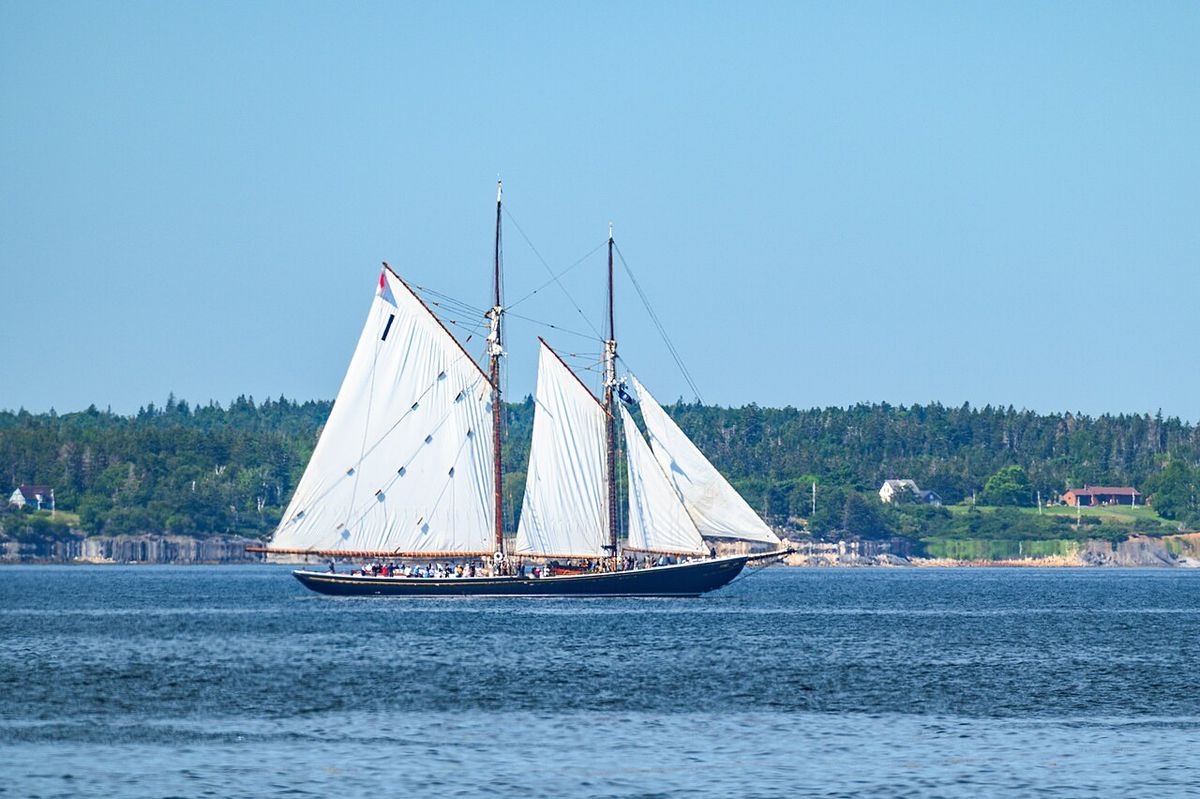
Bluenose II is a replica of the historic Canadian fishing and racing schooner Bluenose, built in 1963 as a promotional vessel for Oland Brewery. Donated to the province of Nova Scotia in 1971 for the symbolic sum of one dollar, the schooner now operates as a sailing ambassador for the province, promoting tourism and maritime heritage. Based at the Fisheries Museum of the Atlantic in its home port of Lunenburg, a UNESCO World Heritage Site, the vessel tours the Atlantic seaboard and the Great Lakes during summer months. Its mission is to promote the legacy of the original Bluenose and the rich maritime history of Atlantic Canada, though it does not officially race in honour of its predecessor's undefeated record.
Construction and original purpose
Bluenose II was commissioned by Sidney Culverwell Oland of Oland Brewery as a marketing tool for the company's Schooner Lager brand. The vessel was built to original plans at the Smith and Rhuland shipyard in Lunenburg, Nova Scotia, with some of the same workers who had constructed the original Bluenose involved in the project. Launched on 24 July 1963, the construction cost was approximately $300,000, equivalent to about $2.5 million in 2020 Canadian dollars. The original captain of Bluenose, Angus J. Walters, was consulted on the replica's design to ensure authenticity. Unlike its working predecessor, Bluenose II was built with yacht-like accommodations to serve as a promotional vessel, featuring a large deckhouse that reduced available deck space. The schooner has one of the largest mainsails in the world, measuring 386 square metres, with a total sail area of 1,036 square metres.
Provincial ownership and stewardship history
Sidney Culverwell Oland sold Bluenose II to the government of Nova Scotia in 1971 for the sum of one dollar, transferring the vessel into public hands. After several years of direct management by the province, stewardship was given to the Bluenose II Preservation Trust, a body mandated to restore the aging schooner and operate it for the people of Nova Scotia. The trust oversaw a significant hull restoration over the winter of 1994-95, with the ship being recommissioned in May 1995. During this period, the vessel became peripherally involved in the federal Sponsorship scandal when $2.3 million allocated for the schooner through a consulting firm saw only a small portion reach the actual vessel. The trust maintained operation until 31 March 2005, when management was transferred to the Lunenburg Marine Museum Society at the Fisheries Museum of the Atlantic. A subsequent controversy arose when the head of the trust, Senator Wilfred Moore, refused to release over $600,000 raised in the schooner's name to the new operators, though the trust's assets were eventually turned over to the province in July 2012. The financial records from the trust were not released by Moore at that time, leaving questions about the management of funds.
Bluenose II was commissioned by Sidney Culverwell Oland as a promotional yacht for Oland Brewery. Sidney Oland donated the schooner to Nova Scotia in 1971 for one dollar. The province later gave possession of the ship to the Bluenose II Preservation Trust to restore and operate it. In 2005, the government placed the vessel under the management of the Lunenburg Marine Museum Society at the Fisheries Museum of the Atlantic. The trust's assets were finally turned over to the province in July 2012.
- 1971: Ownership transferred from Sidney Oland to the Government of Nova Scotia for $1.
- 1994 to 1995: The Bluenose II Preservation Trust oversaw a major hull restoration.
- 31 March 2005: Operational management transferred to the Lunenburg Marine Museum Society.
- July 2012: The Bluenose II Preservation Trust's assets were turned over to the province.
The trust's mandate was to restore the aging schooner to full operational status and operate her for the people of Nova Scotia. The vessel required a major restoration project announced in 2009. Funds for the operation of the ship are raised through charging for passage, public donations, and gift shop sales. The restoration project faced significant cost overruns and delays, with final costs reaching millions of dollars.
The 2009 to 2016 rebuild: process and controversies
In May 2009, the provincial and federal governments announced support for a major restoration of Bluenose II, to be led by Nova Scotia's Tourism, Culture and Heritage Department. The initial projected cost was $14.4 million. By July 2010, a $12.5 million contract was awarded to a consortium of three Nova Scotia shipyards for the restoration work. The project was plagued by delays and cost overruns, with the final price tag reaching approximately $24 million by its completion in the summer of 2016, two years behind schedule. A report by the Nova Scotia Auditor General later blamed mismanagement and inexperience within the Department of Culture and Heritage for the problems. The rebuild itself was controversial, as provincial sources stated it was not intended to create an authentic replica and builders would not be using the original Bluenose plans. This led Joan Roue, a descendant of the original designer William Roue and current rights-holder of the design, to question whether the rebuilt vessel should even be considered the same ship.
The reconstruction process was extensive and involved multiple Nova Scotia firms. Large portions of the original hull were chipped away while other small pieces were given away at the rebuilding site in Lunenburg. The keel was completely remade, and the project aimed to make the schooner look more like the original fishing vessel, with smaller deckhouses and more deck space, reversing the yacht accommodations of the 1963 build. The masts, sails, booms, gaffs, deck boxes, rigging, and some ironwork were planned to be reinstalled upon completion. After more than 25 months of work, the partially completed hull was relaunched into Lunenburg Harbour on 29 September 2012 from the Lunenburg marine railway, followed by festivities at the nearby Fisheries Museum of the Atlantic. Due to unfinished repairs, the vessel was pulled back onto land for more work. It was returned to the water on 6 September 2013 to undergo dock and sea trials, which revealed unreliable steering mechanisms requiring further modifications. Retrofit costs had already risen to $19 million by that point before the final work was completed in 2016.
In July 2010, the Nova Scotia government awarded a contract for the restoration of Bluenose II to a consortium of three Nova Scotia shipyards. The ship's keel was supplied by Snyder's Shipyard in Dayspring. The ship's backbone of laminated ribs came from Covey Island Boatworks in Riverport. Final assembly of the vessel occurred in Lunenburg. This distributed model utilized provincial expertise for the rebuild.
- Keel: Fabricated at Snyder's Shipyard in Dayspring, Nova Scotia.
- Laminated ribs (ship's backbone): Built at Covey Island Boatworks in Riverport, Nova Scotia.
- Final assembly: Conducted in Lunenburg, Nova Scotia.
- Relaunch date: 29 September 2012 into Lunenburg Harbour.
- Return to water for trials: 6 September 2013.
- Projected completion (2010): 2012.
- Actual completion: Summer 2016.
The rebuild project was projected to cost 14.4 million dollars. The ship was finally relaunched in 2012 after major delays. The final cost had risen closer to 16 million dollars from the Nova Scotian government alone. The vessel was pulled back onto land for more work after its 2012 relaunch. Retrofit costs later rose to 19 million dollars, and the final cost reached 24 million dollars by 2016.
Operational mission and public role
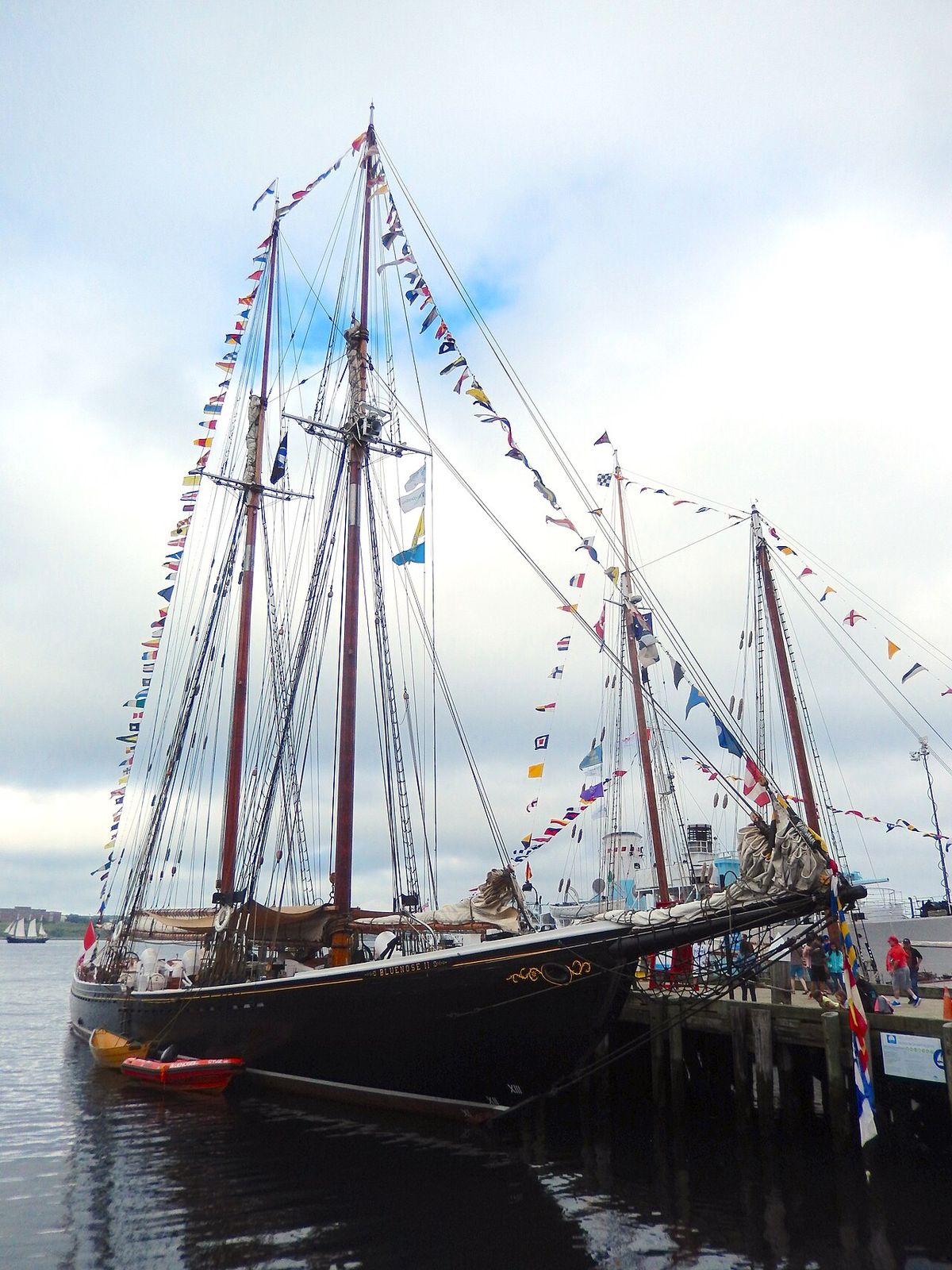
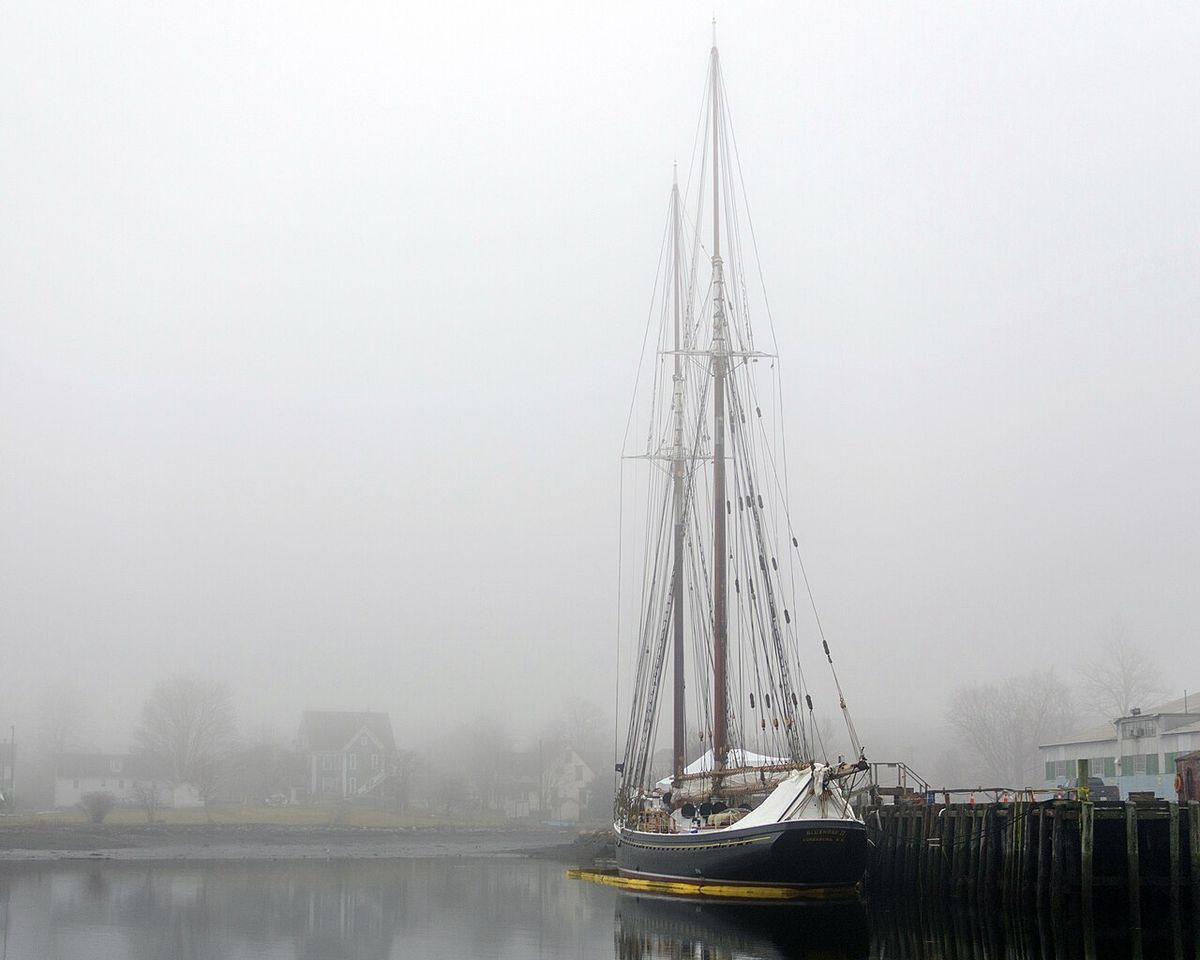
Bluenose II is permanently berthed at the Fisheries Museum of the Atlantic wharf in Old Town Lunenburg, Nova Scotia, the UNESCO World Heritage Site that was the origin of its predecessor. The schooner's formal mission is to continuously promote the history and legacy of both Bluenose vessels and the rich past and present of Lunenburg and Atlantic Canada. Its operational funding is raised through a combination of paid passenger voyages, public donations, and sales at the Bluenose II Company Store Gift Shop in Lunenburg, which is run by the Lunenburg Marine Museum Society. During the summer months, the vessel serves as a goodwill ambassador, touring the Atlantic seaboard, the Gulf of St. Lawrence, and the Great Lakes. Its itinerary routinely includes ports across Nova Scotia, as well as major destinations like Quebec City, Montreal, Toronto, and many ports in the United States. Summer activities for the public include onboard tours, harbour cruises, and deckhand experiences, alongside educational outreach programs for schools and youth groups in Nova Scotia.
The schooner has undertaken notable voyages beyond its regular coastal circuit, demonstrating its capacity as a long-distance ambassador for the province. In 1986, it participated in the Vancouver World's Fair, travelling to the west coast of Canada for an international exposition. In the summer of 2020, due to the COVID-19 pandemic, Bluenose II restricted its tour to Nova Scotia ports only to comply with public health restrictions. The 20-person crew formed a quarantine bubble for training, maintenance, and sailing, with visits to ports other than Lunenburg limited to at-anchor stops or sail-pasts to maintain public health protocols. This adaptive response demonstrated the vessel's ongoing commitment to its ambassadorial role even under challenging circumstances. The schooner's presence in ports serves as a mobile billboard for Nova Scotia tourism, inviting visitors to explore the province's maritime culture and history through direct engagement.
Cultural connections and material legacy
Bluenose II maintains a tangible connection to broader Canadian cultural projects beyond its maritime role. In 2004, the Bluenose Preservation Trust, with Lex McKay and Senator Wilfred Moore, donated a piece of wood from the ship's deck to the Six String Nation project. This material was incorporated into Voyageur, the guitar at the heart of the project, serving multiple functions. Elements from the schooner were used in two parts of the neck laminate, the top and end blocks inside the guitar's body, and as decorative elements in the rosette surrounding the sound hole. This integration physically links the vessel to a symbol of Canadian musical and national identity. The schooner's presence in Lunenburg also reinforces the town's status as a living museum of shipbuilding and a key tourist destination. Its operations support the local economy and help sustain traditional maritime skills within the community. As a floating emblem, Bluenose II continues to educate new generations about Canada's seafaring history, embodying the enduring spirit of its famous predecessor while carving out its own distinct legacy as a cultural ambassador.
Bluenose II was built to original plans by some of the same workers at Smith and Rhuland shipyard. The original captain of Bluenose, Angus J. Walters, was consulted on the replica's design. It was commissioned by Sidney Culverwell Oland for the Oland Brewery. Joan Roue, a descendant of the first Bluenose's designer William Roue, questioned the authenticity of the 2009 rebuild. The Bluenose Preservation Trust also donated material from the ship to the Six String Nation project.
- Original designer consulted: Captain Angus J. Walters of the first Bluenose.
- Design rights-holder: Joan Roue, descendant of designer William Roue.
- 2004 cultural donation: Coordinated by the Bluenose Preservation Trust, Lex McKay, and Senator Wilfred Moore.
- Cultural artifact: Wood from Bluenose II is part of the Voyageur guitar in the Six String Nation project.
- UNESCO site: Home port is Old Town Lunenburg, a designated World Heritage Site.
- Primary museum partner: Fisheries Museum of the Atlantic in Lunenburg.
The 2009 restoration was stated as not intended to create an authentic replica of the original Bluenose. The builders did not use the original plans for that rebuild. This led to questions about whether it should even be considered the same ship. The rebuild aimed to have the schooner look more like the original Bluenose. The original Bluenose II was built with yacht accommodation unlike a fishing schooner.
Financial and operational summary
The financial journey of Bluenose II from a corporate marketing tool to a provincially funded icon involves significant figures and taxpayer investment. The original 1963 build by Oland Brewery cost roughly $300,000. The 1994-95 hull restoration by the Bluenose II Preservation Trust incurred costs that were not fully detailed publicly. The major 2009 to 2016 restoration project experienced the most dramatic cost escalation, beginning with a $14.4 million projection, a $12.5 million contract award in 2010, and a final cost of $24 million. This restoration was funded solely by the Nova Scotia government after federal support was announced. Annual operations are funded through a mix of earned revenue and likely provincial subsidies, with the Lunenburg Marine Museum Society managing the budget from passage fees, donations, and gift shop sales.
Bluenose II was commissioned by Sidney Culverwell Oland for roughly 300,000 dollars. The provincial and federal governments announced support for a major restoration in 2009 projected to cost 14.4 million dollars. The final cost of the restoration rose closer to 16 million dollars from the Nova Scotian government by 2012. Retrofit costs had risen to 19 million dollars by 2013. The final cost reached 24 million dollars by the summer of 2016.
| Financial Milestone | Year | Amount (CAD) |
|---|---|---|
| Original Construction Cost | 1963 | $300,000 |
| Initial Restoration Projection | 2009 | $14.4 million |
| Contract Awarded for Restoration | 2010 | $12.5 million |
| Cost at Relaunch (2013) | 2013 | $19 million |
| Final Restoration Cost | 2016 | $24 million |
A report by the Nova Scotia Auditor General blamed mismanagement and inexperience by the province's Department of Culture and Heritage. The restoration project finished two years behind schedule. The vessel also required modifications to its steering mechanism which proved unreliable. The schooner operates as a sailing ambassador and promotional device for Nova Scotia tourism. Its mission is to promote the history and legacy of Bluenose and Bluenose II.
Questions about Bluenose II
When was Bluenose II built and why?
Bluenose II was launched on 24 July 1963 in Lunenburg, Nova Scotia. It was commissioned by Sidney Culverwell Oland of Oland Brewery as a promotional marketing tool for their Schooner Lager beer brand. The vessel was built as a replica of the famous fishing and racing schooner Bluenose, consulting with the original captain, Angus J. Walters, on its design. The construction cost was approximately $300,000, which would be equivalent to about $2.5 million in 2020 Canadian dollars.
Who owns and operates Bluenose II today?
Bluenose II is owned by the government of Nova Scotia, which acquired it from Sidney Oland in 1971 for one dollar. Day-to-day operation and management of the vessel are handled by the Lunenburg Marine Museum Society, based at the Fisheries Museum of the Atlantic in Lunenburg. The society funds operations through ticket sales for voyages, public donations, and revenue from the Bluenose II Company Store Gift Shop. The schooner's mission is to promote Nova Scotia tourism and maritime heritage.
How much did the recent restoration of Bluenose II cost?
The major restoration project that began in 2009 ended up costing approximately $24 million by its completion in the summer of 2016. The project was initially projected to cost $14.4 million, but experienced significant delays and cost overruns. A report by the Nova Scotia Auditor General attributed the problems to mismanagement and inexperience within the provincial Department of Culture and Heritage. The final cost was funded by the Nova Scotia government.
Does Bluenose II race like the original schooner?
No, Bluenose II does not officially race. This is done in honour of the undefeated racing record of its predecessor, the original Bluenose. The vessel's primary role is as a sailing ambassador and promotional tool for Nova Scotia tourism and maritime history. It spends its summers touring ports in Atlantic Canada, the Great Lakes, and the northeastern United States, offering public tours, harbour cruises, and educational programs instead of competitive sailing.
Where is Bluenose II's home port?
Bluenose II's home port is Old Town Lunenburg, Nova Scotia. It is permanently berthed at the wharf of the Fisheries Museum of the Atlantic in Lunenburg. Lunenburg is a UNESCO World Heritage Site and the origin of its predecessor. The schooner spends much of the year tied up there when not on its summer touring schedule.
What was controversial about the Bluenose II rebuild?
The 2009 to 2016 rebuild was controversial for several reasons. Provincial officials stated the restoration was not intended to create an authentic replica and that builders would not use the original Bluenose plans, leading design rights-holder Joan Roue to question if it was the same ship. The project was also marred by massive cost overruns, rising from a projected $14.4 million to a final $24 million, and a two-year delay. The Nova Scotia Auditor General blamed provincial mismanagement. Large portions of the original hull were chipped away and the keel was completely remade during the process.
Sources and further reading
- Bluenose II (Wikipedia)
- Bluenose II Restaurant | A Maritime Favourite Since 1964 (bluenoseii.ca)
Checked by the Novello Desserts desk. Last updated 2026-10-23.