Oak Island
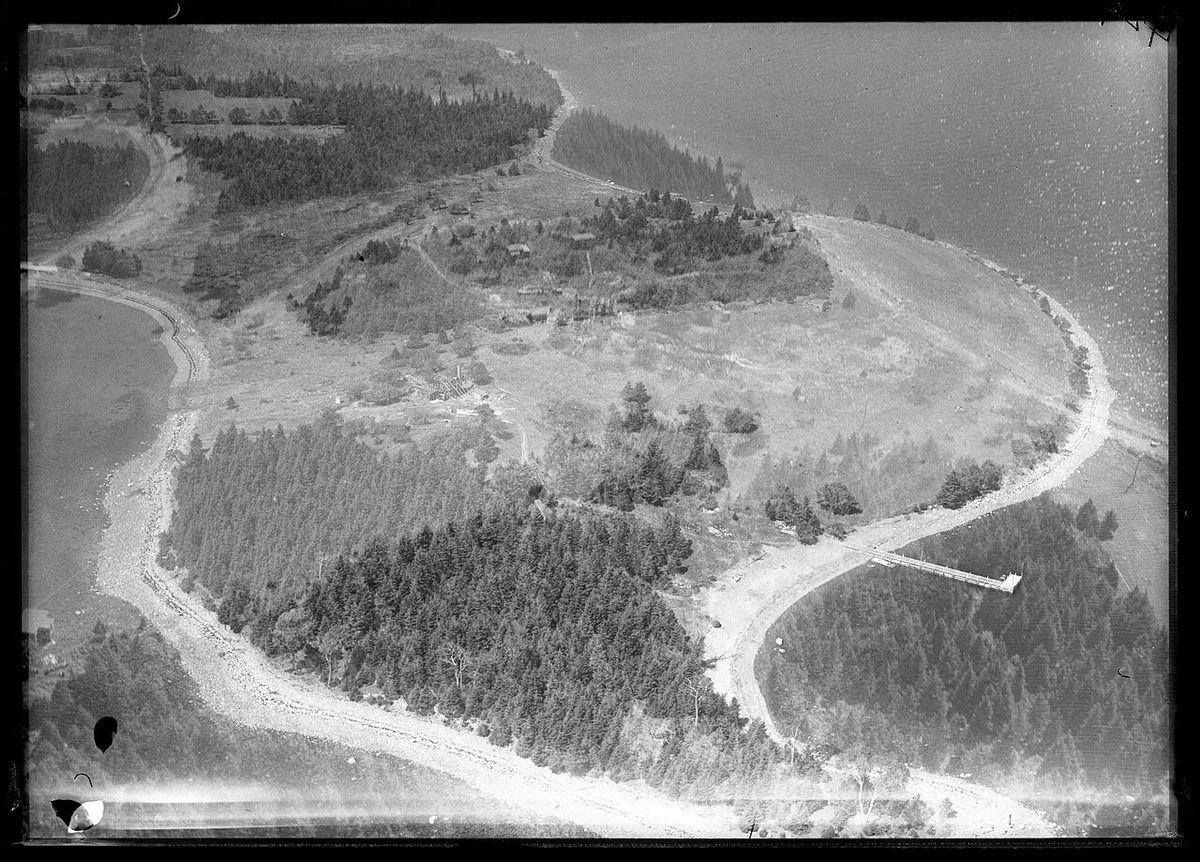
Oak Island is a privately owned, forested island located in Mahone Bay on the south shore of Nova Scotia, connected to the mainland by a causeway. It is internationally famous for the enduring mystery of its so-called 'Money Pit,' a site of repeated excavations for over two centuries based on theories of buried treasure and historical artifacts. The island's lore, encompassing tales of pirate gold, religious relics, and royal jewels, has become a significant piece of North American folklore. Its ongoing exploration, notably documented in the long-running television series The Curse of Oak Island, continues to draw international audiences and fuels its status as a unique Canadian tourist attraction and destination for mystery enthusiasts.
Geography and Natural Environment
The island's landscape is dominated by a temperate broadleaf and mixed forest, characteristic of the New England/Acadian forests region. Its climate is influenced by the Atlantic Ocean, resulting in humid conditions with warm summers and cold winters, though no specific weather station exists on the island itself. The area is prone to dense fog, which can obscure the coast for up to 90 days annually, and is vulnerable to powerful storms including nor'easters and hurricanes that sweep in from the ocean. The nearest official weather station is in the town of Bridgewater, which records an average annual temperature of 7.1 °C and annual precipitation of 1,535.7 millimetres.
The local ecology supports a variety of coastal bird species, including great blue herons, osprey, black guillemots, Leach's storm petrels, and razorbills, as well as eagles and puffins. The endangered roseate tern was the subject of a recovery project from 2003 to 2013, which aimed to establish a secure nesting colony for the birds on an island within Mahone Bay. Geologically, the island was first mapped in 1924 by J. W. Goldthwait of the Geological Survey of Canada, who interpreted it as a composite of four drumlins, or elongated hills formed by glacial deposits over the past 75,000 years. These drumlins consist of multiple layers of till, mainly 'Lawrencetown' and slate till, resting on bedrock. Researchers Les MacPhie and John Wonnacott concluded that the deep deposits at the east end of the island make up these drumlin formations.
There are two distinct types of bedrock underlying Oak Island. The southeastern portion consists of Mississippian Windsor Group limestone and gypsum, and the northwestern part is Cambro-Ordovician Halifax Formation slate. Around 8,000 years ago, the area was a lagoon before sea levels rose with melting glaciers. Dr. Ian Spooner of Acadia University has stated that the current triangular swamp on the island was once a cove, and analysis of core samples shows a significant saltwater intrusion occurred there as recently as the late 1300s or early 1400s. While Spooner suggested this was likely from human manipulation, he did not rule out the possibility of an enormous storm causing the change. In the main search area, bits of anhydrite are found within the till, becoming more competent deeper down.
Early History and Settlement
The land encompassing Oak Island is part of the traditional territory of the Mi'kmaq people, who have inhabited present-day Nova Scotia and Newfoundland for several thousand years. This specific area was once known as the 'Segepenegatig' region. While it is unknown when Europeans first encountered the island, the earliest confirmed European residents in the area date to the 1750s when French fishermen built houses on the future site of Chester. Following the Expulsion of the Acadians during the Seven Years' War, British authorities encouraged New England colonists to settle in Nova Scotia. Land was made available through the Shorham grant in 1759, the same year Chester was officially founded, paving the way for British settlement.
A large part of the island was initially owned by the Monro, Lynch, Seacombe, and Young families who had received the land grant in 1759. In the early days of British settlement, locals referred to the island as 'Smith's Island' after an early settler named Edward Smith. Cartographer Joseph Frederick Wallet DesBarres renamed it 'Gloucester Isle' on his 1778 charts, but the locally used name 'Oak Island' was officially adopted shortly thereafter. Early residents included Edward Smith in the 1760s and Anthony Vaughn Sr. in the early 1770s.
In 1784, the government made additional land grants, this time to former soldiers, which included parts of Oak Island. The original lot owners' names were not formally mapped for the Nova Scotia Crown Lands office until July 6, 1818. The island's modern history became inextricably linked to treasure hunting after old legends were first published in 1857, and it has been intermittently owned by treasure hunters ever since. The search operations grew so extensive that the causeway was constructed in 1965 specifically to transport heavy machinery onto the island for excavation purposes.
The Oak Island Mystery and Key Sites
The core of Oak Island's fame is the mystery of buried treasure, with rumours beginning in the late 1700s often linked to Captain Kidd. Published accounts of excavations started in 1857, and since that time many theories have extended beyond pirate treasure to include religious artifacts, historical manuscripts, and Marie Antoinette's jewels. Critics have often dismissed search areas as natural phenomena, but the mystery persists as a major part of North American folklore. The most famous location is the Money Pit on the island's east side, the site of the original 1795 excavation by a local youth named Daniel McInnis and his two friends. They reported finding a depression, a layer of flagstones, and about 10 feet down, a tier of oak logs.
Subsequent excavations by groups like the Onslow Company, which took up the search in the following decade, were said to have found oak platforms at intervals of about 10 feet to a depth of about 90 feet, where work was halted by flooding. Beyond the Money Pit, several other sites on the island have fuelled speculation and investigation. These include a triangle-shaped swamp, which geological analysis suggests was once a cove, and a formation of boulders known as 'Nolan's Cross,' named after the surveyor and treasure hunter Fred Nolan who identified it. There has also been significant activity at a beach known as Smith's Cove, where objects including non-native coconut fibre have been found, suggesting the possible use of a man-made filtration system.
More recent archaeological discoveries in the Smith's Cove area have included an allegedly pre-15th-century lead cross and various wooden earthworks. The mystery has inspired the publication of more than fifty books recounting the island's history and exploring competing theories. Several works of fiction have also been based upon the Money Pit, including The Money Pit Mystery, Riptide, The Hand of Robin Squires, and Betrayed: The Legend of Oak Island. The public profile of the search was massively amplified in January 2014 when the History Channel began airing the reality TV show The Curse of Oak Island, documenting the work of modern treasure hunters including brothers Rick and Marty Lagina.
Modern Exploration and Ownership
Treasure hunting on Oak Island became an extensive industrial operation in the 20th century, necessitating the construction of the causeway in 1965 to bring heavy machinery onto the island. For decades, the search was led by figures like Dan Blankenship, who initially partnered with 'Oak Island Tours Inc.,' run by David Tobias. Oak Island Tours eventually dissolved, and in February 2019 it was announced that a new partnership had been formed with the Michigan Group. This group consisted of brothers Rick and Marty Lagina, Craig Tester, and Alan Kostrzewa, who had been purchasing lots from David Tobias. Dan Blankenship owned the island with the Michigan Group until his death on March 17, 2019, at the age of 95.
The modern era of exploration has been significantly publicized by the History Channel television series The Curse of Oak Island, which began airing in January 2014. The show documents the efforts of the Lagina brothers and their team, blending historical research with archaeological digs and technological surveys. Their work has been featured extensively on the series and includes finds such as centuries-old coins, an antique brooch, and a lead cross that was allegedly made between 1200 and 1600 A.D. The island remains privately owned and is populated on a seasonal basis with two permanent homes and two cottages being occupied part-time. Public access is granted only to those who schedule tours ahead of time through authorized operators.
Cultural Impact and Tourism
The legend of Oak Island has cemented its place in popular culture, transforming it from a local curiosity into a subject of international fascination. The publication of stories since 1857 and the subsequent dozens of books have built a rich mythology around the island. The launch of The Curse of Oak Island in 2014 brought the mystery into living rooms worldwide, significantly boosting public interest and establishing the island as a recognizable destination. The series has run for multiple seasons, documenting the meticulous and often dramatic process of investigation, which has included the use of sonar, drilling, and coffer dam construction at Smith's Cove. The show's focus on a group of modern treasure hunters, primarily the Lagina brothers, personalizes the centuries-old quest for a contemporary audience.
As a tourist attraction, Oak Island operates on a limited basis due to its private ownership. The primary way for the public to visit is by booking a guided tour in advance through the authorized tour operators. These tours typically focus on the history of the treasure hunt and key sites like the Money Pit area. The Friends of Oak Island Society, successor to the Oak Island Tourism Society, focuses on facilitating these summer tours. The island's allure lies in the tangible sense of mystery and the ongoing quest, offering visitors a chance to walk the ground that has held the attention of explorers for generations. While no major treasure has been confirmed, the accumulation of minor artifacts and the sheer persistence of the search maintain its compelling narrative for visitors and viewers alike.
Notable Theories and Reported Discoveries
Over more than two centuries, numerous theories have been proposed to explain the origins of the Oak Island mystery, each supported by various reported finds. The earliest and most persistent theory involves pirate treasure, specifically that of Captain William Kidd. Other prominent theories suggest the pit could conceal religious artifacts from the Knights Templar, lost manuscripts of Francis Bacon or Shakespeare, or valuables hidden by French Royalists during the revolution, including jewels belonging to Marie Antoinette. Skeptics, including some geologists, have argued that features like the Money Pit could be natural sinkholes or geological formations like the documented drumlins, misinterpreted as human-made. The 'treasure' has been prone to criticism by those who dismiss search areas as natural phenomena.
Reported discoveries throughout the years have provided fuel for these theories, though none have yielded definitive proof of a major treasure hoard. Treasure hunters have searched the island since the late 18th century, and accounts of its Money Pit have been published since 1857. Repeated excavations and investigations have not resolved the mystery. The chronology of key finds and events illustrates the long history of the search, which has become part of North American folklore.
- 1795: Daniel McInnis and friends discover a depression, flagstones, and a tier of oak logs at 10 feet in what becomes the Money Pit.
- 1857: The first published accounts of the Oak Island legends appear, widely disseminating the mystery.
- 1965: Fred Nolan, a surveyor and treasure hunter, identifies the stone alignment known as Nolan's Cross.
- 2019: Formation of the new ownership partnership with the Michigan Group and the death of long-time searcher Dan Blankenship.
The interpretation of these finds remains highly contested, with proponents seeing them as clues to a grand historical puzzle and critics viewing them as unrelated artifacts or natural materials. The analysis of core samples taken from the swamp show that a significant saltwater intrusion occurred as recently as the late 1300s or early 1400s. While researcher Dr. Ian Spooner said this was likely from human manipulation, he did not rule out the possibility of an enormous storm. The series The Curse of Oak Island has documented finds such as centuries old coins, an antique brooch, and a lead cross allegedly made between 1200 and 1600 AD, keeping the cycle of discovery and speculation active in the public eye.
Questions about Oak Island
Where is Oak Island located?
Oak Island is located in Mahone Bay, off the south shore of Nova Scotia in Lunenburg County. It is connected to the mainland at Crandall's Point by a causeway built in 1965. The nearest community is the rural area of Western Shore, and the nearest village is Chester, which was founded in 1759. The island is one of several within the bay and features a forested landscape typical of the region.
What is the Money Pit?
The Money Pit is the name given to the site on Oak Island's east side where treasure hunting began in 1795. According to legend, a youth named Daniel McInnis found a depression and, upon digging with two friends, discovered layers of flagstones and oak logs at regular intervals. Subsequent excavations by groups like the Onslow Company claimed to find oak platforms every 10 feet to a depth of about 90 feet, where the pit would flood, hindering further progress. It is the focal point of the island's mystery and the subject of most excavation attempts.
Can you visit Oak Island?
Yes, but public access is restricted and requires planning. The island is private property, but guided tours are offered on a seasonal basis by appointment. Interested visitors must schedule a tour in advance through the authorized tour operators, such as those coordinated by the Friends of Oak Island Society. There is no general public access, and the island is only populated part-time with two permanent homes and two cottages.
What is the TV show about Oak Island?
The History Channel series The Curse of Oak Island began airing in January 2014 and follows the modern treasure hunting efforts of brothers Rick and Marty Lagina and their team. The reality TV show documents their investigations, historical research, and excavations across the island. It has featured finds such as old coins, a brooch, and a lead cross allegedly dating from 1200 to 1600 AD. The show has brought renewed international attention to the centuries old mystery and the people involved in the search.
Who owns Oak Island now?
Oak Island is now primarily owned by a partnership known as the Michigan Group. This group consists of brothers Rick and Marty Lagina, Craig Tester, and Alan Kostrzewa, who had been purchasing lots from previous owner David Tobias. They formed a new partnership in February 2019 following the dissolution of the former Oak Island Tours Inc. The late treasure hunter Dan Blankenship co-owned the island with the Michigan Group until his death in March 2019. The island remains private property, but public access is granted to those who schedule tours ahead of time. The island is populated seasonally with two permanent homes and two part-time cottages.
Sources and further reading
- Oak Island (Wikipedia)
- Guided Tours of Oak Island, Nova Scotia | Oak Island Legend (oakislandlegend.com)
- Oak Island, NS | World's Longest-Running Treasure Hunt ... (novascotia.com)
- Oak Island Tour (visitsouthshore.ca)
- Things to Do in Oak Island, NC (rudd.com)
Checked by the Novello Desserts desk. Last updated 2026-10-21.