Trump's Belarus potash deal proposal draws condemnation from Canadian leaders
Saskatchewan Premier Scott Moe and other Canadian officials are criticizing U.S. President Donald Trump's plan to source potash from Belarus, calling it 'blood potash' that supports Russian aggression.
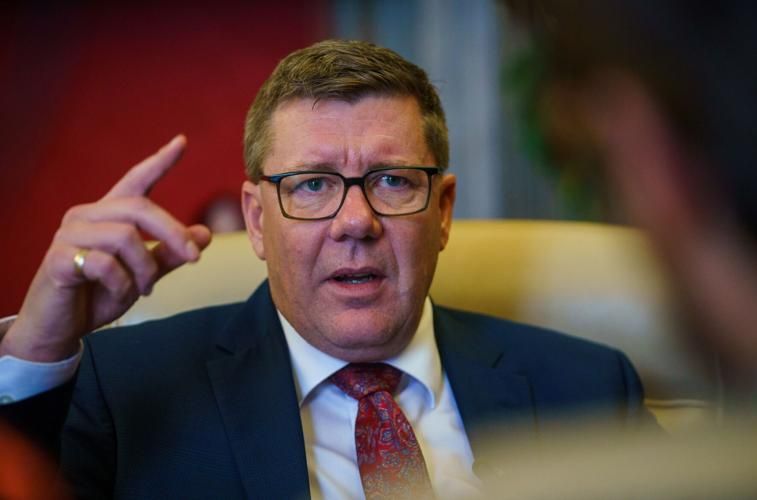
U.S. President Donald Trump's announcement of a potential potash import deal with Belarus has sparked fierce backlash from Canadian political leaders and industry experts, who argue the move would support Russian aggression while undermining North America's integrated fertilizer supply chain. The controversy highlights growing tensions in Canada-U.S. trade relations and raises serious questions about the ethical sourcing of critical agricultural inputs.
Geopolitical implications of the potash proposal
Trump revealed plans Monday to source potash from Belarus through a social media post, claiming the arrangement would provide American farmers with prices "substantially less" than Canadian exports. This announcement comes amid escalating trade tensions between Canada and the U.S., with reciprocal tariffs already imposed on various goods. The proposal specifically targets Saskatchewan's potash industry, which currently dominates North American fertilizer supply chains.
Belarus's close alliance with Russia and its support for Vladimir Putin's invasion of Ukraine make this potential deal particularly contentious. Saskatchewan Premier Scott Moe immediately condemned the proposal, stating "Buying blood potash from Belarus is supporting Russian aggression." His remarks reference the fact that more than 40 countries including Canada have imposed sanctions on Belarus for its role in facilitating Russia's war efforts.
Canadian leaders unite in condemnation
The political response from across Canada's spectrum has been uniformly critical of Trump's proposal. Federal Conservative House Leader Andrew Scheer called Belarus "a communist dictatorship" with a terrible human rights record, while B.C. Premier David Eby framed the move as part of a pattern of attacks on Canadian industries. This rare show of political unity underscores how the proposal touches on both economic and foreign policy priorities for Canada.
Moe's rhetorical question captured the essence of Canadian objections: "Does anyone believe Belarusian blood potash shipped through Russia is going to be more affordable, more sustainable or more ethical than potash shipped from Saskatchewan right here in North America?" The framing of Belarusian potash as "blood potash" directly ties the trade issue to Canada's support for Ukraine against Russian aggression.
Logistical and economic feasibility questions
Beyond ethical concerns, industry experts have raised serious doubts about the practical viability of Trump's proposal. Economist Erin Weir, a former Saskatchewan NDP MP, noted that Belarus lacks significant potash reserves available for new export agreements. Additionally, Belarus faces major transportation challenges as a landlocked country that has lost access through Lithuania, which closed border crossings in response to the Ukraine invasion.
Belarusian President Alexander Lukashenko himself acknowledged these limitations, stating in a Monday news release that "everything is contracted" when asked about supplying large volumes to Western markets. This admission directly contradicts Trump's suggestion of readily available Belarusian potash at reduced prices.
Saskatchewan's competitive advantages
Saskatchewan's position as the world's largest potash producer gives it significant advantages in serving the North American market. Weir emphasized that "It's possible for us to put potash on trains to the American states that are growing corn," contrasting this efficient supply chain with the complex logistics required to move Belarusian product through Russian ports to U.S. markets.
The economic stakes are substantial for Saskatchewan and Canada. Natural Resources Canada data shows nearly half of Canada's potash exports worth $4.2 billion go to the United States, representing 80% of U.S. potash imports from 2021 to 2024 according to U.S. Geological Survey figures. This existing trade relationship has created deeply integrated supply chains that would be difficult to replace.
Market stability concerns
University of Guelph agriculture professor Asim Biswas warned that Trump's vague proposal creates uncertainty in fertilizer markets, potentially affecting investment decisions and long-term planning for Canadian producers. Fertilizer Canada stressed the reliability of Canadian potash in supporting North American farmers through stable, integrated supply chains that have historically maintained price stability.
Saskatchewan Mining Association president Pam Schwann expressed skepticism about the cost-effectiveness of Belarusian imports but cautioned against overreaction. "Our potash mines are price-takers in a global market," she noted, emphasizing that Saskatchewan producers compete based on market prices rather than setting them.
Political divisions on response strategy
The announcement has revealed differing approaches among Canadian politicians about how to counter Trump's protectionist policies. While Ontario Premier Doug Ford has advocated using natural resources as leverage by potentially blocking shipments, Moe maintains opposition to export halts or taxes that could harm Saskatchewan's economy. This debate reflects broader tensions in Canadian trade policy between retaliatory measures and maintaining open markets.
Saskatchewan NDP Leader Carla Beck called for stronger action, describing Trump's comments as an attack on the province's potash industry and urging Moe to provide "a real response." The province has already demonstrated willingness to retaliate in trade disputes, having recently imposed a 50% tax on U.S. alcohol imports.
Broader implications for Canada-U.S. relations
This episode represents more than a simple trade dispute it tests the resilience of North American economic integration amid growing geopolitical tensions. Weir suggested Saskatchewan retains significant bargaining power due to global potash demand and concentrated production, advising Canadians to view Trump's comments with "a grain of salt, or perhaps a grain of potash."
The controversy underscores how resource nationalism and great power conflicts are reshaping traditional economic relationships, forcing Canada to handle complex trade-offs between economic interests and foreign policy principles. As trade tensions continue to escalate, Canadian leaders face increasing pressure to defend both the nation's economic competitiveness and its values-based approach to international relations.
The future of North American fertilizer markets
Industry observers will be watching closely to see whether Trump's proposal materializes into concrete policy changes. The integrated nature of North American fertilizer markets and Saskatchewan's dominant production position suggest any major shift would face significant practical challenges. However, the political symbolism of the proposal alone has already succeeded in raising tensions and creating uncertainty in a vital agricultural sector.
For Canadian producers, the episode serves as a reminder of the need to diversify markets while maintaining the competitive advantages of geographic proximity and established supply chains. As Schwann noted, the industry must balance vigilance against overreaction, continuing to serve American customers while exploring opportunities in other global markets.