Canada's Walk of Fame
Canada's Walk of Fame is a national registered charity and a series of public monuments in Toronto that honours Canadians who have achieved excellence in their fields. Conceived in 1996 and established in 1998, the Walk features stylized maple leaf stars embedded in the sidewalks of the city's Entertainment District. It celebrates inductees across five pillars of achievement: Arts & Entertainment. Entrepreneurship and Philanthropy. Humanitarianism. Science, Technology and Innovation. And Sports & Athletics. As of September 2026, the Walk has inducted 237 Canadians, serving as a major tourist attraction and a source of national pride that aims to inspire future generations.
History and Founding
The concept for Canada's Walk of Fame originated in 1996 when co-founder Peter Soumalias first proposed a walk of fame for notable Torontonians to the board of the Toronto Entertainment District Association. The board rejected the local focus, prompting Soumalias to pursue a national vision. He partnered with Bill Ballard, Dusty Cohl, and later Dianne Schwalm and Gary Slaight to establish a Walk of Fame for all Canadians. Despite initial challenges including a lack of funding and a formal media plan, the founders successfully launched the project. The first induction ceremony was held in 1998, unveiling stars for the inaugural group of inductees on sidewalks in front of Roy Thomson Hall, The Princess of Wales Theatre, and The Royal Alexandra Theatre on King and Simcoe Streets. From these modest beginnings, the organization has grown into a nationally recognized charity and a premier Canadian recognition event, named the number one Canadian recognition event.

Induction Process and Criteria
Canada's Walk of Fame operates a detailed, multi-stage process to select its honourees. Nominations are accepted from the public year-round through the organization's official website, with a concentrated National Nomination Promotion each April. The organization receives thousands of submissions annually, a volume that once reached over 30,000 via mail, fax, and email before the advent of online voting. A dedicated selection committee evaluates all nominees against three strict criteria. First, the nominee must have been born in Canada or spent their formative or creative years in the country. Second, they must have a minimum of ten years of experience in their field of achievement. Third, and most significantly, they must have made a national or international impact on Canada's cultural heritage. The committee forwards qualifying nominees to the organization's board of directors, who make the final selection of inductees.
The evaluation process has evolved to place greater emphasis on the nominee's broader impact. The organization now considers what an induction will do to make Canada a better place, looking at the positive influence candidates have locally, nationally, and internationally. This shift means the Walk of Fame honours not just widespread fame, but substantive contributions across its five pillars of achievement. The final list of inductees is unveiled at the annual awards ceremony. The organization's CEO, Jeffrey Latimer, has stated that conversations with potential inductees now focus more on their personal journey, their struggles, and how they use their platform for positive change, asking questions like 'What are you doing with your platform?' and 'What are you doing with your fame?'
The Stars and Ceremonial Events
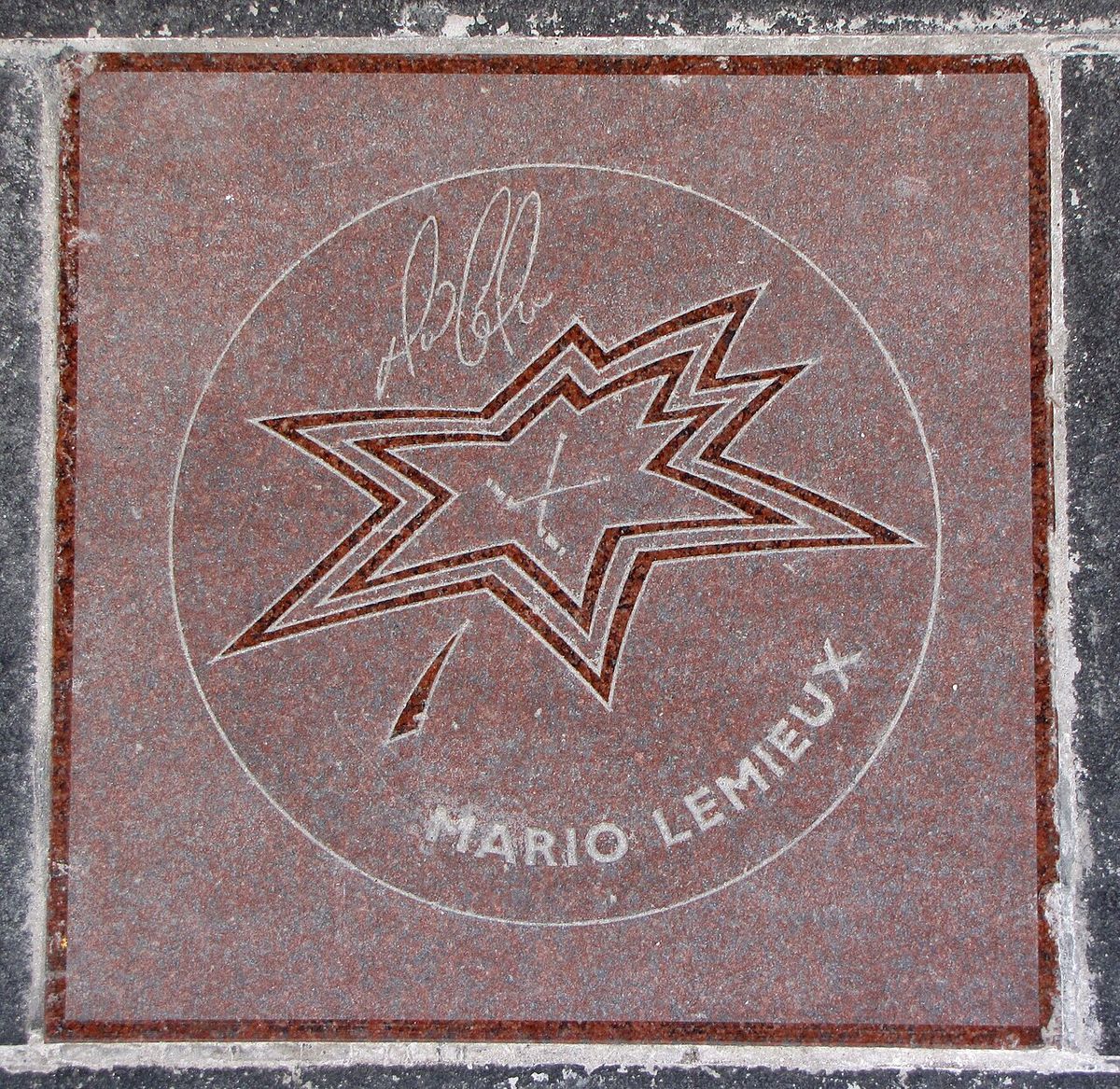
The physical tribute of Canada's Walk of Fame is a series of more than 200 stylized maple leaf stars set into approximately 13 city blocks of sidewalk in downtown Toronto's Entertainment District. Each new inductee is honoured at an annual unveiling ceremony where their star is revealed. The first ceremony in 1998 was modestly attended, with only four of the twelve living inductees present, including Karen Kain, Norman Jewison, Barbara Ann Scott, and Rich Little. Over the years, the event has grown into a major televised gala. The ceremony has been held at various venues, including the Hummingbird Centre in 2007, and has been hosted by numerous notable Canadians. The televised broadcast of the ceremony has moved between networks, airing on CTV until 2008 before moving to Global in 2009. The ceremony has been hosted by a wide array of Canadian personalities over the years.
- Eugene Levy hosted the 2007 ceremony.
- Anne Murray hosted the first Global broadcast in 2009.
- Paul Shaffer hosted the event in 2012.
- Other past hosts include Trish Stratus, Tom Green, Jann Arden, Kurt Browning, and Catriona Le May Doan.

Associated Awards and Honors
Beyond the main induction, Canada's Walk of Fame administers several distinct awards that recognize different types of achievement. The Cineplex Legends Award, established in 2008 and sponsored by Cineplex Entertainment, is presented posthumously to Canadian pioneers in film, music, sport, arts, and innovation. The first recipients were the sibling pioneers Norma and Douglas Shearer in 2008. Recipients of this award also receive a star on the Walk of Fame. The Allan Slaight Honour, first awarded in 2010, recognizes young Canadian musicians who are making a positive impact in the field of music. Named for radio industry leader Allan Slaight, the honour includes a $10,000 honorarium from the Slaight Foundation, though recipients are not considered full inductees of the Walk. The complete list of Allan Slaight Honour recipients includes Nikki Yanofsky, Drake, Melanie Fiona, Carly Rae Jepsen, the Weeknd, Shawn Mendes, Brett Kissel, Shawn Hook, Jessie Reyez and Alessia Cara.
The organization also runs significant mentorship and prize programs aimed at fostering the next generation of talent. The RBC Emerging Artist Music Mentorship Prize, created in 2012 in partnership with RBC, is valued at over $100,000 in total support. It awards young musicians $25,000 in cash plus recording time and performance opportunities. More recent initiatives include the Future Storytellers program for emerging filmmakers and the Community Hero Program, presented by MLSE and Seeing Red Media, which selects an exceptional Canadian under 30 who positively impacts their community. The Community Hero winner receives a donation to advocate for their cause, media opportunities, and recognition at the Canada's Walk of Fame gala events in November 2024 and June 2025.
Expansion and Public Programs
Canada's Walk of Fame has significantly expanded its activities beyond the annual induction ceremony. In 2010, the organization launched the Canada's Walk of Fame Festival, a three-day event culminating in the awards show. The festival has featured performances by renowned Canadian musicians like Sarah McLachlan, Serena Ryder, Crystal Shawanda, Tom Cochrane, and Melanie Fiona, alongside screenings of Canadian films and comedy acts. The organization describes itself as a year-round platform, with programs designed to educate, foster national pride, support Canadian culture, and provide opportunities for emerging talent. These programs are officially designated by the Canadian Radio-television and Telecommunications Commission (CRTC) as being of national interest. The operational focus has shifted from a Toronto-centric attraction to a truly national institution that tells the stories of inductees from communities across the country, emphasizing their personal journeys and contributions over mere fame.
The organization's educational and inspirational mandate is carried out through several sustained initiatives. The RBC Emerging Musician Program provides Canada's rising musical stars with mentorship, performance opportunities, and career development tools. The Future Storytellers program empowers emerging filmmakers with resources to present their talent and shape the future of Canadian film and television. The Community Hero Program, aimed at Canadians under 30, seeks to empower young leaders to make a significant impact in their communities. The organization has also introduced The National Hero Honour, presented to someone who has made outstanding contributions in a given year and represents what it is to be Canadian. These programs are part of a strategy to reach Canadians nationwide through events, broadcasts, and digital content.
Notable Inductees and Recognition
The Walk of Fame honours Canadians from a remarkably diverse range of fields, reflecting the five pillars of achievement. Inductees include well-known figures from arts and entertainment, groundbreaking scientists, celebrated athletes, philanthropists, and humanitarians. The 2026 inductee class, which brought the total to 237, included examples from across this spectrum. Actor Keanu Reeves was inducted alongside retired Lieutenant General Roméo Dallaire, blues singer Salome Bey, and the team of University of Toronto scientists behind the discovery of insulin: Frederick Banting, Charles Best, John Macleod, and James Collip. This diversity highlights the organization's mission to celebrate all forms of Canadian excellence. The physical stars themselves have occasionally required maintenance due to the harsh Canadian winter climate, with freezing, thawing, and sidewalk snowplows causing damage. Notably, in 2010, William Shatner and the family of Gordie Howe commented publicly on the wear to their stars, prompting the City of Toronto to commit to repairs and the Walk of Fame to investigate more durable installation methods.
The selection of inductees demonstrates a balance between international celebrities and those whose contributions are felt more within specific fields or nationally. For instance, the same ceremony honoured Keanu Reeves, a globally recognized film star, and the medical researchers who discovered insulin, whose work has saved millions of lives worldwide. The organization actively seeks nominations for individuals who may not be household names but whose work in healthcare, science, or community service represents significant achievement. With 167 stars in place by 2016, the Walk has grown steadily, adding new honourees each year who meet the stringent criteria of a decade of experience and a verifiable impact on Canada's cultural heritage. The organization states it is important for Canada to shine a brighter light on extraordinary Canadian achievers to inspire more people, more often.
Governance and Cultural Impact
Canada's Walk of Fame operates as a national not-for-profit organization and a registered charity. Its governance includes a board of directors and a selection committee that oversees the rigorous induction process. The organization's CEO, Jeffrey Latimer, has articulated a philosophy that the emphasis is on the walk, not the fame, focusing on the inductees' journeys, struggles, and how they use their platforms for positive change. This approach aims to provide relatable role models who demonstrate resilience and contribution. The Walk of Fame has faced some criticism since its inception, such as early commentary from CBC's Laurie Brown in 1998, who questioned if it would only honour internationally famous figures rather than those known primarily within Canada and called it an attraction to lure tourists to local theatres. The organization's evolution towards highlighting local impact and community heroes addresses this concern directly.
Its growth from a simple sidewalk attraction to an institution with educational programs, a major festival, and youth initiatives demonstrates its sustained role in promoting Canadian identity and achievement. The organization states its mission is to fuel Canadian pride and inspire the next generation by celebrating those who excel in their fields. It functions as the foremost honour for cultural excellence in Canada, according to its own materials. The physical walkway, while a focal point, is now part of a larger strategy that includes national broadcasts, hometown celebrations, and digital outreach to connect with Canadians across the country and present the stories of national achievers. The Walk of Fame collaborates with corporate partners like Cineplex, RBC, and MLSE to deliver its awards and mentorship programs.
Questions about Canada's Walk of Fame
Where is Canada's Walk of Fame located?
Canada's Walk of Fame is located in Toronto, Ontario, specifically in the city's Entertainment District. The stars are embedded in the sidewalks along approximately 13 designated blocks on King Street and Simcoe Street. This installation is situated in front of prominent venues including Roy Thomson Hall, The Princess of Wales Theatre, and The Royal Alexandra Theatre. It is a public walkway and a popular tourist attraction.
How are people chosen for Canada's Walk of Fame?
Inductees are chosen through a public nomination and committee selection process. Anyone can submit a nomination year-round via the official Canada's Walk of Fame website. A selection committee then reviews nominees against three key criteria: they must be Canadian by birth or formative years, have at least ten years of experience in their field, and have made a national or international impact on Canada's cultural heritage. The committee's shortlist is then sent to the organization's board of directors for the final selection.
What is the Allan Slaight Honour?
The Allan Slaight Honour is an award established by Canada's Walk of Fame in 2010. It is named after Allan Slaight, a leading figure in the Canadian radio industry. This honour is awarded to a young Canadian for making a positive impact in the field of music. Recipients receive a $10,000 honorarium from the Slaight Foundation, but they are not considered official inductees of the Walk of Fame.
What are the Hometown Star events?
Hometown Star events are a program introduced by Canada's Walk of Fame to honour inductees from communities outside Toronto. In the year following their induction, these individuals return to their hometowns for a special public celebration. The event includes the presentation of a cheque to a charity chosen by the inductee. A permanent commemorative plaque is also installed in a location of special significance to the inductee within their hometown.
How many people are on Canada's Walk of Fame?
As of September 5, 2026, Canada's Walk of Fame includes 237 inductees. These Canadians are recognized for excelling in various fields such as arts, entertainment, sports, science, and philanthropy. The organization categorizes achievements into five pillars, including Arts & Entertainment and Science, Technology and Innovation. New inductees are added to this total through an annual unveiling ceremony.
Can I visit the stars at any time?
The stars are embedded in the sidewalks along 13 designated blocks in Toronto's Entertainment District, specifically on King Street and Simcoe Street in front of venues like Roy Thomson Hall. This public installation allows for casual viewing at any time. The Walk of Fame has become a popular tourist attraction in the city. Visitors can stroll along these streets to see the over 200 maple leaf like stars honouring Canadian achievers from various fields.
Sources and further reading
- Canada's Walk of Fame (Wikipedia)
- Canada's Walk of Fame, Celebrating Canadian Excellence (canadaswalkoffame.com)
- Canada's Walk of Fame (slaightmusic.com)
- Canada's Walk Of Fame: Celebrating Awesome Canadians (dolcemag.com)
Checked by the Novello Desserts desk. Last updated 2026-10-24.