Coonskin cap
A coonskin cap is a fur hat traditionally fashioned from the skin and tail of a raccoon. Originally worn by Indigenous peoples of the Appalachian region, the cap became a symbol of the American frontier and was adopted by European American pioneers and folk heroes like Daniel Boone and Davy Crockett. In Canada, its cultural resonance is tied to the mid-20th century, when a massive fad inspired by Disney's Davy Crockett television series saw the cap become a ubiquitous piece of children's headwear across North America. The cap remains a recognizable, if niche, piece of historical attire and a popular souvenir at sites like the Alamo.
Indigenous Origins and Frontier Adoption
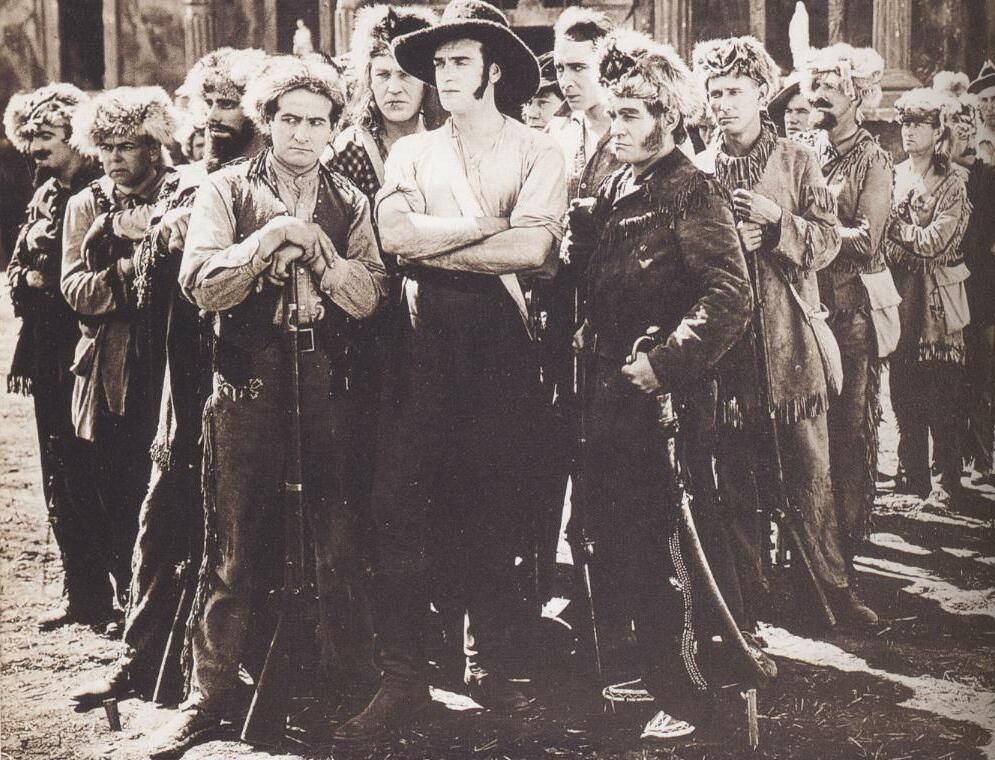
The coonskin cap has deep roots in the material culture of Indigenous peoples in the Appalachian region, specifically in areas that would become Kentucky, Tennessee and West Virginia. For centuries before European contact, native tribes such as the Mound Builders and later the Sioux utilized raccoon pelts for headwear, often imbuing them with spiritual significance tied to trickster figures like the Abenaki spirit Azeban. European American pioneers migrating into these territories in the late 18th and early 19th centuries observed and adopted this practical garment, incorporating it into their own frontier attire. The cap became a standard part of the pioneer outfit, which typically included buckskin clothing, moccasins and a leather belt holding essential tools. By the early 1800s, figures like Daniel Boone and Davy Crockett were strongly associated with the cap, cementing its image as a symbol of rugged frontier independence and self reliance.
As pioneers pushed westward following events like the Louisiana Purchase in 1803 and the Gold Rush of 1848, the coonskin cap travelled with them. Contemporary accounts from the period, such as a Colliers article titled 'A Coonskin Cap', used the hat as a literary symbol of steadfast pioneer values and simplicity. The article recounts a story from the early 1800s where a pioneer, identified by his cap, loses his land to a railroad tycoon, with the judge in the case, Henry Clay Caldwell, being described as a fellow member of the 'coonskin cap tribe'. However, as industrialization accelerated in the latter half of the 19th century, the cap's symbolism began to shift. By the 1880s, the term 'coonskin cap fellow' was used pejoratively to describe rural people perceived as backward, similar to the term 'redneck'. In 1902, the New York Times declared the coonskin cap out of fashion, marking a period of decline for its everyday use.
The 1950s Davy Crockett Fad
The coonskin cap was resurrected from historical obscurity and transformed into a continent wide phenomenon in the mid 1950s. This revival was almost entirely due to the Walt Disney Company's television program 'Disneyland', which aired a three part series on the frontier hero Davy Crockett from December 1954 to February 1955. Starring Fess Parker, the show depicted Crockett wearing a distinctive coonskin cap, instantly creating an overwhelming demand for the headwear among children. The popularity of the show spawned sequels and a merchandising frenzy that extended to the United Kingdom and Australia, creating what became known as the Davy Crockett craze. At the peak of this fad, manufacturers were selling coonskin caps at a rate of approximately 5,000 per day, generating an estimated $300 million in revenue, which equates to about $2.6 billion in 2014 dollars.
The caps marketed to children during this period were often simplified versions made from faux fur, designed as skull caps with a raccoon tail attached. A variation for young girls, called the Polly Crockett hat, was made of all white fur, often rabbit. The fad's cultural penetration was immense, with one actor involved noting it was 'bigger than anything, ever, including The Beatles and Elvis.' The craze began to wane by the end of the 1950s but left a permanent mark on popular culture. References to the cap appeared in Disney's Donald Duck comics as part of the Junior Woodchucks uniform and in novelist Thomas Pynchon's 'V.', where he referred to it as a 'bushy Freudian hermaphrodite symbol.' Fess Parker later reinforced the association by starring in the 'Daniel Boone' television series from 1964 to 1970, again wearing a coonskin cap.
Political Symbolism and Estes Kefauver
Beyond its frontier and pop culture associations, the coonskin cap was also used as a potent political symbol in the mid 20th century. Its most famous political adoptee was Estes Kefauver, a Democratic senator from Appalachian East Tennessee. During his successful 1948 Senate campaign, Kefauver was attacked by Tennessee political boss E. H. Crump, who published advertisements accusing him of being a raccoon like Communist puppet. In a clever and memorable rebuttal at a speech in Memphis, Kefauver donned a coonskin cap and declared, 'I may be a pet coon, but I'm not Boss Crump's pet coon.' This act transformed a potential liability into a personal trademark that resonated with voters, symbolizing independence and folksy authenticity. Kefauver continued to use the coonskin cap as a central part of his political identity throughout his career, wearing it during his unsuccessful campaigns for the Democratic presidential nomination in 1952 and 1956.
Politician Estes Kefauver wore the coonskin cap during his unsuccessful campaign for the Vice Presidency as Adlai Stevenson's running mate in 1956. He also used the cap in his successful Senatorial re election campaigns in 1954 and 1960. Kefauver had first adopted the cap as a personal trademark during his 1948 Senate campaign. His political use of the cap demonstrated how it could craft a public image and connect a modern figure to frontier myths.
Construction and Traditional Craft
Authentic coonskin caps are crafted through a specific process that utilizes the entire raccoon pelt. Traditional instructions advise starting with a large, blemish free skin that has a full, well marked tail. The pattern typically consists of four pieces: a crown piece (A) shaped to the head's widest point, and a headband made from three separate pieces (B, C, D), each about four inches wide. The crown and the first headband piece are cut as a single unit from the flesh side of the pelt, positioned near the tail to incorporate it. The remaining headband pieces are cut from adjacent fur to ensure a match in grain and colour, a step that requires careful selection of the pelt material.
The construction involves careful hand sewing, often using a blanket stitch with a fine needle and strong thread like nylon. A key step is slicing the base of the tail partway in on each side and sewing it into a tubular shape. When joining the fur pieces, the edges are brought together and stitched from the skin side, taking care not to catch the hair in the seam to maintain a hidden appearance. After the tail is prepared, the headband is joined to the crown, with the remaining pieces added and trimmed for a proper fit. A satin lining can be added for comfort, using a simplified version of the same pattern, attached only along the lower edge. This traditional skill is still taught in some contexts, such as a class offered at David Crockett State Park in October 2026, which instructs students on making a cap using readily available tools and materials.
- Select a large, high quality raccoon pelt with a full tail.
- Cut a four piece pattern from heavy paper: one crown and three headband sections.
- Cut the crown and first headband piece (B) as one unit from the pelt near the tail.
- Cut the remaining headband pieces (C and D) from matching adjacent fur.
- Shape and sew the tail into a tube using a blanket stitch.
- Sew the headband pieces to the crown from the skin side, ensuring seams are hidden.
- Test for fit and trim headband pieces as necessary.
- Optionally, add a fabric lining attached only at the lower edge.
The Cap at the Alamo and Modern Souvenir Culture
The coonskin cap maintains a strong connection to the legend of Davy Crockett and the Battle of the Alamo, making it a perennial souvenir. Historical evidence suggests Crockett likely did wear such a cap. His daughter Matilda, who was 14 when he left for Texas in 1835, wrote that on his departure 'He was dressed in his hunting suit, wearing a coonskin cap.' Alamo survivor Susanna Dickinson, in an 1875 interview, recalled seeing Crockett's 'peculiar cap' lying by his side after the battle. Given the winter siege conditions, with recorded temperatures in the 30s to 60s Fahrenheit, a fur cap would have been practical frontier attire. The Alamo gift shop in San Antonio capitalizes on this legend, selling approximately 15,000 coonskin caps annually, making it the shop's best selling item.
The Alamo itself receives about 1.5 million visitors each year, many of whom explore the historic church and Long Barrack on the 4.2 acre site. While the caps sold are modern productions, often using faux fur, they serve as a tangible link to the frontier mythos for visitors. The cap's enduring appeal is evidenced by its continuous commercial presence, with online retailers in October 2026 listing various styles, including faux fur 'Cossack' style hats, for sale at prices around 20 Canadian dollars. These commercial sales demonstrate the lasting power of the Crockett legend and the cap's status as an well-known piece of Americana.
Cultural Legacy and References
The coonskin cap occupies a unique niche in North American cultural history, transitioning from a functional piece of Indigenous and frontier gear to a mass marketed pop culture icon. Its legacy is preserved through ongoing historical interpretation, craft revival and its status as a collectible souvenir. The cap's image is inextricably linked to specific historical eras: the early American frontier of the late 1700s and early 1800s, and the consumer driven fad culture of the 1950s. It serves as a case study in how media can resurrect and commercialize historical symbols. The cap continues to appear in various cultural contexts, from the uniforms of the Junior Woodchucks in Disney comics to historical reenactments and craft workshops.
The coonskin cap has a dual identity as a genuine article of historical attire and a mass produced piece of nostalgia. It remains a powerful emblem of frontier life and a memorable artifact of a major 20th century fad. The cap's story is tied to themes of media influence and commodification. For example, the Alamo gift shop sells thousands of the caps each year, showing its lasting recognition as a souvenir.
Questions about Coonskin cap
How popular were coonskin caps in the 1950s?
During the peak of the Davy Crockett fad in the mid to late 1950s, coonskin caps were an extraordinary commercial success. Manufacturers sold them at a rate of about 5,000 caps per day. The craze generated an estimated $300 million in sales, which is equivalent to roughly $2.6 billion in 2014 dollars. The fad was widespread across the United States, Canada, the United Kingdom and Australia.
Where can you buy a coonskin cap today?
Coonskin caps are still widely available for purchase, primarily as souvenirs and novelty items. The Alamo gift shop in San Antonio, Texas, sells approximately 15,000 caps each year, making it their best selling item. They are also readily found through online retailers and marketplaces, with listings in October 2026 showing faux fur versions available for around 20 Canadian dollars. Some historical parks, like David Crockett State Park, even offer classes on how to make your own.
What is a coonskin cap made from?
A coonskin cap is a hat fashioned from the skin and fur of a raccoon. Traditionally, it is made from a single raccoon pelt, using the skin for the crown and headband and incorporating the animal's tail. Instructions for making one specify using a large, blemish free skin with a full, well marked tail. Modern versions, especially those sold as souvenirs, are often simplified and made from synthetic faux fur materials, with a skull cap lined with faux fur and a tail attached.
Why is Davy Crockett associated with the coonskin cap?
Davy Crockett is associated with the coonskin cap because he was a historical frontiersman who wore one, as described by his daughter Matilda. His association was massively amplified in the 20th century by Disney's television program 'Davy Crockett' starring Fess Parker, which aired from December 1954 to February 1955. In the show, Crockett was portrayed wearing the cap, which made him and the hat immensely popular. This initiated a major fad, firmly linking Crockett's image with the coonskin cap in popular culture.
Did Daniel Boone wear a coonskin cap?
Yes, Daniel Boone is strongly associated with the coonskin cap. He is listed among the early American frontiersmen, along with Davy Crockett, Meriwether Lewis, and Joseph L. Meek, who adopted the headwear. The cap is an well-known item linked with the Trans Appalachian frontier of the late 18th and early 19th centuries, which Boone helped explore and settle. The style was originally designed by Indigenous peoples of Appalachia and later became part of the standard pioneer hunting suit, which included a coonskin cap.
What was the Polly Crockett hat?
The Polly Crockett hat was a variation of the coonskin cap marketed to young girls during the 1950s fad. It was similar in style to the boys' cap, including the distinctive long tail. However, it was made of all white fur instead of raccoon fur. This fur was typically faux fur or possibly rabbit fur. It was created to capitalize on the popularity of the Davy Crockett craze and provide a version of the fashionable hat for girls.
Sources and further reading
- Coonskin cap (Wikipedia)
- When Coonskin Caps Were Cool (priceonomics.com)
- DIY Coonskin Cap (motherearthnews.com)
- A Souvenir at the Alamo: Crockett's Coonskin Cap (texashighways.com)
Checked by the Novello Desserts desk. Last updated 2026-10-24.