Voyageurs
The voyageurs were the French and French-Canadian canoe men who formed the backbone of the North American fur trade from the late 17th to the late 19th century. Primarily hired labourers, they undertook the gruelling long-distance transportation of trade goods and furs across a vast network of inland waterways, from Montreal to the remote Athabasca country. Their strength, endurance, and knowledge of canoe travel were essential to the commercial success of enterprises like the North West Company and the Hudson's Bay Company. Today, their legacy is celebrated across Canada through cultural festivals, historical re-enactments, and educational programs that honour their role in the exploration and economic development of the continent.
Historical Development and Role
The voyageur era emerged from the evolving needs of the North American fur trade. In 1681, French authorities sought to control the trade by issuing licences, and the travellers associated with the licensed canoe transportation of furs became formally known as voyageurs. They were distinct from the coureurs des bois, who were unlicensed independent traders, and from engagés, who were indentured servants. The trade was dominated by Montreal merchants, and as it expanded westward, forts and trading posts were established with the help of voyageurs and explorers. By the peak of the trade in the early 1800s, voyageurs numbered in the thousands, serving as the essential blue-collar workforce. After the British conquest of New France in 1763, English speakers took over management, but the physical labour remained the domain of French Canadians. The fierce competition between the North West Company and the Hudson's Bay Company created high demand for experienced voyageurs, especially after the HBC began hiring them for expeditions into the Athabasca region around 1815.
Colin Robertson, an HBC officer, strongly advocated for hiring French Canadian voyageurs, describing them in 1810 as the best in the world, spirited, enterprising, and easily commanded. The competition for this skilled labour between the HBC and the NWC created the largest demand for voyageurs in Montreal since before the merger of the XY Company and the NWC. The American Fur Company, founded by John Jacob Astor in 1808, also grew to monopolize the American fur industry by 1830, further illustrating the scale of the continental trade that relied on such labour. The voyageurs' work was part of a licensed, organized effort, a key distinction from the earlier, more informal coureurs des bois. Most voyageurs were born in New France, and working as a voyageur was often seen as a temporary means to earn additional income to support their families and expand their farms, though roughly two thirds of the colonial population had no involvement in the fur trade.
Life and Labour on the Routes
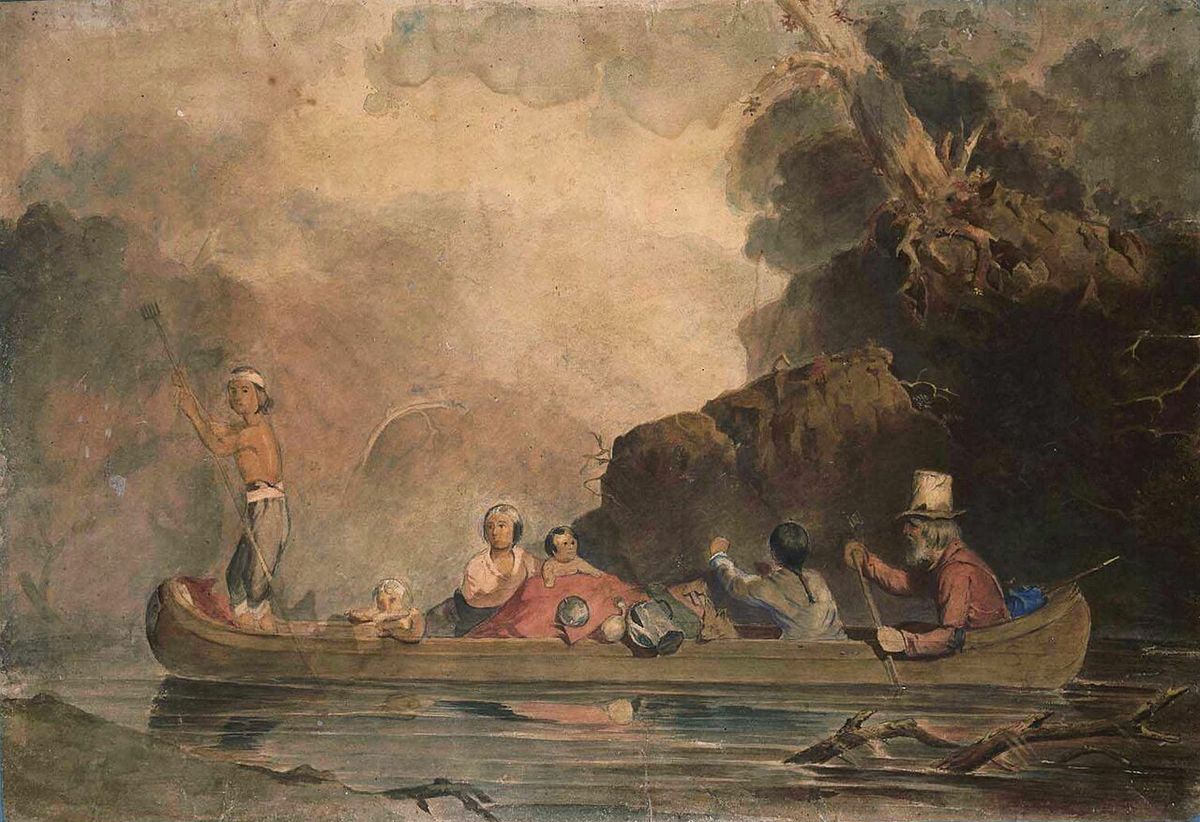
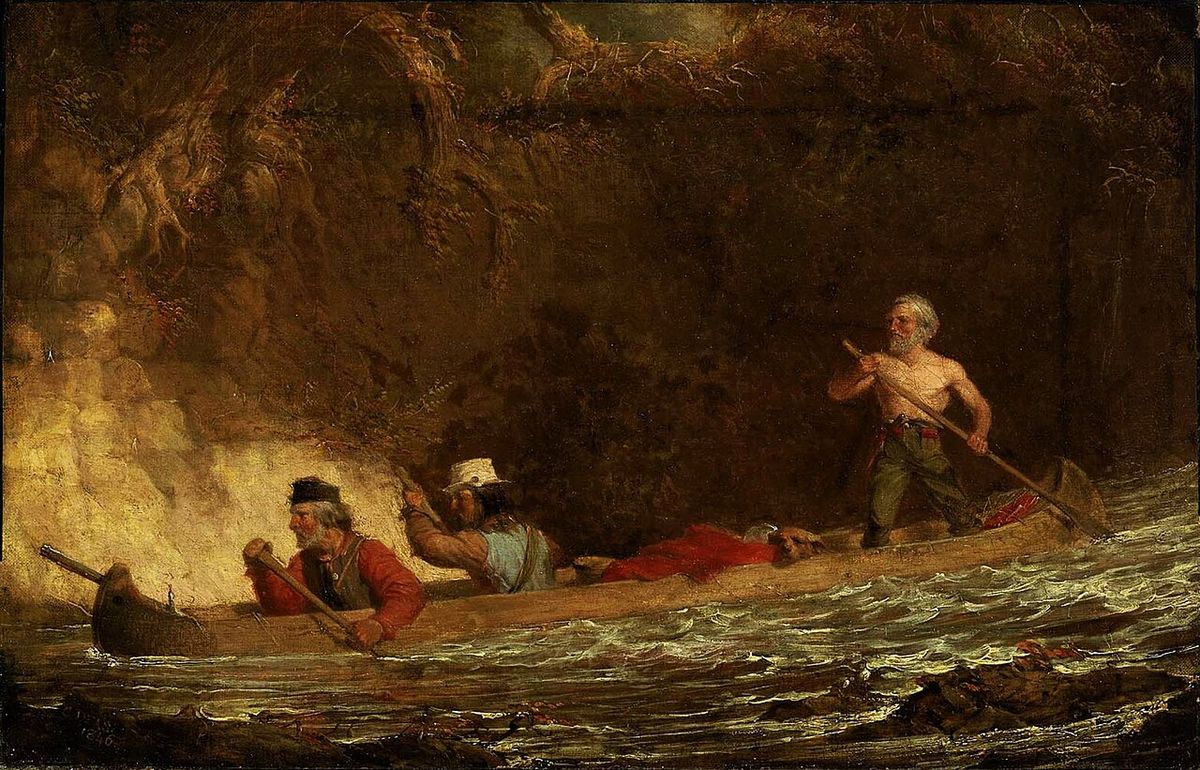
The daily life of a voyageur was defined by extreme physical exertion and a strict routine. A typical workday lasted up to 15 hours, paddling from before dawn until dusk, with brief breaks for meals. They paddled in rhythm, often singing to maintain pace and morale, and a retired voyageur once claimed he could carry, paddle, walk and sing with any man he ever saw. The primary measure of their work was the pièce, a standard bundle of furs weighing 90 pounds. Voyageurs were famed for their strength, often carrying two of these bundles over portages, with reports of some men carrying up to seven bundles for half a mile. This relentless labour led to common injuries like hernias, which were frequently fatal. Most voyageurs began this work in their early twenties and continued into their sixties, as the wages, while providing supplementary income for their families, were rarely enough to retire early. The social world of the voyageurs was intensely masculine, filled with activities like gambling, drinking, and storytelling during their rare moments of rest.
Their survival and success in the wilderness were heavily dependent on knowledge and techniques adopted from Indigenous communities, including methods of travel, hunting, and the use of pemmican as a staple food. Voyageurs also brought Western materials and techniques that were valued by the communities they encountered. Their diet varied by role. Those who travelled only between Montreal and Grand Portage were known as mangeurs de lard (pork eaters) due to their reliance on salt pork. Those who overwintered in the interior had a more varied diet that included locally procured food. The journey was perilous, and voyageurs blended traditions to cope, often starting their trips with prayers at a shrine to Ste. Anne. Few written records exist from the voyageurs themselves, as most were illiterate. One of the only known documents left by a voyageur was a series of letters penned by John Mongle of Maskinongé, likely with the help of a clerk, chronicling his voyages into the mainland.
Types of Voyageurs and Their Canoes
Voyageurs were categorized by their specific roles and the distances they travelled. The mangeurs de lard, or pork eaters, were seasonal workers who paddled the route between Montreal and the major rendezvous point at Grand Portage on Lake Superior. Their name came from their diet of salt pork. Those who ventured into the interior beyond Grand Portage and overwintered at remote trading posts were called hommes du nord or hivernants. Approximately one third of mangeurs de lard eventually became hivernants. These winterers also helped negotiate trade in Indigenous communities and in the spring would carry furs from remote outposts back to the rendezvous posts. Their transportation relied on two main types of birchbark canoes. The canot de maître, or master canoe, was used on the Great Lakes and Ottawa River routes. It was about 36 feet long, could carry up to three tons of cargo or 65 standard 90-pound packs, and was manned by a crew of 8 to 10 men. On a portage, it was carried inverted by four men using shoulder pads.
For travel west of Lake Superior into the narrower interior waterways, the smaller canot du nord was used. It was about 25 feet long, carried about half the cargo (25-30 pièces), and was typically crewed by 5 or 6 men. This vessel was carried upright by two men. A third type, the canot bâtard or hybrid canoe, was also used. The canoes were made from the bark of large paper birch trees stretched over a frame of white cedar. When running rapids, the canoes were steered by the avant standing in the front and the gouvernail standing in the rear. The crews for these journeys were substantial. Up to ten men could be required to safely operate a fully loaded canot de maître carrying as much as four tonnes of goods. The northern canoe had about 18 inches of draft when fully loaded and weighed about 300 pounds.
Major Trade Routes and Rendezvous
The voyageurs travelled an extensive network of waterways that became the arteries of the continental fur trade. The primary route originated in Montreal and followed the Ottawa River, through connecting lakes and rivers to Lake Huron and then to Lake Superior. An alternative route followed the Saint Lawrence River and Lake Erie to Lake Huron. The main western rendezvous point was initially at Grand Portage, a nine-mile portage on the northwest shore of Lake Superior, which gave the location its name. By 1803, the North West Company moved this hub slightly east to Fort William. From these points, routes stretched into the interior, with a key junction at Lac La Croix. The trunk route from Grand Portage largely defined what later became the U.S./Canada border in that region. Another major route began at York Factory on Hudson Bay, travelling up the Hayes River to Norway House on Lake Winnipeg. This route later saw the use of York boats in addition to canoes.
A significant hub in the interior was Cumberland House on Cumberland Lake, from which routes branched out in four different directions. Most routes were designed to be completed in a round trip from a major transfer point like Grand Portage in one season. The 1821 merger of the North West Company and the Hudson's Bay Company shifted more traffic towards the Hudson Bay route, which offered direct ocean access. The Hudson Bay and Montreal routes joined in the interior, particularly at Lake Winnipeg. By the late 18th century, Europeans had wintered on Rainy Lake west of Lake Superior, and regular routes led west from the lake by the 1730s. The table below outlines the key characteristics of the two primary canoe types used on these different legs of the journey.
| Canoe Type | Primary Route | Length | Typical Crew | Cargo Capacity (Pièces) | Weight |
|---|---|---|---|---|---|
| Canot de maître | Montreal to Grand Portage | ~36 ft (11 m) | 8-10 voyageurs | Up to 65 | ~600 lbs (270 kg) |
| Canot du nord | Interior (west of Lake Superior) | ~25 ft (7.6 m) | 5-6 voyageurs | 25-30 | ~300 lbs (140 kg) |
Decline and End of the Voyageur Era
The voyageur era faded due to a combination of economic, technological, and ecological factors. The merger of the North West Company and Hudson's Bay Company in 1821 consolidated operations and reduced the competitive demand for labour. The demand for furs in Europe declined as fashions changed and alternative materials like silk became popular, while fur-bearing animals in North America became less plentiful. The American fur trade was largely monopolized by the American Fur Company by 1830. Most decisively, new transportation technologies rendered the long canoe brigades obsolete. The expansion of railway lines, particularly the completion of the Canadian Pacific Railway in 1882, and the use of steamships eliminated the need for human-powered transport over vast distances. Improved transportation methods lessened the need to move furs and goods by canoe, and the dominance of York boat travel on the Hudson Bay route also reduced the need for voyageurs.
The closure of Fort William as a major rendezvous point in 1892 is often cited as the symbolic end of the voyageur era. After the merger, much trade shifted to York Factory and later some went south to Minnesota. By the mid-19th century, the HBC ruled an inland empire stretching to the Pacific, and land routes like the Carlton Trail grew in importance. The fur trade routes became obsolete starting in the 1880s. The volume of the North American fur trade declined, though it continues to this day. After the era ended, many French Canadians applied their bush skills to the prospecting and mineral exploration trades that grew in Northern Ontario. The voyageurs had one prominent late revival in 1884, when Field Marshal Garnet Wolseley demanded their services as river pilots and boatmen for the British Nile Expedition to Khartoum, though their recruitment slowed the response and the relief force arrived two days too late.
Modern Commemoration and Events
The spirit and history of the voyageurs are kept alive through numerous contemporary events and educational initiatives across Canada. These activities blend historical re-enactment with cultural celebration, ensuring the voyageur story remains a living part of the national narrative. Key events include the annual Festival du Voyageur in Winnipeg, Western Canada's largest outdoor winter festival, and the Vive les Voyageurs Festival at Fort Langley National Historic Site in British Columbia. These festivals feature a wide array of activities designed to engage the public with this heritage. The 2026 Vive les Voyageurs Festival, for example, includes live demonstrations of coopering and blacksmithing, Métis beading with artist Lisa Shepherd, storytelling with elder Ken Pruden, and musical spoon and jig performances with Maurice Guibord.
The Festival du Voyageur's Canada Life School Program for the 2026 to 2027 season offers students a hybrid program with make-and-take craft kits, interactive demonstrations, plays, concerts, and outdoor sports. Registration for this program opens on October 14, 2026 and closes on January 22, 2027. The program is careful in its approach to reconciliation, noting it will not require Indigenous partners and artists to speak French or English, providing translation instead, as a recognition of Canada's colonial past. Other commemorations include Voyageur-themed summer camps, such as the 2026 Voyageurs Mini Camps for children aged 4 to 5. Historical blogs and societies provide detailed accounts of voyageur life, drawing on primary sources like the 1793 journal of North West Company clerk John Macdonell, which documents a brigade's six-week journey from Lachine to Grand Portage.
- Festival du Voyageur (Winnipeg, MB): This festival offers a Canada Life School Program with in-person activities at Parc du Voyageur, including craft kits, interactive demonstrations, plays, concerts, and dance workshops for students. The park is closed to the public during school program hours for safety.
- Vive les Voyageurs Festival (Fort Langley, BC, April 18, 2026): This event features live demonstrations like blacksmithing and beaver trapping techniques, Métis beadwork, storytelling, and presentations on the Chinook Jargon.
- Voyageur Summer Camps: Organisations run themed camps, such as the 2026 Voyageurs Mini Camps for children aged 4 to 5, focusing on adventure and historical themes.
- Educational Resources: Blogs and historical societies provide detailed accounts of voyageur life, answering questions about their daily routines, trade goods, and family histories. Resources like the graphic novel 'Fur Trade Nation' by Carl Gawboy present the fur trade from an Ojibwe point of view.
- Merchandise and Souvenirs: Festivals offer official merchandise, including the traditional ceinture fléchée (arrow sash) and souvenir t-shirts, allowing for year-round engagement with voyageur symbolism.
Questions about Voyageurs
What did voyageurs do?
Voyageurs were hired canoe men responsible for the long-distance transportation of goods and furs for the North American fur trade. They paddled large birchbark canoes along established water routes, carrying trade goods from Montreal to interior trading posts and returning with bundles of furs. Their work involved gruelling days of paddling for up to 15 hours and carrying heavy loads over portages. They were essential employees of fur trading companies like the North West Company and the Hudson's Bay Company, and some also served as guides for explorers such as Pierre La Vérendrye.
How far did voyageurs travel?
Voyageurs travelled extraordinary distances across the continent's waterways. The main route from Montreal to the major rendezvous point at Grand Portage on Lake Superior covered hundreds of kilometres. From there, wintering voyageurs travelled even farther into the interior, reaching regions like the Athabasca country in present-day northern Alberta and Saskatchewan, which was a key area for high-quality pelts. Some routes extended from Hudson Bay at York Factory inland to Lake Winnipeg and beyond to the Pacific coast by the mid-19th century. A single round trip from Montreal to the western interior often took an entire season.
What was a typical day like for a voyageur?
A voyageur's day was long and physically demanding. They would rise before dawn, quickly pack the canoe, and start paddling at first light. They paddled in unison, often singing to keep time, for stretches of about 50 minutes followed by a 10-minute break. The day involved 15 hours of work, with brief stops for meals of pemmican, dried peas, or salt pork. The most arduous tasks were the portages, where they had to unload the canoe and carry the cargo and the vessel itself overland between waterways, each man carrying multiple 90-pound bundles. This routine continued for six to eight weeks at a time during the travel season.
What is the difference between a voyageur and a coureur des bois?
The key difference lies in their legal and operational roles within the fur trade. Voyageurs were hired wage-earners who worked for licensed fur trading companies, specializing specifically in the transportation of furs and goods by canoe. Coureurs des bois, meaning 'runners of the woods,' were independent, unlicensed traders who operated before and alongside the voyageur system. They engaged in all aspects of the trade, including trapping and direct negotiation with Indigenous trappers, and were not employed by a single company. The term coureur des bois later picked up the additional meaning of 'unlicensed' after the voyageur system was established.
How is voyageur history celebrated in Canada today?
Voyageur history is celebrated through numerous festivals and educational programs. The Festival du Voyageur in Winnipeg is a major winter festival featuring music, crafts, and historical re-enactments, with a dedicated school program. The Vive les Voyageurs Festival at Fort Langley National Historic Site, scheduled for April 18, 2026, offers demonstrations, storytelling with Métis elders, and traditional music. Many museums, historic sites, and summer camps offer educational programs about voyageur life. These events often highlight the cultural fusion between French-Canadian voyageurs and Indigenous and Métis communities, and include efforts towards reconciliation in their programming.
When did the voyageur era end?
The voyageur era effectively ended in the late 19th century due to several factors. The merger of the major fur companies in 1821 reduced competition. The demand for furs decreased as fashions changed and animals became scarcer, and new transportation technologies like railways and steamships made the long, labour-intensive canoe brigades obsolete. The completion of the Canadian Pacific Railway in 1882 was a major blow, and the presence of York boats on the Hudson Bay route also reduced the need for canoe travel. The closure of the Fort William rendezvous post in 1892 is frequently cited as the symbolic end of the traditional voyageur period.
Sources and further reading
- Voyageurs (Wikipedia)
- Vive les Voyageurs Festival, Fort Langley National Historic Site (parks.canada.ca)
- Voyageur's Life (nikkirajala.com)
Checked by the Novello Desserts desk. Last updated 2026-10-24.