Battle of Ortona
The Battle of Ortona was fought from 20 to 28 December 1943 between the 1st Canadian Infantry Division and the German 1st Parachute Division in the Adriatic coastal town of Ortona, Italy. Canadian soldiers called it the "Italian Stalingrad" due to the intense house-to-house combat and high casualties experienced during the Christmas season. The engagement was a major event in the Italian Campaign, resulting in a Canadian victory that secured a deep-water port for the Allies. Today, Ortona is a significant destination for Canadian remembrance, featuring cemeteries, memorials, and guided tours that explore the history of "Bloody December".
Strategic Context and the Advance to the Moro River
In the autumn of 1943, the Allied Italian campaign had the strategic objectives of drawing German forces away from France and the Eastern Front ahead of the planned D-Day invasion. The British Eighth Army, after breaking through the main Gustav Line defences at the Sangro River in late November, advanced towards the next obstacle, the Moro River, six kilometres south of Ortona. For this phase, the exhausted British 78th Infantry Division on the Adriatic coast was relieved by the fresh 1st Canadian Infantry Division under Major General Christopher Vokes. The Canadians faced difficult conditions of cold and mud as they fought to cross the Moro River in early December. By mid-December, the 1st Canadian Infantry Brigade under Brigadier Howard Graham had fought to within three kilometres of Ortona and was then relieved by the 2nd Infantry Brigade under Brigadier Bert Hoffmeister for the final assault on the town. Ortona's value was a matter of debate. Allied planners considered its deep-water port useful for shortening supply lines from distant ports like Bari and Taranto, while some German commanders, including Field Marshal Albert Kesselring, questioned the cost of defending it.
The German Defence and Fortification of Ortona
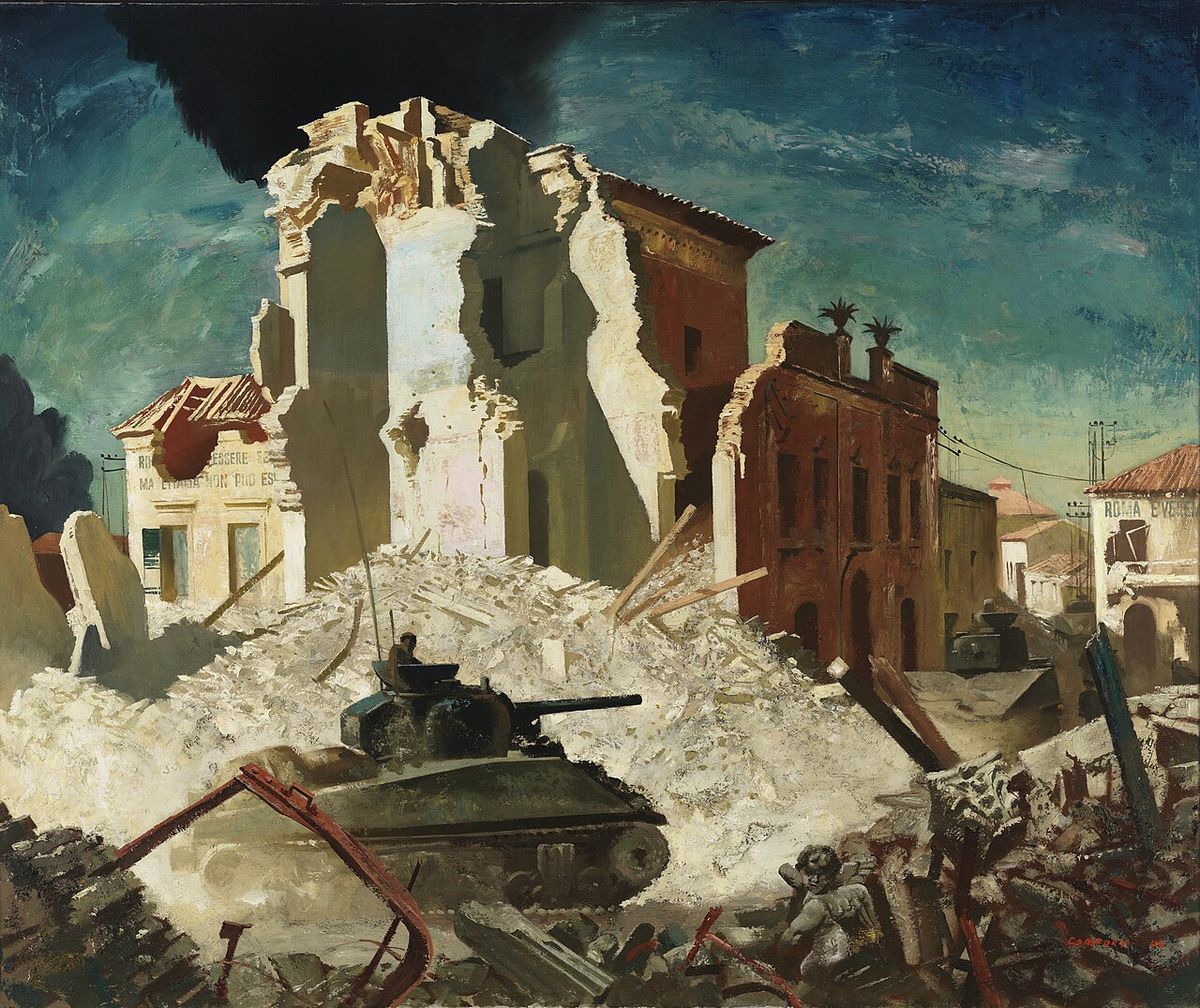
The defence of Ortona was entrusted to the German 1st Parachute Division, an elite volunteer unit of highly trained veterans with experience from campaigns in Denmark, Norway, Russia, and the Caucasus. These paratroopers were under orders from Adolf Hitler to defend Ortona at all costs, an edict that influenced the battle's character. The town itself was integrated into the Winter Line defence system, with German engineers constructing a network of interlocking defensive positions within its buildings and streets. Machine guns and anti-tank emplacements were carefully concealed in the rubble, and buildings were heavily booby-trapped. The Germans were instructed to fight for every last house and tree, transforming Ortona from a genteel pre-war seaside resort known as the Pearl of the Adriatic into a fortified urban stronghold. This determined defence by a premier German unit meant the advancing Canadians, who had previously faced Panzergrenadier units, were now confronting one of the most formidable opponents in the German order of battle.
The Assault and the Eight Days of Combat
The Canadian attack on Ortona began on 20 December 1943, led by the Loyal Edmonton Regiment and The Seaforth Highlanders of Canada, with tank support from the Three Rivers Regiment. Concurrently, the 3rd Canadian Infantry Brigade attempted a flanking attack to the west of the town to cut off German lines of retreat but was hampered by rugged terrain and stiff resistance. Fighting in the town quickly devolved into close-quarters engagements as Canadian troops encountered the prepared German defences. Street advances proved extremely costly, prompting the adoption of the mouse-holing tactic to move through interior walls. The battle raged through the Christmas period, with a temporary pause on Christmas Day when orders to destroy the cathedral and civilian hospital were largely ignored by the troops. After eight days of relentless combat, the depleted German paratroopers, having suffered significant casualties, withdrew from the town on 28 December. The Canadians secured Ortona, but the victory came at a high price, capping a month that would be remembered as Bloody December.
The Mouse-Holing Tactic and Urban Warfare
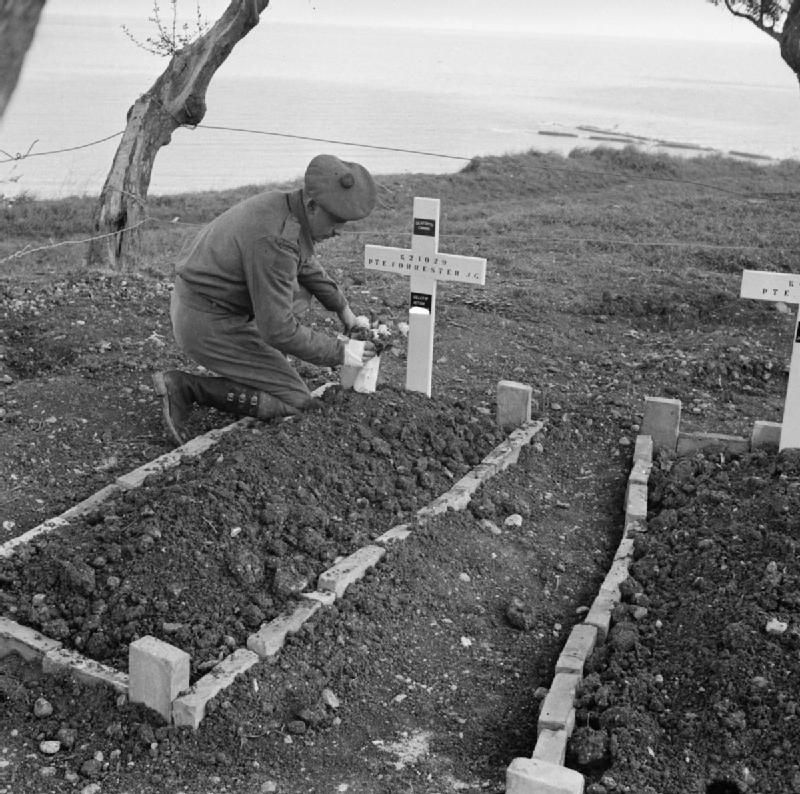
Faced with streets swept by German machine gun and sniper fire, Canadian infantry in Ortona systematically employed a technique known as mouse-holing. This involved using weapons like the shoulder-fired PIAT or heavy Teller anti-tank mines to blast holes through the shared walls of adjoining stone and brick buildings. After creating a breach, soldiers would throw grenades through the opening and then assault into the next room or adjacent house, engaging in immediate close combat. The process allowed platoons to clear buildings from the inside, moving from one structure to the next without entering the deadly streets. While a British training film from 1941 had illustrated the concept, the Canadians at Ortona were early and effective combat practitioners of this method. Engineers on both sides also used a more brutal variant, setting demolition charges to collapse entire buildings onto enemy positions. The widespread use of mouse-holing became a defining feature of the battle and has been studied in military academies ever since as a classic solution to the problem of urban advancement against a dug-in enemy.
Casualties and the Physical Destruction
The human cost of the fighting around Ortona was severe for both sides. Canadian casualties during the Moro River battles, which encompassed the fight for the town, were officially recorded as 1,375 dead. This number represented almost a quarter of all Canadians killed during the entire Italian Campaign from 1943 to 1945. Other historical accounts estimate total Canadian casualties for the Ortona engagement itself were as high as 2,300, including approximately 500 fatalities. In addition to the killed and wounded, over 5,000 Canadian soldiers were evacuated from the front due to battle exhaustion and illness during Bloody December. The German 1st Parachute Division and the supporting 90th Light Infantry Division also sustained heavy losses. Civilian casualties added to the toll, with combined military and civilian losses estimated between 4,000 and 6,000. The town of Ortona was physically devastated by the combat. Its pre-war character as a cliff-top resort was erased by artillery, tank fire, and demolitions. During the battle, Canadian forces destroyed the dome of the Church of St Thomas to prevent its use as a German observation post, a visible symbol of the destruction wrought upon the town's infrastructure.
Post-Battle Recognition and Historical Analysis
In the immediate aftermath, Major General Christopher Vokes reported that his division had smashed the 90th Panzer Grenadier Division and given the 1st German Parachute Division a mauling it would long remember. The strategic importance of the battle has been debated by historians. Rick Atkinson notes that German commanders like Kesselring saw the defence as disproportionately costly, while the Allies may have overestimated the town's value. However, its symbolic and tactical significance for Canada is firmly established. In November 2000, the Government of Canada designated the Battle of Ortona a National Historic Event, installing a bronze plaque in the Piazza Plebiscito. The plaque text states the battle symbolized the efforts of the Canadian Army in the Italian Campaign. British Prime Minister Winston Churchill later wrote that Ortona was the first great battle in the streets of an inhabited centre, and we learned a lot from it. The engagement continues to be analyzed for its lessons in combined arms urban warfare and is commemorated in works like Canadian artist Gerald Trottier's 1945 mural, an eight-foot by forty-eight-foot painting housed in the Prince of Wales Armouries Heritage Centre in Edmonton.
Ortona as a Modern Destination for Remembrance
Contemporary Ortona serves as a primary destination for Canadians wishing to connect with this history through remembrance tourism. The focal point is the Ortona Canadian Military Cemetery, located south of the town, where 1,375 Canadian soldiers are buried. Nearby is the Moro River Canadian War Cemetery, commemorating the broader campaign. Within Ortona, visitors can see Canada Place and the Piazza Plebiscito, the site of the official Canadian historic plaque. Specialized tour companies operate guided itineraries that trace the battle. Liberation Tours offers walks through the streets of Ortona, while Valour Canada organizes multi-day tours like its 2026 Italian Battlefield Remembrance Tour scheduled for November 1 to 14. These tours visit key tactical locations such as The Gully, Casa Berardi, the Cider Crossroad, and Vino Ridge. The experience is often combined with visits to regional cultural sites, such as the Cantina Frentana Winery or the beach at Francavilla al Mare, blending historical reflection with the area's modern attractions. The town's long history, dating back to the Bronze Age and including Roman, Byzantine, and Lombard rule, adds a deeper historical context for visitors exploring the 20th-century battlefields.
For visitors interested in the Battle of Ortona, key historical sites include the Ortona Canadian Military Cemetery, where many fallen soldiers are buried. The Moro River Canadian War Cemetery is another important site for remembrance. Other notable locations are Canada Place and the Piazza Plebiscito, which features a Canadian plaque. Private guides and online resources offer tours focusing on the battle's history and the surrounding area.
- The Ortona Canadian Military Cemetery, containing the graves of fallen Canadians.
- The Moro River Canadian War Cemetery, another Commonwealth War Graves Commission site.
- The Piazza Plebiscito, location of the Canadian National Historic Event plaque.
- Guided battlefield tours covering The Gully, Casa Berardi, and the town's defensive points.
- The rebuilt Church of St Thomas, whose dome was destroyed during the fighting.
- Local museums and cultural centres that provide historical context for the 1943 battle.
- Nearby attractions like Villa Rogatti, San Leonardo, and Sterlin Castle, often included in broader tours.
The "Italian Stalingrad" Comparison and Legacy
The soldiers' nickname for Ortona, the Italian Stalingrad, arose from direct parallels in the nature of the combat, though not its scale. Both battles involved armies under orders from Hitler to hold their ground regardless of cost, leading to attritional warfare in a ruined urban environment. Both were characterized by block-by-block and room-to-room fighting where defenders used rubble for cover and attackers had to develop new tactics to advance. The comparison highlighted the extreme brutality and psychological toll of the close-quarters engagement, which was a new experience for the Canadian army in the Second World War. This legacy of ferocious infantry combat cemented Ortona's place in Canadian military memory as a battle of exceptional hardship and determination. The story is preserved not only in official history but also in personal accounts, such as Farley Mowat's memoir And No Birds Sang, and in detailed military histories like Mark Zuehlke's book Ortona: Canada's epic World War II battle. For Canada, the battle remains a powerful example of operational skill and sacrifice under the most difficult conditions, a story retold through annual remembrance tours and educational resources.
Questions about Battle of Ortona
Why is the Battle of Ortona important to Canada?
The Battle of Ortona is a major event in Canadian military history due to the intensity of the combat and the level of sacrifice involved. The victory against an elite German division demonstrated the skill and tenacity of Canadian infantry. The 1,375 Canadian deaths in the surrounding Moro River battles accounted for nearly a quarter of all Canadian fatalities in the entire Italian Campaign. In 2000, the Canadian government recognized the battle as a National Historic Event, stating it symbolized the efforts of the Canadian Army in Italy. It remains a central story of Canadian participation in the Second World War.
What can I see in Ortona today related to the battle?
Ortona features several important sites for visitors. The Ortona Canadian Military Cemetery south of the town is the burial ground for many Canadian soldiers who died in the battle and the Moro River operations. The Moro River Canadian War Cemetery is another significant memorial site. In the town centre, Canada Place and the Piazza Plebiscito host the official Canadian plaque designating the battle as a National Historic Event. Guided battlefield tours visit key locations like The Gully, Casa Berardi, Cider Crossroad, and Vino Ridge. The Church of St Thomas, whose dome was destroyed during the fighting, has been rebuilt.
Why was Ortona called the 'Italian Stalingrad'?
Canadian soldiers who fought there coined the terms Italian Stalingrad and Little Stalingrad because of the similar nature of the combat to the larger battle on the Eastern Front. Both engagements involved brutal, house-to-house fighting in a devastated urban setting where defenders used rubble for fortification. In both cases, German forces were under direct orders from Adolf Hitler to hold their positions at all costs, leading to a war of attrition. While the scale of casualties at Stalingrad was far greater, the intensity and character of the close-quarters combat in Ortona created a strong analogy for the troops experiencing it.
What was 'mouse-holing' and who used it?
Mouse-holing was a tactical method used extensively by Canadian troops in Ortona to avoid deadly enemy fire in the streets. It involved using explosives like the PIAT or Teller mines to blast holes through the interior walls that connected adjoining buildings. Soldiers would throw grenades through the hole and then assault into the next room or house, clearing buildings from the inside. This allowed them to advance through the town without exposing themselves in the open streets. While not invented by the Canadians, they were early and highly effective combat practitioners of this technique, which has since become a standard subject in urban warfare studies.
How many casualties were there in the Battle of Ortona?
Canadian casualties were very high. Official figures state 1,375 Canadian soldiers were killed during the broader Moro River battles, which included the fighting for Ortona. Other historical estimates place total Canadian casualties for the Ortona engagement itself as high as 2,300, with approximately 500 of those being fatalities. The German 1st Parachute Division and supporting units also suffered heavy losses. The combined casualties for Allied and German forces, along with civilians caught in the fighting, are estimated to have been between 4,000 and 6,000 people during the battle for the town.
Are there guided tours of the Ortona battlefield?
Yes, several organizations offer guided tours of the Ortona battlefield and related Italian campaign sites. Operators like Liberation Tours and Valour Canada run specialized remembrance tours focusing on Canadian Second World War history. For example, Valour Canada's 2026 Italian Battlefield Remembrance Tour is a two-week itinerary from November 1 to 14 that includes Ortona. These tours typically visit the war cemeteries, key defensive positions like The Gully, and the streets of Ortona itself, providing historical context and facilitating private remembrance ceremonies. They allow participants to walk the ground and understand the tactical challenges Canadian troops faced.
Sources and further reading
- Battle of Ortona (Wikipedia)
- Ortona, Our Canadian Version of Stalingrad (themaritimeexplorer.ca)
- The Battle of Ortona (liberationroute.com)
Checked by the Novello Desserts desk. Last updated 2026-10-26.