Tecumseh
A skilled orator and diplomat, Tecumseh is best known for his ambitious, though ultimately unsuccessful, effort to forge a vast, united Native American confederacy stretching from the Great Lakes to the Gulf of Mexico. He promoted this intertribal unity to resist the expansion of the United States onto Native American lands. His alliance with British forces during the War of 1812, particularly his role in helping capture Detroit in August 1812, secured his place in Canadian military history and folklore. Tecumseh's death at the Battle of the Thames in Upper Canada on October 5, 1813, marked the collapse of his confederacy, but his legacy as a symbol of Indigenous unity, resistance, and leadership endures strongly in both Canadian and Indigenous narratives. He became a celebrated folk hero in American, Indigenous, and Canadian popular history after his death.
Early Life and Formative Influences
Tecumseh was born into the Panther clan of the Kispoko division of the Shawnee tribe, most likely in the Scioto River valley near present-day Chillicothe, Ohio. His father, Puckeshinwau, was a Shawnee war chief, and his mother, Methoataaskee, was possibly of Creek descent, and the Shawnees were in a period of reunification in the Ohio Country during his childhood, a peace that was shattered by escalating conflict with American colonists. His father was killed in the 1774 Battle of Point Pleasant, a defeat that forced the Shawnees to cede Kentucky, and this early loss and the subsequent displacement of his people by American military campaigns, including those led by George Rogers Clark in 1780 and 1782, deeply shaped Tecumseh's worldview. As a teenager, he attended a great intertribal conference at Lower Sandusky in 1783 where leaders like Joseph Brant argued that Indigenous lands were held in common and must be defended through unity, a doctrine that became the foundation of his later political vision.
Tecumseh was raised by his older brother Cheeseekau, a noted war chief who taught him to be a warrior. As a young man, Tecumseh participated in attacks on flatboats traveling down the Ohio River. He was disturbed by the cruel treatment of prisoners by Shawnee warriors, which indicated his lifelong aversion to torture. After the American Revolutionary War, the United States claimed lands north of the Ohio River by right of conquest. In 1786, Shawnee chief Moluntha signed the Treaty of Fort Finney, surrendering most of Ohio. Moluntha was later murdered by a Kentucky militiaman. Tecumseh traveled south with Cheeseekau to live with the Chickamauga Cherokees in Tennessee around 1790. He participated in raids with them from 1790 to 1792. Tecumseh had a long-term relationship with a Cherokee woman, and they had a daughter who was living in Arkansas in 1825.

Military Experience and Path to Leadership
Returning to the Ohio Country, Tecumseh fought as a minor leader in the Northwest Indian War, though he missed the major Indian victory at St. Clair's defeat on November 4, 1791, because he was hunting or scouting at the time. He was present in 1792 when his brother Cheeseekau was killed during an unsuccessful attack on Buchanan's Station near Nashville, and Tecumseh probably sought revenge for his brother's death, but the details are unknown. Tecumseh returned north and fought in the decisive Battle of Fallen Timbers in 1794, a bitter defeat that led to the collapse of the Native confederacy led by Blue Jacket, and he refused to attend the subsequent Treaty of Greenville in 1795, which ceded about two-thirds of Ohio and portions of Indiana to the United States. By 1796, Tecumseh had become the civil and war chief of his own Kispoko band of about 50 warriors and 250 people, which settled along the White River near present-day Anderson, Indiana, for the next eight years.
During this period, the daily lives of Native communities were plagued by sickness, alcoholism, poverty, and the loss of land, and in 1805, Tecumseh's younger brother Lalawéthika experienced a spiritual awakening and began preaching a message of cultural revival. Lalawéthika urged listeners to renounce European goods and alcohol, discard their traditional medicine bags, and he became known as Tenskwatawa, or the Prophet, drawing upon ideas from earlier prophets like Neolin. Tecumseh embraced his brother's teachings by eating only Native food, wearing traditional Shawnee clothing, and not drinking alcohol, and he saw in the religious movement a potential political tool for uniting tribes. Together, they established a settlement near the ruins of Fort Greenville, Ohio, in 1806, attracting followers from multiple tribes and challenging the accommodationist stance of chiefs like Black Hoof, and the movement's growth alarmed American settlers, prompting Tecumseh and Blue Jacket to travel to Chillicothe to reassure Ohio officials in 1806 and 1807.
Founding Prophetstown and the Fort Wayne Crisis
Seeking a more secure and central location farther from American forts, Tecumseh and Tenskwatawa moved their followers westward and in 1808 established a new, larger settlement that Americans called Prophetstown, north of present-day Lafayette, Indiana. This community became a major multi-tribal hub, attracting Shawnees, Potawatomis, Kickapoos, Winnebagos, Sauks, Ottawas, Wyandots, and Iowas, with a population that may have reached 6,000, making it larger than any American city in the region. Prophetstown functioned as an independent city-state and the physical centre of Tecumseh's growing political and spiritual alliance, and the brothers initially worked to maintain a peaceful coexistence with the United States, but a major turning point came in September 1809. William Henry Harrison, governor of the Indiana Territory, negotiated the Treaty of Fort Wayne, purchasing 2.5 to 3 million acres of land in present-day Indiana and Illinois from a group of tribal leaders, and the treaty deliberately excluded many communities who used the land, sparking widespread outrage among Indians.
For Tecumseh, the Treaty of Fort Wayne exemplified the destructive United States policy of negotiating separate land treaties with individual tribes. Historian John Sugden notes that the treaty "put Tecumseh on the road to war" with the United States. Before the treaty, Tecumseh was relatively unknown to outsiders, who usually referred to him as "the Prophet's brother". Afterwards, he emerged as a prominent figure determined to build an intertribal confederacy to counter United States expansion. This directly led to his famous confrontation with Governor William Henry Harrison the following year.

Building the Confederacy and Confrontation at Vincennes
Following the Fort Wayne treaty, Tecumseh began extensive diplomatic missions to build a military and political confederacy to halt further American expansion, and his vision was for a permanent, united Native nation with clear borders existing alongside the United States. He was convinced that a show of unity and cultural strength among the Native tribes would persuade white Americans to accept this arrangement, but it soon became obvious that Anglo‑America had no intention of embracing such a drastic shift. In August 1810, he confronted Governor William Henry Harrison at Vincennes in a standoff that became well known, where Tecumseh delivered a powerful indictment of American policy, citing historical injustices like the Gnadenhütten massacre and the killing of Chief Moluntha. He accused the United States of deliberate extermination, even alleging that goods distributed under Harrison's authority had carried smallpox to the Kickapoos, which historian Jeffrey Ostler interprets as a charge of intentional, systematic destruction of Native peoples.
Key demands Tecumseh presented to Harrison included the rejection of the Treaty of Fort Wayne. Tecumseh proclaimed that Native Americans owned their lands in common. He urged tribes not to cede more territory unless all tribes agreed. Tecumseh warned that the chiefs who signed the treaty would be punished. He told Harrison that if President James Madison did not nullify the treaty, they would have to fight.
- The immediate rescission of the Treaty of Fort Wayne.
- A halt to all American settlement on the disputed lands.
- Recognition that land belonged to all tribes in common, meaning no cession was valid without universal consent.
Tecumseh warned Harrison that the chiefs who signed the Treaty of Fort Wayne would be punished. He told Harrison that if President James Madison did not nullify the treaty, they would have to fight it out. The meeting ended in a stalemate. Harrison dismissed Tecumseh's concept of common land ownership and insisted the land had been purchased fairly. After the meeting at Vincennes, Tecumseh traveled widely to recruit allies. He journeyed as far south as the Creek and Cherokee nations to urge them to join his confederation.
The Battle of Tippecanoe and Outbreak of War
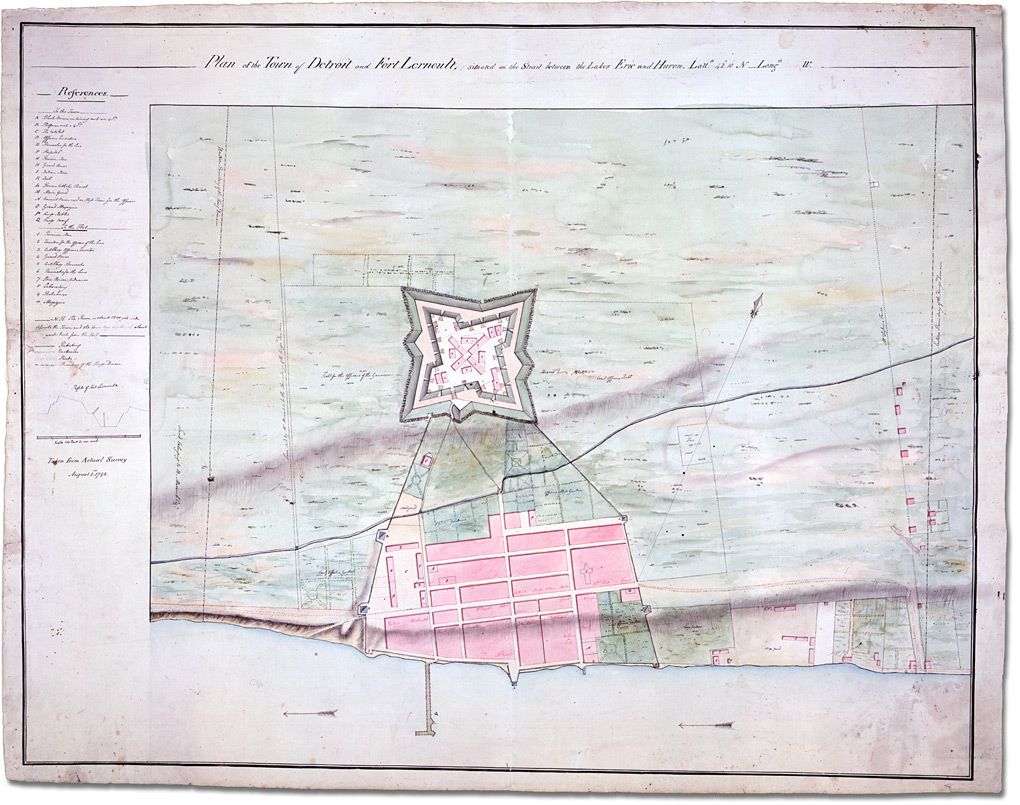
Tenskwatawa, against Tecumseh's instructions to avoid conflict, ordered a pre-dawn attack on Harrison's camp on November 7, 1811, and the ensuing Battle of Tippecanoe was a bloody and indecisive clash. Harrison's troops ultimately held their ground and subsequently destroyed Prophetstown, and the battle was a severe setback for Tecumseh's movement, discrediting Tenskwatawa's spiritual authority and scattering many of the confederacy's followers. However, it also hardened anti-American sentiment among many tribes and demonstrated the very military threat Tecumseh had been organizing to counter, setting the stage for wider conflict when the War of 1812 began the following year. In the War of 1812, Tecumseh joined his cause with the British. He recruited warriors and helped capture Detroit in August 1812. Tecumseh and his warriors played a decisive role in the British capture of Detroit. They helped convince American General William Hull that he was surrounded by a vast Indigenous force. This victory was a high point for the British and Indigenous alliance. It demonstrated the military force of Tecumseh's confederacy when combined with British troops.

The War of 1812 and Death at the Battle of the Thames
Following the victory at Detroit, Tecumseh participated in an unsuccessful campaign in Ohio and Indiana in 1813. The war's momentum shifted when United States naval forces took control of Lake Erie in 1813. This cut British supply lines and forced a retreat. The British commander, General Henry Procter, decided to withdraw his forces into Upper Canada. Tecumseh vehemently opposed this move. He accused Procter of cowardice and betraying their Indigenous allies. Tecumseh reluctantly retreated with the British as his confederacy began to fray.
American forces led by William Henry Harrison pursued the retreating British and Indigenous force into Upper Canada. On October 5, 1813, Harrison's army engaged them at the Battle of the Thames. The American troops included a regiment led by Richard Mentor Johnson. In the battle, the British lines quickly collapsed. Tecumseh and his warriors mounted a fierce resistance. During the fighting, Tecumseh was killed. His death caused his multi-tribal confederacy to collapse.
Immediate consequences of Tecumseh's death included the collapse of his multi-tribal confederacy. The lands he had fought to defend were eventually ceded to the United States government. His death marked the end of large-scale, coordinated Indigenous military resistance in the Great Lakes region. After his death, Tecumseh became a folk hero in American, Indigenous, and Canadian popular history.
- The rapid collapse of his multi-tribal confederacy, as it had been held together largely by his personal authority and charisma.
- The end of major, organized Indigenous military resistance in the Old Northwest.
- The retreat of British and remaining Indigenous forces further into Upper Canada.
- The eventual cession of the lands he had fought to defend to the U.S. government in subsequent treaties.
Legacy and Historical Significance
Tecumseh's legacy grew after his death, and he became a folk hero in American, Indigenous, and Canadian popular history. Details of his life have often been obscured by mythology. In Canada, he is remembered as a courageous ally and a brilliant military leader. His assistance was crucial to early British successes in the War of 1812. His vision of intertribal unity and his resistance to dispossession made him a symbol of Indigenous sovereignty. The political and military confederacy he built did not survive him, but his ideals continued to inspire later Indigenous leaders.
Historical accounts of Tecumseh's life have often been obscured by mythology. Key aspects of his character are consistently recorded from his early adulthood. He was known as a persuasive orator who traveled widely. He had a lifelong aversion to torture and cruelty. Tecumseh's story illustrates the difficulty of achieving pan-tribal solidarity. His life and death marked the end of an era of large-scale Indigenous military resistance in the Great Lakes region. He remains one of the most celebrated Native Americans in history.
Questions about Tecumseh
Why is Tecumseh important to Canadian history?
Tecumseh is important to Canadian history primarily for his military alliance with British forces during the War of 1812. His leadership and the warriors of his confederacy were instrumental in the British capture of Detroit in August 1812, a significant early victory. He was commissioned as a brigadier general by the British and fought alongside them in several campaigns. His death at the Battle of the Thames in Upper Canada (present-day Ontario) cemented his place in the narrative of the war, and he is remembered as a courageous ally who helped defend British North America from American invasion.
What was Tecumseh's main goal or vision?
Tecumseh's primary goal was to create a united, pan-tribal confederacy of Indigenous nations from the Great Lakes to the Gulf of Mexico to resist American territorial expansion. He advocated for the doctrine that all Indigenous land was held in common by all tribes, meaning no single leader or group could legally cede territory without the consent of all. His vision was for a permanent, independent Native nation with secure borders that would exist alongside, but separate from, the United States. He believed that demonstrating this unity and cultural strength would force Americans to respect Indigenous land rights.
What was Prophetstown and why was it significant?
Prophetstown was a settlement established in 1808 by Tecumseh and his brother Tenskwatawa (the Prophet) north of present-day Lafayette, Indiana. It served as the physical and spiritual capital of their movement, attracting a multi-tribal population of Shawnees, Potawatomis, Kickapoos, Winnebagos, and others, possibly reaching 6,000 people. It was significant as an unprecedented experiment in intertribal living and the central hub for organizing Tecumseh's political and military confederacy. Its destruction by American forces under William Henry Harrison after the Battle of Tippecanoe in 1811 was a major blow to the movement.
How did Tecumseh die?
Tecumseh was killed on October 5, 1813, during the Battle of the Thames in Upper Canada (near present-day Thamesville, Ontario). After the British lines under General Henry Procter collapsed, Tecumseh and his warriors mounted a fierce last stand from a swampy area. He was shot during the fighting. His body was recovered from the field by his followers, who buried him in a secret location that remains unknown. His death led to the immediate disintegration of his confederacy.
What was Tecumseh's relationship with his brother Tenskwatawa?
Tecumseh and his younger brother Tenskwatawa, originally named Lalawéthika, had a complementary partnership. Tenskwatawa provided the religious and spiritual foundation for their movement through his visions calling for cultural renewal and rejection of European ways. Tecumseh provided the political, diplomatic, and military leadership, building the confederacy based on his brother's spiritual authority. While they worked closely together, tensions existed. Tenskwatawa's decision to attack at the Battle of Tippecanoe in Tecumseh's absence in 1811 against his brother's orders resulted in a devastating defeat and damaged the movement.
What happened to Tecumseh's confederacy after his death?
Tecumseh's confederacy collapsed rapidly following his death at the Battle of the Thames. The alliance was heavily dependent on his personal leadership, diplomatic skill, and military reputation. Without him, the multi-tribal coalition fragmented, and organized large-scale resistance in the Old Northwest effectively ended. The lands he had fought to defend were subsequently ceded to the United States through a series of treaties. Many of the tribes involved were eventually forced to relocate further west, as American settlement expanded into the vacuum left by the confederacy's dissolution.
Sources and further reading
- Tecumseh (Wikipedia)
- Visit Tecumseh (tecumseh.ca)
- Things to Do | Downtown Tecumseh in Michigan (downtowntecumseh.com)
Checked by the Novello Desserts desk. Last updated 2026-10-18.