Head-Smashed-In Buffalo Jump
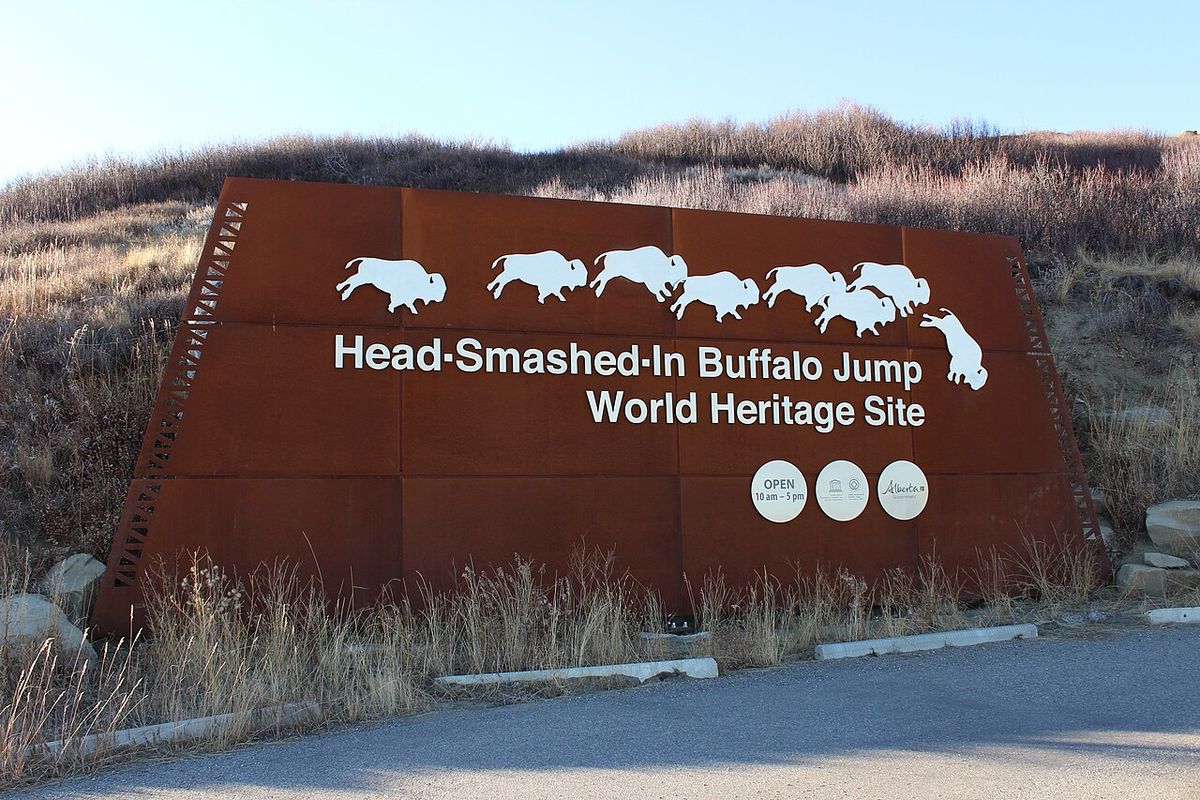
Head-Smashed-In Buffalo Jump is a UNESCO World Heritage Site and National Historic Site of Canada located in the foothills of the Rocky Mountains, 18 kilometres west of Fort Macleod, Alberta. This exceptionally well-preserved archaeological landscape illustrates a sophisticated communal hunting technique used by Plains Indigenous peoples for over 5,500 years, where bison were driven off an 11-metre cliff. The site includes a modern interpretive centre built into the sandstone cliff, which explores Blackfoot culture, ecology, and archaeology. It serves as a vital educational and cultural centre, drawing about 60,000 visitors annually to learn about this significant chapter of North American history.
Archaeology and Historical Use
The Head-Smashed-In Buffalo Jump represents one of the oldest, largest, and best-preserved buffalo jumps in North America, with evidence of use spanning at least 5,500 years and potentially up to 7,500 years. The hunting practice involved a highly coordinated communal effort to channel herds of plains bison from grazing areas in the Porcupine Hills towards the precipice. Specialized hunters known as "buffalo runners," who were trained in animal behaviour, would often disguise themselves as wolves or coyotes to help steer the massive animals. The drive lanes, stretching back about three kilometres, were lined with hundreds of stone cairns that helped funnel the stampeding bison toward the cliff's edge. At full gallop, the lead animals would be pushed over the 11-metre drop by the weight of the herd behind them, resulting in fatal or immobilizing injuries.
The cliff itself extends for roughly 300 metres, with the kill site at its base. The depth of the bone deposits, measuring up to 12 metres, provides stark testimony to the scale and duration of the hunts. After the fall, warriors waiting below would finish off injured bison with spears and clubs before the community began the intensive butchering and processing work. This processing camp, situated nearby with access to fresh water, was a hub of activity where every part of the animal was utilized. The successful hunt provided not only vast quantities of meat but also hides for clothing and shelter, bones for tools, and sinew for cordage, supporting the community's material needs for an extended period.
The abundance generated by a successful jump hunt had significant social and cultural impacts, granting people leisure time to pursue artistic, spiritual, and ceremonial activities. This economic foundation allowed for increased cultural complexity within Blackfoot society. The site's Blackfoot name, Estipah-skikikini-kots, originates from a legend about a young man who wished to watch the bison fall from below the cliff and was tragically buried and killed under the cascade of animals, hence 'Head-Smashed-In'. The jump fell out of use in the 19th century following European contact and the near-extinction of the plains bison.
Designation and Recognition
The site was first recorded by European settlers in the 1880s and received its first archaeological excavation in 1938 by the American Museum of Natural History. In 1968, the Government of Canada designated it a National Historic Site, acknowledging its immense archaeological value. The Province of Alberta followed by declaring it a Provincial Historic Site in 1979. The highest level of international recognition came in 1981 when UNESCO inscribed Head-Smashed-In Buffalo Jump on the World Heritage List for its outstanding testimony to prehistoric life and the customs of Indigenous peoples.
This designation places it among the world's most significant cultural landmarks, such as the Egyptian pyramids. The process of securing these designations was greatly supported by the advocacy of Blackfoot elders, most notably Joe Crowshoe Sr. (Aapohsoy’yiis), a ceremonial elder of the Piikani Nation. Joe Crowshoe Sr. dedicated his life to preserving and promoting Blackfoot culture and fostering understanding between Indigenous and non-Indigenous peoples, for which he received the National Aboriginal Achievement Award in 1998. His contributions are honoured within the interpretive centre at the Joe Crow Shoe Sr. Lodge.
The Interpretive Centre
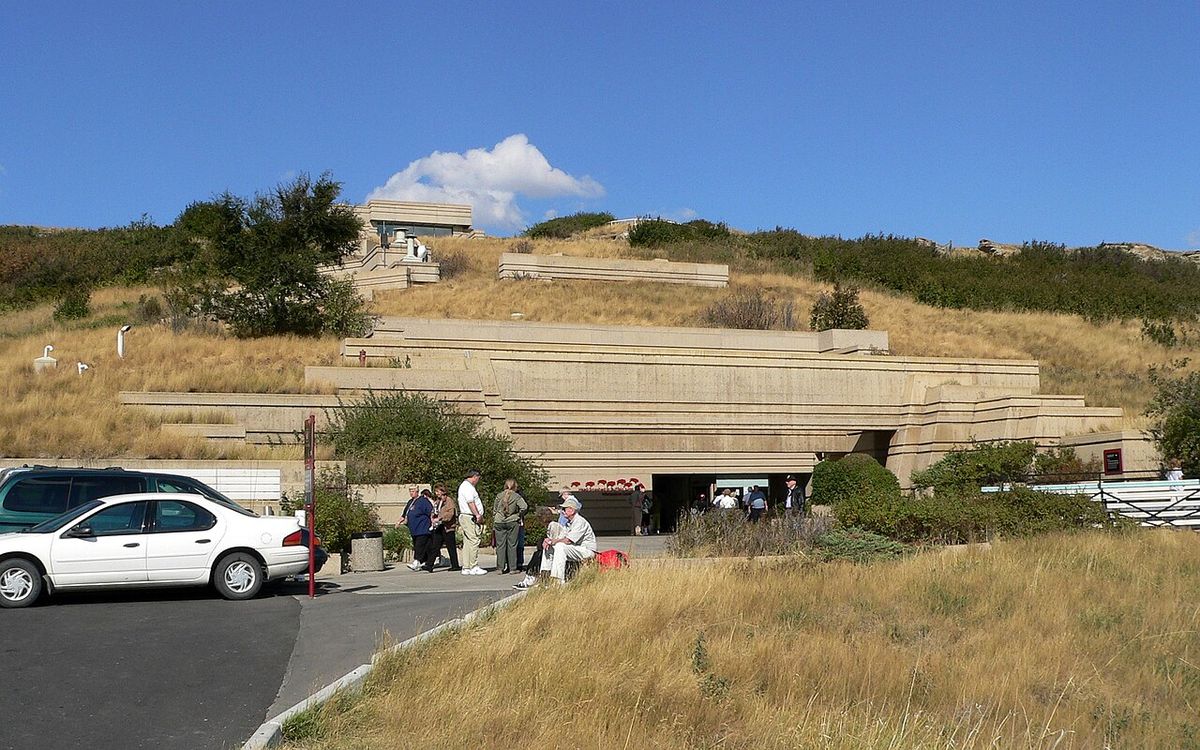
Opened in 1987, the Head-Smashed-In Buffalo Jump Interpretive Centre is an architectural landmark designed to blend with the natural landscape. The Calgary firm Le Blond Partnership created a structure built directly into the ancient sandstone cliff, a design that earned the Governor General's Gold Medal for Architecture in 1990. The centre is built on five distinct levels that take visitors on a journey through the ecology, mythology, lifestyle, and technology of the Blackfoot people, with interpretations drawn from both Indigenous knowledge and archaeological science. It serves as the primary venue for public education and engagement with the site's history, seeing approximately 60,000 visitors each year.
The centre operates year-round, with seasonal variations in hours. For example, in the 2026 season it was open Wednesday through Sunday from 10 a.m. to 5 p.m., expanding to seven days a week during peak summer months. Admission fees as of 2026 were $18 for adults, $14 for seniors, $11 for youth, $45 for a family pass, and free for children under six. The facility offers extensive educational programs for schools and the public that can be booked throughout the year. A key permanent exhibition is Lost Identities: A Journey of Rediscovery, a photographic collection of images from Indigenous communities that first appeared at the centre in 1999 and, after touring, returned as a permanent display.
The centre also hosts numerous special events and festivals that celebrate Indigenous culture. One of the most notable is Buffalo Harvest Days, which brings together First Nations artists and craftspeople to display and sell traditional and contemporary works, including jewelry, clothing, and art. During the summer months of July and August, visitors can witness traditional drumming and dancing demonstrations held every Wednesday at 11 a.m. and 1:30 p.m. The centre's clifftop trail offers visitors a direct experience of the landscape, leading them to the very edge of the jump where they can look out over the vast prairie and the processing area below.
Recent Profile and Tourism
In January 2026, the site was mentioned in an episode of the Golden Globe-winning American television medical drama The Pitt . In the episode, character Dr. Michael 'Robby' Robinavitch, played by Noah Wyle, announces he is taking a sabbatical to visit the landmark. This mention generated immediate and widespread curiosity, with the site's marketing head, Quinton Crow Shoe, noting a noticeable increase in inquiries and social media engagement as a direct result. Provincial marketing agency Travel Alberta capitalized on the attention by releasing a promotional video featuring the show's characters superimposed on the cliff backdrop. The site typically welcomes around 60,000 visitors annually, with peak season running from May through September. Promotional efforts like discounts through the Canada Strong Pass program have also positively affected attendance. Head-Smashed-In is considered part of a cluster of major southern Alberta attractions, including Writing-on-Stone Provincial Park and Waterton Lakes National Park, which collectively draw tourists to explore the region's diverse landscapes and histories.
Ongoing archaeological work continues to reveal new insights into the site's history. Renowned archaeologist Bob Dawe, who began excavating at Head-Smashed-In in 1983, notes that new excavations in untouched areas are planned to answer remaining questions about the scale and duration of the jumps. Dawe estimates that a successful hunt would have required a "critical mass" of several hundred bison to create the momentum needed to drive leaders over the cliff. The site's profile ensures that it remains not only a place of historical reflection but also an active subject of scientific inquiry and public interest.
Cultural References
The unique name and significant history of Head-Smashed-In Buffalo Jump have inspired references in various works of Canadian music and, more recently, international television. The punk band SNFU released a song titled "Head Smashed In Buffalo Jump" on their 2001 album In the Meantime and In Between Time, which narrates a meeting with a character at the site. The John Borra Band included a song called "Buffalo Jump" on their 2002 album One Night at Seven in the Morning, whose refrain incorporates the full name of the heritage site. The most prominent recent reference occurred in 2026 on the television show The Pitt, significantly raising the site's international profile and triggering a wave of visitor interest, as confirmed by site staff.
Visitor Information and Key Features
Planning a visit to Head-Smashed-In Buffalo Jump involves understanding its seasonal operations and the breadth of experiences offered. The site is open year-round, with reduced days during the off-season and expanded hours in the summer. The interpretive centre is the main starting point, featuring museum galleries, a theatre, and a gift shop. From the centre, visitors can access outdoor trails leading to the cliff top for a panoramic view of the surrounding prairie and the kill site below. Special programming, such as the weekly drumming and dancing demonstrations in summer and the annual Buffalo Harvest Days festival, provide immersive cultural experiences. Key features and facts for visitors include the site's UNESCO World Heritage Status, designated in 1981, and the architectural design of the centre, which won the Governor General's Gold Medal for Architecture in 1990. The site's management emphasizes its role within a network of regional attractions, encouraging visitors to explore the full range of southern Alberta's natural and cultural heritage.
Key features and facts for visitors include its status as a UNESCO World Heritage Site. The site is open year round and offers an interpretive centre built into the sandstone cliff. Admission fees apply for adults, seniors, youth, and families. The centre explores Blackfoot culture, local ecology, and archaeological finds.
- World Heritage Status: Designated by UNESCO in 1981 for its outstanding universal value.
- Archaeological Scale: Bone deposits are 12 metres deep, representing millennia of use.
- Architectural Design: The centre, built into the cliff, won the Governor General's Gold Medal for Architecture in 1990.
- Cultural Programming: Regular events include Buffalo Harvest Days and weekly drumming demonstrations in July and August.
- Educational Focus: Offers bookable programs for schools and groups throughout the year.
- Accessibility: The centre is built on multiple levels with elevator access, and trails are developed for visitor safety and interpretation.
- Location Context: Part of a southern Alberta tourism circuit including Writing-on-Stone and Waterton Lakes.
- Recent Popularity: Gained increased attention after a 2026 mention on the television show The Pitt.
With its combination of deep history, striking landscape, and active contemporary programming, Head Smashed In offers a comprehensive destination for learning and reflection. The site welcomes visitors from across Canada and around the world. It sees about 60,000 visitors a year. The interpretive centre hosts special events and native festivals known for their authenticity. Visitors can witness traditional drumming and dancing demonstrations in the summer.
Questions about Head-Smashed-In Buffalo Jump
Where is Head-Smashed-In Buffalo Jump located?
Head-Smashed-In Buffalo Jump is located in southern Alberta, Canada, approximately 18 kilometres west of the town of Fort Macleod. It is about 150 to 185 kilometres south of Calgary, situated in the foothills where the Rocky Mountains begin to rise from the prairie. The site is near the Oldman River, which was a crucial water source for the Blackfoot people. Its location made it an ideal natural landscape for the communal bison hunts that took place there for thousands of years.
How did Head-Smashed-In Buffalo Jump get its name?
The name originates from a Blackfoot legend. According to the story, a young Blackfoot man wanted to watch the bison plunge off the cliff from a vantage point below the ledge. He positioned himself under the cliff face to witness the event but was tragically buried underneath the falling animals. When the hunt was over, he was found dead under the pile of carcasses with his head smashed in. The Blackfoot name for the site is Estipah-skikikini-kots, which conveys this story.
Why is Head-Smashed-In a UNESCO World Heritage Site?
UNESCO designated Head-Smashed-In Buffalo Jump a World Heritage Site in 1981 for its outstanding testimony to prehistoric life and the customs of Indigenous peoples. The site is an exceptionally well-preserved landscape that illustrates a sophisticated communal hunting tradition practised for over 5,500 years. Its deep archaeological deposits, intact drive lanes, and cliff formation provide extensive evidence of this cultural practice. The designation recognizes its global significance, placing it among other world wonders for its cultural and historical value.
What can visitors see and do at the site today?
Visitors today can explore the modern interpretive centre, which is built into the sandstone cliff and features five levels of exhibits on Blackfoot culture, ecology, and archaeology. From the centre, a trail leads to the top of the cliff for a view of the jump and surrounding prairie. The centre offers educational programs, a gift shop, and a theatre. Special events are held throughout the year, including Buffalo Harvest Days with Indigenous artists and craftspeople, and weekly traditional drumming and dancing demonstrations during July and August.
How much does it cost to visit Head-Smashed-In Buffalo Jump?
Admission fees are structured by age group. As of the 2026 season, general admission prices were $18 for adults aged 18 to 64, $14 for seniors 65 and over, and $11 for youth aged 7 to 17. A family pass was available for $45, and children aged 6 and under were admitted free. The site occasionally offers free or reduced admission promotions, such as through the Canada Strong Pass program. It is advisable to check the official website for the most current hours and pricing before planning a visit.
How long was the buffalo jump used, and how did the hunt work?
Archaeological evidence indicates the jump was used for at least 5,500 years, with some estimates suggesting up to 7,500 years of use. The hunt was a highly coordinated communal effort. Buffalo runners, trained in animal behaviour, would guide bison herds from grazing areas along drive lanes lined with stone cairns towards the cliff. Disguised as wolves or coyotes, they helped stampede the herd. The lead animals, pushed by the mass of the herd behind them, would run over the 11-metre cliff edge, falling to their death or severe injury, where they were then processed by the community below.
Sources and further reading
- Head-Smashed-In Buffalo Jump (Wikipedia)
- Head-Smashed-In Buffalo Jump heritage site enjoys boost ... (globalnews.ca)
- 'The perfect trap': Archeologist reflects on decades at Head ... (cbc.ca)
Checked by the Novello Desserts desk. Last updated 2026-10-26.