Montreal Biosphere
The Montreal Biosphere, known in French as the Biosphère de Montréal, is a museum dedicated to environmental education and action, housed within the geodesic dome originally built as the United States pavilion for the 1967 World's Fair, Expo 67. Located on Île Sainte-Hélène in Parc Jean-Drapeau, the structure was designed by the American architect and engineer R. Buckminster Fuller. As North America's only museum entirely devoted to the relationship between society and the environment, it explores critical issues such as climate change, water ecosystems, air quality, and sustainable development through interactive exhibitions. The Biosphere serves as a prominent symbol of Montreal's architectural heritage and its ongoing commitment to ecological awareness and the socio-ecological transition.
Architectural History and Expo 67
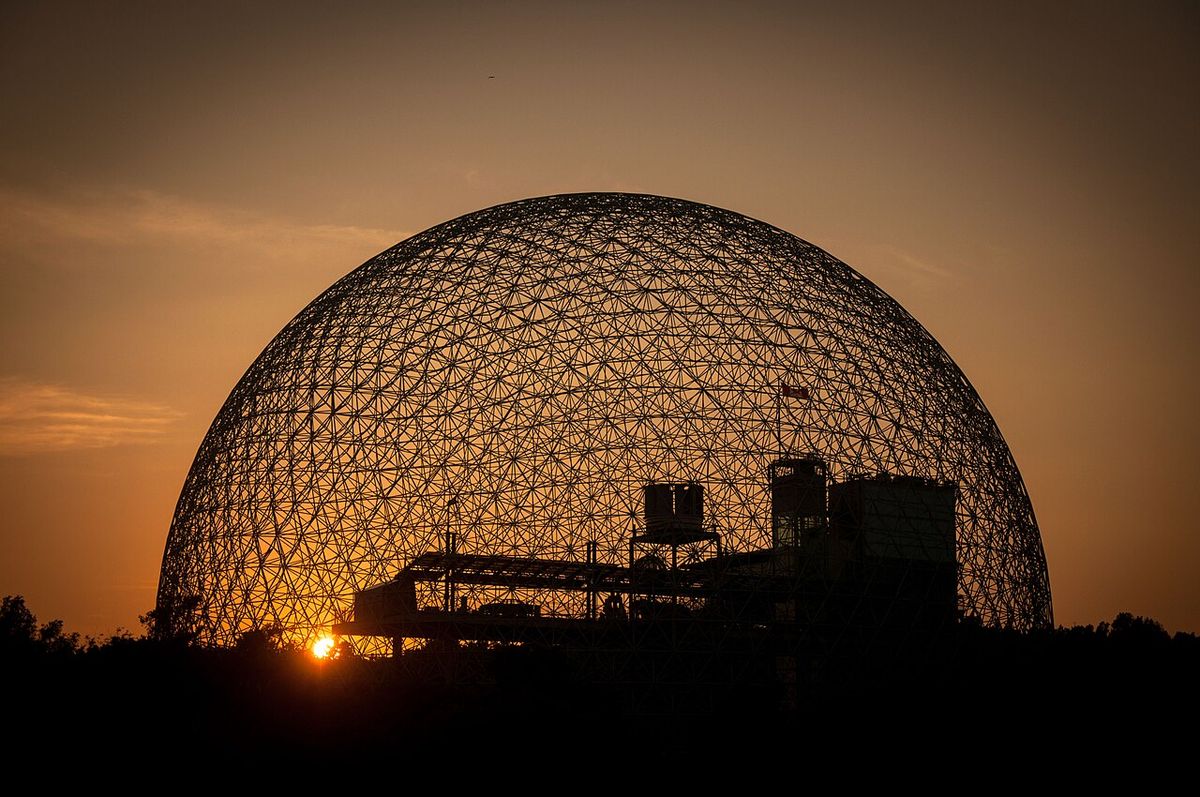
The Biosphere's defining architectural feature is its geodesic dome, conceived and engineered by R. Buckminster Fuller with Shoji Sadao and Geometrics Inc. for the United States pavilion at Expo 67. Construction of the pavilion, led by the George A. Fuller Company, began in December 1965 after plans were revealed by the United States Information Agency the previous June. The original structure was a fully enclosed double-layer dome composed of a steel truss framework and transparent acrylic cells, creating a sphere 76 metres in diameter and 62 metres high. Fuller's ambitious initial proposal included a suspended geodesic sphere inside for his 'World Game' simulation, but this interactive concept was rejected by exposition organizers in favour of more conventional exhibition designs. The interior exhibition spaces and displays were instead designed by the firm Cambridge Seven Associates, creating a multi-level experience for the millions of visitors to the world's fair.
Upon its debut for Expo 67, which ran from 27 April to 29 October 1967, the pavilion featured several notable attractions. Visitors entered via a 37-metre-long escalator, then the longest ever built, which ascended to exhibit platforms suspended within the vast dome. The two uppermost platforms hosted 'Destination: Moon', a display of NASA space programs featuring actual spacecraft capsules including Freedom 7, Gemini 7, and Apollo AS-202. The mezzanine level contained the 'American Spirit' exhibit, displaying a wide variety of artifacts such as American Indian crafts, folk art objects, guitars owned by famous musicians, a collection of dolls, and an array of almost 300 hats. A 300-seat theatre screened the multi-screen film A Time to Play by Art Kane, and the Minirail monorail track ran directly through the pavilion structure.
The innovative building incorporated a complex sun-shading system intended to regulate internal temperature by reflecting biological processes, an attempt by Fuller to liken the building to human skin. This shading system failed to work properly and was eventually disabled. The architectural design of the interior exhibition space was handled by architects from Golden Metak Productions, who created four themed platforms divided into seven levels for visitors to explore. Fuller's original idea for the geodesic dome was to incorporate 'pores' into the enclosed system, further likening it to the sensitivity of human skin, but this feature was not implemented in the final construction.
From Pavilion to Museum: A Changing Journey
Following the closure of Expo 67, the United States donated the pavilion structure to the City of Montreal. It was integrated into the summer exhibition 'Man and His World', which occupied the former fairgrounds. Renamed the Biosphere, it reopened in 1968 as an aviary and arboretum featuring four suspended gardens and hundreds of birds. The pavilion's use fluctuated in subsequent years, briefly serving again as a U.S. national pavilion in 1971 for a 'Visit USA' display sponsored by the United States Travel Service and the Smithsonian Institution. It reverted to a nature theme in 1972, with the addition of a troop of baboons, a Japanese garden, and a children's adventure area called Sleeping Beauty's Fantasy Land. In 1973, the Biosphere was converted into an anti-pollution exhibit titled 'Man and His Environment', sponsored by Hydro-Québec.
A catastrophic fire on 20 May 1976, sparked by a welding crew during structural renovations, burned away the entire acrylic bubble skin of the dome, leaving only the blackened steel skeleton intact. The city was determined to maintain the structure and explored plans for its reuse, including an open-air venue for suspended gardens or concerts. In 1977, plans were announced to transform it into a recreational area named Man at Play, but they did not come to fruition. By 1980, the building's future remained unclear as the city cleaned the site in hopes of finding a redevelopment partner. The skeletal dome stood closed and unused for fourteen years, a dormant landmark on the island.
The building's revival began in August 1990 when Environment Canada committed $17.5 million to turn it into an interactive museum focused on the water ecosystems of the Great Lakes-Saint Lawrence River region. Architect Éric Gauthier designed new enclosed exhibition buildings to fit inside the historic steel frame, and the Biosphere Environment Museum officially opened on 6 June 1995. The museum changed its name in 2007 to clearly reflect its environmental mandate, and in 2021, control was transferred from Environment Canada to Space for Life, the City of Montreal's complex of nature museums. This marked the final shift from a federal project to a civic institution.
Museum Mission and Exhibitions
Since its reopening in 1995, the Biosphere's core mission has been to raise public awareness and foster citizen engagement on significant environmental issues, advocating for a socio-ecological transition. The museum presents interactive activities and exhibitions about major environmental issues related to water, climate change, air, ecotechnologies, and sustainable development. Its programming blends science, art, and activism to explore the links between human society and the natural world, providing visitors with both information and inspiration for actionable change. The museum describes itself as a place where curious minds can learn about the major environmental issues of our time and explore ways to address them.
The museum's programming is diverse and regularly updated to include immersive experiences. It offers family-oriented activities such as guided explorations led by artists, scientists, and engaged citizens, offered on the first and third Saturday of each month from December to April. The Biosphere also utilizes its striking architecture as a canvas for public engagement, illuminating the dome in different colours to mark special occasions and seasons. In April 2020, it displayed multiple colours in support of healthcare workers during the COVID-19 pandemic, and in June 2022, it glowed green for World Environment Day. At night, light, landscapes, and artistic sound creations interact in a poetic journey inspired by the circle of life, celebrating the links between living beings and nature.
- Exhibition themes include water ecosystems, climate change, renewable energy, and severe weather.
- Interactive displays and artistic installations merge environmental science with creative expression.
- Activities such as 'Câlins' events with characters from Pony promote family engagement.
- The museum hosts temporary exhibits like 'Rencontres dans la Voie lactée', a spatio-temporal journey exploring our galaxy's history and future.
- Educational animations allow visitors to explore unique ecosystems like the Labrador Coast alcid cliff and learn to identify different species.
- The museum's facilities, including a panoramic room and a conference room, are available for private events.
Visitor Information and Practical Details
The Biosphere is open to the public from Tuesday through Sunday, 9:00 a.m. to 5:00 p.m., and is closed on Mondays. It is easily accessible via public transit, located a short walk from the Jean-Drapeau station on the Montreal Metro's Yellow Line. Visitors can also reach the site via the 769 bus route, and paid parking is available in lots P10 and P11 on Île Sainte-Hélène, though parking hours should be verified for availability. A typical visit to explore the museum's exhibits thoroughly takes approximately 1.5 to 2 hours, with additional time recommended for enjoying the surrounding grounds of Parc Jean-Drapeau.
Admission pricing as of 2026 is set at $22 for adults, $16 for students, and $11 for children aged 5 to 17, with children under five admitted free. A family ticket is available for $52. The museum is part of the Espace pour la vie complex, Montreal's ensemble of nature museums, and visitors can purchase a combined pass for significant savings. The Espace pour la vie pass, priced at $55, provides access to four attractions, the Biosphere, Biodome, Insectarium, and Planetarium, and is valid for 30 days from first use, offering a savings of approximately 40 percent compared to purchasing individual tickets. This pass represents an advantageous way to visit the five museums of Espace pour la vie over a 12-month period.
| Visitor Category | Admission Price (2026) |
|---|---|
| Adult | $22 |
| Student | $16 |
| Child (5-17) | $11 |
| Family Ticket | $52 |
| Espace pour la vie 4-Attraction Pass | $55 |
The Montreal Biosphere is considered best for families, architecture fans, and visitors curious about sustainability. It offers interactive bilingual exhibits on environmental issues like climate change and sustainable development. A visit is often paired with exploring the wider Parc Jean Drapeau on Saint Helen's Island. The park features public art, BIXI bike stations, dining options, and information on universal accessibility to ensure a comfortable visit for all.
Architectural and Cultural Legacy
The Biosphere's geodesic dome is widely recognized as a masterpiece of 20th-century architecture. In 2021, The New York Times selected it as one of the 25 most significant works of postwar architecture. Its influence extended beyond Montreal, directly inspiring the design of Spaceship Earth, the geodesic sphere at the EPCOT Center in Walt Disney World. Disney designer John Hench expanded upon Fuller's three-quarter sphere concept to create the full sphere that appears balanced on legs at the Florida theme park. The dome's architectural form had an impact on scientific nomenclature. The carbon molecule buckminsterfullerene was named for R. Buckminster Fuller after its co-discoverer, Harold Kroto, noted the molecule's structure resembled the geodesic spheres Fuller designed, recalling his visit to the Expo 67 pavilion.
The striking structure has also made numerous appearances in film, television, and other media, cementing its status as a cultural symbol. It was featured prominently in the original Battlestar Galactica television series episode 'Greetings from Earth' and served as a filming location for Robert Altman's post-apocalyptic film Quintet. The dome appeared in the 2003 animated series Jacob Two-Two episode 'Jacob Two-Two and the Notorious Knit Knapper', in which it is used as the headquarters for a group of seniors planning to knit a giant tea cosy to cover Montreal. It was used as a key location in the finales of both The Amazing Race: Family Edition and The Amazing Race Canada 4.
The Biosphere appears in popular culture, including in video games. It is featured as a World Wonder in the game Civilization VI, specifically in the New Frontiers DLC. In the game, the Biosphere wonder increases the appeal of marsh and rainforest tiles. It also provides bonuses to renewable power and tourism output. This digital representation connects the structure's historical form with contemporary cultural mediums.
Governance and Integration with Espace pour la vie
In 2021, administrative control of the Biosphere was transferred from the federal agency Environment Canada to Space for Life (Espace pour la vie), the City of Montreal's network of nature museums. This integration aligns the Biosphere with sister institutions like the Biodome, Insectarium, Planetarium, and Botanical Garden, creating a unified portfolio focused on natural sciences and environmental education. The move to municipal stewardship underlines the site's importance as a local civic asset and architectural treasure, while facilitating collaborative programming and shared resources across the museum network. The Biosphere is now described as a Montreal architectural landmark from Expo 67 that hosts exhibitions highlighting how to live as eco-citizens.
Under its current governance, the Biosphere continues to evolve its role as a centre for dialogue and learning. It emphasizes a multidisciplinary approach, hosting events that bring together scientists, artists, and citizens to discuss environmental challenges. The museum's strategic positioning within the expansive and popular Parc Jean-Drapeau ensures it remains a destination for both tourists and Montreal residents, combining historical appreciation with forward-looking ecological discourse. Its ongoing illumination projects and seasonal programming keep the landmark dynamically engaged with the community it serves. The Parc Jean-Drapeau authority encourages visitors to sign up for a newsletter to stay informed about the latest news, upcoming events, and activities at the site.
The Biosphere's operational details, including its commitment to universal accessibility and a sustainable, responsible outdoors, are managed in concert with the park. The museum's location is specifically marked on maps to make access easier, and information is provided for visitors arriving by subway, bike, car, or on foot. This integrated management under Espace pour la vie ensures the Biosphere's legacy as a site of architectural history is maintained alongside its vital function as a contemporary museum devoted to environmental action. The museum supports multiple causes through its lighting displays and actively promotes citizen awareness and engagement as part of its core mandate.
Questions about Montreal Biosphere
What is the Montreal Biosphere?
The Montreal Biosphere is an environmental museum located inside the geodesic dome that was the United States pavilion at Expo 67. It is dedicated to exploring the relationship between society and the environment, with exhibits on climate change, water, air, and sustainable development. The museum is situated on Île Sainte-Hélène in Parc Jean-Drapeau. It is operated as part of the Espace pour la vie museum complex and is described as North America's only museum entirely devoted to the environment.
How much does it cost to visit the Biosphere?
As of 2026, general admission is $22 for adults, $16 for students, and $11 for children aged 5 to 17. Children under five enter for free. A family ticket is available for $52. Visitors can also purchase an Espace pour la vie pass for $55, which provides access to four attractions, the Biosphere, Biodome, Insectarium, and Planetarium, over a 30-day period, offering significant savings over single tickets.
How do I get to the Biosphere?
The Biosphere is located on Île Sainte-Hélène in Parc Jean-Drapeau. The most convenient public transit option is the Montreal Metro. Take the Yellow Line to the Jean-Drapeau station and walk approximately 10 minutes to the museum. The 769 bus also stops nearby. For those driving, paid parking is available in lots P10 and P11 on the island, and visitors are advised to verify parking hours for availability.
What happened to the Biosphere after Expo 67?
After Expo 67, the U.S. donated the pavilion to Montreal, and it was reused for seasonal exhibitions under the name 'Man and His World'. It was severely damaged by a fire in 1976 that burned away its acrylic skin, leaving only the steel skeleton. The structure stood unused for over a decade before a $17.5 million renovation funded by Environment Canada transformed it into an environmental museum, which opened in June 1995. New enclosed buildings were constructed inside the original frame by architect Éric Gauthier.
Is the Biosphere part of a larger museum network?
Yes, since 2021, the Biosphere has been part of Espace pour la vie (Space for Life), the City of Montreal's integrated complex of nature museums. This network also includes the Biodome, Insectarium, Planetarium, and Botanical Garden. This affiliation allows for combined ticketing, shared programming, and a collaborative focus on environmental education and citizen science across multiple sites. The Espace pour la vie pass provides access to these five institutions.
Who designed the Biosphere dome?
The geodesic dome was designed by R. Buckminster Fuller with Shoji Sadao and Geometrics Inc. This well-known structure was originally built as the United States pavilion for Expo 67. The interior structures and exhibits for the exposition were designed by Cambridge Seven Associates. Later, architects from Golden Metak Productions designed the interior exhibition space. The building is a double-layer steel and acrylic dome, 76 metres in diameter and 62 metres high.
Sources and further reading
- Montreal Biosphere (Wikipedia)
- Biosphère (parcjeandrapeau.com)
- Biosphère, Espace pour la vie (mtl.org)
- Biosphère | Space for life (espacepourlavie.ca)
- Montreal Biosphere, Complete Visitor Guide (2026) (montrealtips.com)
Checked by the Novello Desserts desk. Last updated 2026-10-24.