GLP-1 drugs reshape Canadian food buying as new protein tech emerges
A survey finds three million Canadians use the drugs, shifting spending away from snacks and toward nutrient-dense foods like produce and protein.
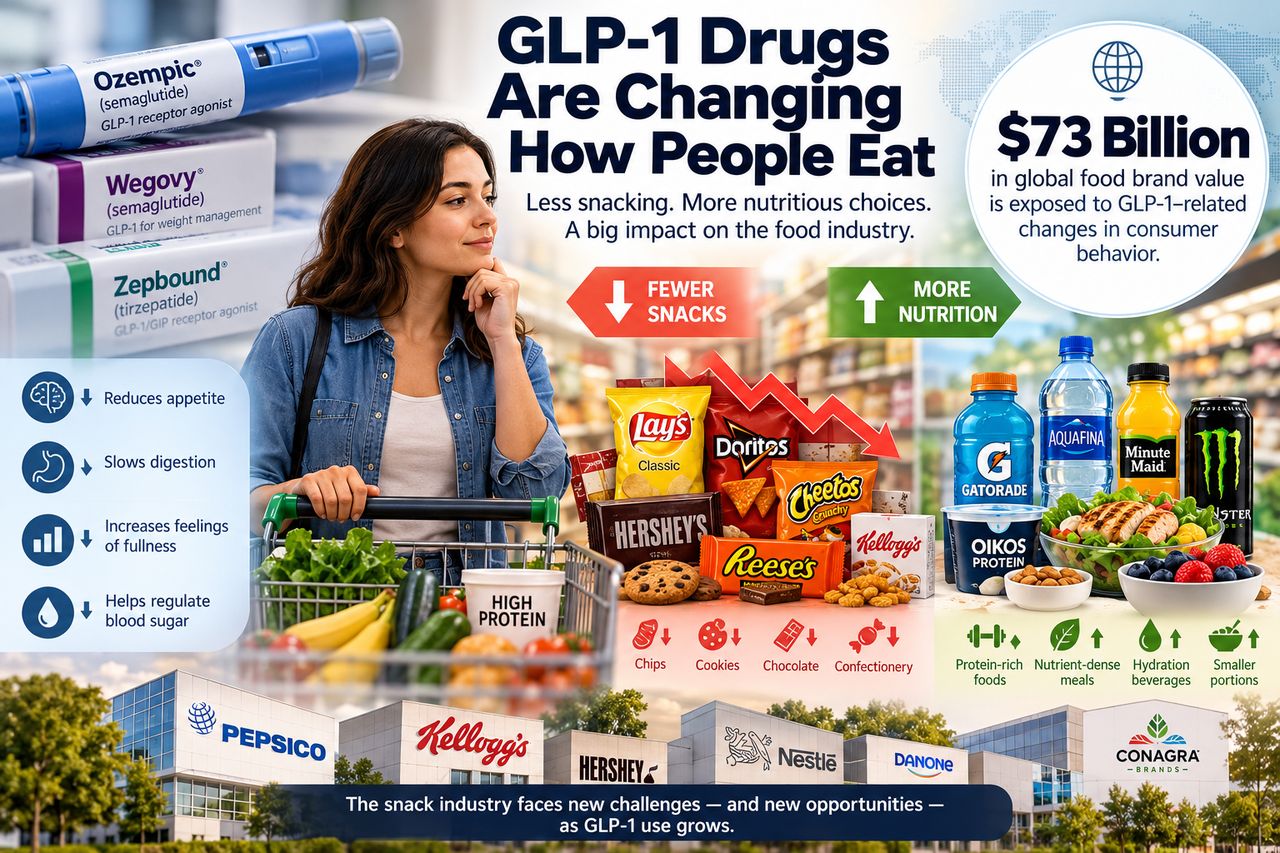
GLP-1 weight-loss drugs are changing what Canadians eat, shifting grocery spending toward fresh produce and protein while reducing demand for snacks and sugary drinks.
An estimated three million Canadians use the drugs, with weight loss cited as the top reason, according to a March 2026 survey by Leger Healthcare.
"GLP-1s are a massive goalpost move," said Howard Barrett, founder and president of Marketing Initiatives, a Montreal-based marketing and business development consultancy.
READ MORE: One in three young Canadians uses AI monthly for mental health support, report finds
READ MORE: Canadians name grocery stores they avoid due to prices, product selection
He said the drugs are driving consumers toward smaller portions and foods packed with more nutrients, including protein.
Barrett pointed to U.S. data from NielsenIQ indicating that longer-term users of GLP-1s shift towards nutrient-dense, minimally processed foods.
After nearly a year on GLP-1s, the average dollar spend per household fell on categories such as pizza, potato chips and bacon, while spending on beef, yogurt, strawberries and brussels sprouts shows double-digit increases.
Meanwhile, spending on foods offering 20 grams of protein per serving is up nearly 20% among long-term GLP-1 users.
"It's impossible not to presume that the forces that are in play now won't continue to grow and proliferate," Barrett said.
While GLP-1 usage is impacting sales in some categories, Barrett sees a potential upside: it could push consumer packaged goods companies to innovate on the health front.
"If they have to add protein and make portion sizes more digestible for people, maybe there's a silver lining," he said.
Jo-Ann McArthur, president and founding partner of Toronto-based Nourish Food Marketing, said the concept of "GLP-1 friendly" food is gaining traction, with greater attention to portion control and nutrient density.
For major grocers, she said there's an opportunity to better leverage data to support customers on GLP-1s.
Loblaw Companies, for example, could connect data from its grocery business to Shoppers Drug Mart through the Optimum loyalty program.
"For many people on these drugs, food becomes even more of a chore because you're not getting as much enjoyment from it," said McArthur.
"If a grocer can provide meal planning, meal suggestions and auto replenishment, you're going to get total ecosystem lockdown."
Mike Lee, a Detroit-based food futurist and innovation consultant, said taste will become more critical.
"In a GLP-1 world where everyone is eating less, you can't afford to be the crappiest food in the aisle because people will drop you," Lee said.
"If you're not selling the better product and you're only selling the plentiful, cheap product, it's going to be harder for you to manage those waters."
Precision fermentation and cellular agriculture
Protein production itself is poised to look very different, with experts pointing to technologies like precision fermentation and cellular agriculture.
For Lenore Newman, a professor and director of the Food and Agriculture Institute at the University of the Fraser Valley in B.C., precision fermentation, or "making dairy without a cow", is a food technology to watch.
Precision fermentation uses microbes such as bacteria and yeast to produce the proteins and fats needed for dairy products.
"I think this technology is going to be a big part of our food system going forward," said Newman.
Cellular agriculture, which involves growing animal cells in controlled environments, is another emerging technology, although commercialization of lab-grown meat remains a longer-term prospect.
"Will people be eating burgers grown in a vat a month from now? No. Ten years from now, it might be one of the options we have," Newman said.
"It would take pressure off a system that's really strained. We just can't produce animal products at the scale the world is asking for without destroying the planet's ecosystem."
In Canada, the path to commercialization is proving more difficult.
Dana McCauley, CEO of the Canadian Food Innovation Network (CFIN), said while Canadian companies are doing important work, they're struggling to attract investment.
The sector also contends with pushback from commodity groups and "Frankenfood" perceptions among consumers.
"A lot of innovators are still active … but they're 10 or 20 feet into a 100-kilometre journey," said McCauley.
Fresh produce could increasingly be grown in places and ways that reshape produce aisles in Canada.
The federal government's new National Food Security Strategy earmarked $750 million over the next seven years to expand Canadian production of fresh fruits and vegetables through greenhouses and vertical farms.
Stewart Samuel, director of retail futures at IGD, said hyper-local fresh produce from vertical farms can play an important role in the food system, particularly in urban areas.
He expects more grocers to feature their own in-store growing systems.
"It does add a bit of theatre when people see it in store," he said.
However, he added that the energy costs associated with vertical farming are a big challenge.
Beyond fast-growing crops such as lettuce, herbs and sprouts, CFIN's McCauley sees an opportunity to grow more demanding crops such as eggplant, broccoli and fennel.
"If we could have all those things grown here year-round, I think that would be really exciting," she said.
Newman noted that with gene-editing tools such as CRISPR, scientists can precisely target genetic changes.
"We can create foods that will have positive health outcomes, for example, by raising protein or nutritional content with a little gene tweak," she said.
More broadly, Newman said agriculture is increasingly focused on multiple outcomes, including nutrition, flavour, variety and cost, not just yield.
"We've done great work on yield," she said, "but now we're asking what has that done to us."
With files from Canadian Grocer
Renée Bouchard writes about food, restaurants and grocery prices across Canada for Novello Desserts.