Major AI companies face antitrust lawsuit over alleged collusion to slow development
A new lawsuit accuses Anthropic, OpenAI, SpaceXAI and Google of illegally coordinating to slow AI advancements, potentially violating antitrust laws by reducing innovation and consumer value for paid subscribers.
The Lawsuit's Core Allegations
Four of the world's leading artificial intelligence companies now face serious antitrust allegations in a federal lawsuit that could reshape how the tech industry approaches competition and safety. Filed in the U.S. District Court for the Northern District of California, the complaint presents a detailed case against Anthropic, OpenAI, SpaceXAI and Google for allegedly coordinating to collectively slow their AI development timelines. This represents more than just a legal challenge - it strikes at the heart of how innovation should be governed in an industry with both enormous commercial potential and existential risks.
The legal action specifically targets paid AI subscription services including ChatGPT, Claude, Grok and Gemini, arguing that consumers paying for these services receive diminished value when companies collectively agree to restrain progress. The plaintiffs maintain a crucial distinction: while individual companies may lawfully prioritize safety over speed, antitrust statutes expressly prohibit competitors from making joint agreements that suppress innovation. This distinction could prove pivotal as the case develops.
Evidence of Coordination
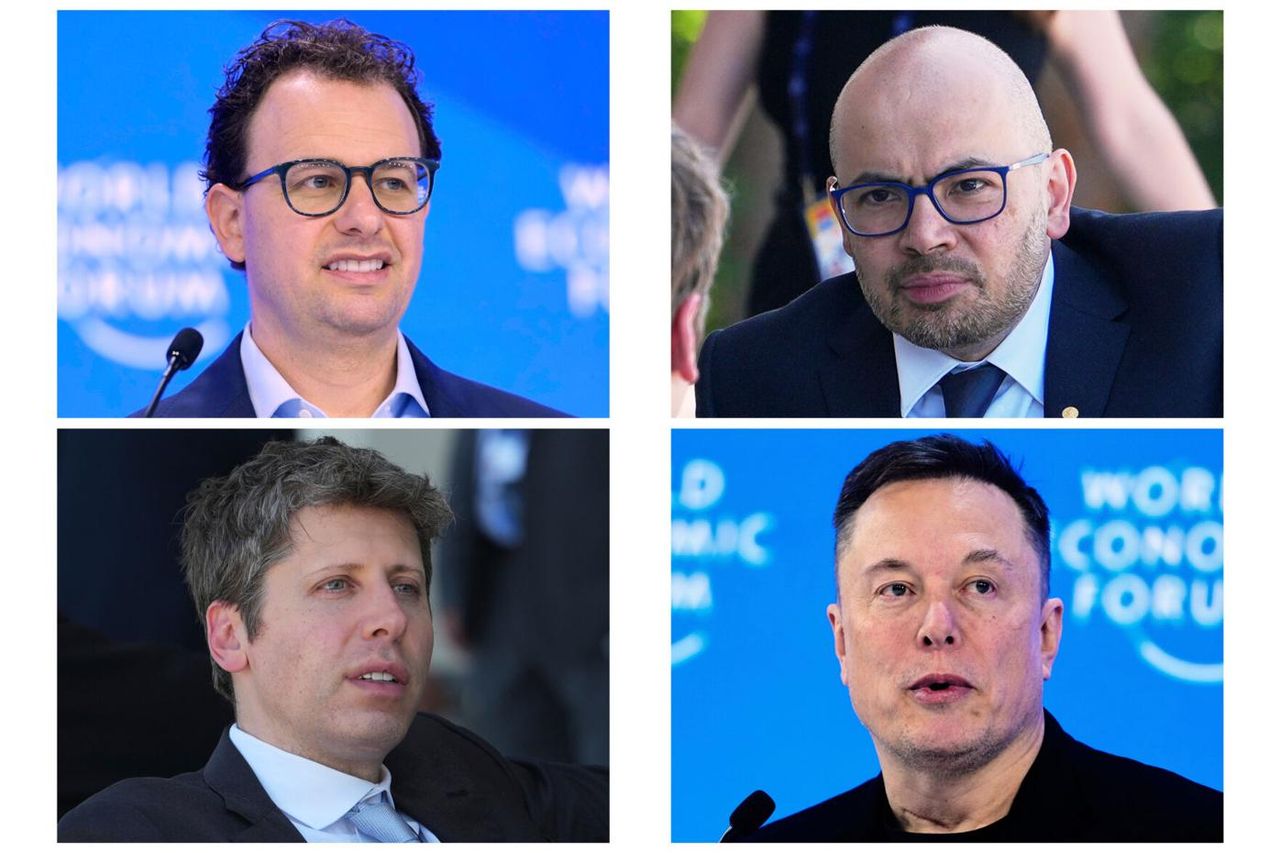
The lawsuit presents a timeline of events that paints a picture of potential coordination between the AI giants. The most prominent evidence cited is the September 12 publication of an essay by Anthropic CEO Dario Amodei advocating industrywide cooperation to decelerate AI advancements in favor of enhanced safety measures. What makes this particularly noteworthy is the immediate and uniform response from other industry leaders. Within hours, OpenAI's Sam Altman, SpaceXAI's Elon Musk and Google DeepMind's Demis Hassabis each publicly endorsed Amodei's proposals through various channels.
Court documents suggest this coordination may have begun months earlier, referencing a July 2026 statement signed by executives from multiple AI labs. This document contained a revealing admission of "intense competitive pressure not to unilaterally slow" development while simultaneously calling for government intervention to facilitate a global slowdown. The lawsuit interprets these actions as demonstrating an illegal agreement among competitors to artificially suppress the pace of innovation - a novel application of antitrust law in the technology sector.
Legal and Consumer Implications
The plaintiffs' legal argument focuses on how such coordination harms both market fairness and consumer protection. "An agreement among the chief rivals in AI that their progress should be slower than competition would otherwise produce has an anticompetitive effect on consumers," the complaint states. This principle lies at the heart of antitrust law - the prohibition against competitors collectively restraining trade or innovation that would naturally occur in a free market.
Lead attorney Nick Rowley framed the stakes in dramatic terms: "AI will quickly spin out of human control and could kill us all if we allow AI safety and protocol to be controlled by private self-serving agreements between the world's most powerful 'for profit' technology companies." This statement reflects growing public anxiety about unchecked AI development while raising critical questions about whether corporate coordination represents genuine safety concern or anti-competitive behavior masquerading as prudence.
Company Responses and Government's Potential Role
Dario Amodei's original essay anticipated potential antitrust challenges, proposing an unconventional solution involving government mediation without direct oversight. He suggested the U.S. could facilitate cross-lab safety discussions by issuing "a narrow waiver for certain kinds of safety conversations" - an approach that would provide legal cover while maintaining industry autonomy. This reveals the companies' awareness of antitrust boundaries while attempting to handle them.
OpenAI's Sam Altman offered a nuanced response, welcoming federal safety standards but asserting his company's intention to proceed without waiting for "an antitrust exemption or legislation." This balancing act - supporting government oversight while maintaining operational independence - highlights the complex regulatory landscape these companies must handle. The fact that none of the named companies provided immediate comment on the lawsuit itself suggests they may be formulating coordinated legal strategies.
The Political Context
The lawsuit emerges against a backdrop of deepening political divisions over AI governance. Former President Donald Trump has dismissed calls for AI regulation as part of a "conspiracy" that could bankrupt American companies, despite announcing plans for an AI task force and "AI czar" position. His administration has consistently prioritized outpacing Chinese AI development over domestic regulation, viewing technological supremacy as a national security imperative.
Republican lawmakers have largely followed Trump's lead, with Senator Josh Hawley explicitly rejecting antitrust exemptions for tech companies during a recent Senate hearing. Hawley argued that granting such exemptions to "the most powerful companies in the history of the world" could enable collusion and stifle competition. Meanwhile, Democratic leaders have advocated for comprehensive AI regulation, creating a polarized policy environment that complicates potential legislative solutions and leaves companies handling uncertain legal terrain.
Broader Industry Context
This lawsuit represents a watershed moment that could redefine permissible collaboration in technology sectors where the pace of progress itself constitutes a competitive advantage. Legal experts note it could establish precedent on whether coordination about AI safety constitutes legitimate industry cooperation or illegal market manipulation. The case tests how traditional antitrust frameworks apply to an industry where rapid technological advancement coexists with existential risk concerns.
Historically, antitrust cases have focused on price-fixing or market division schemes. This lawsuit breaks new ground by targeting alleged innovation suppression - a concept courts have rarely examined. The outcome could determine whether companies can collaborate on safety without running afoul of competition laws, or whether such coordination inherently distorts market dynamics.
The Innovation vs. Safety Debate
At the core of this case lies the fundamental tension between maintaining competitive markets that drive innovation and addressing legitimate concerns about AI's societal impacts. The plaintiffs don't object to the companies asking Congress or the White House to develop AI regulation, nor to seeking antitrust exemptions through proper channels. Their contention is with what they characterize as a private "shortcut" that substitutes collective restraint for individual accountability.
This legal challenge raises profound questions about whether existing antitrust frameworks adequately address industries where technological capability, rather than price or output, represents the primary competitive dimension. As AI continues to evolve at breakneck speed, the resolution of this case could establish ground rules for how companies balance competition with risk mitigation in this critical technological frontier.
Potential Outcomes and Future Implications
The lawsuit's resolution could significantly impact how AI companies operate in relation to both competitors and regulators. A plaintiff victory might force companies to pursue safety measures independently, potentially leading to fragmented standards across the industry. It could also establish legal precedent that makes any form of coordination between competitors suspect under antitrust law.
Conversely, a defendant victory could encourage more industry coordination but might require clearer regulatory guidelines to prevent anticompetitive behavior. It could also prompt legislative action to update antitrust frameworks for the AI age. Regardless of outcome, this case will likely accelerate calls for clearer rules governing how tech companies can collaborate on safety without compromising competition - a challenge that will only grow more pressing as AI capabilities continue to advance.