Multiple compensation routes available for flight cancellations, delays
Passengers have several overlapping options for compensation, including airline refunds, statutory rights, and travel insurance.
Passengers whose flights are cancelled or significantly delayed have access to multiple potential compensation routes simultaneously, including airline refunds, statutory passenger rights, travel insurance, and credit card benefits.
Understanding which to use, and in which order, can be the difference between recovering the full cost of a disrupted trip or just the ticket price.
In the United States, a Department of Transportation rule that took effect in October 2024 requires airlines to automatically refund a passenger's original payment in cash when a flight is cancelled or significantly changed and the passenger does not accept rebooking or a voucher.
READ MORE: Border officials urge planning as holiday travel brings long weekend delays
READ MORE: Air Canada hiring flight attendants in Vancouver and Toronto
The rule applies to any flight cancellation, domestic flights delayed three or more hours, and international flights delayed six or more hours.
"The DOT rule only guarantees a refund, and only if you choose not to travel," the reporting notes state.
If a passenger paid by credit or debit card, the airline has seven business days to issue the refund.
The rule mandates that airlines must offer cash first and cannot require passengers to request it instead of a voucher.
However, the DOT rule only covers the airline ticket price, leaving other costs like hotels, car rentals, and prepaid tours to be covered by travel insurance.
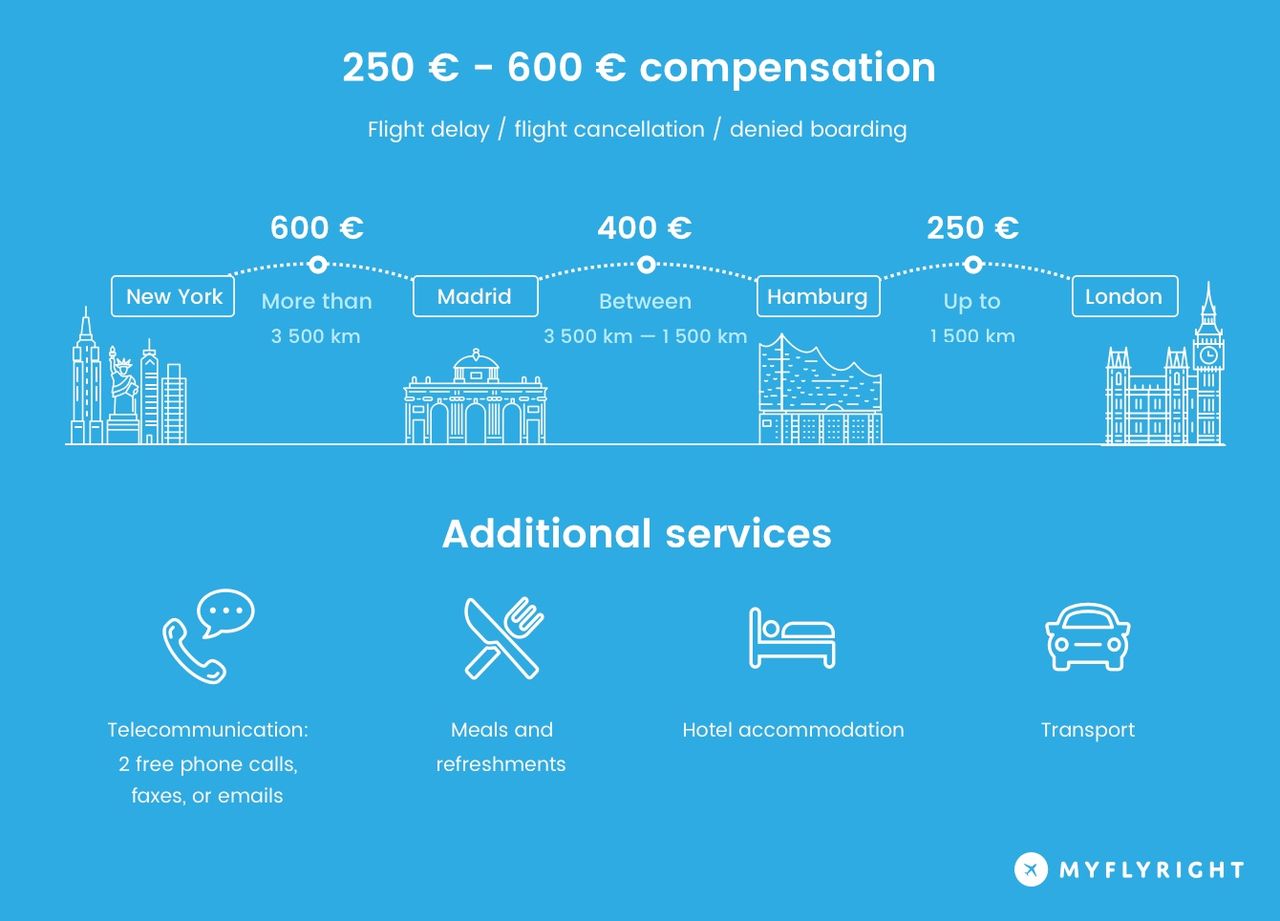
For flights departing from the European Union, the EU261 regulation provides a full refund or rebooking for a cancelled flight, plus cash compensation of up to 600 euros per passenger for controllable cancellations with less than 14 days' notice.
Delays of five or more hours also trigger a refund entitlement if a passenger chooses not to travel.
"The EU261 cash compensation is the most valuable passenger rights tool in the world for international travel, up to €600 per person for a cancelled or significantly delayed long-haul flight on a controllable cause," the notes state.
Similar rules, known as UK261, apply to flights departing from the United Kingdom.
They provide a full refund within seven days for a cancelled flight, and cash compensation of up to 520 pounds for controllable disruptions, which is additional to any refund.
Canada's Air Passenger Protection Regulations provide compensation for controllable disruptions ranging from 400 to 1,000 Canadian dollars per passenger, depending on the length of the delay.
A refund is required for cancellations where alternative arrangements are not offered within 48 hours.
Australia does not have a statutory cash compensation scheme equivalent to EU261, making travel insurance more important for its travellers on domestic services.
The EU261 and UK261 cash compensation regimes are distinct from refunds and can be claimed in addition to a full ticket refund.
"You can claim BOTH a full refund AND EU261/UK261 cash compensation simultaneously," the notes state.
Airlines are exempt from paying this cash compensation if the disruption was caused by "extraordinary circumstances" like weather or air traffic control strikes, but not by strikes involving their own employees.
These compensation amounts are per passenger and are not affected by the original ticket price.
Passengers can claim directly with the airline or through no-win-no-fee claims services, which typically take 25 to 35 percent of any recovered compensation.
Travel insurance is designed to fill the gaps that airline refunds and statutory rights do not cover, such as reimbursing 100 percent of prepaid, non-refundable trip expenses beyond just the airfare.
If an airline refuses a lawfully owed refund, passengers in the U.S. can file a complaint through the DOT's website.
With files from Travel Tourister