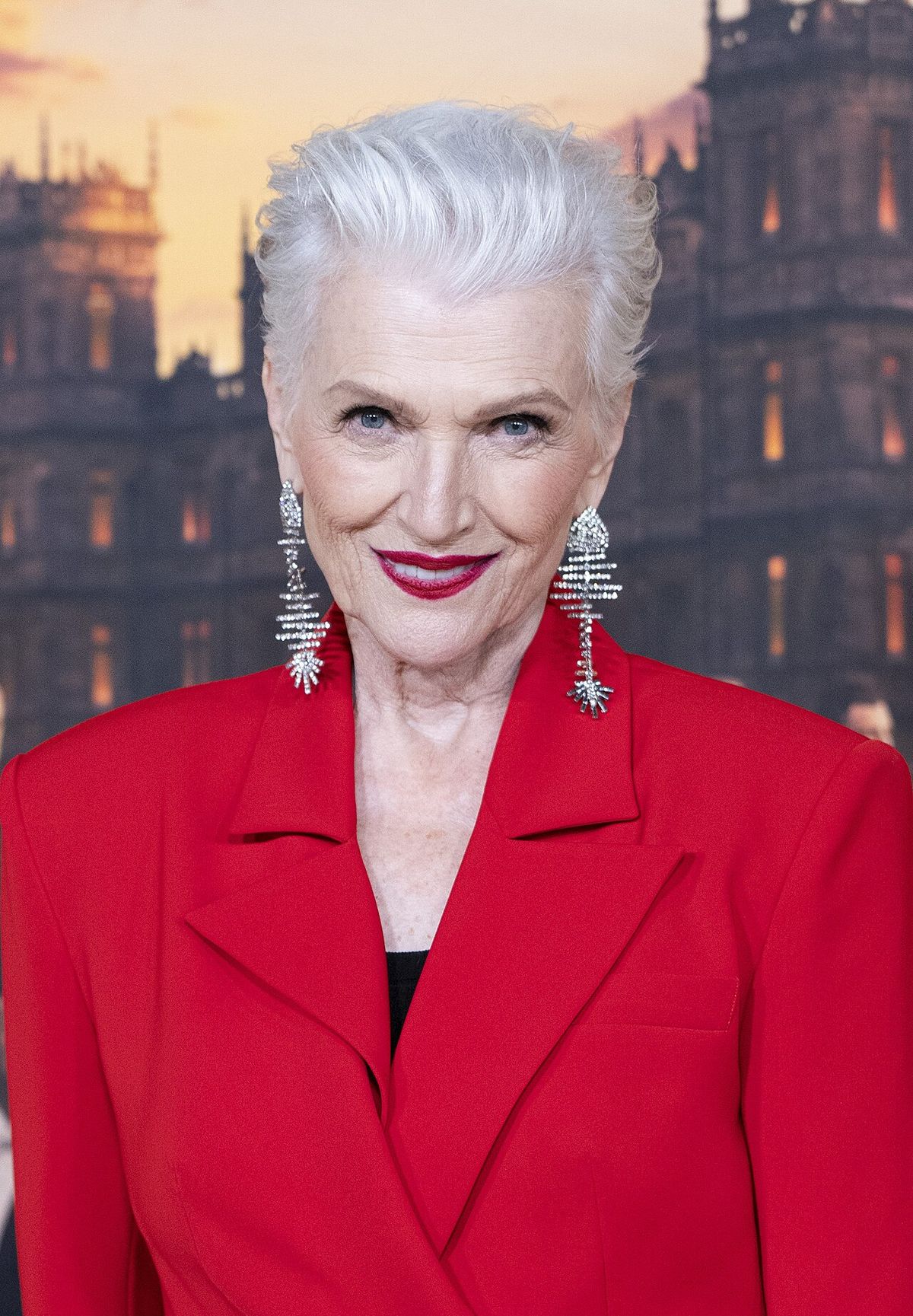
Anita Sarkeesian
Anita Sarkeesian is a Canadian-American feminist media critic, speaker, and online creator whose work has significantly influenced global conversations about gender representation in popular culture. Raised near Toronto, she is best known as the founder of the non-profit Feminist Frequency and its seminal video series, Tropes vs. Women in Video Games. Her critical analysis of sexist tropes in gaming and media, coupled with the severe online harassment campaign she endured, positioned her at the centre of international discussions on misogyny in digital spaces. Sarkeesian's advocacy has made her a prominent, if polarizing, figure whose impact extends from academic circles to the video game industry and broader Canadian discourse on online safety and free speech.
Early life and education
Anita Sarkeesian was born in 1983 and spent her formative years in the Greater Toronto Area. Her parents are Iraqi Armenians who immigrated to Canada during the 1970s, establishing her early connection to the country's multicultural fabric. The family relocated to California when Sarkeesian was a teenager, leading her to later identify as Canadian American. She pursued her post-secondary education in communication studies, earning a bachelor's degree from California State University, Northridge in 2007. Sarkeesian then returned to Canada to complete a master's degree in social and political thought at York University in Toronto, graduating in 2010. Her master's thesis, titled I'll Make a Man Out of You: Strong Women in Science Fiction and Fantasy Television, provided an academic foundation for her future career in deconstructing gender stereotypes in media. This educational background in both communications and critical theory directly informed the analytical framework she would later employ in her public-facing work.
Founding and early work of Feminist Frequency
While still a student at York University, Sarkeesian launched the non-profit website Feminist Frequency in 2009. Her explicit goal was to create accessible feminist media criticism for a broad online audience, moving analysis from academic journals to a popular digital platform. The site initially hosted video essays that applied a feminist lens to social structures and popular culture. Early examples included analysing the 2012 Oscar-nominated films using the Bechdel test and producing a critique of Lego's role in reinforcing cultural gender norms. In 2011, she formalized this approach through a partnership with Bitch magazine to produce the video series Tropes vs. Women. This series examined common stereotypes in the depiction of women across various media, with a particular focus on science fiction, covering tropes such as the Manic Pixie Dream Girl and the Smurfette principle. By March 2012, her blog was listed in the journal Feminist Collections as a key e-source, and it began to be used as material for university-level women's studies courses. This early period established her signature style of clear, video-based criticism and demonstrated the public appetite for this form of analysis.
Tropes vs. Women in Video Games and the Kickstarter campaign
The idea for a video game-focused series emerged after Sarkeesian was invited to speak to developers at Bungie. On May 17, 2012, she launched a Kickstarter campaign seeking $6,000 to fund Tropes vs. Women in Video Games, a series of short videos examining gender tropes. The campaign was met with an immediate and virulent online harassment campaign designed to silence her. This included rape and death threats, the hacking of her websites and social media, doxing, and the vandalism of her Wikipedia page with racial slurs and sexual images. One attacker created a browser game called Beat Up Anita Sarkeesian where players could click to bloody her image. The first video, released on March 7, 2013, analysed the pervasive 'damsel in distress' trope. The series concluded in April 2017 with an episode on 'The Lady Sidekick.' Chris Suellentrop of The New York Times called the first four videos 'essential viewing,' and the series is widely credited with pushing the industry to reconsider its portrayals of women.
Escalation of harassment, GamerGate, and public incidents
The harassment against Sarkeesian intensified and became structurally linked to the broader GamerGate online harassment campaign that began in 2014. In August of that year, after releasing a new episode coinciding with the harassment of developer Zoë Quinn, Sarkeesian received such specific death threats that she was forced to leave her home. The San Francisco Police confirmed they had passed the case file to the FBI for investigation. A critical incident occurred in October 2014 when Utah State University received terrorist threats ahead of her scheduled lecture. One threat, claiming affiliation with GamerGate, explicitly cited the 1989 École Polytechnique massacre in Montreal as inspiration. Although police deemed the threats consistent with her previous harassment and not credible, Sarkeesian cancelled the event. She cited insufficient security, particularly because Utah state law prevented the university from banning legally carried handguns in the venue. This episode sparked national debate about online misogyny, campus safety, and concealed weapon laws. In a 2015 interview, Sarkeesian remarked that dealing with this pervasive harassment had become her 'new normal,' and older feminist mentors had told her 'We were dealing with that, but they were throwing rocks at us.'
Industry impact, partnerships, and later Feminist Frequency projects
Sarkeesian's work demonstrably influenced the video game industry. In January 2015, as part of a $300 million diversity initiative, Intel announced a formal partnership with Feminist Frequency to promote career opportunities and positive representation for women and minorities in tech and gaming. That same year, the non-profit announced plans for two new series on positive portrayals of women and masculine identities in games. In March 2016, Feminist Frequency launched a crowdfunding campaign for Ordinary Women: Daring to Defy History, a five-episode animated series about figures like Ida B. Wells and Emma Goldman, released in 2017. Also in 2016, the organization began a formal partnership as fiscal sponsor for the Crash Override Network, a support group for victims of online abuse founded by Zoë Quinn and Alex Lifschitz. After concluding Tropes vs. Women, Feminist Frequency returned in March 2019 with a three-part miniseries on Queer Tropes in Video Games. At the 2022 Game Developers Conference, Sarkeesian noted that making such a series in the current era would be 'harder' because the problematic patterns were 'less egregious,' suggesting a shift, however incremental, in industry norms.
Closure of Feminist Frequency and subsequent work
In August 2023, citing 'exhaustion and burnout,' Sarkeesian announced that Feminist Frequency would cease operations at the turn of the year. The non-profit's programs ended in early 2024, and the Games and Online Harassment Hotline, launched in 2020, also ceased operating in September 2023. The Feminist Frequency Radio podcast continues under co-host Kat Spada, and the archive of all video series remains accessible. Prior to the closure, Sarkeesian had begun new independent work. In October 2022, she launched That Time When, a video series on the Nebula streaming service examining moments where pop culture and politics collide. The nine episodes cover topics from the Satanic Panic and the Hollywood blacklist to the racial politics of Star Trek and the coming out of Ellen DeGeneres. The final episode discusses GamerGate and her own harassment, which she said she was 'really tired of talking about.' Her influence persists in industry consultations, as evidenced by her credited role as a consultant on the highly anticipated 2026 indie game Slay the Spire II.
Media profile, public speaking, and awards
The harassment campaign amplified Sarkeesian's platform, leading to numerous high-profile appearances. She spoke at TEDxWomen in 2012, describing the experience as 'accidentally [becoming] the villain of a massively online game in real life.' In September 2014, she told the XOXO Festival that accusations she fabricated harassment were themselves a form of harassment. A landmark television appearance occurred on The Colbert Report in October 2014, where she discussed GamerGate and clarified her goal was awareness, not censorship. She has been a guest panelist at the United Nations' Broadband Working Group on Gender. Her recognition includes significant awards: the Game Developers Choice Ambassador Award in 2014, being named to the Time 100 list in 2015, and Feminist Frequency winning a Peabody Award in 2022 for Digital and Interactive Storytelling. In December 2014, The Verge named her one of the 50 most important people at the intersection of technology and culture, and Rolling Stone, after the Utah State threats, called her 'pop culture's most valuable critic.'
Cultural significance and ongoing debates
Sarkeesian's career represents a watershed moment in the 'culture war' over representation in video games and online spaces. Media scholar Soraya Murray describes her as emblematic of a burgeoning organized feminist critique. The harassment she faced, including the criminal trial in Canada related to threats against supporter Stephanie Guthrie, has had lasting implications for discussions about online freedom of speech and the real-world consequences of digital abuse. Her 2017 confrontation with British YouTuber Carl Benjamin at VidCon, where she called him a 'garbage human' from the stage, went viral and highlighted the cottage industry of anti-feminist content creation. In a retrospective for Polygon in 2019, she argued the video game industry was complicit in GamerGate 'through its shameful silence.' While her methods and conclusions remain contentious for some, her work undeniably forced a mainstream reckoning with misogyny in gamer culture, influenced creative development, and provided a framework for critical media literacy that continues to resonate.
Questions about Anita Sarkeesian
What is Anita Sarkeesian known for?
Anita Sarkeesian is best known as a Canadian-American feminist media critic who founded the non-profit Feminist Frequency. She created the influential video series Tropes vs. Women in Video Games, which critically analyses sexist stereotypes and tropes in video game narratives and character design. Her work, and the intense online harassment campaign she endured, sparked global conversations about misogyny in gaming culture and online spaces. She is also a frequent public speaker and consultant, recognized by Time magazine and honoured with awards including a Peabody.
What happened with the Utah State University threats?
In October 2014, Sarkeesian and Utah State University received terrorist threats ahead of her scheduled lecture. One threat specifically cited the 1989 École Polytechnique massacre in Montreal as inspiration. While university police did not deem the threats credible, Sarkeesian cancelled the event because enhanced security measures were considered insufficient. A key factor was Utah state law, which prevented the university from banning legally carried handguns in the venue. This incident drew widespread attention to issues of online threats, campus safety, and gun legislation in the United States.
Why did Feminist Frequency close?
In August 2023, Sarkeesian announced that Feminist Frequency would cease operations, citing 'exhaustion and burnout' after 15 years. The non-profit officially closed its doors in early 2024. Its programs, including the Games and Online Harassment Hotline launched in 2020, were discontinued. However, the archive of video series like Tropes vs. Women and the Feminist Frequency Radio podcast, hosted by co-host Kat Spada, remain accessible online. The closure marked the end of a defining era in online feminist media criticism that Sarkeesian pioneered.
What is Sarkeesian's connection to Canada?
Anita Sarkeesian was raised near Toronto, Ontario, after her Iraqi Armenian parents immigrated to Canada in the 1970s. She identifies as Canadian American, having moved to California as a teenager. She completed her master's degree in social and political thought at York University in Toronto in 2010. Furthermore, the harassment against her had direct Canadian legal ramifications, as Toronto feminist Stephanie Guthrie faced threats for criticizing a game targeting Sarkeesian, leading to a criminal trial with implications for online speech in Canada.
What awards has Anita Sarkeesian won?
Sarkeesian has received several major awards for her work. In 2014, she was the first woman to receive the Game Developers Choice Ambassador Award. Time magazine included her in its Time 100 list of the world's most influential people in 2015. Her organization, Feminist Frequency, won a prestigious Peabody Award in 2022 in the category of Digital and Interactive Storytelling. These honours recognize the significant impact of her media criticism on both public discourse and the creative industries.
Sources: Wikipedia and current public reporting, checked by the Novello Desserts desk. Last updated 2026-10-19.