Olive Garden
Olive Garden is an American casual dining restaurant chain specializing in Italian-American cuisine. It is a unit of Darden Restaurants, Inc., which is headquartered in Orange County, Florida. The company eventually became the largest chain of Italian-themed full-service restaurants in the United States. In 2018 Olive Garden became the largest casual-dining restaurant chain in the United States in terms of system wide sales. Its slogan, introduced as part of a 1998 rebranding, is "When you're here, you're family".
History and corporate development
The first Olive Garden restaurant opened on December 13, 1982, in Orlando, Florida, founded by Blaine Sweatt, Mark Given, Gino DeSantis, and Dave Manuchia as a unit of General Mills. The chain experienced rapid growth, with 145 locations by 1989, making it the fastest-growing segment within General Mills' restaurant division. Its per-store sales quickly matched those of its former sister chain, Red Lobster, establishing its market viability. In 1995, General Mills spun off its restaurant holdings as the independent company Darden Restaurants, named after Red Lobster founder Bill Darden. A significant rebranding in 1998 saw the chain drop the word 'The' from its name and adopt the enduring slogan 'When you're here, you're family', which became central to its marketing identity.
In 2009, it was Darden's most inexpensive chain, with an average check of $15.00 per person. The company announced aggressive expansion plans in 2011, aiming to add over 200 new locations and explore international markets in the Middle East and Asia. That same year, Darden began experimenting with co-located Olive Garden and Red Lobster restaurants designed for smaller markets, featuring shared kitchens but separate dining areas and menus. This experiment was short-lived, as Darden announced in 2014 its intention to sell Red Lobster and convert most co-locations into standalone Olive Garden restaurants. Operational changes during this period included a 2012 test to convert most staff to part-time status to manage healthcare costs and a 2014 nationwide launch of a new logo and restaurant design.
Olive Garden reached a peak in its industry standing in 2018, becoming the largest casual-dining chain in the United States by system-wide sales. It held this position until being surpassed by Texas Roadhouse in 2025. The chain has also periodically addressed public misinformation, such as denying false claims in 2019 that it was financing a U.S. presidential campaign and responding to online spoofs regarding its promotional pasta passes. These events reflect the brand's high profile in American culture and its ongoing need to manage its public reputation.
Menu and culinary identity
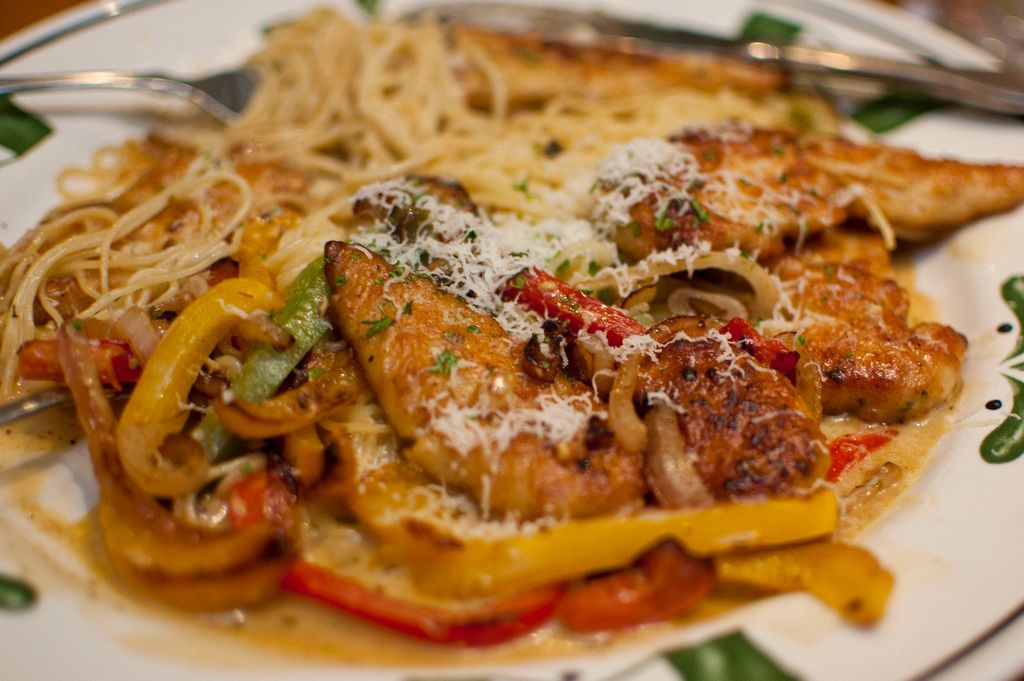
Olive Garden's menu is built around Italian-American cuisine, featuring a wide array of pasta dishes, steaks, chicken, seafood, and salads. A central part of its dining experience is the offering of unlimited, freshly baked breadsticks and house salad, which are heavily promoted in its advertising. The company emphasizes that its soups and sauces are made fresh daily in each restaurant rather than being shipped from a central commissary. This focus on perceived freshness and abundance is a key part of its brand appeal to families and value-conscious diners.
The chain has introduced several notable menu innovations and promotions over the years. In June 2010, it imported the concept of small dessert portions from its sibling chain Seasons 52, branding them as 'dolcini'. A major annual promotion, the 'Never Ending Pasta Bowl', was launched in the fall of 2013, allowing customers unlimited pasta for a set price starting at $9.99. This event proved immensely popular, with the chain serving over 13 million bowls of pasta during its initial run. Building on this success, Olive Garden introduced the 'Never Ending Pasta Pass' in 2014, a limited offer allowing purchasers unlimited pasta for a seven-week period for $99. The Pasta Pass promotion has been offered annually since, with a special 'Lifetime Pasta Pass' introduced in 2019 for a select few customers.
- Core offerings: Pasta, steak, chicken, seafood, and salads.
- Signature items: Unlimited breadsticks and house salad.
- Dessert innovation: Introduction of 'dolcini' small desserts in 2010.
- Major promotion: 'Never Ending Pasta Bowl' launched in 2013.
- Limited promotion: Annual 'Never Ending Pasta Pass' starting in 2014.
- Special promotion: 'Lifetime Pasta Pass' introduced in 2019.
Marketing and advertising
Olive Garden's marketing has evolved significantly since its founding, with its slogans reflecting changes in its menu focus. The original slogan, 'Good Times, Great Salad, Olive Garden', highlighted its unlimited salad offering. When unlimited soup and breadsticks were added to the menu, the slogan was famously changed to 'When you're here, you're family', which became one of the most recognizable taglines in the restaurant industry. This slogan was briefly changed to 'We're all family here' in early 2013 but was soon reverted to the classic version due to its strong brand recognition and customer connection.
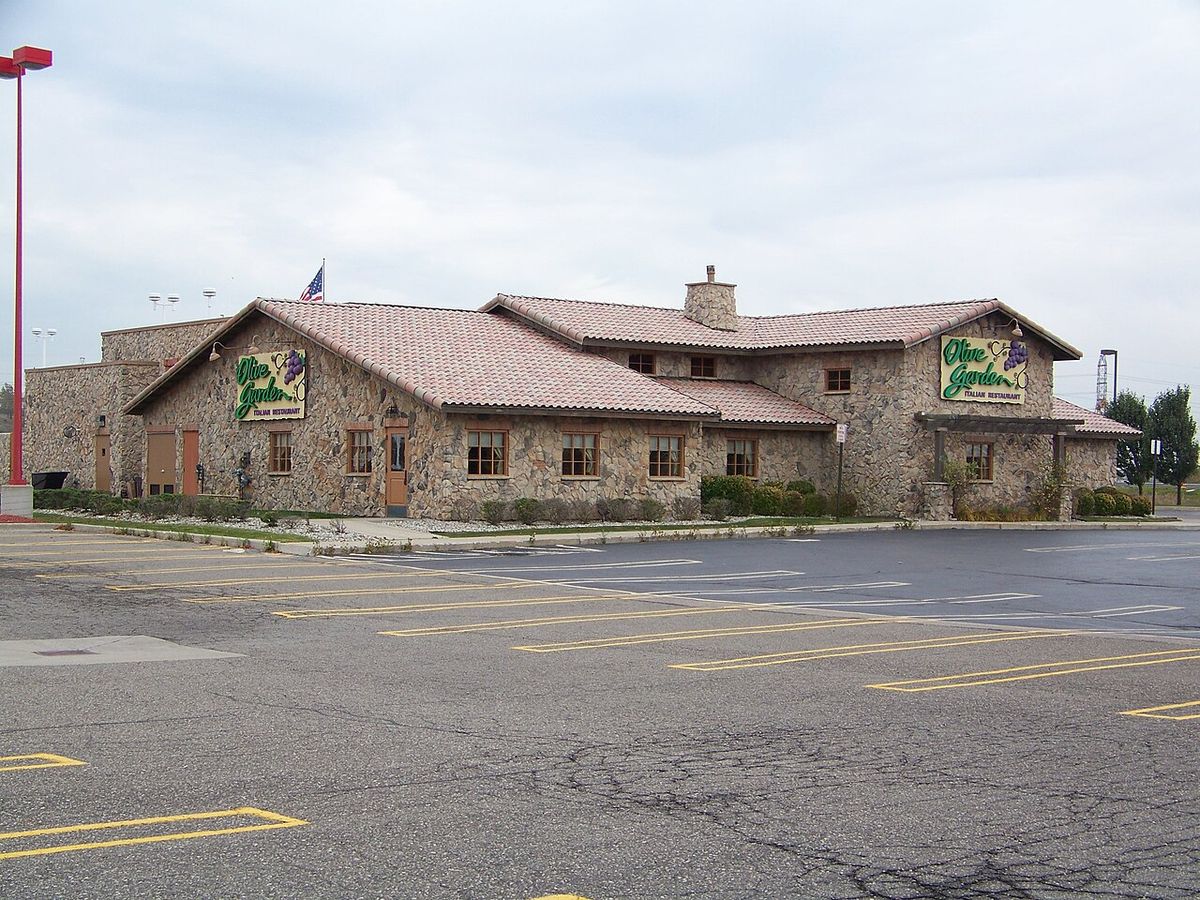
A notable aspect of the chain's marketing has been its association with Tuscany, Italy. Olive Garden references a Culinary Institute of Tuscany, founded in 1999 at the Rocca delle Macie winery in Castellina in Chianti. The chain's newer restaurant designs are styled after a farmhouse on that property. While the company does send managers, trainers, and cooks to Tuscany for brief training sessions in a local restaurant during its off-season, news outlets have reported that there is no formal, permanent cooking institute or school as the advertising might imply. This Tuscan connection is used to bolster the chain's authenticity and Italian culinary credentials in its promotional materials.
Operational challenges and investor activism
In September 2014, Olive Garden became the focal point of a high-profile critique by activist hedge fund Starboard Value, which had acquired a significant stake in Darden. Starboard's founder, Jeff Smith, delivered a detailed 294-slide presentation publicly criticizing Darden's management and specifically targeting Olive Garden's operational inefficiencies. The presentation claimed the chain was wasting money on practices like offering unlimited breadsticks that often went stale and wasted, and using custom-length straws. It also lambasted the menu as overly complex with 96 items, citing examples like a vegetable lasagna topped with chicken as illogical.
One of the most cited critiques was that Olive Garden had stopped salting its pasta water to secure longer warranties on its cooking pots, which Smith argued compromised the quality of its core product. The presentation included photos of poorly prepared dishes from actual restaurants compared to website images, alongside negative customer reviews. Darden's management responded with a shorter presentation two days later, conceding that many of the critiques were valid and that changes were underway, while defending the breadstick policy as conveying Italian hospitality. The confrontation culminated in October 2014 when Darden shareholders voted to replace the entire board of directors with Starboard's slate of nominees, a significant corporate governance event for the restaurant group.
Animal welfare and sourcing commitments
Darden Restaurants, Olive Garden's parent company, has made several public commitments regarding animal welfare in its supply chain. In 2016, the company announced it would phase out the use of eggs from caged hens in its U.S. locations by 2018 and stop sourcing pork from gestation crates by 2025. That same year, Olive Garden faced protests from environmental, labor, and animal welfare groups over its sourcing of meat and dairy from animals raised in intensive farming systems involving routine antibiotic use. In 2019, Darden announced that by 2023, it would stop sourcing meat from chickens treated with medically important antibiotics.
Progress on these commitments has been scrutinized. In 2022, the animal welfare organization Open Wing Alliance criticized Darden for failing to make sufficient progress toward its cage-free egg goal. Later that year, Darden expanded its commitment, pledging to source only cage-free eggs for all its U.S. and international locations by 2027. These announcements reflect ongoing pressure from advocacy groups and evolving consumer expectations regarding food sourcing practices in the restaurant industry.
Financial performance and market position
Olive Garden is the largest revenue generator within the Darden Restaurants portfolio. As of 2022, its restaurants accounted for $4.5 billion of Darden's total $9.63 billion in revenue. The chain's financial journey has seen periods of strong growth and challenges. In 2010, it generated $3.3 billion in sales, vastly outpacing its closest competitor, Carrabba's Italian Grill, which had sales of $650.5 million. However, sales at established locations began to decline in the early 2010s, with a 2.5 percent decrease reported in the final quarter of 2011.
In 2009, Olive Garden was Darden's most inexpensive restaurant chain with an average check per person of $15.00 (USD). By 2012, sales had decreased at Olive Garden. The company introduced a three-course meal for $12.95 to try to stop the decline. In 2018 Olive Garden became the largest casual-dining restaurant chain in the United States in terms of system wide sales.
| Year | Key Competitive Note |
|---|---|
| 2018 | Became largest U.S. casual-dining chain by sales |
| 2022 | Accounted for nearly half of Darden revenue |
| 2025 | Surpassed by Texas Roadhouse for top sales position |
Global footprint and restaurant design
As of February 13, 2022, Olive Garden operates 922 restaurants globally. While the vast majority of its locations are in the United States, the chain has expanded into select international markets. The company has cited the maturity of the North American market as a reason for exploring growth in regions such as the Middle East and Asia. This international expansion represents a newer strategic direction for a chain that historically grew through company-owned locations rather than franchising.
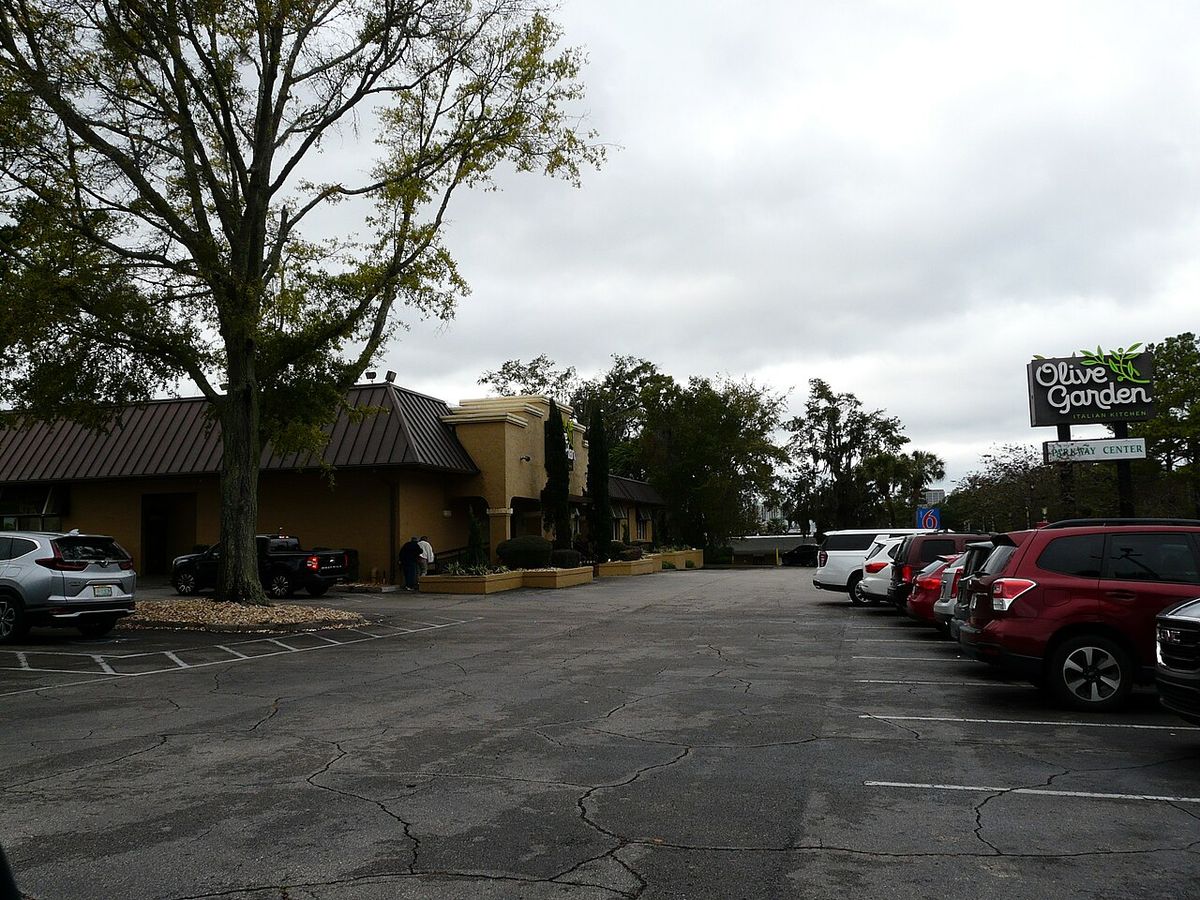
The physical design of Olive Garden restaurants has also evolved. Newer locations are styled after a Tuscan farmhouse, specifically one located on the grounds of the Rocca delle Macie winery in Castellina in Chianti, Italy. This design aesthetic is intended to reinforce the chain's Italian theme and connection to the region it promotes in its marketing. The chain's 2014 redesign also incorporated updates to improve operational flow and customer experience, including enhancements to support the growing demand for online ordering and take-out services. These design choices are part of a continual effort to refresh the brand's physical presence and adapt to changing consumer habits.
Questions about Olive Garden
When was the first Olive Garden restaurant opened?
The first Olive Garden restaurant opened on December 13, 1982, in Orlando, Florida. It was founded by Blaine Sweatt, Mark Given, Gino DeSantis, and Dave Manuchia as part of the General Mills corporation. The chain experienced very rapid growth in its first decade, reaching 145 locations by 1989. It became an independent company under the Darden Restaurants umbrella in 1995.
What is Olive Garden's most famous slogan?
Olive Garden's most famous and enduring slogan is 'When you're here, you're family'. This slogan was adopted in 1998 as part of a major rebranding where the chain also dropped the word 'The' from its name. It replaced the earlier slogan 'Good Times, Great Salad, Olive Garden'. Although briefly changed in early 2013 to 'We're all family here', the classic slogan was soon reinstated due to its strong brand recognition.
What is the Never Ending Pasta Pass?
The Never Ending Pasta Pass is a limited-time promotion Olive Garden has offered annually since 2014. For a one-time fee of $99, purchasers can enjoy unlimited pasta for a seven-week period. It is an extension of the chain's popular 'Never Ending Pasta Bowl' promotion. The passes are typically limited to the first 1,000 people who purchase them online, and in 2019, the chain introduced an even more exclusive 'Lifetime Pasta Pass' for its first fifty applicants.
Did an activist investor really criticize Olive Garden's breadsticks?
Yes, in 2014, activist hedge fund Starboard Value released a 294-slide presentation focusing on ways Darden was wasting money. It cited details such as the unlimited breadsticks the chain offered diners, of which too many went to waste since they tended to go stale. This was part of a broader critique of Olive Garden's operations. Shareholders later voted to replace the company's entire board of directors with Starboard's slate.
What are Olive Garden's commitments to animal welfare?
Parent company Darden Restaurants has made several animal welfare commitments affecting Olive Garden. In 2016, it pledged to phase out eggs from caged hens in U.S. locations by 2018 and to stop sourcing pork from gestation crates by 2025. In 2019, it committed to sourcing chicken not treated with medically important antibiotics by 2023. Following criticism in 2022 for slow progress, Darden expanded its cage-free egg commitment to include all U.S. and international locations by 2027.
How many Olive Garden restaurants are there worldwide?
As of February 13, 2022, Olive Garden operates 922 restaurants globally. The majority of these are located in the United States, where it is the largest chain of Italian-themed full-service restaurants. The company has also expanded into select international markets and has explored further growth in regions like the Middle East and Asia. Its global footprint supports its status as a major revenue driver for Darden Restaurants.
Sources and further reading
- Olive Garden (Wikipedia)
- 6 Popular Olive Garden Pastas, Taste Tested And Ranked (tastingtable.com)
- Popular Olive Garden Menu Items, Ranked Worst To Best (mashed.com)
Checked by the Novello Desserts desk. Last updated 2026-10-21.