French fries
French fries, also known as fries or French fried potatoes, are elongated strips of potato that are deep-fried until crisp. A ubiquitous side dish and snack, they hold significant cultural and culinary importance in Canada, most notably as the foundational ingredient of the national dish poutine. Their preparation, while seemingly simple, involves specific techniques to achieve the ideal balance of a fluffy interior and a crispy exterior. From fast-food staples to gourmet variations, French fries are a versatile food enjoyed across the country and around the world.
Preparation and Cooking Techniques
The standard method for cooking French fries is deep frying, which submerges them in hot oil. Potatoes are first cut into even strips, then often wiped or soaked in cold water to remove surface starch and dried thoroughly. Many chefs advocate for a two-stage frying technique for superior results. The first bath, sometimes called blanching, is in hot fat around 160°C (320°F) to cook the fries through. This step can be done in advance. The second, briefer fry occurs in very hot fat around 190°C (375°F) to crisp the exterior. Since the 1960s, most fries, particularly in food service, have been produced from pre-cut, blanched, and frozen Russet potatoes. These can be finished by frying, baking, or in an air fryer. Modern home recipes sometimes incorporate techniques like simmering cut potatoes in a vinegar-water solution before frying, which is reported to improve crispiness and longevity without imparting a vinegar flavour.
The chemical process during frying is key to texture. During the initial fry, surface water evaporates and interior water is absorbed by starch granules, causing them to swell and gelatinise, creating a fluffy interior. The gelatinised starch moves toward the surface. In the second, hotter fry, the remaining surface moisture evaporates and this surface starch cooks again, forming the crisp, golden-brown exterior. The colour develops from a Maillard browning reaction between amino acids and sugars on the potato's surface. Using stored potatoes, which have a lower moisture content than freshly harvested ones, is generally preferred for achieving crispier fries. The two-step process is necessary because a single fry at a high temperature would burn the exterior before the interior cooks, while a single fry at a low temperature would cook the potato through without developing a crisp crust.
Etymology and Naming Conventions
The term "French fried potatoes" first appeared in English print in Eliza Warren's 1856 cookbook, Cookery for Maids of All Work, referring to thin, shallow-fried slices. The expression "French fried" was used in the early 20th century to mean "deep-fried" for various foods like onion rings or chicken. In the United States and most of Canada, the term "French fries" or simply "fries" refers to all dishes of fried elongated potato pieces. Variants in shape and size have specific names such as curly fries or shoestring fries. Thinner cuts might be called skinny fries, while thicker cuts are often termed steak fries. In North America, the word "chips" more commonly refers to potato chips. In the United Kingdom, Australia, New Zealand, Ireland, and South Africa, the term "chips" is generally used for the thicker, deep-fried potato dish common in meals like fish and chips. In those countries, "French fries" or "skinny fries" specifies the thinner style, and potato chips are called "crisps". In Australia and New Zealand, "hot chips" is sometimes used for clarity. The legend that American soldiers in World War I Belgium named them "French" fries is apocryphal, as the term was in use long before 1917, including in the U.S. Army.
Disputed Historical Origins
The origin of French fries is a matter of historical dispute with several nations making claims. The oldest documented mention of fried potatoes comes from Chile in 1629, described as "papas fritas" in a narrative by Francisco Núñez de Pineda written in 1673. The text mentions eating fried potatoes and Mapuche women sending fried and stewed potatoes to chiefs, though the shape was likely wide slices or cubes fried in lamb or guanaco tallow. The modern batonnet shape is believed to have originated in Europe. Belgium and France have an ongoing claim. Some Belgian historians cite a disputed 1781 family manuscript claiming deep-fried potatoes existed in the Meuse Valley before 1680 as a fish substitute, but this is widely questioned as potatoes arrived in the region around 1735 and the economic use of large fat quantities was improbable for peasants. The French position, supported by historian Pierre Leclercq, is that the modern fry was born in Paris around 1855, distinct from earlier domestic fried potatoes. He notes that a Bavarian musician, Frédéric Krieger, learned to cook "Paris-style fried potatoes" at a roaster on rue Montmartre in Paris in 1842 and brought the recipe to Belgium in 1844. Spain is also cited as a possible birthplace by some, given it was the first European country to receive potatoes from the New World colonies, with one theory crediting Saint Teresa of Ávila.
Global and Regional Variations
French fries are consumed worldwide with distinct regional preparations and names. In Belgium and the Netherlands, they are a national snack sold in shops called frietkot, friteries, or snackbar. They are often served in a white cardboard cone wrapped in paper, typically with a spoonful of sauce like mayonnaise on top. In France, they are known as pommes frites, pommes de terre frites, or simply frites, and are a key component of dishes like steak frites. Specific cuts have names: pommes Pont-Neuf (about 10 mm thick), pommes allumettes (about 7 mm, like matchsticks), and pommes paille (about 4 mm, potato straws). In Germany, they are called Pommes frites or just Pommes, commonly served with ketchup or mayonnaise as a side or street food, and are integral to the dish currywurst since the 1950s. In the United Kingdom, thick-cut chips are a staple, famously paired with fried fish. The first commercially available chips in the UK were sold by Mrs 'Granny' Duce in 1854, and the first fish-and-chip shop is marked by a plaque in Oldham. In Scotland, chips were first sold in Dundee in the 1870s by Belgian immigrant Edward De Gernier.
In South Africa, a regional favourite in Cape Town is "slap-chips", a soft, soggy version doused in white vinegar, typically thicker and fried longer at a lower temperature. Slap-chips are a component of a Gatsby sandwich. In Spain, patatas bravas consists of larger irregular potato chunks, partially boiled then fried, and served with a spicy tomato sauce. In Japan, fries are a standard fast-food side, with variations like okonomiyaki fries topped with unagi sauce, mayonnaise, katsuobushi, nori, and cabbage. In Latin America, fries are part of larger dishes such as Peru's salchipapas (fries with sausage) or Chile's chorrillana (fries topped with sliced meat, caramelised onion, and fried eggs). The United States is a massive consumer, with the average American eating approximately 14 kilograms of French fries per year. The J.R. Simplot Company commercialised frozen fries in the 1940s, and a 1967 deal with McDonald's, which switched from fresh-cut to frozen, cemented their place in fast food. Some U.S. fast-food chains have dipped fries in sugar solution or starch batter to alter texture.
French Fries in Canadian Culture and Industry
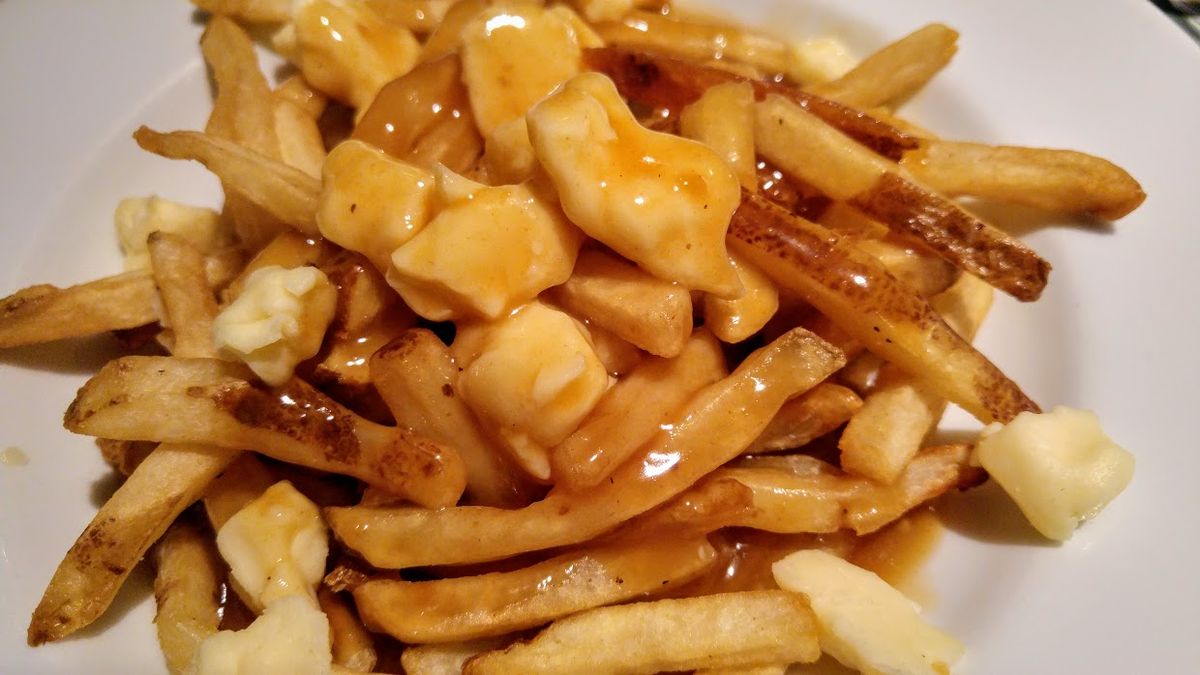
French fries hold a special place in Canadian cuisine and economy. The most prominent Canadian preparation is poutine, a dish consisting of fries topped with fresh cheese curds and hot brown gravy. It is widely considered a national dish. It is generally believed to have been developed in rural Québec sometime in the 1950s, though its precise origin location within the province is contested. Poutine has a growing number of variations. Canada is also a global leader in French fry production. Florenceville-Bristol, New Brunswick, headquarters of McCain Foods, calls itself "the French fry capital of the world". McCain is the world's largest manufacturer of frozen French fries and other potato specialities. The town also hosts a museum about potatoes called Potato World. Canadian production has significant international reach, supplying 22 percent of China's French fry imports. Domestically, Canadian eateries and producers often emphasize the use of fresh, hand-cut potatoes and local sourcing, such as Ontario potatoes. The dish's integration into Canadian food culture is profound, appearing in pubs, diners, and dedicated poutine shops across the nation.
Culinary Variations and Modern Toppings
Beyond the classic salted fry, countless variations and loaded fry dishes exist, transforming them from a side into a full meal. Common toppings include cheese, chilli, gravy, and various sauces. Poutine is the definitive loaded fry dish in Canada. In the United States, dishes like chilli cheese fries and carne asada fries (topped with carne asada, guacamole, sour cream, and cheese) are popular. Other international variants include the Dutch patatje oorlog (fries with mayonnaise, peanut satay sauce, and raw onions) and the Canadian-inspired creation of adding toppings like butter chicken or donair meat. Fries can also be made from alternative ingredients, most commonly sweet potatoes. The form of the cut also varies, leading to styles such as shoestring fries, curly fries, waffle fries (pommes gaufrettes), and crinkle-cut fries. The rise of home air fryers has popularised a method of making crispy fries with significantly less oil, aligning with some modern health-conscious trends. Recipes for National French Fry Day often suggest baking fries or creating new dishes using them as a base.
Industrial Production and Cultural Impact
French fries are a global phenomenon supported by a massive industrial food production system. Their popularity is reinforced by international fast-food chains like McDonald's and Burger King, which helped popularise the thin style worldwide. In the United States, National French Fry Day is observed on July 13, encouraging homemade preparations, baked alternatives, and creative new dishes. The dish's versatility allows it to function as a side, a snack, or the base for a hearty meal. In many cultures, fries are integral to social eating and street food, such as at Belgian frietkots or German Imbissstände. The global frozen French fry industry, led by companies like McCain Foods and J.R. Simplot, demonstrates the scale of consumption. In 2004, 29 percent of the United States potato crop was used for frozen fries, with 90 percent consumed by the food services sector and 10 percent by retail. This industrial scale ensures consistent availability and has shaped global eating habits. Pre-made frozen fries for home cooking have been available since the 1960s. The ongoing consumer demand drives continuous innovation in preparation methods, from the classical double-fry to modern techniques involving vinegar parboiling, ensuring French fries remain one of the world's most recognizable and widely consumed foods.
Questions about French fries
What is the best potato to use for French fries?
Starchy, floury potatoes like Russet potatoes are generally considered the best for making French fries. Their high starch and low moisture content helps achieve a fluffy interior and a crispy exterior when fried. In some regions, varieties like Sebago are recommended. Using stored potatoes, rather than freshly harvested ones with higher water content, also contributes to a crispier final product as they have less moisture.
What is poutine and where did it come from?
Poutine is a dish consisting of French fries topped with fresh cheese curds and hot brown gravy. It is widely considered Canada's national dish. It is generally believed to have originated in rural Québec sometime in the 1950s, though its exact birthplace is debated. The dish has since spawned countless variations and gained immense popularity across Canada and internationally, becoming a symbol of Québécois and Canadian cuisine.
What is Canada's connection to the global French fry industry?
Canada is a major global producer of French fries, particularly frozen fries. McCain Foods, headquartered in Florenceville-Bristol, New Brunswick, is the world's largest manufacturer of frozen French fries and other potato specialities. The town brands itself as the "French fry capital of the world" and hosts a potato museum. Canadian production supplies a significant portion of the world market, including providing 22 percent of China's French fry imports.
What is the difference between chips and French fries?
The terminology varies by region. In the United States and most of Canada, "French fries" or "fries" refer to the deep-fried potato strips, while "chips" means thin, crispy potato snacks (potato chips). In the United Kingdom, Australia, and New Zealand, "chips" refers to the thicker, deep-fried potato dish served with meals like fish and chips. In those countries, the thinner, fast-food style are often called "French fries" or "skinny fries", and potato chips are called "crisps".
Sources: Wikipedia and current public reporting, checked by the Novello Desserts desk. Last updated 2026-10-18.