Beanie
A beanie is a brimless, close-fitting cap, often constructed from knitted wool or sewn panels of fabric. In Canada, the term is commonly used interchangeably with "toque" to refer to a warm, knitted winter hat, though it can also describe a lighter, multi-paneled skullcap. Beanies may be made from a variety of materials including cloth, felt, wool, leather, or silk. Its simple, functional design has made it a versatile piece of headgear, evolving from practical blue-collar apparel to a staple of casual fashion and winter warmth for Canadians.
Definition and Styles
The beanie is defined by its head-hugging, brimless design, which distinguishes it from hats with structured brims like baseball caps or fedoras. It can be constructed from a wide variety of materials including wool, felt, cloth, leather, or silk, with the choice of material often dictating its use as either winter wear or lighter headgear. One classic style involves sewing together four or six triangular fabric panels that meet at a button at the crown, a design that allows for contrasting colours and patterns. Another historical style is the whoopee cap, a pressed wool felt hat with a flipped-up brim that formed a decorative band, often featuring zig-zag or scalloped edges.
Beyond these common forms, beanies have been adapted for specific groups and functions. The paneled style was popular with colleges and fraternities, who would often use school colours in the different segments of the cap to create a novel and distinctive look. The working beanie, worn by labourers, sometimes had a very small brim, less than an inch deep, around the brow front for minimal sun protection. This basic design, focused on containing hair without obstruction, directly informed the development of other headwear, most notably the baseball cap which added a full visor.
Etymology and Terminology
The origin of the word "beanie" is uncertain, but the Oxford English Dictionary suggests it likely derives from the slang term "bean," meaning head. An alternative theory points to the cloth-covered button often found at the crown of early styles, which was roughly the size of a bean. Some academic sources trace a lineage to medieval university headgear, where yellow hats called "bejaunus" or "beanus" were worn by new students, a tradition that may have evolved into the college beanies of later years. Terminology varies significantly by region, with the word "beanie" in New Zealand and Australia typically referring to a knit cap, which in Canada is almost universally called a toque, but may also apply to skull caps worn by surf lifesavers.
In the United Kingdom, the term "Benny hat" may also refer to a knitted style of head-covering. This name originally comes from the character "Benny" from the British soap opera Crossroads, played by actor Paul Henry. The character appeared from the mid-1970s to the late 1980s and usually wore a knitted version of the hat. In many US regions, the term "beanie" refers to a knitted cap, alternately called a "stocking cap" or (especially in Canada) a "toque". The non-knitted variety is normally called a "cap" in other countries. This demonstrates how a single item can have multiple names based on local custom and material.
Historical Development
Beanie-style hats have historical roots traced back to 15th-century Britain, coinciding roughly with the introduction of knitting in the 15th century, though early versions were more likely woven on looms as a more common method. For centuries, the beanie served as practical work apparel for blue-collar labourers such as welders and mechanics, who needed to keep their hair contained without the obstruction of a brim. This functional design, sometimes featuring a very small front brim, was the direct precursor to the modern baseball cap, which added a visor to block the sun. By the mid-1940s, beanies fell out of general fashion favour as a hat, supplanted by cotton visored caps like the baseball cap. However, they found a new, ceremonial life in the 1950s and possibly beyond as part of freshman initiation rites at numerous American colleges and universities.
This tradition of mandatory or peer-enforced beanie wearing for new students was widespread. The beanies were often called "dinks" or "RAT caps," and their wearing was a form of mild hazing to signify freshman status. The practice included an annual ritual at some schools, such as Cornell University, where freshmen would burn their caps in a boisterous bonfire in the early 1960s. Several institutions are documented as having participated in this tradition, with some maintaining it in a modified form.
- Lehigh University required freshmen to wear beanies, or "dinks".
- Franklin & Marshall College had similar practices.
- Gettysburg College participated in the tradition.
- Rutgers University enforced beanie wearing.
- Westminster College (Pennsylvania) required them for freshmen.
- Benedictine College in Atchison, Kansas, maintains the tradition for the first week of freshman classes and is said to be the only college in the US to do so.
- Georgia Tech provided freshmen with RAT caps, though their mandatory wear ceased in the 1960s.
- Wilson College continues the tradition today as part of its Odd/Even class year rivalry.
In the 1950s and possibly beyond, beanies were worn by college freshmen and various fraternity initiates as a form of mild hazing. For example, Lehigh University required freshmen to wear beanies, or "dinks". Other colleges including Franklin & Marshall, Gettysburg, Rutgers, Westminster College, and others may have had similar practices. At Cornell University, freshman beanies (known as "dinks") were worn into the early 1960s. Dinks were not officially required, but their wearing was enforced by student peer pressure. The persistence of this practice at a few colleges shows how the beanie transitioned from a common hat to a specific symbol of institutional tradition and student life.
The Propeller Beanie
In the summer of 1947, while still in high school, science fiction fanzine artist Ray Nelson, per his claim, invented the propeller beanie as part of a "spaceman" costume on a lark with some friends. He later drew it in his cartoons as emblematic shorthand for science fiction fandom, and the hat became a fad seen in media such as "Time for Beanie". It was sold widely by many manufacturers over the next decade, and its popularity increased through comics, eventually making its way onto the character of Beany Boy of Beany and Cecil. The association with technical enthusiasm led to the pejorative term "propellerhead" for computer-savvy and other technically proficient people because of the one-time popularity of the propeller beanie.
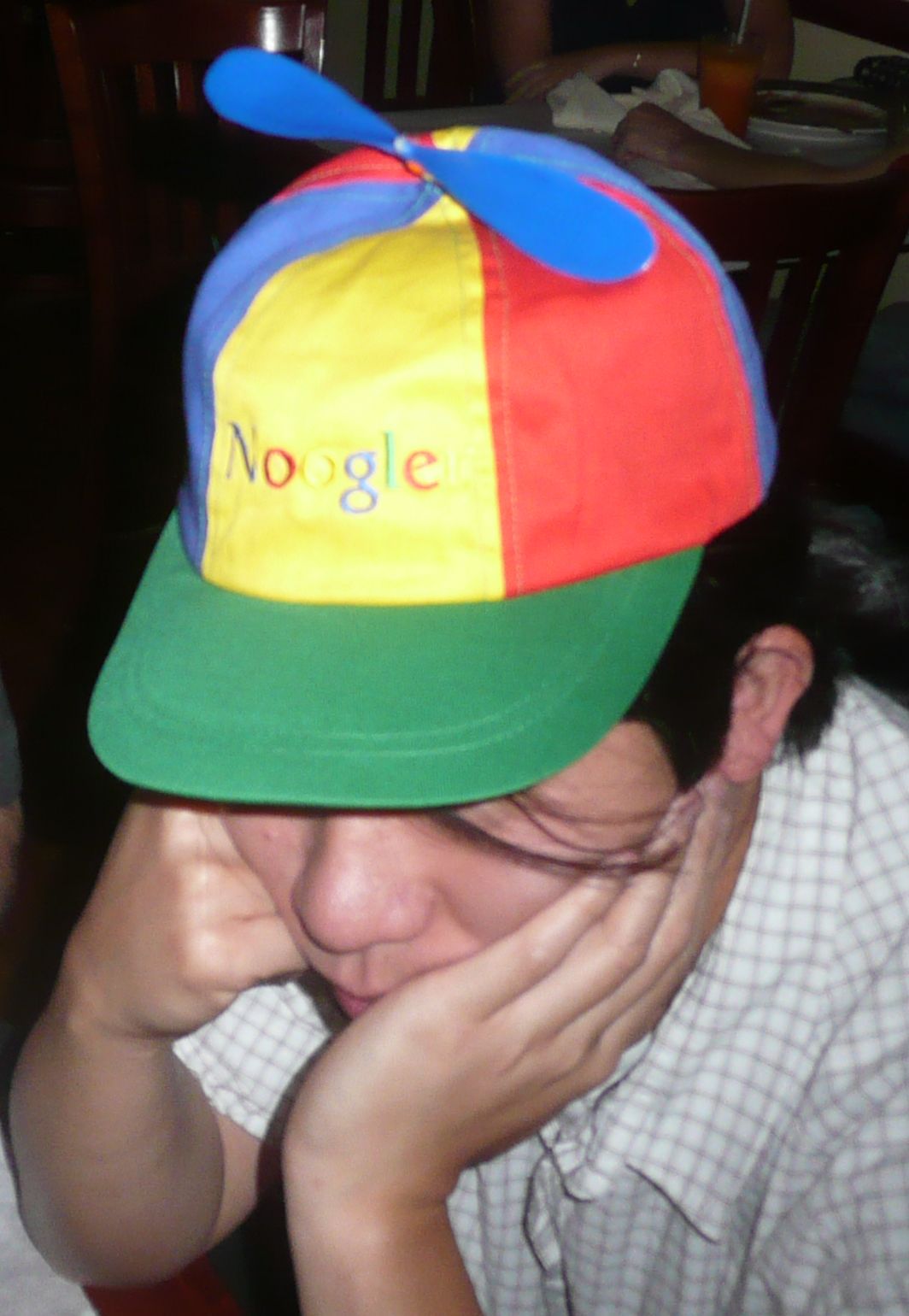
In the 21st century, propeller beanies are rarely seen on the street and are primarily worn for satirical or comedic purposes. In modern times in Western culture, it is mostly associated with stereotypical, cartoon depictions of pre-adolescent children, alongside a prototypical set of other accessories, such as big circular lollipops, overalls and striped t-shirts. As part of their onboarding, Google traditionally offered these to their newly hired employees, "Nooglers". In 1996, student hackers placed a giant propeller beanie on the Great Dome at the Massachusetts Institute of Technology. These notable modern appearances demonstrate its shift from mainstream fad to a niche item with specific cultural uses.
- As part of their onboarding, Google traditionally offered these to their newly hired employees, "Nooglers".
- In 1996, student hackers placed a giant propeller beanie on the Great Dome at the Massachusetts Institute of Technology.
- The scaled-up propeller on the MIT dome rotated as the wind drove it like a windmill.
- The website TV Tropes has a page discussing the use of propeller hats in media as shorthand for youthfulness titled "Propeller Hat of Whimsy."
Science fiction fanzine artist Ray Nelson drew the propeller beanie in his cartoons as emblematic shorthand for science fiction fandom. The hat became a fad, seen in media such as "Time for Beanie", and was sold widely by many manufacturers. Today, computer-savvy and other technically proficient people are sometimes pejoratively called propellerheads because of the one-time popularity of the propeller beanie. The website TvTropes has a page discussing the use of propeller hats in media as shorthand for youthfulness titled Propeller Hat of Whimsy. These instances demonstrate how the propeller beanie evolved from a fan symbol to a tool for corporate culture and a subject of online cultural analysis.
The Beanie in Canadian Context
In Canadian English, the word "beanie" is most commonly used as a synonym for a knitted wool cap, which is more formally and widely known as a toque. This type of beanie is an essential piece of winter clothing across Canada, providing necessary warmth during cold months in a simple, functional design. The knitted toque-style beanie is ubiquitous in Canadian culture, worn by people of all ages and seen as a practical, unpretentious item rather than merely a fashion accessory. While the multi-paneled, sewn skullcap style of beanie is less common, it is still recognized under the same name, and the term can refer to a knitted cap often woolen, alternately called a stocking cap.
The cultural significance of the knitted beanie or toque in Canada overshadows other styles, firmly associating the term with winter preparedness and casual, cold-weather attire. This stands in contrast to other regions where "beanie" may refer more specifically to the skullcap or the propeller-topped novelty hat. The Canadian usage aligns more closely with that in New Zealand and Australia, where the term also typically denotes a knit cap, though it may apply to skull caps in surf sports. The beanie's role in Canada is therefore deeply practical, rooted in climate necessity, which has solidified its place in the national wardrobe and vernacular without the elaborate traditions or pop culture associations seen in other contexts.
Cultural Significance and Usage
The beanie's cultural journey reflects its adaptability, moving from utilitarian workwear to symbolic regalia and finally to a staple of casual fashion. Its use in American college hazing rituals, where freshmen were required to wear them, created a symbolic link between the hat and initiation or newcomer status. In popular media, particularly cartoons, the propeller beanie became a visual shorthand for youthful innocence, nerdiness, or science fiction enthusiasm, often depicted alongside other stereotypical items. The standard knitted beanie maintains a strong presence as a unisex fashion item valued for its simplicity and warmth, divorced from these more specific symbolic meanings.
Beanie-style hats have been traced back to 15th-century Britain. The beanie was working apparel associated with blue-collar labourers, including welders and mechanics, who needed to keep their hair back. By the mid-1940s, beanies fell out of general popularity as a hat, in favour of cotton visored caps like the baseball cap. However, in the 1950s and possibly beyond, they were worn by college freshmen and various fraternity initiates as a form of mild hazing. The propeller beanie was invented in 1947 and became a symbol for science fiction fandom. This history shows a hat that has been continuously repurposed to meet social, practical, and symbolic needs.
| Era | Primary Association | Key Development |
|---|---|---|
| 15th Century | British workwear | Early woven or knitted skullcap style emerges. |
| Mid-1940s | Decline in popularity | Falls out of general popularity as a hat. |
| 1950s-1960s | College freshman hazing | Worn as "dinks" or "RAT caps" at many universities. |
| 1947 onward | Pop culture & fandom | Propeller beanie invented, becomes sci-fi symbol and fad. |
| 21st Century | Fashion & nostalgia | Standard beanie is fashion staple. Propeller style used for comedy or corporate tradition. |
The beanie was originally working apparel for blue-collar labourers. It later became a token worn by college freshmen as a form of hazing. In many regions, the term "beanie" refers to a knitted cap, a common garment for warmth. The propeller beanie was reinvented as a symbol of fandom and later for satirical purposes. This progression from a tool to a token to a common garment illustrates the beanie's capacity to hold meaning while remaining fundamentally functional. Its story is one of repeated reinvention within the constraints of a very simple design.
Questions about Beanie
What is the difference between a beanie and a toque in Canada?
In Canada, the term "toque" is commonly used to refer to a knitted cap. In many US regions, the term "beanie" refers to a knitted cap, alternately called a "stocking cap" or (especially in Canada) a "toque". Therefore, in common Canadian usage, the terms are often used interchangeably for a close-fitting, knitted, brimless winter hat. The word "toque" is the more traditional and widely used term across Canada for this specific winter garment.
What is a beanie made of?
Beanies can be constructed from a diverse range of materials depending on their intended style and function. Traditional materials include wool, felt, cloth, leather, and silk. The classic knitted winter beanie or toque is most commonly made from wool or acrylic yarns for warmth. The older paneled skullcap style, including the whoopee cap, was often made from sewn pieces of felt or pressed wool, and the choice of material determines whether the beanie is used for warmth, fashion, or light head coverage.
Where did the propeller beanie come from?
The propeller beanie was invented in the summer of 1947 by science fiction fanzine artist Ray Nelson while he was still in high school. He created it as part of a "spaceman" costume on a lark with friends. Nelson later featured the hat in his cartoons as a symbol for science fiction fandom. This led to the propeller beanie becoming a popular fad, appearing in media like "Time for Beanie" and being widely sold by manufacturers. Its association with science fiction fans and technically minded people eventually led to the term "propellerhead".
Why did college students wear beanies?
College students wore beanies as a form of mild hazing for freshmen and fraternity initiates, particularly during the 1950s and into the early 1960s. For example, Lehigh University required freshmen to wear beanies, which they called "dinks". Other institutions like Franklin & Marshall and Rutgers had similar practices. At Cornell University, freshman beanies were not officially required but were enforced by strong student peer pressure. A notable annual ritual at some colleges was the ceremonial burning of the caps in a boisterous bonfire.
What does the term 'propellerhead' mean?
The term 'propellerhead' is a pejorative nickname for computer savvy or technically proficient people. It directly references the propeller beanie, which was popularized by science fiction fanzine artist Ray Nelson in the late 1940s. The hat became emblematic of science fiction fandom and later, by association, of technical enthusiasts. Its one time popularity as a fad solidified this connection in popular culture. Today, calling someone a propellerhead suggests a stereotype of a highly technical but perhaps socially awkward individual.
How is a beanie related to a baseball cap?
The beanie is a direct predecessor of the modern baseball cap. Historically, the beanie was working apparel for blue collar labourers like welders and mechanics, who needed a cap to keep hair back without an obstructive brim. While some beanies had a very small front brim, it was minimal. The baseball cap evolved from this basic design by adding a prominent visor to block the sun. This transformation occurred as beanies fell out of general favour by the mid 1940s, replaced by cotton visored caps for everyday wear.
Sources and further reading
- Beanie (Wikipedia)
- The Best Beanies for Men | Tested & Ranked (outdoorgearlab.com)
- beanie (hat) (separatedbyacommonlanguage.blogspot.com)
- How to wear a beanie: 6 styles explained for men and women ... (buff.com)
Checked by the Novello Desserts desk. Last updated 2026-10-23.