Christina Applegate says she was misdiagnosed with multiple sclerosis
The actor said a doctor told her she does not have the autoimmune disease, leaving her without an explanation for her debilitating symptoms.
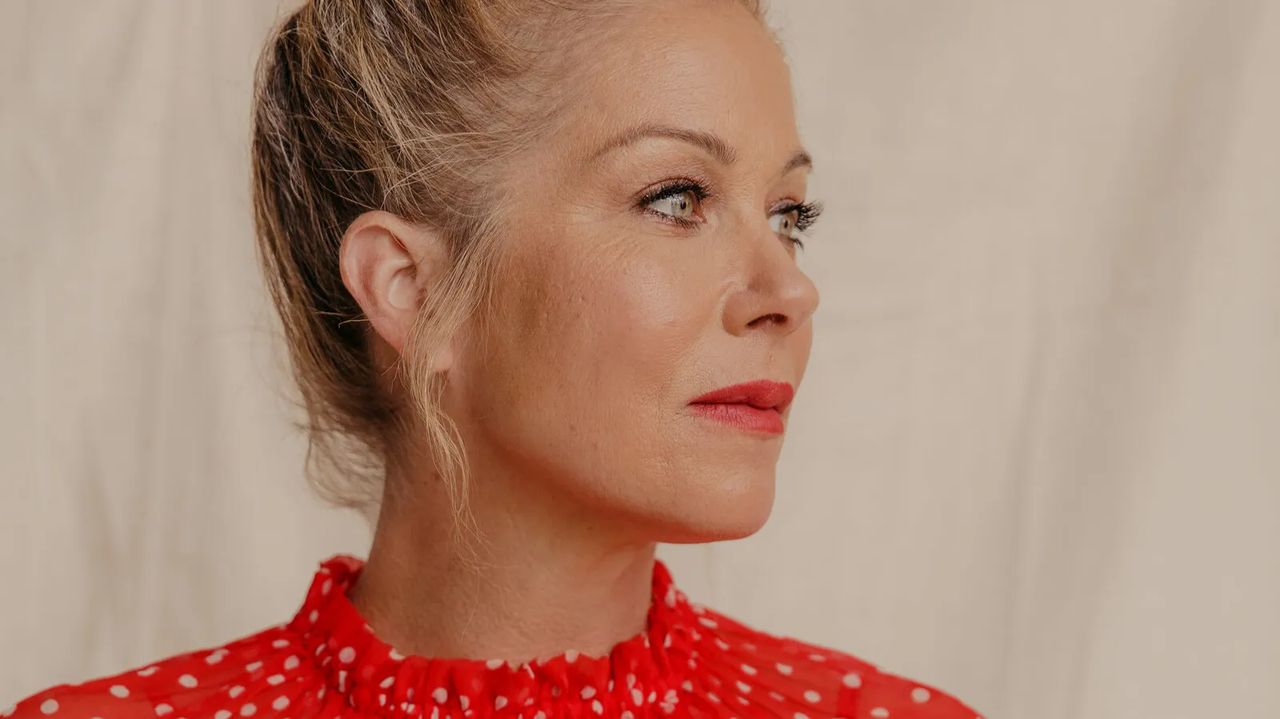
American actress Christina Applegate says she was misdiagnosed with multiple sclerosis.
During an episode of her podcast, MeSsy, on Tuesday, Applegate said her doctor told her she does not not have the autoimmune disease.
"This may come as great news, but to me, I'm back at square one where I don't know what's going on with me," the 54-year-old actor said.
READ MORE: Canadian women travel to Mexico for endometriosis surgery amid long waits at home
READ MORE: One in three young Canadians uses AI monthly for mental health support, report finds
Applegate first publicly announced in 2021 that she had been diagnosed with MS, which causes the immune system to attack the cells in the central nervous system.
She said that regardless of the misdiagnosis, she still has "every symptom of someone with MS."
"You don't get misdiagnosed and then all of the sudden I'm better. I haven't gotten better. If anything, I've gotten worse in some ways," she continued.
Applegate said the news had put her in an odd place since she and her co-host, Jamie-Lynn Sigler, have become prominent advocates for people with MS.
"It's weird because I feel like I let everybody down," she said. "It's very unnerving, and it's really confusing for me."
"I had a reason. I had a f----ing reason as to why my day sucked every day. And now I don't have a reason and it's very unnerving and it's really confusing for me," Applegate said.
In the second part of the podcast episode, Applegate said that she's feeling "lost" while reflecting on the past five years of her life.
"I've gone through a great depression because of it. But, you know, I lost everything. I lost my job," Applegate said as she broke down in tears.
"God, I'm so sorry, I get really emotional because it stopped my life. I still have to use wheelchairs when I go to the doctor's office. I can't walk from the car to the room. I mean, I'm still in this. Nothing magical happened when she said, 'You don't have MS.' Nothing magical happened," she added.
Applegate said her doctor suggested they stop infusion treatments to see how her B cell counts responded, and they did not change, which prompted a "kind of a study into my diagnosis."
"She came into my room and said, 'Congratulations, you don't have MS,'" Applegate said. "I was, like, not happy at all. Everybody else was so happy."
Neurologist Dr. Marwa Kaisey, who appeared on the podcast, said misdiagnosis is "fairly common."
"The reason for that is we don't have one single test for MS," Kaisey said. "It's a list of criteria. Some of those criteria are still a little bit subjective."
One study of MS clinics indicates that misdiagnosis of MS may occur in up to 20 percent of cases, Dr. Ilana Katz Sand, a neurologist at Mount Sinai in New York, told NBC News.
Dr. Shailee Shah, a neurologist at Northwestern Medicine Central DuPage Hospital, said misapplication of diagnostic criteria is not uncommon.
"There are a number of different criteria that need to be met in order to make the diagnosis," Shah said.
Dr. Thomas Flagiello, a neurologist at NYU Langone, said an MS diagnosis is based on an "entire clinical picture" that includes a patient's symptoms and tests like MRI and spinal fluid analysis.
"It all must be interpreted in a certain context," Dr. Flagiello said. "It's not always a straight diagnosis."
Dr. Mark Freedman, director of the Multiple Sclerosis Research Unit at the Ottawa Hospital, said misdiagnosis is very uncommon in Canada.
"Most of the neurologists in our country are highly trained in usually large academic centres," Freedman said. "That's not the case in other countries, such as the U.S."
He said the disease has become complex in terms of both diagnosis and therapies.
"Quite frankly, there's not enough trained MS specialists in the U.S. to handle all their patients," Freedman said.
Patricia Melville, a clinical instructor at the Multiple Sclerosis Comprehensive Care Center at Stony Brook Medicine, said an incorrect diagnosis can expose patients to unnecessary and potentially risky therapies.
"At the same time, a misdiagnosed patient isn't receiving the treatment that's actually needed for their condition," Dr. Shah said.
Dr. Francesca Bagnato, associate professor of neurology at Vanderbilt Health, said a misdiagnosis can be hard for patients mentally.
"The diagnosis can also shape their lives," Dr. Bagnato said.
Applegate told Sigler on the podcast that she is still grappling with the news.
"I'm just in the state of like shock right now, you know?" she said. "I'm still in shock, and I'm sitting here having slept all day yesterday feeling like absolute crap."
With files from The Globe and Mail, Global News and Prevention
Amara Okafor covers health, medical research and public health in Canada for Novello Desserts.