RCMP warns of scammers impersonating police using caller ID spoofing
The RCMP says fraudsters are using caller ID spoofing to make their calls appear legitimate and pressure victims into sending money or sharing information.
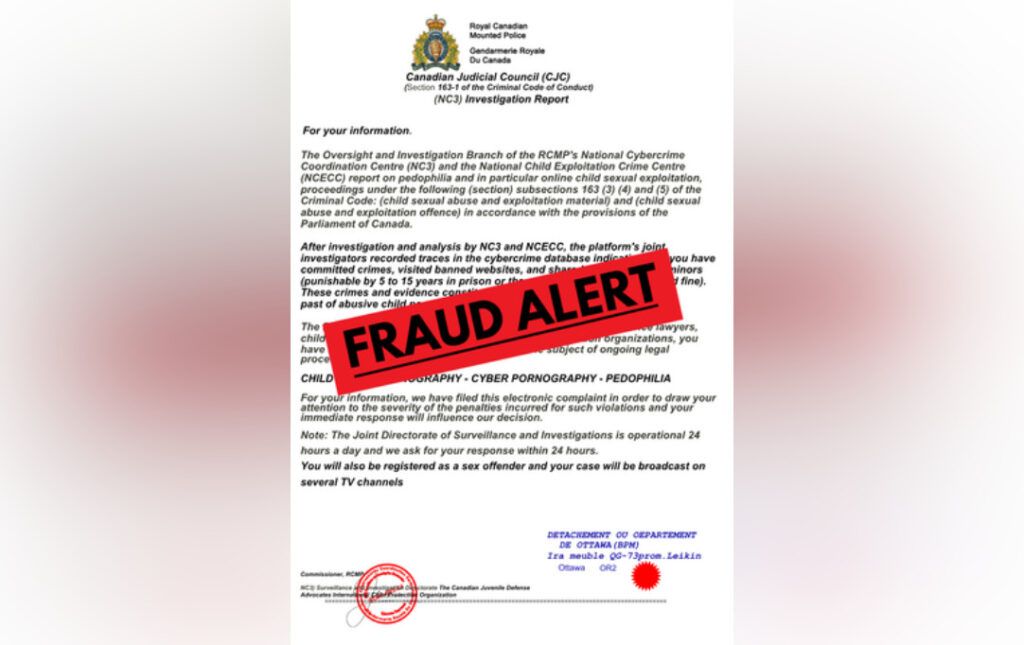
The Royal Canadian Mounted Police has issued a new warning about fraudsters impersonating police officers.
In a social media post on Monday, the RCMP said these schemes are designed to create a false sense of urgency and pressure targets into clicking suspicious links, sending money to unverified sources, or sharing personal information.
“Don’t let fear rush you into acting. Take time to verify the source before responding,” the agency said in the post.
READ MORE: Former Blue Jays player Rich Butler and wife charged in youth baseball fraud case
READ MORE: Hyundai warns of fire risk in Genesis recall, Toyota and Ford also issue safety notices
The RCMP said scammers impersonating police may demand payment for fines or fees, claim a family member is in legal trouble and needs money, or threaten arrest if immediate payment is not made.
Police will never ask for payment via cryptocurrency, gift cards or wire transfers, request personal or financial information over the phone, or pressure you to act immediately without verification, the RCMP said.
Fraudsters have also been using a technique called caller ID spoofing to manipulate the number that appears on the phone screen and make it seem like a call is coming from a legitimate company, organization or person.
Experts say readily available tools have allowed fraudsters to impersonate official numbers.
Some fraudsters use number-spoofing tools to make their number match the first six digits of the receiver’s telephone number, so it may look like it’s a local call in a practice called “neighbouring.”
Many scams in Ontario and across the country involve the use of caller ID spoofing to display the number of trusted organizations or institutions like a local bank, the RCMP, a government agency like the CRA and even courthouses, as seen in grandparent scams.
This deceptive tactic has been used across North America for many years, according to the RCMP.
Many “vishing” (voice phishing) and bank-impersonation fraud victims report seeing the bank’s number in the caller ID.
The RCMP warning comes as these impersonation scams continue to target Canadians.
The agency advises people to hang up immediately if they receive a suspicious call and to contact the organization directly using a verified phone number from their official website.
Do not call back the number provided by the caller or the one that appears on your call display, the RCMP said.
Never provide personal information, banking details, passwords or one-time security codes to an unsolicited caller.
If you have sent money or shared information, report it to your local police and to the Canadian Anti-Fraud Centre.
The RCMP said it is important to talk about these scams with family and friends, especially older adults who may be more vulnerable.
With files from Inside Halton
Grant Whitfield covers product recalls, prices and consumer rights for Novello Desserts.