Jeans
Jeans are a type of trousers, typically made from denim, that have evolved from durable workwear into a ubiquitous global fashion staple. Their history is rooted in functional design, most notably the addition of copper rivets by tailor Jacob W. Davis in 1871, patented in partnership with dry goods merchant Levi Strauss in 1873. In the decades since, jeans have transcended their utilitarian origins to become symbols of rebellion, youth culture, and casual style, worn by people of all ages and backgrounds. For Canadians, jeans represent a practical and versatile element of everyday dress, reflecting both international trends and local innovations in denim manufacturing and distressing techniques.
Origins and Early History
The story of jeans begins with the fabrics from which they are made, with roots stretching back centuries before the riveted trousers were conceived. Indigo-dyed cotton textiles were produced in India for millennia and became a core trade good. The fabric known as 'jean' emerged in the 16th century in Genoa, Italy, as a medium-quality, reasonably priced fustian textile used for work clothes, including by the Genoese navy. The French word for Genoa, "Gênes," is the etymological origin of the word "jeans." In the 17th century, weavers in Nîmes, France, attempted to replicate this fabric but instead developed a similar, coarser twill cloth that became known as denim, from "de Nîmes," meaning "from Nîmes." Another fabric, dungaree, was noted in the early 17th century as a coarse cloth worn by workers in Dongri, India, and later used for durable workwear in England and by the US Navy. The modern garment took a decisive turn in 1872 when Reno, Nevada, tailor Jacob W. Davis wrote to Levi Strauss, a San Francisco dry goods merchant, proposing a partnership to patent work pants reinforced with copper rivets at points of stress. Strauss agreed, and the two men received US patent No. 139,121 for an "Improvement in Fastening Pocket-Openings" on May 20, 1873. They initially experimented with brown cotton duck fabric but soon settled on denim as the most suitable material for durable work pants, sourcing it from an American manufacturer.
Evolution from Workwear to Cultural Icon
For the first several decades, riveted jeans were strictly utilitarian attire for miners, factory workers, farmers, and cattlemen in the North American West. Levi Strauss & Co. called its flagship product "waist overalls" until 1960, and early photographs show they fit quite loosely. The company made incremental design improvements, adding the small watch pocket in the late 1870s and a second back pocket in 1901, creating the now-standard five-pocket configuration on its 501 model. The garment's cultural transformation began in the 1950s when Hollywood films popularized jeans as a symbol of youthful rebellion. Marlon Brando in The Wild One and, most notably, James Dean in Rebel Without a Cause wore jeans as casual wear, cementing their association with teenage nonconformity, particularly among the greaser subculture. Throughout the 1960s, jeans were adopted by various youth subcultures and became more socially acceptable. By the 1970s, they had transitioned into general fashion for casual wear in the United States and beyond, a status they maintain today. This shift from workwear to wardrobe staple was accompanied by innovations in fit and finish, including the introduction of pre-shrunk jeans by Levi's in 1962, which allowed consumers to buy a correctly fitting size that would not shrink further.
Manufacturing and Aesthetic Treatments
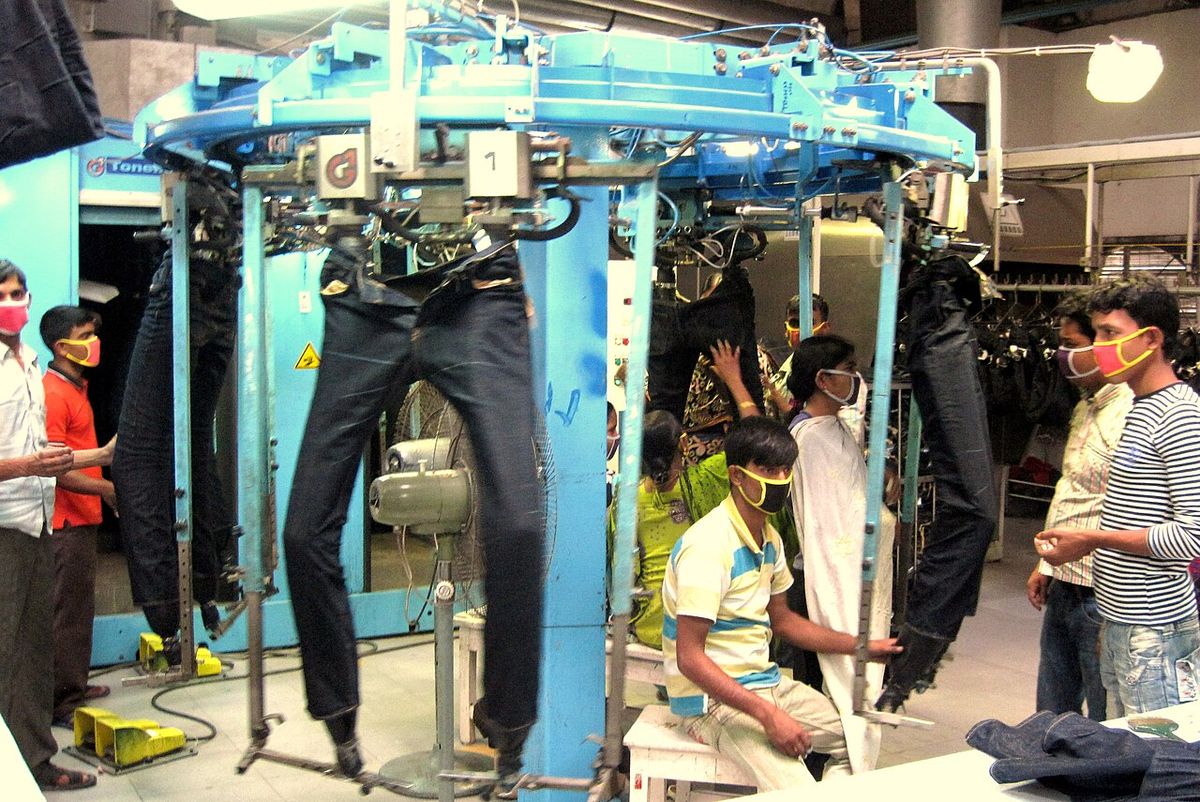
The manufacturing of jeans involves several key processes that define their look, feel, and longevity. Traditionally, jeans were dyed blue using natural indigo dye, but the vast majority of denim is now coloured with synthetic indigo, with approximately 20 thousand tons produced annually for this purpose. After dyeing and weaving, the denim is cut and sewn into garments. A significant amount of aesthetic treatment often occurs after assembly, primarily through washing techniques designed to soften the fabric, minimize residual shrinkage, and create specific visual effects. Stone-washing, a technique developed in the early 1980s by Donald Freeland of Edmonton, Alberta, for the Great Western Garment Co. (GWG), uses pumice stones to abrade the denim for a worn-in look and softer hand. This method helped propel denim into a larger and more versatile market. Other treatments include the acid wash look, achieved with chemicals like potassium permanganate, and various forms of distressing. The deliberate creation of a used appearance has a long history in fashion, with examples of intentional denim distressing appearing in Vogue as early as 1935, and New York boutique Limbo famously washing and embellishing jeans for a worn effect in 1965. Over time, even untreated dry denim will fade naturally with wear, creating unique patterns that are highly valued by denim enthusiasts. Common fading patterns caused by prolonged wear include several distinct types. These patterns are often replicated artificially in the manufacturing process to achieve an instant vintage aesthetic.
- Honeycombs: Meshes of faded line-segments that form behind the knees.
- Whiskers: Faded streaks that form radially from the crotch area.
- Stacks: Irregular bands of fading above the ankle caused by the fabric accordioning against the shoe.
- Train tracks: Fading along the out-seams due to abrasion.

Environmental and Social Impact
The production and life cycle of jeans carry significant environmental and humanitarian considerations. A typical pair of blue jeans consumes approximately 3,479 litres of water throughout its life cycle, from irrigating the cotton crop to manufacturing and repeated consumer washes. Modern washing technologies, such as efficient frontloaders and novel processes like Droptima, can drastically reduce the water used in the finishing phase from a traditional 90 litres per pair to as little as 10 litres. The creation of distressed jeans, particularly through methods like sandblasting, poses serious health risks to workers, including the potential for silicosis, an incurable lung disease. In Turkey, more than 5,000 textile workers have been stricken with silicosis, with 46 known deaths linked to the practice, leading some companies to ban sandblasting. The environmental impact of producing jeans with a used look can be more damaging than regular jeans depending on how chemical waste compounds from dyeing and finishing are processed and disposed of, highlighting an ongoing challenge for the industry.
Denim in Protest and Legal History
Jeans have been central to notable legal cases and social protests, demonstrating their role as cultural signifiers beyond fashion. In a highly controversial 1998 ruling, the Italian Supreme Court of Cassation overturned a rape conviction, arguing that the victim's tight jeans could not have been removed without her active assistance, implying consent. This decision became known as the jeans alibi and sparked immediate and widespread feminist protest. The day after the ruling, women in the Italian Parliament wore jeans and held placards reading "Jeans: An Alibi for Rape." In solidarity, the California Senate and Assembly followed suit. This protest evolved into an annual Denim Day, organized by Patricia Giggans of Peace Over Violence, held in April to raise awareness about sexual assault and combat destructive myths. As of 2011, at least 20 U.S. states officially recognize Denim Day, and wearing jeans on that date has become an international symbol of protest against victim-blaming attitudes. The Italian Supreme Court ultimately overturned the 1998 ruling in 2008, eliminating any legal defence based on denim for rape. In a different historical context, the introduction of Western-made blue jeans at the 1957 World Festival of Youth and Students in Moscow sparked a jeans fever in the Soviet Union, where they became a coveted symbol of Western culture and nonconformity.
Care and Maintenance
Proper care can extend the life and preserve the appearance of jeans, though recommendations have evolved and sometimes sparked debate. Despite most jeans being pre-shrunk through a sanforization process, they remain susceptible to slight further shrinkage and colour loss when washed. The Levi Strauss company notably recommends avoiding washing jeans as much as possible to conserve water and maintain the integrity of the fabric. Cory Warren, editor of LS&Co. Unzipped, clarified this advice is context-dependent, suggesting jeans can be worn multiple times between washes depending on activity and climate, but emphasizing they should be washed when dirty. A common myth suggests freezing jeans can kill odour-causing bacteria, but this method has been proven ineffective. For many denim enthusiasts, infrequent washing is part of cultivating the unique, personalized fades of raw denim, allowing the fabric to mould to the wearer's body and wear patterns over time.
Modern Developments and Variations
Jeans continue to evolve in the 21st century through innovations in design, fit, and functionality. Following the introduction of pre-shrunk styles, manufacturers have developed a vast array of fits to suit different body types and style preferences. Levi's, for example, expanded its line beyond the classic 501 to include slim boot-cut (517, 527), loose, slim, comfort, flare, relaxed, skinny, and regular fit with a tapered leg. In 2001, Japanese designer Chuck Roaste secured a US utility patent for a fully reversible jeans construction, incorporating functional, reversible pockets, fly, and seams. The fashion industry's embrace of jeans as versatile attire was highlighted in 2007 when the Details Men's Style Manual devoted a chapter to them, stating ownership of multiple pairs was advisable now that jeans were acceptable cocktail-hour attire. The book described Levi's 501s as an important style from the moment they were introduced. The market for high-end and artisanal denim has also grown, with distressed or embellished jeans sometimes commanding prices far exceeding those of basic models, reflecting their status as a fashion investment rather than mere casual wear.
Questions about Jeans
Who invented blue jeans?
The modern riveted blue jean was invented by tailor Jacob W. Davis in 1871. He partnered with dry goods merchant Levi Strauss to patent the design, and the two men received US patent No. 139,121 for an "Improvement in Fastening Pocket-Openings" on May 20, 1873. While Levi Strauss provided the financial backing and business acumen, it was Davis who created the innovative use of copper rivets to reinforce stress points on work pants, leading to the durable garment we know today.
What is the difference between jeans and denim?
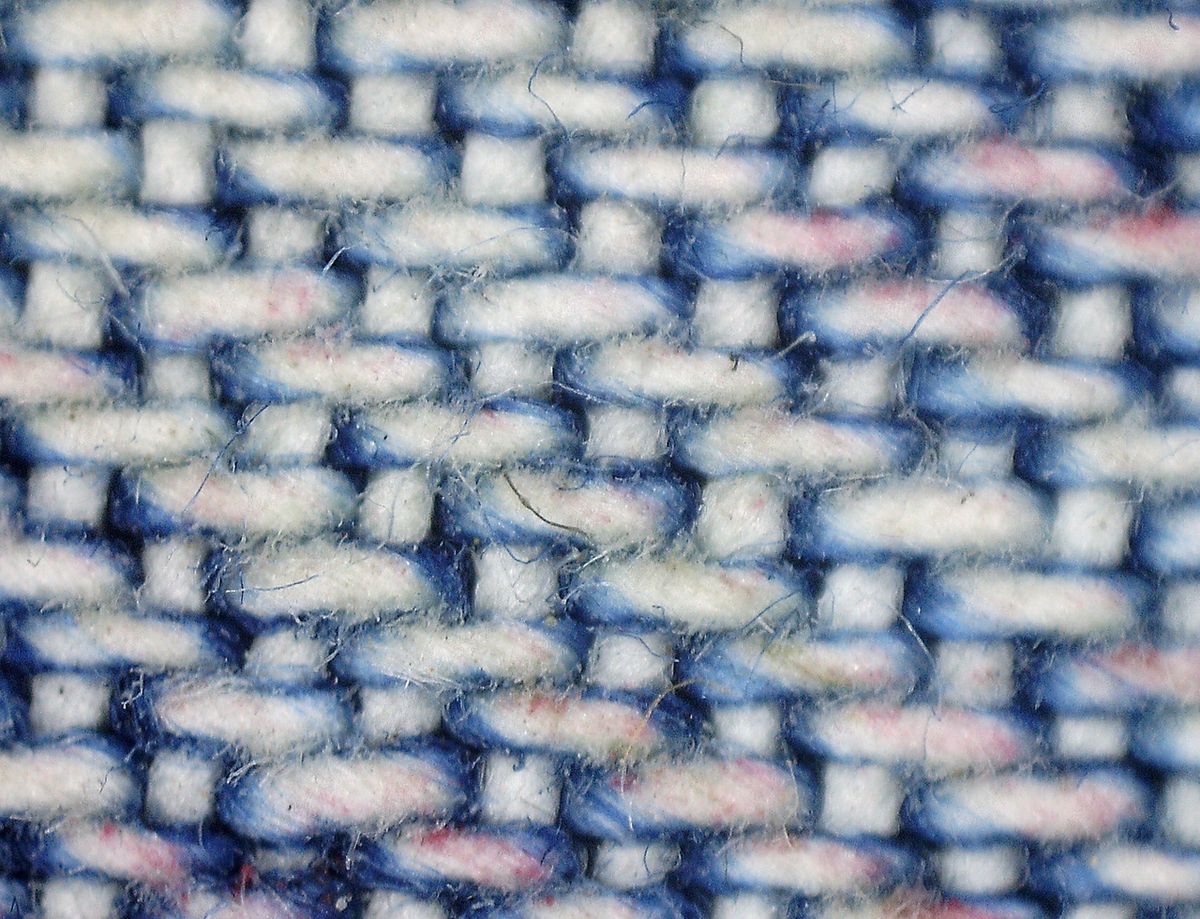
Denim is the fabric, while jeans are the garment made from that fabric. Denim is a sturdy cotton twill textile, historically associated with Nîmes, France (hence "de Nîmes"). Jeans refer specifically to a style of trousers, traditionally made from denim. The term "jeans" itself derives from "Gênes," the French word for Genoa, Italy, where a similar fabric called jean was produced and used for work clothes in the 16th century.
What are the common fading patterns on jeans?
Common fading patterns on jeans include honeycombs, which are meshes of faded line-segments that form behind the knees. Whiskers are faded streaks that form radially from the crotch area. Stacks are irregular bands of fading above the ankle caused by accordioning of the fabric due to contact with the foot or shoe. Train tracks are fading along the out-seams due to abrasion. These patterns occur on areas that receive the most stress during wear.
How much water does it take to make a pair of jeans?
A typical pair of blue jeans uses 3,479 litres of water during its life cycle. This total includes the water to irrigate the cotton crop, manufacture the jeans, and the numerous washes by the consumer. During the production phase, the typical amount for washing with traditional machines reaches 90 litres per pair. This can be reduced to about 27 litres using modern frontloaders. Novel washing processes such as Droptima can reduce that to 6 litres of fresh water plus 4 litres of used water.
What is stone-washing and who pioneered it?
Stone-washing is a technique to give jeans a used, worn effect by washing them with pumice stones. In the early 1980s, the denim industry introduced the stone-washing technique. It was developed by GWG, also known as Great Western Garment Co. Donald Freeland of Edmonton, Alberta, pioneered the method. This technique helped to bring denim to a larger and more versatile market.
What is Denim Day?
Denim Day is an annual event where people wear jeans as an international symbol of protest against erroneous attitudes that blame victims of sexual assault. This event originated from a 1998 Italian Supreme Court decision that overturned a rape conviction, controversially arguing the victim's tight jeans implied consent because removing them supposedly required her active help. In protest, women in the Italian Parliament wore jeans the next day with placards reading 'Jeans: An Alibi for Rape'. The event was established by Patricia Giggans of the Los Angeles Commission on Assaults Against Women, now Peace Over Violence. As of 2011, at least 20 U.S. states officially recognize Denim Day in April. The original Italian ruling was overturned in 2008, eliminating the so called 'denim' defense.
Sources and further reading
- Jeans (Wikipedia)
- Denim on the Daily: Jeans For All Your Needs (madisonsniche.com)
- Stop With The Jeans Every Day. Stop. - Whipstitch (whip-stitch.com)
- 'Don't wash them too regularly': One pair of jeans is all we ... (bbc.com)
- The Power of Denim, Food, Fiber, and Fashion Quarterly, ... (iu.pressbooks.pub)
Checked by the Novello Desserts desk. Last updated 2026-10-19.