Mullet
The mullet is a hairstyle characterized by shorter hair at the front, top, and sides, with significantly longer hair at the back. This distinctive cut has cycled through periods of mainstream popularity and subcultural significance for decades, from ancient history to contemporary fashion. In Canada, the mullet holds a particular resonance, often linked to hockey culture and regional identities, making appearances from NHL playoff traditions to local barbershops. Its enduring, if often ironic, appeal lies in its versatility and its unique blend of professional presentation and rebellious flair.
Etymology and Naming
The term 'mullet' as a descriptor for this specific haircut was popularized in the mid-1990s by the American hip-hop group the Beastie Boys. They used the words 'mullet' and 'mullet head' in their 1994 song "Mullet Head," which included lyrical instructions for the cut: 'number one on the side and don't touch the back, number six on the top and don't cut it wack, Jack.' The group further elaborated on the hairstyle in a six-page article titled "Mulling Over The Mullet" in the second issue of their magazine, Grand Royal, in 1995. In that article, they offered a selection of humorous alternative names for the style, including "Hockey Player Haircut" and "Soccer Rocker." While an edited scan from an Australian automotive magazine, Street Machine, appeared to show the term in use as early as January 1992, the Oxford English Dictionary was unable to verify this citation and it was found to be a digitally edited fake. The name itself, therefore, is a relatively modern label for a much older style, firmly entering the lexicon through 1990s pop culture.
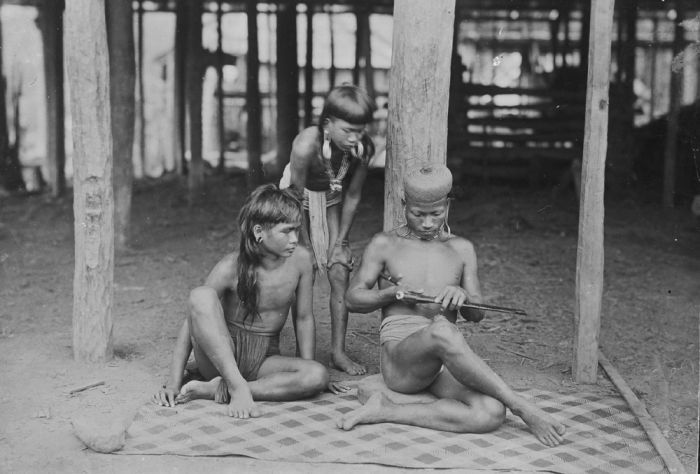
Historical Precedents
The basic form of the mullet hairstyle has ancient roots across multiple cultures and continents. The Roman historian Suetonius noted that Emperor Tiberius wore his hair 'rather long at the back, so much so as even to cover the nape of his neck,' a style he attributed to the Claudian family. One bust of Tiberius's great-nephew Caligula also shows short locks across the forehead with longer hair behind. In Greek legend, Hector of Troy was thought to have worn his hair short at the front but long at the back, a style Lycophron called the 'Hector-like' hairstyle, and it was also associated with the Daunians and Peucetians. Archaeological finds, such as a 1st-century CE metal figurine discovered in 2018 at the Wimpole Estate in England, led archaeologists to hypothesize that natives in ancient Britain during the Roman occupation could have worn their hair in a similar fashion.
In the 6th century, the Byzantine scholar Procopius wrote that men from the Blue faction wore a non-Roman 'Hunnic' look with long hair at the back cut short over the forehead. Researcher Alan Henderson describes the ancient hairstyle's practical utility, as it kept hair out of the eyes while providing warmth and protection for the neck. Early European encounters with Indigenous peoples in the Americas also documented the style. In 1621, Plymouth colonist Edward Winslow described the Abenaki man Samoset in Mourt's Relation as 'a tall straight man, the hair of his head black, long behind, only short before, none on his face at all.' Similarly, some Indigenous tribes in Borneo, including the Penan, Dayak Kayan, Kenyah, and Iban, have traditionally worn mullet-like hairstyles. These widespread historical examples demonstrate that the fundamental silhouette of the mullet is a recurring grooming choice across millennia and continents.
Modern Fashion Cycles: 1960s to 1990s
The mullet's journey through 20th-century fashion is marked by distinct peaks in popularity across various music and media scenes. In the 1960s, Welsh singer Tom Jones sported the cut in two of his three 1965 performances of "It's Not Unusual" on The Ed Sullivan Show, specifically on May 2 and June 13 of that year. The 1970s saw rock stars such as David Bowie and Paul McCartney adopting variations of the style in the early part of the decade, a look similar to the shag haircut popularized by David Cassidy and Rod Stewart. When eulogizing Rush drummer Neil Peart in 2020, writer Greg Prato asserted based on a 1974 video that Peart had a mullet and may have been one of the first rockers to later wear a rattail, as seen in a 1985 video.
The 1980s represented the mullet's zenith in Western popular culture, being 'everywhere' in Australia, the United States, and the United Kingdom according to a 2019 Guardian article. The decade was also the high point of its popularity in continental Europe. Chinese musician Cui Jian's mullet became popular among young Chinese men in the 1980s, and within lesbian culture, the style came to be used as a way of identifying oneself as a member of that culture in public. The 1990s brought a more self-aware, often ironic embrace of the mullet, highlighted by Superman's controversial depiction with the hairstyle in the 1993 DC Comics storyline 'Reign of the Supermen' following his apparent death in 1992. The cancelled film project Superman Lives would also have depicted the character with a mullet. The punk band the Vandals listed regional names for the style in their 1998 song 'I've Got an Ape Drape,' and the gay punk band Pansy Division released their single 'Hockey Hair' in Vancouver, Canada in 1997. Vocalist Wesley Willis wrote and released the track 'Cut the Mullet' in 1998, frequently performing it live.
The 2000s Revival and Sports Connection
The early 2000s saw the mullet solidify its place in documentary film and music compilation, while also becoming strongly associated with specific subcultures. The 2001 film American Mullet documented the phenomenon and the people who wore it, and Universal Records Canada released the album Mullet Years: Power Ballads, a collection of hard rock ballads. During this period, the style became popular with the bogan subculture in Australia and New Zealand. A significant and sustained revival began in the late 2010s, heavily propelled by sports figures, which cemented the mullet's modern cultural footprint. After winning back-to-back Stanley Cups, Phil Kessel was spotted at Pittsburgh Penguins training camp in September 2017 bringing the mullet back, following the tradition of Jaromír Jágr who wore one with the Penguins in the 1990s.
In American college football, Oklahoma State head coach Mike Gundy wore a mullet starting in early 2017, with its popularity supposedly earning the university millions in marketing revenue. In the NHL, Patrick Kane of the Chicago Blackhawks popularized the 'playoff mullet' as an alternative to the traditional playoff beard from 2010 to 2015. Then-Pittsburgh Steelers running back James Conner began sporting a mullet in 2018, continuing what is described as the Yinzer tradition of the hairstyle in Western Pennsylvania. The sports revival extended to Australia in the late 2010s, with soccer player Rhyan Grant becoming widely known for his haircut to the point it was included in the video game FIFA 20. This period demonstrated the mullet's powerful connection to athletic identity and regional pride.
The 2020s Pandemic Boom and Global Trends
The 2020s accelerated the mullet's comeback, driven by global events and formalized competitions. In September 2020, i-D magazine called 2020 'the year of the mullet,' attributing its boom to COVID-19 lockdowns and the extended closure of hair salons. In a Vice Media article, mullet-wearing teenagers described getting the haircut as a joke, with one stating 'There's an irony to the mullet haircut. It's this disgustingly gross haircut, which means it's definitely worn in an ironic way.' Barbershop founder Magda Ryczko noted the style's practicality for the era of Zoom meetings, allowing a professional front view while maintaining a messier look off-camera. The annual USA Mullet Championship began in 2020, and the versatility of the taper fade helped modernize the classic cut with a cleaner look.
The style's global reach was evident with Mexican singer Peso Pluma attracting attention for his mullet in July 2023, a hairstyle he adopted as his signature after a barber in Medellín gave him a popular local cut. Record-seeking entered the arena in August 2023 when 58-year-old Tami Manis from Knoxville, Tennessee was awarded a Guinness World Record for a 172.72 cm-long mullet, the result of not cutting the back of her hair for 33 years. In September 2024, 26-year-old Trevor Hyland of County Mayo, Ireland, gained the nickname 'The Fresh Prince of Bel-Mullet' after representing Ireland in a Swiss competition to find the greatest example of the hairstyle. By 2026, the modern mullet is recognized as a major men's hairstyle trend, characterized by hybrid variations that combine the traditional longer back with fades, tapers, and other contemporary barbering techniques.
Variations: Rattail, Skullet, and Adaptations
The classic mullet has inspired several distinct variations that modify its signature silhouette for different subcultural or personal statements. The most common related style is the rattail, which involves shaving or cutting most of the hair very short, leaving only a single, long, thin strand of hair at the back of the neck. This strand is often grown very long and may be braided, causing it to resemble the tail of a rat, as its name suggests. Another notable variant is the skullet, which consists of shaving the top and sides of the skull while leaving the hair long at the back of the head. If the wearer is bald, strands of hair may be left on the sides at ear height. Its most famous proponent, British comedian Bill Bailey, adopted the skullet hairstyle and retained it for over three decades.
- Rattail: A single long, often braided strand left at the nape, contrasting with very short hair elsewhere.
- Skullet: Shaved or bald top and sides combined with a long back section.
- Taper Fade Mullet: A modern version using gradual fade techniques on the sides and back for a cleaner transition.
- Playoff Mullet: Grown specifically for sports playoffs, notably in the NHL as an alternative to the beard.
- Hunnic Look: The 6th-century Byzantine description of short hair over the forehead with length at the back.
- Ape Drape: One of the many regional slang terms for the mullet listed by the Vandals in their 1998 song.
The rattail and skullet are two adaptations of the core mullet concept. The rattail leaves only a single long strand of hair at the back, which can be curled or braided. The skullet involves shaving the top and sides while leaving the back long, or if a person is bald, leaving side strands. British comedian Bill Bailey is a famous long-term proponent of the skullet hairstyle. These variations demonstrate the style's flexibility for different personal aesthetics.
Cultural Impact, Bans, and Formal Recognition
The mullet occupies a unique space in popular culture, often celebrated with a mix of nostalgia, irony, and genuine appreciation, while also facing official censure. It has been the subject of dedicated books like Barhey Hoskyns' The Mullet: Hairstyle of the Gods (2000) and Alan Henderson's Mullet Madness!: The Haircut That's Business Up Front and a Party in the Back (2007), as well as the 2001 documentary film American Mullet. Actor Kiefer Sutherland has recounted in 2019 and again in 2022 press interviews that his role in the 1987 film The Lost Boys made him an unwitting instigator of the style's 1980s popularity. The mullet has also faced official sanction, being banned in Iran in the 2010s as one style on a list of 'un-Islamic' and 'decadent Western' haircuts. The style's formal recognition extends to competitive and record-keeping spheres, with the annual USA Mullet Championship founded in 2020 and Tami Manis earning a Guinness World Record in August 2023 for her 172.72 cm-long mullet. The style's global competitive appeal was further shown in 2024 when Irishman Trevor Hyland vied to represent Ireland at a European level after a Swiss competition, and its presence in media remains strong from video games to fashion publications, showing the mullet's persistent and complex role in global culture.
Questions about Mullet
Where did the name 'mullet' for the haircut come from?
The term 'mullet' was popularized by the American hip-hop group the Beastie Boys. They used it in their 1994 song "Mullet Head" and detailed the hairstyle in a 1995 article in their magazine, Grand Royal. While they coined or popularized the specific name, the hairstyle itself is much older. The Beastie Boys also humorously suggested alternative names like 'Hockey Player Haircut' and 'Soccer Rocker' in their article.
Is the mullet hairstyle actually a new style?
No, the mullet is not a new style. Historical records and artifacts show similar haircuts dating back to antiquity. The Roman Emperor Tiberius was described as wearing his hair long at the back in the 1st century. Greek legends describe Hector of Troy with a similar cut, and 6th-century Byzantine writings mention a 'Hunnic' look with short front and long back. Evidence suggests it was also worn in ancient Britain and by some Indigenous peoples in North America and Borneo long before the modern era.
Why is the mullet associated with hockey in Canada?
The mullet has a strong association with hockey due to its adoption by several high-profile NHL players over decades. In the 1990s, Pittsburgh Penguins star Jaromír Jágr famously wore one. More recently, players like Phil Kessel revived it in Pittsburgh, and Patrick Kane of the Chicago Blackhawks popularized the 'playoff mullet' from 2010 to 2015 as an alternative to the traditional playoff beard. This connection has embedded the style within hockey culture, particularly in Canadian and certain American hockey communities, where it symbolizes a blend of toughness and nonconformity.
What caused the mullet's comeback in the 2020s?
The mullet's major revival in the early 2020s was driven by several factors. The COVID-19 pandemic and related lockdowns played a significant role, as people unable to visit barbershops let their hair grow, and the style's 'business in the front' look suited video conferencing. The comeback was also propelled by a wave of ironic adoption by teenagers and a continued embrace in sports, especially hockey and football. Media outlets declared 2020 "the year of the mullet," and the establishment of events like the USA Mullet Championship further normalized and celebrated the style.
What is the difference between a mullet and a rattail?
A mullet and a rattail are related but distinct styles. A classic mullet involves cutting the hair short at the front, top, and sides while leaving the back section long and full. A rattail, however, is more extreme: most of the hair is cut very short or shaved, leaving only a single, long, thin strand of hair growing from the very base of the neck. This strand is often braided as it grows longer, resembling a rat's tail. The rattail is therefore a more minimalist and pronounced variation on the 'long at the back' concept.
Are there any famous recent examples of people with mullets?
Yes, many contemporary figures have sported mullets. In sports, Australian soccer player Rhyan Grant and American football coach Mike Gundy are known for their cuts. Mexican singer Peso Pluma adopted a mullet as his signature hairstyle in 2023. The style is also prevalent in hockey, with current and former NHL players keeping the tradition alive.
Sources and further reading
- Mullet (Wikipedia)
- Why Most Mullets Fall Apart After Day One (And How to Keep ... (highland.style)
- The Mullet Is Staging Another Comeback. We Do Not Have ... (gq.com)
- Mullet Hairstyles: 13 Ways to Embrace Your Individuality (gatsbyglobal.com)
- How To Style A Mullet | Davines (us.davines.com)
Checked by the Novello Desserts desk. Last updated 2026-10-19.