Northern
The Northern, also known as the Northwestern, is a genre of adventure fiction set primarily in the late 19th and early 20th century frontiers of western Canada and Alaska. Similar to the American Western, the Northern genre is distinguished by its focus on the frozen landscapes, boreal forests, and unique cultural elements of the Canadian North. Its stories commonly feature protagonists such as Royal Canadian Mounted Police officers, fur trappers, prospectors, and First Nations peoples, pitted against the harsh wilderness or human antagonists. The genre gained international prominence following the Klondike Gold Rush and was extremely popular throughout the interwar period, serving as a key medium for exploring Canadian national myths and identity.
Characteristics and setting
The Northern genre is defined by its specific geographical and environmental backdrop, most often the remote and frigid regions of western Canada. Popular settings within this framework include the Yukon, the area around Hudson Bay, and the Barren Grounds, often referred to by generic names like the 'Far North' or the 'North Woods'. Common visual and narrative elements feature boreal forests, isolated log cabins, mining towns, and pervasive snow, leading to such films being colloquially termed 'snow pictures'. Animals, particularly dog sled teams popularized by works like Jack London's The Call of the Wild, and threats such as bear attacks are recurrent features. The wilderness itself often serves as the primary antagonist, presenting challenges of survival that the protagonists must endure and overcome.
The genre is deeply intertwined with what has been termed the 'Matter of Canada', the national mythos exploring key historical events and anxieties. Common historical touchstones include the Klondike Gold Rush (1896 to 1899), the North-West Rebellion (1885), the pursuit of the fugitive Albert Johnson in 1932, and stories of the Black Donnelly murders. A persistent theme is the contrast between Canadian and American frontier ideals, often highlighting Canadian order versus American lawlessness. Unlike the Western, the Northern rarely glorifies heroic outlaws, a distinction famously summarized by author David Skene-Melvin's observation that 'Canada never had a Wild West because the Mounties got there first.' The genre explores a national anxiety about potential annexation by the United States, framing the Canadian frontier as a distinct and morally superior space.
Key characters and archetypes
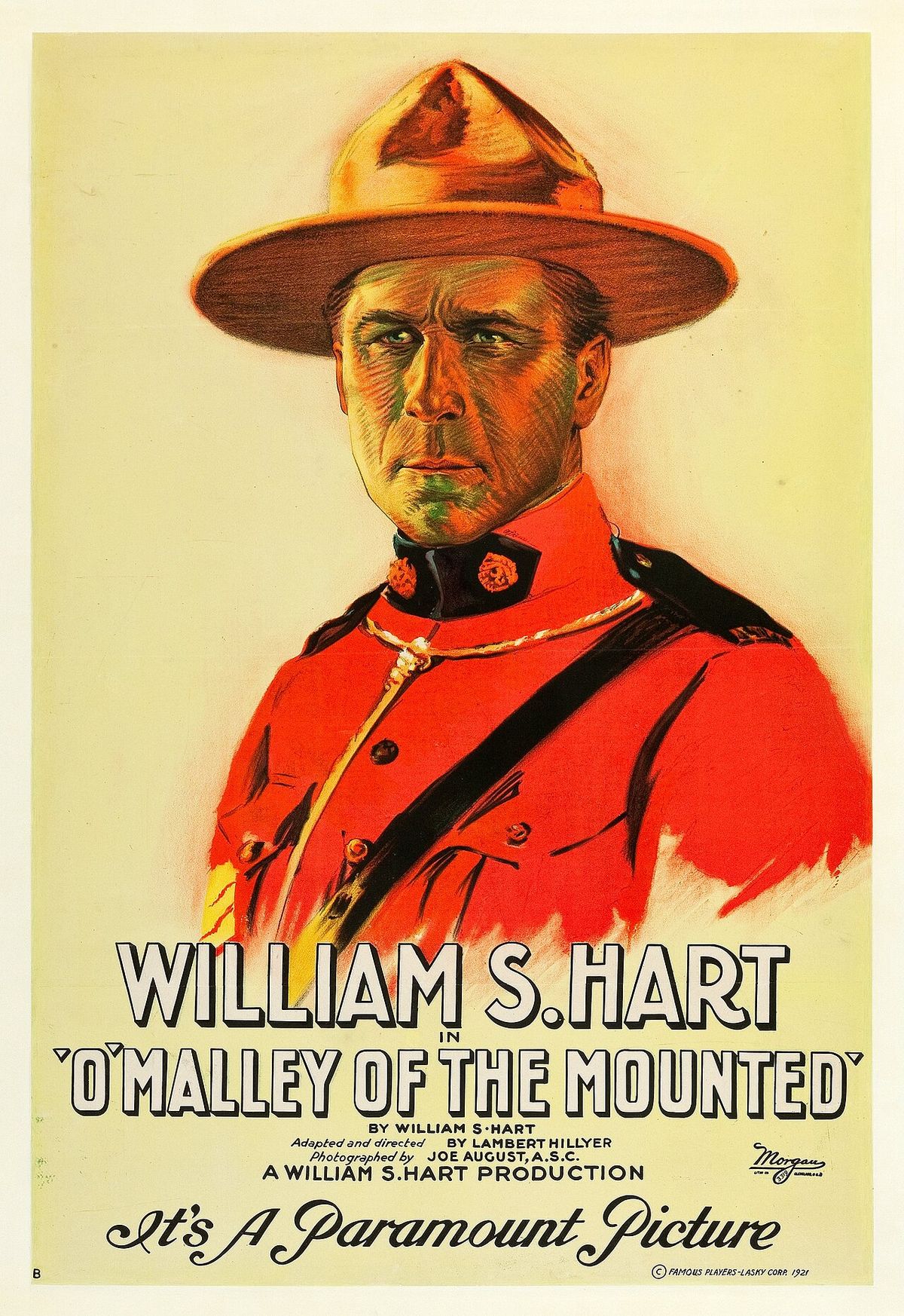
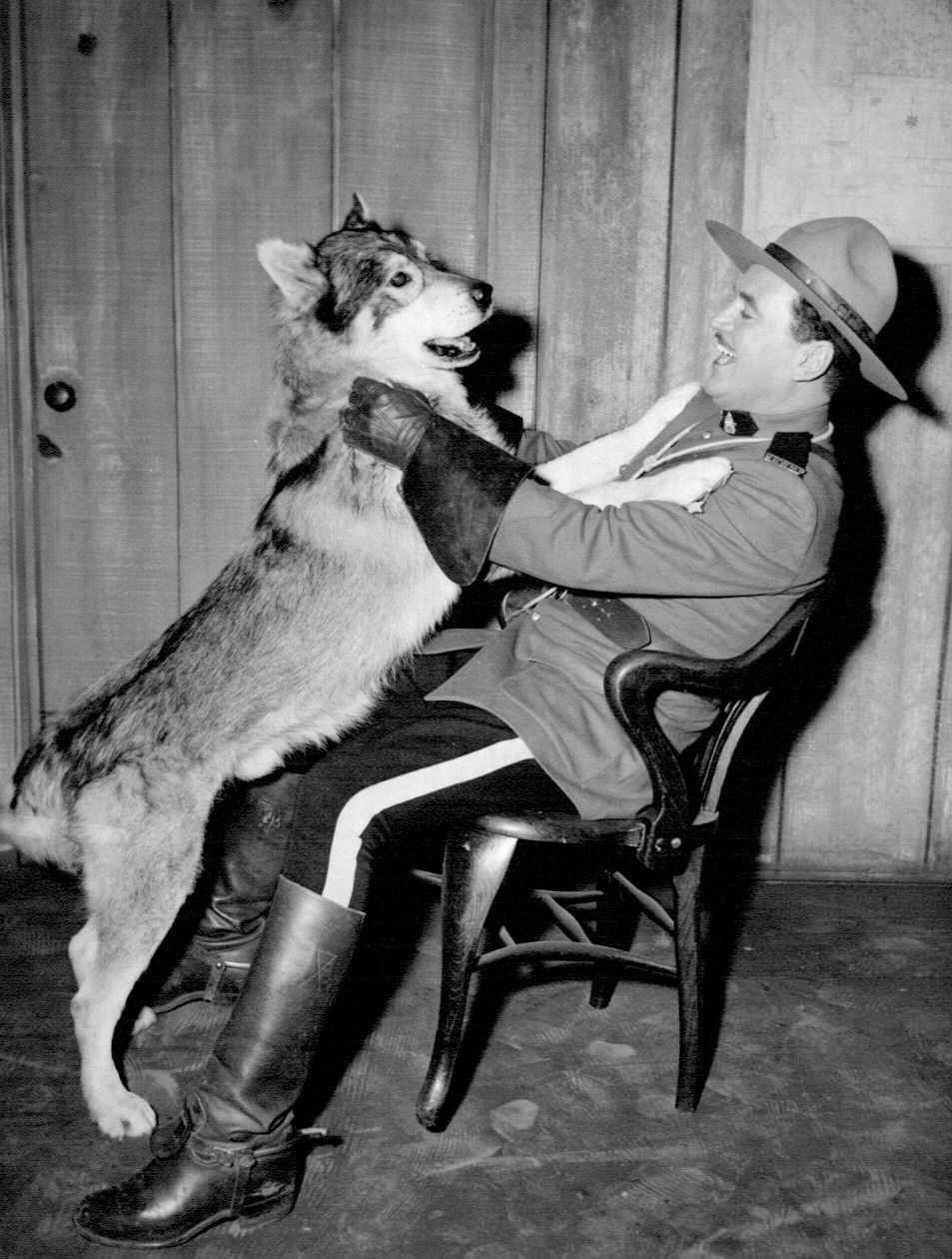
The most central figure in the Northern genre is the Mountie, a member of either the historic North-West Mounted Police or the Royal Canadian Mounted Police. These characters are so prevalent that Northern films are frequently called 'Mountie films'. Their portrayal varies significantly by the author's nationality, reflecting different cultural values. British writers often depicted them as young upper-class men serving the British Empire in the colonies, while American authors fashioned them more like U.S. Marshals, prioritizing an individual sense of justice above duty to the law. Canadian-authored Mounties are typically self-abnegating champions of state authority, upholding order through moral force rather than brute strength, with their authority derived from the law itself. A standard plot involves a lengthy pursuit of a fugitive across the wilderness, culminating in a capture that may be resolved non-violently, emphasizing the power of lawful authority.
French-Canadian characters are another ubiquitous element, described by historian Pierre Berton as filling a role analogous to Mexicans in Westerns. They are typically depicted as rustic and uneducated, divided into two broad stereotypes. The first is the heroic, happy-go-lucky bon-vivant, and the second is the villainous, lecherous killer. Later works sometimes merged these into a charming rogue or anti-villain. Visual markers for these characters included a tuque, a sash, and a pipe, first seen in the 1908 film A Woman's Way. Female French-Canadian characters followed a similar 'tempestuous' stereotype, exemplified by performances from Lupe Vélez in Tiger Rose (1929), Renée Adorée in The Eternal Struggle (1923), and Nikki Duval in Quebec (1951). Beyond these central types, the genre also regularly featured fur trappers and traders, lumberjacks, frontiersmen, prospectors, First Nations people, outlaws, settlers, and townsfolk as part of its ensemble.
Historical development and popularity
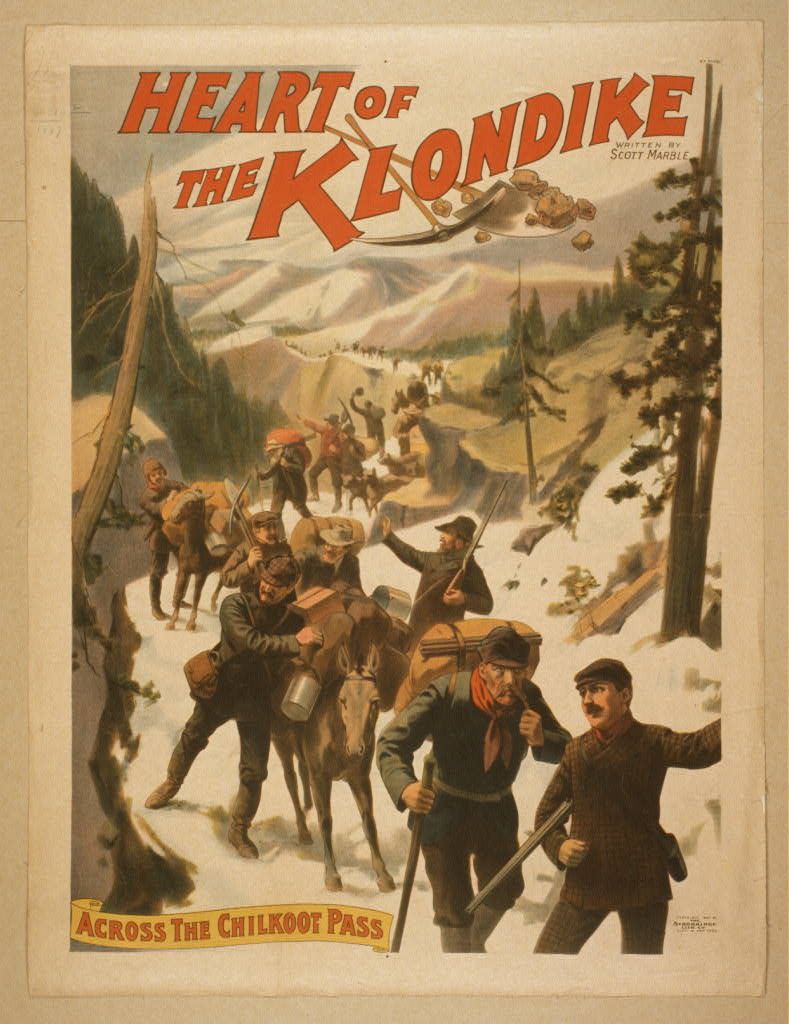
The genre's origins are closely linked to the Klondike Gold Rush of the 1890s, which captured global imagination and inspired a wave of adventure fiction. Best-selling novels by gold rush veterans, such as Jack London's The Call of the Wild (1903), Rex Beach's The Spoilers (1906), and Robert W. Service's The Trail of Ninety-Eight (1909), cemented the Northern's core themes and settings. The genre reached its peak popularity during the interwar years of the 20th century, experiencing a pronounced 'Mountie craze' in the mid-1920s. Literary historian David Skene-Melvin classifies the period from 1880 to 1920 as the heyday of the Northern in Canadian crime literature, a time of exploring the nation's remote and romantic frontiers. He cites Joseph Edmund Collins as an important early figure, despite the low quality of his work, for addressing aspects of the 'Matter of Canada' in novels like The Story of Louis Riel: The Rebel Chief (1885).
Despite this peak, a significant portion of Northern fiction was produced by non-Canadian authors. Skene-Melvin argues that the Northern is 'the only truly indigenous Canadian art form, even if most of its exponents have been foreigners.' Early international examples include the British play The Klondyke Nugget from 1898, which its author Samuel Franklin Cody initially wrote as a Western but changed to capitalize on the gold rush. The genre remained largely static in Hollywood even as the Western evolved post-World War II. Production of Northerns waned considerably in the late 1950s, with their underlying mythology never undergoing the same critical revision as the Western. Canadian authors largely moved to other genres after World War I as the national literary focus shifted away from a frontier and colonial ethos.
Common tropes and anachronisms
Several recurring and sometimes historically inaccurate tropes became definitive of the Northern genre. A frequent anachronism was the portrayal of the Hudson's Bay Company as a tyrannical power with absolute authority, even in modern settings. This depiction was so pervasive that in 1921 the company successfully sued the Famous Players-Lasky Corporation over its villainous portrayal in the film remake of The Call of the North. Another popular trope originating from the 1914 novel The Call of the North is 'La Longue Traverse' or the 'Journey of Death'. In this scenario, the Hudson's Bay Company is shown to execute convicts by abandoning them in the wilderness without supplies, a concept repeated in later films and by reviewers.
The genre also consistently contrasted Canadian and American approaches to frontier justice and Indigenous relations. In films like Pony Soldier and Saskatchewan, the North-West Mounted Police are depicted as reasonable, compassionate, and fair in dealings with First Nations peoples. This stands in direct opposition to hotheaded American characters, often criminals, lawmen, or soldiers, who are shown to prefer violent confrontation or extermination. This trope reinforces a central national myth of Canada as a more orderly and just society than its southern neighbour. The concept of law enforcement is almost exclusively performed by the state, with a general Canadian preference in crime fiction for police over vigilantes or private investigators.
Examples across media and parody
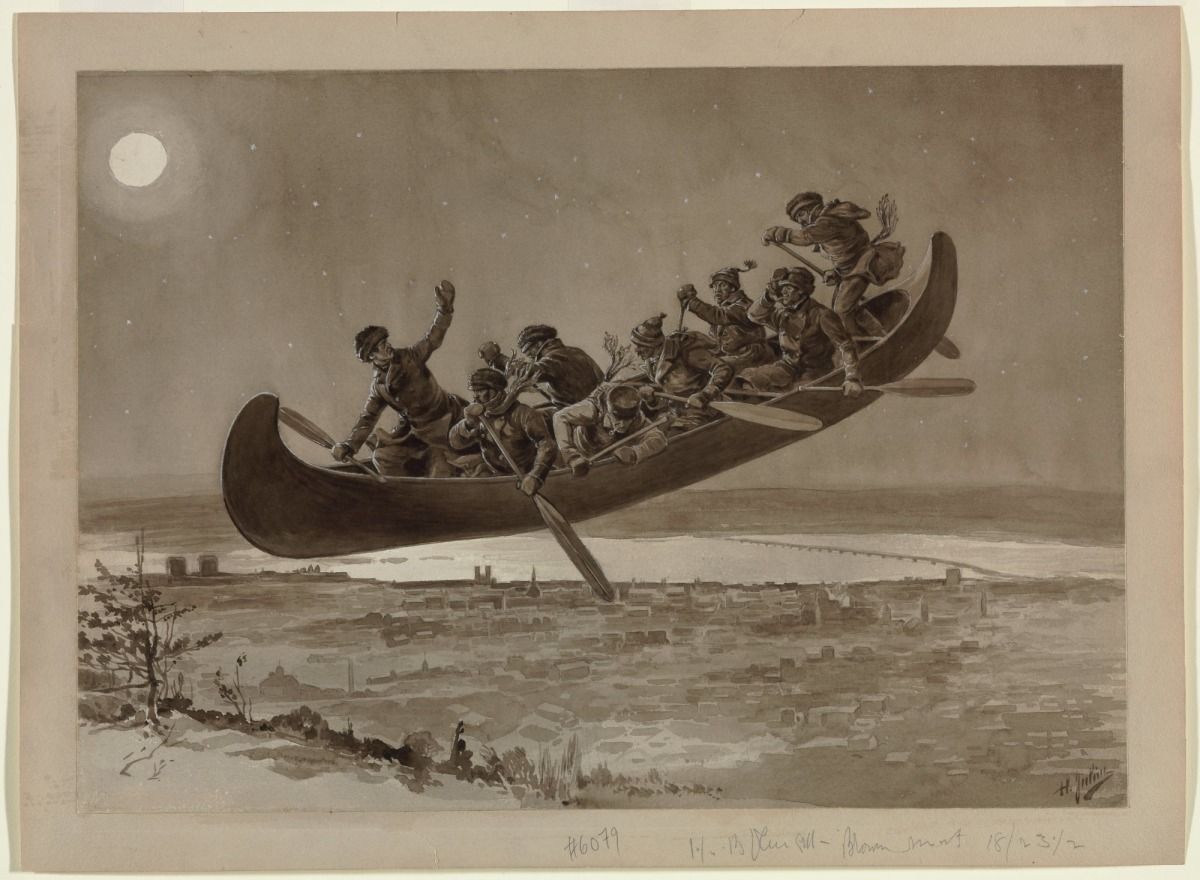
The Northern genre has manifested across a wide range of media, from early folklore to modern video games. Canadian oral stories and folklore provide foundational elements, with tales like the Chasse-galerie (the flying canoe) and legends of figures like woodsman Big Joe Mufferaw and Métis leader Louis Riel forming part of the national mythos. Pulp magazines dedicated to the genre flourished for decades, with titles like North-West Stories running from May 1925 to Summer 1937 before becoming North-West Romances until Spring 1953. Radio serials brought the Northern to a broad audience, with notable programs including Renfrew of the Royal Mounted and the long-running Challenge of the Yukon (1939 to 1955), which featured Sergeant Preston. The genre has been the subject of parody, highlighting its established conventions. Charlie Chaplin's 1925 film The Gold Rush is a comedy that parodies some of the cliches of the Northern genre. The Looney Tunes character Blacque Jacque Shellacque, who first appeared in the 1959 short Bonanza Bunny, is another direct parody of the French-Canadian woodsman stereotype.
- Pulp Magazines: North-West Stories (1925 to 1937), Complete Northwest Magazine (1935 to 1940).
- Radio Serials: Challenge of the Yukon (1939 to 1955), Renfrew of the Royal Mounted.
- Film Parodies: The Gold Rush (1925), Blacque Jacque Shellacque (1959).
- Comics: King of the Royal Mounted, 30 Days of Night, Jesuit Joe.
- Literary Anthologies: Rugged Alaska Stories (1950), Best Mounted Police Stories (1978).
Literary collections and critical analysis
The academic and popular study of the Northern genre has been supported by several key anthologies and critical works. These collections have helped to define the canon and analyze its cultural significance. Notable anthologies include Best Mounted Police Stories (1978) edited by Dick Harrison, The Northerners (1990) edited by Bill Pronzini and Martin H. Greenberg, and Scarlet Riders (1998) edited by Don Hutchison. These volumes gather short fiction that exemplifies the genre's focus on Mounties, prospectors, and wilderness survival. Earlier collections, such as Frank Richardson Pierce's Rugged Alaska Stories (1950), captured the genre's pulp magazine origins, while later ones like Stories of the Far North (1998) edited by Jon Tuska continued the tradition.
Critical analysis of the Northern often explores its role in shaping Canadian national identity and its differences from the American Western. Foundational texts include Pierre Berton's Hollywood's Canada: The Americanization of our National Image (1975), which examines how U.S. film studios portrayed Canada. Other important works are Thomas Donald MacLulich's Between Europe and America: The Canadian Tradition in Fiction (1988) and Michael Dawson's The Mountie from Dime Novel to Disney (1998). These studies investigate how the genre's conventions, from the heroic Mountie to the tyrannical trading company, reflect and sometimes distort historical realities and cultural anxieties. Further academic work includes Scott MacKenzie and Anna Westerståhl Stenport's Films on Ice: Cinemas of the Arctic (2015) and Richard G. Baker's 2015 article on the Canadian border as an American frontier in Hollywood Northerns.
Publication history and volume
The large quantity of published Northern fiction, particularly focused on the Mounties, demonstrates the genre's immense popularity during its peak. By the year 1930, an estimated 75 volumes of Mountie fiction had been published, a figure that does not include juvenile fiction or the vast amount of material published in serialized magazine formats. This literary output was complemented by dedicated pulp magazines that ran for years, providing a steady stream of new stories for avid readers. The longevity of publications like North-West Romances, which continued until 1953, shows a sustained commercial interest well into the mid-20th century. This publishing ecosystem supported both foreign and domestic writers in producing works that shaped the popular image of the Canadian North.
The genre's themes were also explored in other artistic mediums, such as photography, with collections like Anthony Jourdain's Northern. The table below illustrates the run of some major pulp magazines dedicated to the Northern genre, showing their duration and evolution. This dedicated publishing infrastructure allowed for the repetition and refinement of the genre's core tropes, from the noble Mountie to the treacherous wilderness, embedding them deeply in popular culture. The decline of these magazines in the early 1950s coincided with the broader waning of the genre's popularity in the late 1950s, marking the end of a prolific era in Canadian-themed popular fiction.
| Publication Title | Years Active | Notes |
|---|---|---|
| North-West Stories | May 1925, Summer 1937 | Became North-West Romances |
| North-West Romances | Fall 1937, Spring 1953 | Successor to North-West Stories |
| Complete Northwest Magazine | September 1935, April 1940 | Published for nearly five years |
Questions about Northern
What is the difference between a Northern and a Western?
The primary difference is the setting. Northerns are set in the frozen frontiers of Canada and Alaska, featuring snow, boreal forests, and remote mining towns, while Westerns are set in the American Old West. The central law enforcement figure in a Northern is typically a Mountie, representing state authority, whereas Westerns often feature sheriffs, marshals, or vigilantes. Northerns also more frequently use the harsh wilderness itself as a key antagonist, and they rarely glorify heroic outlaws, focusing instead on themes of order and survival within a challenging environment. The genre explicitly contrasts Canadian order and compassion with American lawlessness and violence, particularly in dealings with Indigenous peoples.
Why are Mounties so central to the Northern genre?
Mounties symbolize law, order, and Canadian civilization in the wilderness, serving as the antithesis to the lawlessness often depicted in American Westerns. Their presence is so definitive that Northern films are often called 'Mountie films'. Fictional Mounties uphold authority through moral force rather than just physical prowess, reflecting a Canadian ideal of just governance. Their pursuit of fugitives across vast, snowy landscapes provides a classic plot structure for the genre. By 1930, their popularity was immense, with over 75 volumes of Mountie fiction published, not including stories in magazines. Their portrayal varies, with British authors depicting them as colonial servants, Americans as individualistic lawmen, and Canadians as self-abnegating champions of the state.
What historical event most influenced the Northern genre?
The Klondike Gold Rush (1896 to 1899) was the most significant historical event in popularizing the Northern genre. It drew international attention to the Canadian North and inspired a wave of adventure stories from participants and observers. Best-selling novels like Jack London's The Call of the Wild and Robert W. Service's poetry directly emerged from this period. The gold rush established core settings and character types, prospectors, rugged wilderness, remote towns, that became staples of the genre for decades, fueling its peak popularity in the interwar years. The event was a key part of the 'Matter of Canada', the national mythos that the genre consistently explores alongside other events like the North-West Rebellion.
How are French-Canadians typically portrayed in Northerns?
French-Canadians are a ubiquitous but stereotyped presence in Northerns, often serving as exotic or rustic characters. Historian Pierre Berton compared their role to that of Mexicans in Westerns. They are typically depicted as uneducated and divided into two broad types: the heroic, cheerful bon-vivant and the villainous, lecherous killer. Visual cues include a tuque, sash, and pipe, first established in the 1908 film A Woman's Way. Female French-Canadian characters often follow a 'tempestuous' stereotype, as seen in performances by Lupe Vélez and Nikki Duval. Some later examples merged the two stereotypes into a charming, roguish anti-villain, but the core depictions remained largely consistent throughout the genre's history.
When did the Northern genre peak in popularity?
The Northern genre reached its peak popularity during the interwar period of the 20th century, particularly in the 1920s and 1930s. This era saw a 'Mountie craze' across literature, film, and radio. Pulp magazines like North-West Stories were widely read from 1925 onward, and radio serials such as Challenge of the Yukon began their long runs in 1939. Literary historian David Skene-Melvin identifies 1880 to 1920 as the heyday of the Northern in Canadian crime literature. While the genre continued to be produced after World War II, its popularity steadily waned in the late 1950s as audience tastes shifted and the genre's conventions remained largely unchanged, unlike the evolving Western.
Are there any modern examples of the Northern genre?
Yes, modern examples of the Northern genre exist. Video games like Red Dead Redemption 2 feature fictional northern territories with frontier themes, and Tell Me Why is set in a small Alaskan town. The genre's tropes are also parodied in contemporary culture, such as through the Looney Tunes character Blacque Jacque Shellacque, who first appeared in 1959. While the genre's popularity waned in the late 1950s, it is still produced. Anthologies like Scarlet Riders and Stories of the Far North, both from 1998, continue to curate classic Northern stories. These works ensure the genre's exploration of wilderness and national mythos remains part of the cultural conversation.
Sources and further reading
- Northern (Wikipedia)
- It Is Different in the North (heretohelp.bc.ca)
- Inuit Nunangat (indigenouspeoplesatlasofcanada.ca)
Checked by the Novello Desserts desk. Last updated 2026-10-31.