Albert Johnson
Albert Johnson, known as the Mad Trapper of Rat River, was a fugitive whose violent confrontation with the Royal Canadian Mounted Police in the winter of 1931-32 sparked one of the largest and most dramatic manhunts in Canadian Arctic history. His refusal to communicate, his survival skills in extreme conditions, and the fatal shootout that ended the pursuit became a major national news story. Johnson's true identity remains an enduring mystery, despite extensive modern forensic investigation and DNA analysis tracing his ancestry to Sweden. The story of the Mad Trapper has become a significant part of Northern Canadian folklore, inspiring numerous books, songs, and films that explore the events and the unanswered questions surrounding the man.
Arrival in the North and Initial Conflict
Albert Johnson arrived in the Fort McPherson area via the Peel River on 9 July 1931. He was questioned by RCMP Constable Edgar Millen but provided minimal personal information, leading the officer to note a possible Scandinavian accent and that Johnson seemed to be in his thirties and financially comfortable. Johnson proceeded to build a small 2.5 by 3 metre cabin on the banks of the Rat River without acquiring a trapping licence, an unusual omission for someone living off the land. In late December 1931, Indigenous trappers from the area complained to the RCMP detachment in Aklavik that Johnson was interfering with their trap lines. An initial RCMP investigation suggested the complaints may have stemmed from a confrontation where Johnson had pointed a gun at the trappers when they visited his cabin. This report set in motion the events that would escalate into a violent manhunt across the frozen wilderness. At the time, many traditional trapping areas were being encroached upon by outsiders fleeing the economic hardships of the Great Depression, which added tension to the region.
The Siege at Rat River Cabin
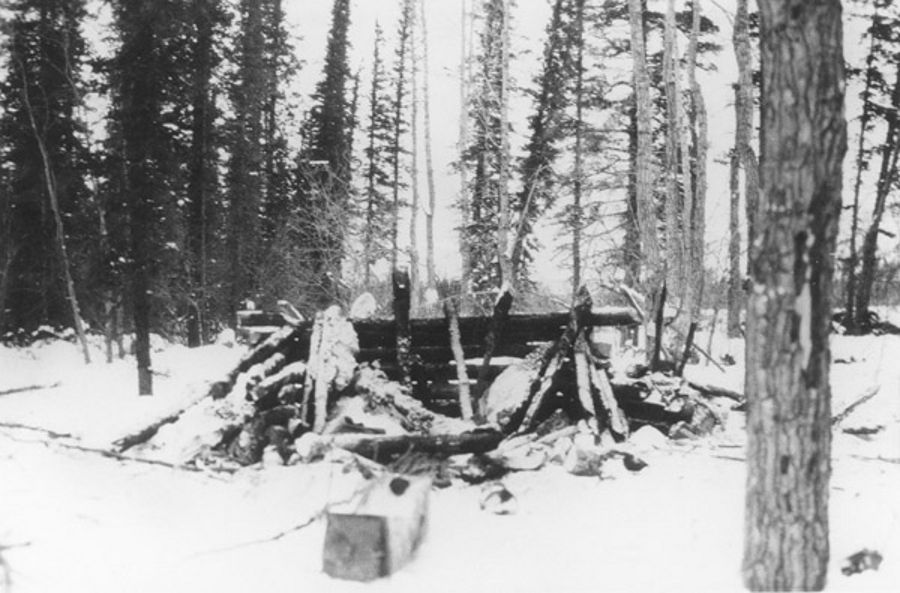
The first police visit to Johnson's cabin occurred on 26 December 1931, when Constable Alfred King and Special Constable Joe Bernard trekked 100 kilometres to investigate the trap-line allegations. Johnson refused to speak to them, and when King looked into the cabin window, Johnson placed a sack across it, prompting the constables to return to Aklavik for a search warrant. They returned five days later with a small posse, and when King attempted to force the cabin door, Johnson shot him through the wood, leading to a brief firefight before the posse retreated with the wounded King, who later recovered. A larger force of RCMP officers, special constables, and local volunteers returned to the cabin on 9 January 1932 for a 15-hour siege in -40 °C weather. The posse fired hundreds of rounds and used dynamite in an attempt to force Johnson out, but he survived inside a 1.5-metre-deep dugout beneath the cabin floor. An RCMP investigative report later noted the dynamite charge barely damaged the cabin, and it was purposely destroyed afterwards to prevent Johnson's return, which may have created the impression the blast had levelled it. After failing to capture him, the exhausted posse retreated to Aklavik at 4:00 a.m., and upon their return on 14 January, they found Johnson had fled, beginning the extended pursuit.
The Extended Manhunt and Millen's Death
News of the siege was relayed south through the Royal Canadian Corps of Signals station at Aklavik, turning the manhunt into a national front-page news story. The reinforced posse tracked Johnson's trail from his abandoned cabin after being delayed by blizzard conditions. They caught up with him on 30 January 1932, surrounding him in a thicket where a firefight broke out. During this engagement, Johnson shot and killed Constable Edgar Millen, the officer who had first questioned him months earlier, and the only sound the posse reported from Johnson was his laugh after the shooting. Following Millen's death, the RCMP expanded the search party by enlisting local Inuvialuit and Gwichʼin trackers for their superior wilderness skills and ability to move in the back country. The RCMP also requested aerial assistance, leading to the involvement of famed bush pilot Wilfrid 'Wop' May, a First World War flying ace, who arrived in Aklavik on 5 February in a ski-equipped Bellanca monoplane with mechanic Jack Bowen. May's aerial reconnaissance was crucial, as he spotted Johnson's tracks beyond the Richardson Mountains, proving the fugitive had scaled a 2,100-metre peak to evade the blocked mountain passes. On 14 February, May found tracks on the Bell River and followed them to where they turned south up the Eagle River, noticing footprints leading from the centre of the frozen river to the bank where Johnson had made camp.
Final Confrontation and Aftermath
The pursuit team, guided by Wop May's radio reports, cornered Johnson on the Eagle River on 17 February 1932. As they rounded a bend, they found him only a few hundred metres away, and he attempted to run for the riverbank without his snowshoes and could not make it. A final firefight erupted, during which RCMP Constable Alfred King was seriously wounded and Johnson was fatally shot in the left side of the pelvis at an acute angle. The bullet is believed to have passed through vital tissues, bowels, and main arteries. Wop May landed his plane, picked up the injured King and flew him to help, for which May was credited with saving King's life. An examination of Johnson's body revealed he was carrying over $2,000 in Canadian and U.S. currency, gold, a pocket compass, a razor, a knife, fish hooks, nails, a dead squirrel, a dead bird, and a large quantity of Beecham's Pills. The RCMP calculated he had travelled over 137 kilometres from his cabin in 33 days, burning approximately 42 megajoules (10,000 kilocalories) a day in the cold and hostile terrain. Notably, Johnson never spoke to his pursuers, and the only person known to have heard his voice was Constable Millen during their initial interview, where Millen thought he had a Scandinavian accent.
Forensic Investigation and Identity Theories
In August 2007, a forensic team assembled by Myth Merchant Films exhumed Johnson's grave in Aklavik for a modern examination, detailed in the documentary The Hunt for the Mad Trapper and the book The Mad Trapper: Unearthing a Mystery by Barbara Smith. The analysis determined Johnson was approximately 35 years old at death, had scoliosis which would have led to chronic back pain, and possessed sophisticated dental work indicative of wealth and access to major urban centres like Chicago or New York. Isotope testing of his teeth suggested he may have grown up in Scandinavia or the U.S. Midwest. The examination also found he had been struck multiple times in his final gun battle, with wounds to his leg and thorax, and a spiral fracture of his femur supported the anecdote that a bullet hit an ammunition pouch on his hip. Subsequent DNA analysis, advanced by Othram Inc. in 2021 after technical problems delayed earlier efforts, traced his ancestry to Sweden, linking him to multiple descendants of Gustaf Magnusson (1776 to 1853) and Britta Svensdotter (1781 to 1846). Many genetic matches traced their ancestry to the Swedish towns of Hånger, Kävsjö, and Kulltorp. As of July 2021, further DNA samples and family history were being sought from possible descendants to continue the investigation. Over the decades, various theories have been put forward regarding Johnson's true name, with several proposed identities generating significant interest.
- Arthur Nelson: An obscure individual who travelled from Dease Lake, British Columbia, into the Yukon between 1927 and 1931, remembered by Kaska Dena elders by the alias Mickey Nelson. He used similar firearms to Johnson, including a Savage Model 99 rifle and a sawn-off Iver-Johnson shotgun.
- John Johnson: A theory proposed by author Dick North in his 1989 book Trackdown, linking the Mad Trapper to a Norwegian-born repeat criminal named Johan Konrad Jonsen who served time in San Quentin and Folsom prisons. DNA tests involving the criminal's great-nephew Ole Getz later disproved this connection.
- Owen Albert Johnston: A relative of a family from Pictou, Nova Scotia, who left home at the start of the Great Depression. His last letter was posted from Revelstoke, British Columbia, in early 1931. A relative mentioned in a 2009 Halifax radio interview that they were arranging for DNA tests.
- Sigvald Pedersen Haaskjold: A Norwegian man last known in 1927, proposed by author Mark Fremmerlid in his book What Became of Sigvald Anyway. Fremmerlid pointed to circumstantial evidence, including Haaskjold's obsession with authorities and his construction of a fortress-like cabin on Digby Island, British Columbia, before disappearing.
While many people had offered convincing circumstantial and anecdotal evidence that they were related to Albert Johnson, the DNA analysis ruled out all of the candidates tested. His identity remains a mystery. In 2017, a familial DNA investigation was attempted. Technical problems with the DNA eluded analysis until an adequate sequence was developed by Othram Inc. in 2021. Further investigation by Othram traced his ancestors to Sweden, linking him to multiple descendants of a Swedish couple. As of July 2021, further DNA samples and family history were being sought from possible descendants to further the investigation.
Cultural Legacy in Media
The story of the Mad Trapper has cemented itself in Canadian popular culture, inspiring numerous artistic works across different media. The event has been the subject of folk songs for decades, including The Capture of Albert Johnson by Wilf Carter and The Mad Trapper of Rat River by Stanley G. Triggs on his 1961 album Bunkhouse and Forecastle Songs of the North West. Doug Hutton's song Rat River Trapper was released on the 1974 RCMP tribute album Scarlet and Gold. Several books have been written on the subject, ranging from non-fiction accounts to fictionalized novels that explore the man and the chase.
- Rudy Wiebe, The Mad Trapper (1980): A 186-page book published by Jackpine House Ltd.
- Thomas York, Trapper (1981): A 476-page novel published by Avon Books.
- Frank W. Anderson and Art Downs, The Death of Albert Johnson, Mad Trapper of Rat River (1986): A non-fiction account published by Heritage House.
- Dick North, The Mad Trapper of Rat River (2003) and The Man Who Didn't Fit In (2005): Detailed investigative works published by The Lyons Press.
- Hélèna Katz, The Mad Trapper (2004): A 133-page volume from Altitude Publishing.
- Barbara Smith, The Mad Trapper: Unearthing a Mystery (2009): A book accompanying the forensic investigation.
- Mark Fremmerlid, What Became of Sigvald Anyway? (2009): A 66-page book proposing the Sigvald Haaskjold theory.
- Thomas P. Kelley, Rat River Trapper (1972): An earlier 141-page account published by Paper Jacks.
The manhunt has also been adapted for the screen multiple times, with films offering varying degrees of fictionalization of the core events. The 1972 Canadian film The Mad Trapper presented a highly fictionalized version, while the 1975 U.S. production Challenge to Be Free referred to Johnson only as Trapper and portrayed him as a man living in peace with wild animals. The most prominent cinematic treatment is the 1981 film Death Hunt, starring Charles Bronson as Albert Johnson and Lee Marvin as Constable Edgar Millen. The 2009 documentary The Hunt for the Mad Trapper focused on the 2007 exhumation and forensic examination. The enduring interest in the story stems from its combination of a harsh Arctic setting, a silent and enigmatic antagonist, and a prolonged chase that tested the limits of human endurance and policing in the remote North.
Physical Evidence and Modern Analysis
The items found on Johnson's body and the forensic examination of his remains provided intriguing but incomplete clues about his background and capabilities. He was carrying a significant amount of money and gold, suggesting he was not destitute, and his exceptional dental work with gold fillings pointed to a middle-class or wealthy upbringing and access to advanced dental care. The forensic team noted a spiral fracture in his femur consistent with a bullet striking an ammunition pouch on his hip during the final battle. His skeletal structure revealed scoliosis, a curvature of the spine that would have caused chronic back pain, and asymmetrical features including a non-symmetrical tailbone and one foot longer than the other. Isotope analysis suggested a childhood spent in either Scandinavia or the American Midwest, while the 2021 DNA work provided stronger evidence for Swedish ancestry. The following table summarizes the key physical evidence and forensic findings that have shaped the investigation into the Mad Trapper.
| Evidence Category | Specific Findings |
|---|---|
| Currency and Valuables | Over $2,000 in U.S. and Canadian dollars, gold |
| Survival Gear | Pocket compass, razor, knife, fish hooks, nails |
| Unusual Items | Dead squirrel, dead bird, large quantity of Beecham's Pills (a digestive aid) |
| Dental Work | High-quality gold fillings, indicative of expensive care in a major urban centre |
| Physical Characteristics | Estimated age 30-40, scoliosis, asymmetrical tailbone, one longer foot |
| Isotope Analysis (2007) | Suggested childhood in Scandinavia or the U.S. Midwest |
| DNA Analysis (2021) | Genetic links to ancestral populations in Sweden, particularly around Hånger, Kävsjö, and Kulltorp |
| Fatal Injuries | Gunshot wounds to leg, thorax, and a debilitating shot through the pelvis from behind |
| Travel Endurance | Calculated to have travelled 137+ km in 33 days, burning approx. 10,000 kcal daily |
A 2007 forensic examination found that Albert Johnson was approximately 30 to 40 years old and had scoliosis, which would have led to chronic back pain. Isotope analysis of his teeth suggested he may have grown up in Scandinavia or the U.S. Midwest. His dental work was of very high quality for the time, suggesting he was able to afford expensive state-of-the-art work at a major centre. After the examination, his remains were re-interred with full religious rites by both the local priest and native elders, something that had not been afforded to him at his original burial.
Questions about Albert Johnson
Who was Albert Johnson, the Mad Trapper?
Albert Johnson, dubbed the Mad Trapper of Rat River, was a fugitive who engaged in a violent, month-long manhunt with the RCMP in the Northwest Territories and Yukon during the winter of 1931-32. He arrived in the North in mid-1931, built a cabin without a trapping licence, and after a conflict with local trappers, shot a police officer who came to question him. His exceptional survival skills and silence during the chase made the story major national news. His true identity has never been conclusively proven, making him one of Canada's most enduring mysteries, with modern DNA pointing to Swedish ancestry.
How did the manhunt for Albert Johnson end?
The manhunt ended on 17 February 1932, on the frozen Eagle River in the Yukon. A posse led by the RCMP and aided by bush pilot Wop May's aerial tracking cornered Johnson. In the ensuing firefight, Constable Alfred King was seriously wounded and Johnson was fatally shot in the pelvis. Wop May landed his Bellanca monoplane, picked up the injured King and flew him to help, for which May was credited with saving King's life. Johnson died at the scene, having never spoken a word to his pursuers throughout the entire chase.
What evidence was found on Albert Johnson's body?
An examination of Johnson's body yielded over $2,000 in both U.S. and Canadian dollars, as well as some gold. Other items included a pocket compass, a razor, a knife, fish hooks, nails, a dead squirrel, a dead bird, and a large quantity of Beecham's Pills, a patent medicine with actual benefits as a digestive aid. He also had teeth with gold fillings that were believed to be his. His dental work was of exceptional quality, suggesting poverty was not a reason for him to relocate North.
Has Albert Johnson's real identity ever been discovered?
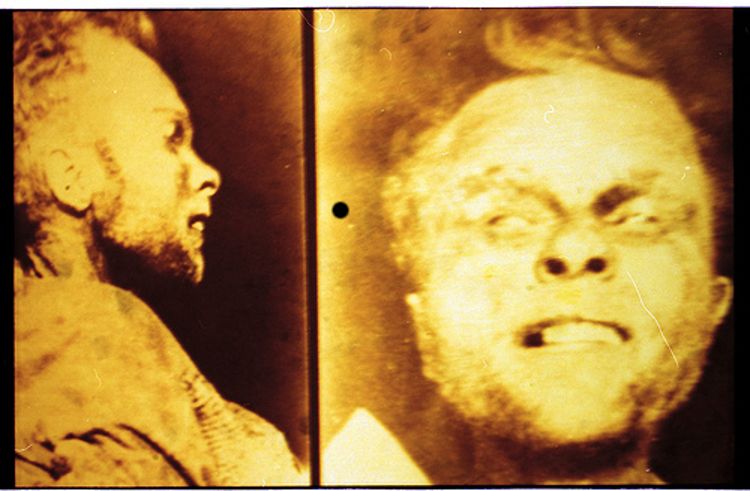
No, Albert Johnson's true identity remains unknown despite extensive efforts. The RCMP circulated his photographs throughout Canada and the United States in the 1930s without success. Modern forensic exhumation in 2007 and advanced DNA analysis by Othram Inc. in 2021 traced his ancestry to specific regions in Sweden but did not identify him by name. Several theories have been proposed, linking him to individuals like Arthur Nelson or Owen Albert Johnston, but DNA testing has ruled out all specific candidates put forward so far.
What did modern forensic science reveal about Albert Johnson?
The 2007 forensic examination revealed Johnson was approximately 35 years old at death and had scoliosis, which would have caused chronic back pain. Isotope analysis of his teeth suggested he grew up in either Scandinavia or the U.S. Midwest. His dental work was exceptionally sophisticated for the era. DNA analysis later confirmed genetic links to specific regions in Sweden, connecting him to descendants of Gustaf Magnusson and Britta Svensdotter. The examination also confirmed he was shot multiple times in his final battle, including the fatal pelvic wound and a leg wound that caused a spiral femur fracture.
How has the story of the Mad Trapper been portrayed in popular culture?
The story has inspired numerous songs, books, and films. Folk songs were recorded by Wilf Carter, Stanley G. Triggs, and Doug Hutton. Key books include Dick North's The Mad Trapper of Rat River, Barbara Smith's The Mad Trapper: Unearthing a Mystery, and Mark Fremmerlid's What Became of Sigvald Anyway? Film adaptations include the 1972 movie The Mad Trapper, the 1975 film Challenge to Be Free, and the major Hollywood production Death Hunt in 1981 starring Charles Bronson and Lee Marvin. A 2009 documentary, The Hunt for the Mad Trapper, covered the forensic exhumation.
Sources and further reading
- Albert Johnson (Wikipedia)
- Albert Johnson, “The Mad Trapper of Rat River” (thecanadianencyclopedia.ca)
- Albert Mussey Johnson, Death Valley ... (nps.gov)
- The Mad Trapper part 4: The quest to identify Albert ... (ashcroftcachecreekjournal.com)
Checked by the Novello Desserts desk. Last updated 2026-10-22.