Battle of Lundy's Lane
The Battle of Lundy's Lane National Historic Site in Niagara Falls, Ontario, commemorates the fiercest and bloodiest land battle of the War of 1812, which was fought on 25 July 1814. Today, the preserved battlefield and adjacent Drummond Hill Cemetery form a key heritage destination, featuring memorials such as the Soldier's Monument from 1895 and the Commemorative Wall added in 2004. The site also includes the gravesite of Canadian heroine Laura Secord. This location allows visitors a direct connection to a significant moment in Canada's military history, situated within a modern residential and commercial tourist district.
The Historical Battle
The Battle of Lundy's Lane was the climax of the 1814 American campaign on the Niagara frontier. In early July, American forces under Major General Jacob Brown crossed the Niagara River, captured Fort Erie, and defeated a British force at the Battle of Chippawa. By late July, Brown's army had advanced to Queenston, threatening the British stronghold at Fort George. British Lieutenant General Gordon Drummond, arriving to take personal command, sought to check the American advance. On the afternoon of 25 July, British forces established a defensive line on the high ground of a cemetery at the junction of Lundy's Lane and Portage Road, massing their artillery there. The American First Brigade, commanded by Brigadier General Winfield Scott, advanced and was initially mauled by the British guns. A flanking movement by the 25th U.S. Infantry under Major Thomas Jesup disrupted the British left flank and even captured the wounded British commander, Major General Phineas Riall. As night fell, American commander Jacob Brown arrived with reinforcements and ordered an attack to capture the British artillery centrepiece. Lieutenant Colonel James Miller of the 21st U.S. Infantry famously replied, 'I'll try, Sir,' before his men successfully stormed the hill with a bayonet charge, capturing the guns. Drummond, wounded but determined, launched three successive frontal counter-attacks through the night in a desperate attempt to retake his artillery. The close-quarters fighting in the dark and smoke was brutal, with musket volleys and bayonet clashes causing severe casualties on both sides. By midnight, both armies were utterly exhausted, with the Americans holding the hill but their effective fighting force reduced to only about 700 men.
Aftermath and Significance
In the early hours of 26 July, the Americans, short of supplies and water and with their commanders Brown and Scott severely wounded, withdrew from the battlefield back toward Chippawa and eventually to Fort Erie. The British reoccupied the bloodied field at dawn. While tactically a stalemate, the battle was a strategic British victory. The battle confirmed that American regular troops had evolved into a highly professional fighting force, though British veterans of the Napoleonic Wars were horrified by the carnage they witnessed. The battle ended American hopes of advancing to Burlington Heights and severing British supply lines, effectively concluding the 1814 Niagara campaign. British and Canadian regulars, though war-weary from years of service, held the line, with the Upper Canada Incorporated Militia battalion performing notably well despite being surprised. The battle's legacy includes several enduring military honours. James Miller's response, 'I'll try, Sir,' became the motto of the 5th U.S. Infantry. Ten active battalions of the modern United States Army perpetuate the lineages of American regiments that fought there. Four British regiments were awarded the 'Niagara' battle honour for their service at Lundy's Lane.
The Battlefield Today
The core of the historic battlefield is preserved around Drummond Hill Cemetery, located at 6110 Lundy's Lane in Niagara Falls. The site was designated a National Historic Site of Canada in 1937. Urban growth has covered much of the original terrain with homes and businesses, and Lundy's Lane itself is now a major four-lane arterial road. However, the City of Niagara Falls owns and maintains over four hectares of the site as parkland and historic space. This includes parcels donated by local teacher Ruth Redmond in 1996, which were converted into parkland across from the cemetery. The battlefield's high position, which was critical in 1814, is still evident at the cemetery, which remains the focal point for visitors. The area became a popular tourist destination as early as the 1820s, with several observation towers built to give visitors an overview of the historic ground. This tradition of heritage tourism continues today with a structured historical experience managed by the City of Niagara Falls Museums.
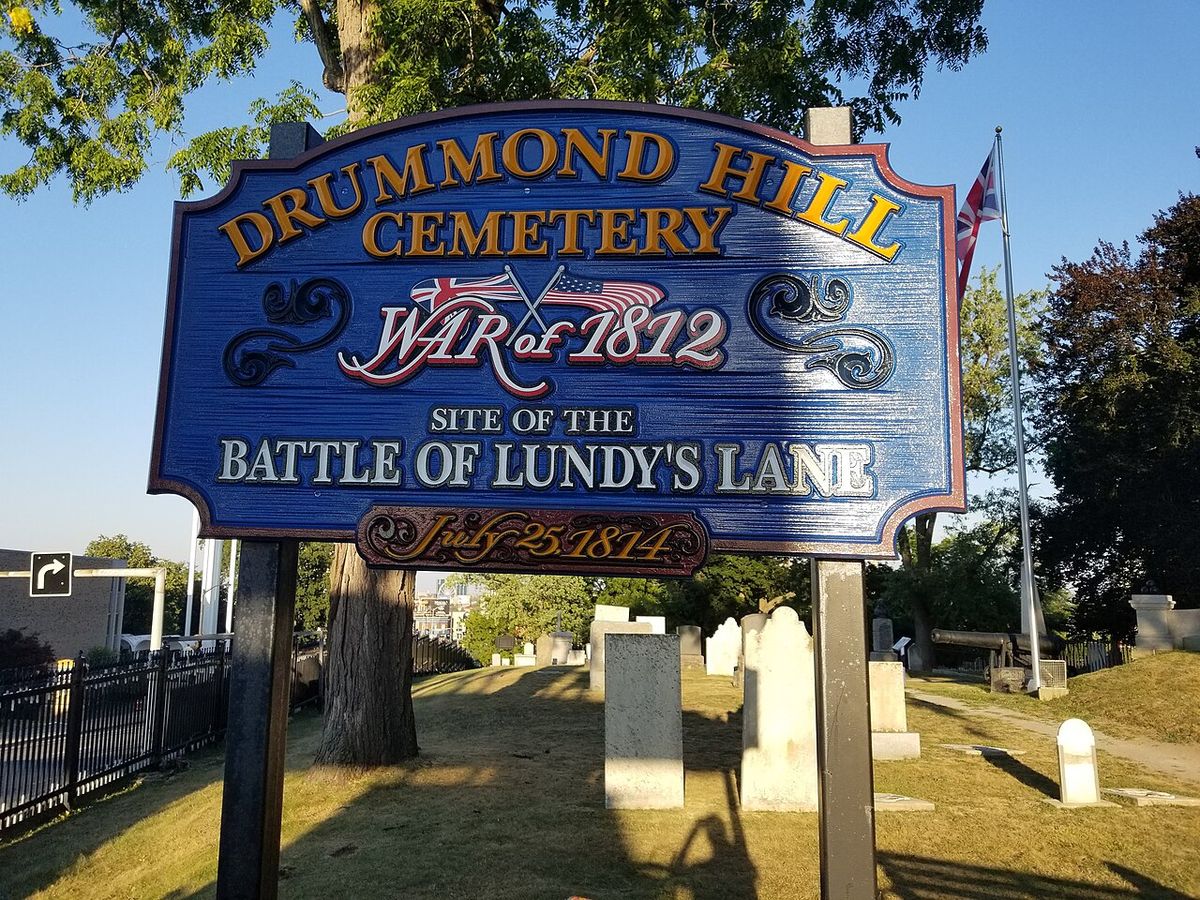
Visitor Experience and Key Features
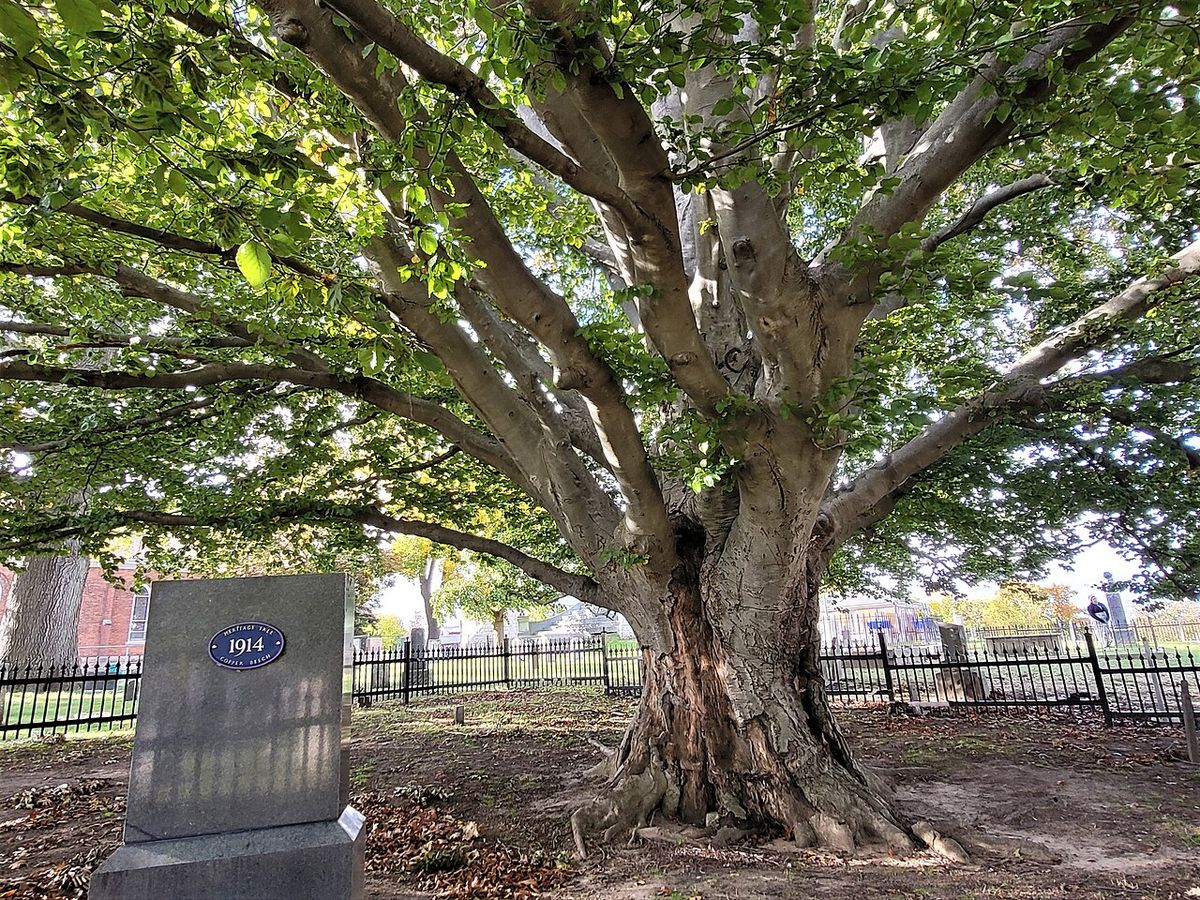
The primary way to experience the Battle of Lundy's Lane is through a self-guided walking tour produced by the Niagara Falls Museums. The tour brochure and map can be picked up at the Niagara Falls History Museum on Ferry Street, which serves as the recommended starting point. The walking route is approximately 1.7 kilometres in distance and guides visitors through the key points of the American advance and British defence. Historical markers placed throughout the area provide context about the battle and the history of the surrounding Drummondville neighbourhood. The preserved features on site offer a tangible connection to the past. The most prominent is the Battle of Lundy's Lane Memorial, a 12-metre-high granite monument erected by the federal government in 1895. A beautiful Copper Beech tree, planted as a legacy of the war, stands on the property. The site also includes the preserved British trench line and various memorials to soldiers from both sides. One building, constructed around 1831, is preserved as the Battle Ground Hotel Museum, which features exhibits related to the battle and is open seasonally on weekends to illustrate 1850s battlefield tourism.
The battlefield site contains several notable landmarks and memorials. A key feature is the cemetery at the highest point of the battlefield where British artillery was massed during the fight. The Lundy's Lane Battlefield Memorial is a prominent monument commemorating the combatants. The site also includes historical markers that denote significant locations, such as the area where Lieutenant Colonel James Miller's troops captured the British guns. These features are part of the preserved historic landscape near present-day Niagara Falls, Ontario.
- The Lundy's Lane Memorial (1895): A 12-metre granite obelisk commemorating the battle.
- Drummond Hill Cemetery: The central battleground, containing graves of soldiers and a commemorative wall added in 2004.
- Laura Secord's Gravesite: The burial place of the famed Canadian heroine of the War of 1812.
- The Copper Beech Tree: A historic tree planted in memory of the battle.
- The Battle Ground Hotel Museum: A preserved 1831 building with battle exhibits.
- Historical Markers: Placed along the walking tour route detailing the action.
- The Soldier's Monument: Created by Parliament and unveiled by the Lundy's Lane Historical Society in 1895.
A self-guided walking tour allows visitors to explore the battlefield at their own pace. This tour helps visitors visualize the dramatic events of 25 July 1814, such as the intense musketry at close range and the series of attacks and counter-attacks over the high ground. The Niagara Falls History Museum serves as a starting point and provides broader context for the battle. The museum's exhibits detail the War of 1812 in the region, including the strategic importance of the Niagara peninsula and the aftermath of the bloody stalemate at Lundy's Lane.
Drummond Hill Cemetery and Laura Secord
Drummond Hill Cemetery is the heart of the battlefield park. Established in 1799 on the sandy ridge due to its height above the surrounding area, it was the strategic high ground fiercely contested during the battle. The cemetery continued to be used and expanded after the war, and the surrounding village was named Drummondville in 1831 after the British commander, later becoming part of Niagara Falls in 1904. Burials in the cemetery span from 1799 to the present day, documenting the area's history. The most famous individual interred here is Laura Secord, known for her perilous 1813 journey to warn British forces of an American attack prior to the Battle of Beaver Dams. Her gravesite is a point of pilgrimage for many Canadians. The cemetery contains the graves and memorials of numerous Canadian, British, and American soldiers who fought at Lundy's Lane, making it a solemn place of remembrance. The commemorative wall, added in 2004, further honours those involved in the conflict. The cemetery's location, accessed from Buchner Place off Drummond Road, remains a serene green space amidst the developed Lundy's Lane corridor.

Lundy's Lane Tourist District
The Battle of Lundy's Lane National Historic Site is situated within the broader Lundy's Lane tourist area, one of Niagara Falls's most famous and busy districts. The lane itself stretches for miles and is a hub for visitors seeking accommodation, dining, shopping, and entertainment. The area offers over two miles of affordable hotels, family-friendly attractions like indoor waterparks, numerous restaurants ranging from casual to award-winning, and extensive shopping options from unique boutiques to the Canada One Outlets. This modern commercial activity exists just minutes from the Niagara Falls themselves, creating a blend of heritage tourism and contemporary leisure. The district's development is directly linked to its history, as the notoriety of the 1814 battle made the area a destination even in the 19th century. Today, visitors can easily combine a reflective visit to the historic battlefield with the many amenities of the lane, enjoying golf, dining, and shopping after exploring the site. The Lundy's Lane area demonstrates the evolution of a battlefield into a community and a major tourist corridor, offering comfort and convenience for all types of travellers.
Commemoration and Reenactment
The Battle of Lundy's Lane is actively commemorated through physical memorials, annual events, and educational programming. The most pronounced marker is the large 1895 memorial monument in the cemetery. The site's national historic designation ensures its protection and interpretation for future generations. The Niagara Falls Museums play a central role in keeping the history alive by providing the walking tour, maintaining the Battle Ground Hotel Museum, and hosting special events. Annual battle reenactments are a significant draw, where hundreds of reenactors recreate an authentic military encampment and stage demonstrations of the fighting. These events provide a vivid, immersive glimpse into soldier and civilian life during the War of 1812, helping to educate the public about the scale and intensity of the conflict. The support from various levels of government, including funding from the Government of Canada for the walking tour brochure, confirms the battle's importance in Canada's national story. These efforts ensure that the story of the bloodiest battle on Canadian soil during the war continues to be told and remembered.
Comparative Battle Statistics
The Battle of Lundy's Lane stands out in the history of the War of 1812 for its particularly high casualty rate and the number of troops engaged. The following table outlines key figures from the engagement, drawn from historical analysis and official returns. The figures illustrate the near-parity in losses, confirming the battle's ferocity and the stalemate that resulted. The high proportion of killed and wounded among the casualties highlights the effectiveness of the musketry and artillery at close range. These statistics are a sobering reminder of the human cost of the conflict and are central to the site's commemoration as a place of national sacrifice.
| Category | British/Canadian Forces | American Forces |
|---|---|---|
| Commanders | Lt. Gen. Gordon Drummond | Maj. Gen. Jacob Brown |
| Approximate Strength | 3,000 | 2,800 |
| Killed | 84 | 174 |
| Wounded | 559 | 572 |
Questions about Battle of Lundy's Lane
Where exactly is the Battle of Lundy's Lane battlefield located?
The Battle of Lundy's Lane National Historic Site is located in Niagara Falls, Ontario, centred on Drummond Hill Cemetery at 6110 Lundy's Lane. The preserved portion of the battlefield is just east of Drummond Road. The area is now a residential and commercial district, but the key historic ground is maintained as a park and cemetery. The Niagara Falls History Museum on Ferry Street, approximately 1.7 kilometres away, serves as the starting point for the official walking tour.
Can you visit Laura Secord's grave at the battlefield?
Yes, the gravesite of Canadian heroine Laura Secord is located within Drummond Hill Cemetery on the battlefield site. Secord is famous for her 1813 trek to warn British forces of an American attack. Her burial place is a notable feature for visitors and is included on the self-guided walking tour. The cemetery is the final resting place for many soldiers from the battle and other local residents, with burials dating from 1799.
Is there an annual reenactment of the Battle of Lundy's Lane?
Yes, annual battle reenactments are held at the site. Hundreds of reenactors participate, creating an authentic military encampment and staging demonstrations of the fighting. These events vividly portray life during the War of 1812 and provide an engaging, educational experience for the public. Details on specific dates and events are available through the Niagara Falls Museums, which organize and promote the activities.
What is the 'I'll try, Sir' monument or reference at Lundy's Lane?
The phrase 'I'll try, Sir' is not a physical monument but a famous historical quote from the battle. When American commander Jacob Brown ordered Lieutenant Colonel James Miller to capture the British artillery, Miller replied, 'I'll try, Sir,' before successfully leading the assault. This resolute response later became the official motto of the 5th U.S. Infantry Regiment. The story is a key part of the battle's narrative and is often recounted in historical interpretations at the site.
Why is the battle considered a strategic British victory if it was a tactical stalemate?
Although neither army broke the other's line and both withdrew exhausted, the battle halted the American offensive on the Niagara Peninsula. The Americans suffered casualties so severe that they could no longer pursue their objective of advancing to Burlington Heights. They retreated to Fort Erie and, by November 1814, back across the Niagara River. The British maintained control of the northern end of the Niagara, thus achieving their strategic goal of defending Upper Canada from invasion, making Lundy's Lane a key British strategic victory.
What was the date and location of the Battle of Lundy's Lane?
The Battle of Lundy's Lane was fought on 25 July 1814. It occurred near present day Niagara Falls, Ontario, during the War of 1812. The battle site was a spur from the main Portage Road alongside the Niagara River, running along the summit of some rising ground. This location is now a residential and commercial area, with part of the battlefield preserved next to Drummond Hill Cemetery on Lundy's Lane.
Sources and further reading
- Battle of Lundy's Lane (Wikipedia)
- Lundy's Lane Battlefield (nfexchange.ca)
- Lundy's Lane (niagarafallstourism.com)
- History, Lundy's Lane Niagara Falls (lundyslane.com)
- Battle of Lundy's Lane National Historic Site of Canada (thecanadianencyclopedia.ca)
Checked by the Novello Desserts desk. Last updated 2026-10-24.