Gros Morne National Park
Gros Morne National Park is a Canadian national park and UNESCO World Heritage Site located on the west coast of Newfoundland. Spanning 1,805 square kilometres, it is the second largest national park in Atlantic Canada and is renowned for its dramatic landscapes and exceptional geological significance. The park's name derives from Gros Morne Mountain, Newfoundland's second-highest peak, which is part of the Long Range Mountains, an extension of the Appalachian chain. Its designation as a World Heritage Site in 1987 recognizes its rare exposure of deep ocean crust and mantle rock, providing a world-class illustration of the process of continental drift.
Geology and Landscape
The geology of Gros Morne National Park is internationally significant for its clear illustration of plate tectonics and continental drift. The park contains oceanic crust and mantle rock exposed by the obduction process, alongside sedimentary, granite, and igneous rocks from various geological eras. A key geological feature is the Global Boundary Stratotype Section and Point for the Tremadocian stage and the entire Ordovician system, defined at the Green Point section within the park. The park lies within the Humber Zone, a miogeocline, with its highlands containing the largest external basement massif of the Grenville Orogeny in the Appalachian Orogen. This Precambrian basement, known as the Long Range Inlier, Long Range Complex or Basement Gneiss Complex, consists of quartz-feldspar gneisses and granites that are up to 1,550 million years old. Mt. Gros Morne and Mt. Big Level lie within this Inlier, and its western boundary features Devonian and Ordovician thrust faults where crystalline rocks thrust over Cambrian-Ordovician carbonate rocks. The park's landscape was further shaped by a Pleistocene ice cap, which carved out dramatic fjords such as Bonne Bay and Western Brook Pond.
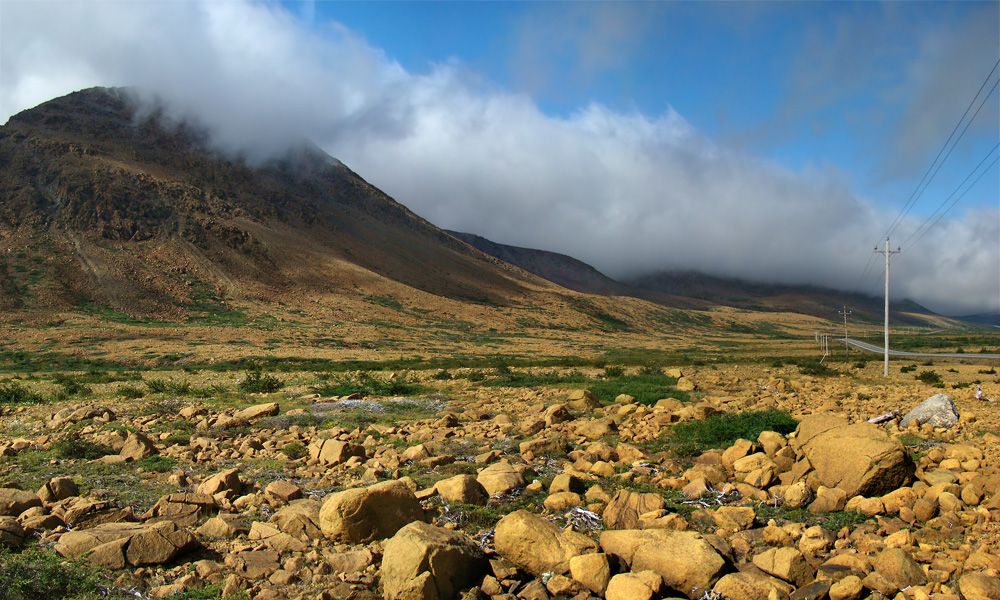
The most visually striking geological feature is the Tablelands, located between Trout River and Woody Point. This barren, rust-coloured plateau is composed of ultramafic rocks, primarily peridotite and serpentinite, which originated in the Earth's mantle and were thrust to the surface during an ancient plate collision. These rocks are deficient in nutrients required by most plants and contain high levels of iron, giving the area a distinctive, desert-like appearance. Beneath the weathered, brown surface, the unweathered rock is a dark green colour. The Tablelands provide a rare and accessible example of the Earth's mantle exposed at the surface. The south portion of the park, including Table Mountain and North Arm Mountain, consists of Upper Cambrian and Lower Ordovician ophiolites known as the Bay of Islands Complex, Little Post Complex, and Old Man Cove Formation.
Notable Natural Features
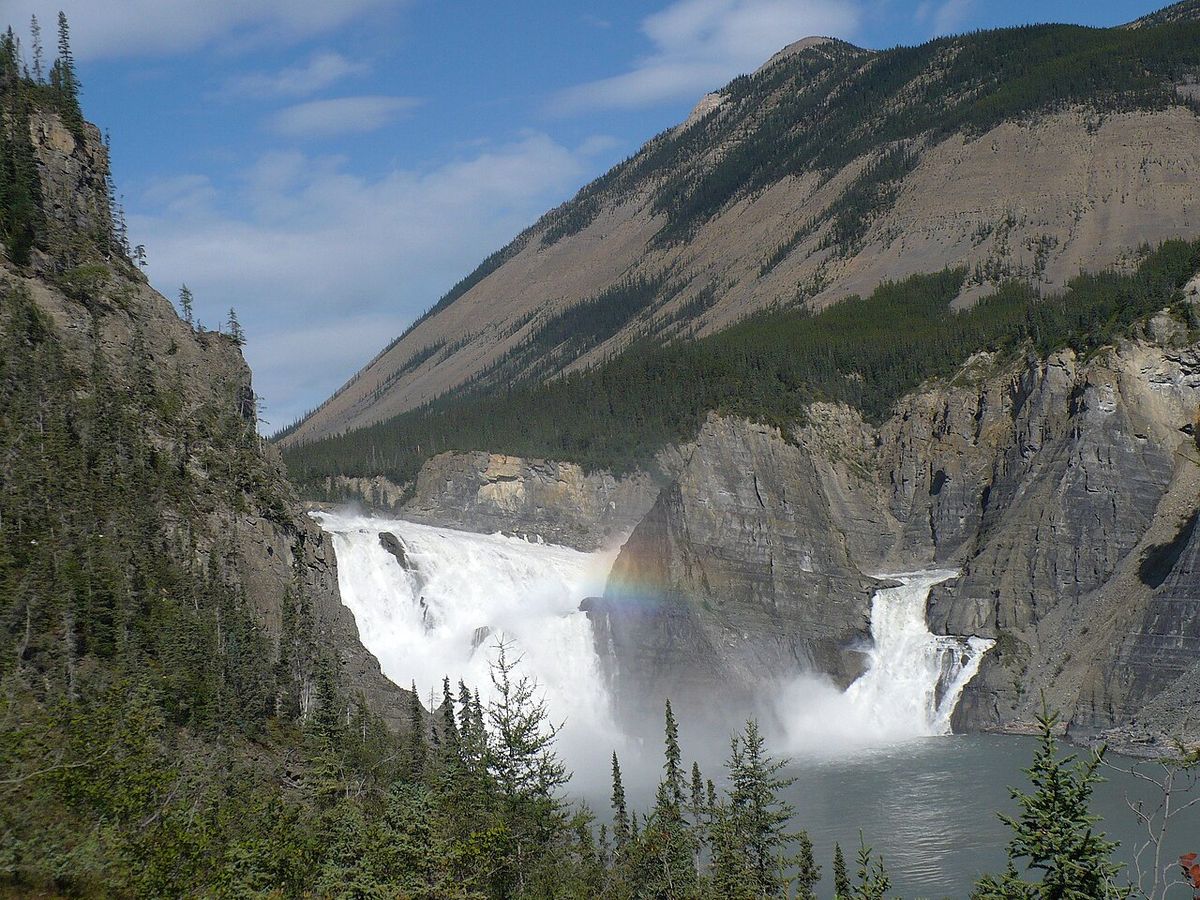
Gros Morne's diverse landscapes include coastal lowlands, boreal forests, bogs, alpine highlands, and freshwater fjords. Western Brook Pond is a premier example of a glacially carved freshwater fjord. Formed during the last ice age between 25,000 and 10,000 years ago, the land rebounded after the glaciers melted, cutting off the outlet to the sea and allowing the 16-kilometre-long chasm to fill with extremely pure fresh water, which holds the highest purity rating for natural bodies of water. The sedimentary rocks, some calcareous, underlie the westernmost shores, while granitic gneiss is dominant elsewhere. Pissing Mare Falls, the highest waterfall in eastern North America and the 199th highest in the world, flows into Western Brook Pond. The park's soils vary widely, reflecting the underlying bedrock and supporting distinct plant communities.
- Silver Mountain association: Very stony sandy loams over glacial till lying over granite, granitic gneiss, and schist in the northeast.
- St. Paul’s Inlet association: Similar stony sandy loams developed on comparable rock types farther west.
- North Lake association: Stony sandy loam over sedimentary rocks and dolomitic limestone in the southeast.
- Cox’s Cove association: A narrow, uneven band of mostly shallow loam over shale, slate, limestone, and sandstone near the coast.
- Serpentine Range association: Stony, nutrient-poor soils on the ultramafic Tablelands south of Bonne Bay.
- Gull’s Marsh and Sally’s Cove associations: Peat-rich and coarser soils dominating the coastal strip north of Bonne Bay.
- Wood’s Island association: Clay-based soils found uniquely around the Rocky Harbour area.
This soil diversity supports the park's wide range of plant communities. In the northeast, the Silver Mountain soil association of very stony sandy loams over granite and gneiss supports forest growth. The nutrient-poor soils of the Serpentine Range association on the ultramafic Tablelands result in sparse vegetation. Near the northern coast, peat-rich soils of the Gull's Marsh association and coarser soils of the Sally's Cove association are found in boggy areas. Coastal areas also feature the narrow Cox's Cove association of shallow loam over sedimentary rock. The varied bedrock types across the park lead to this wide spectrum of soils and plant life.
Wildlife
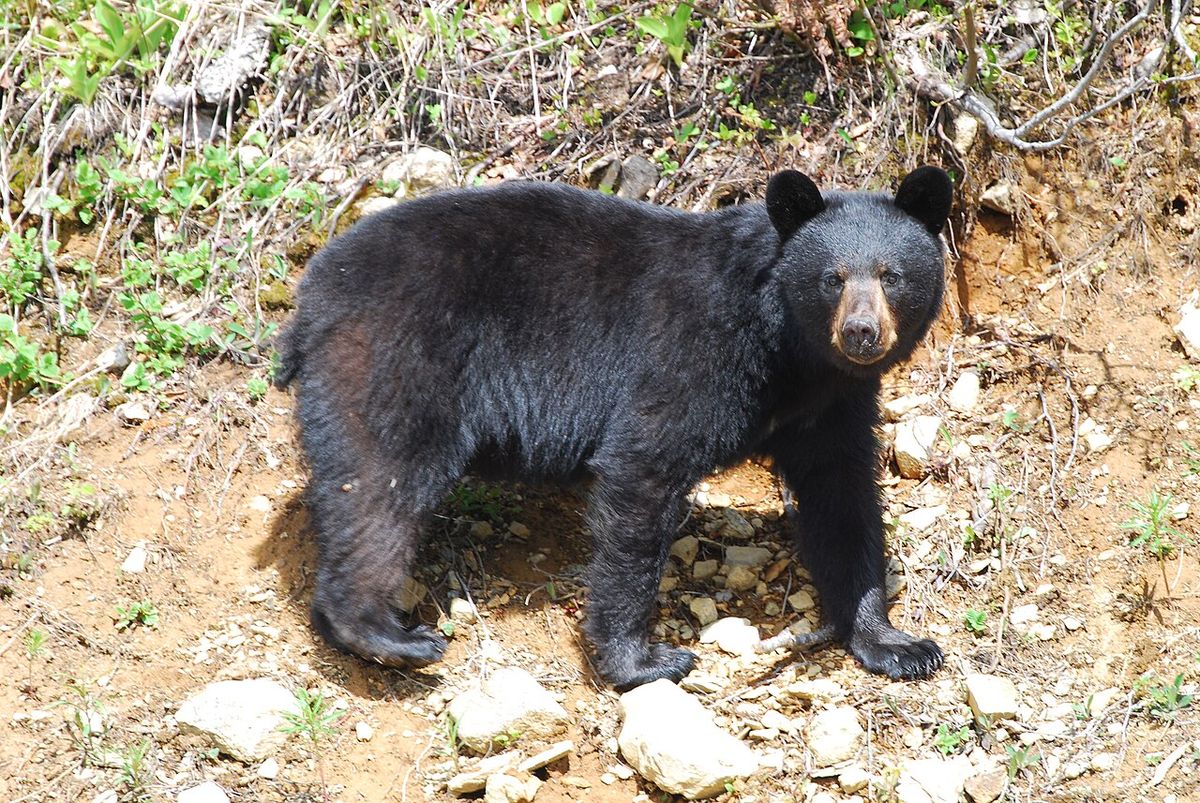
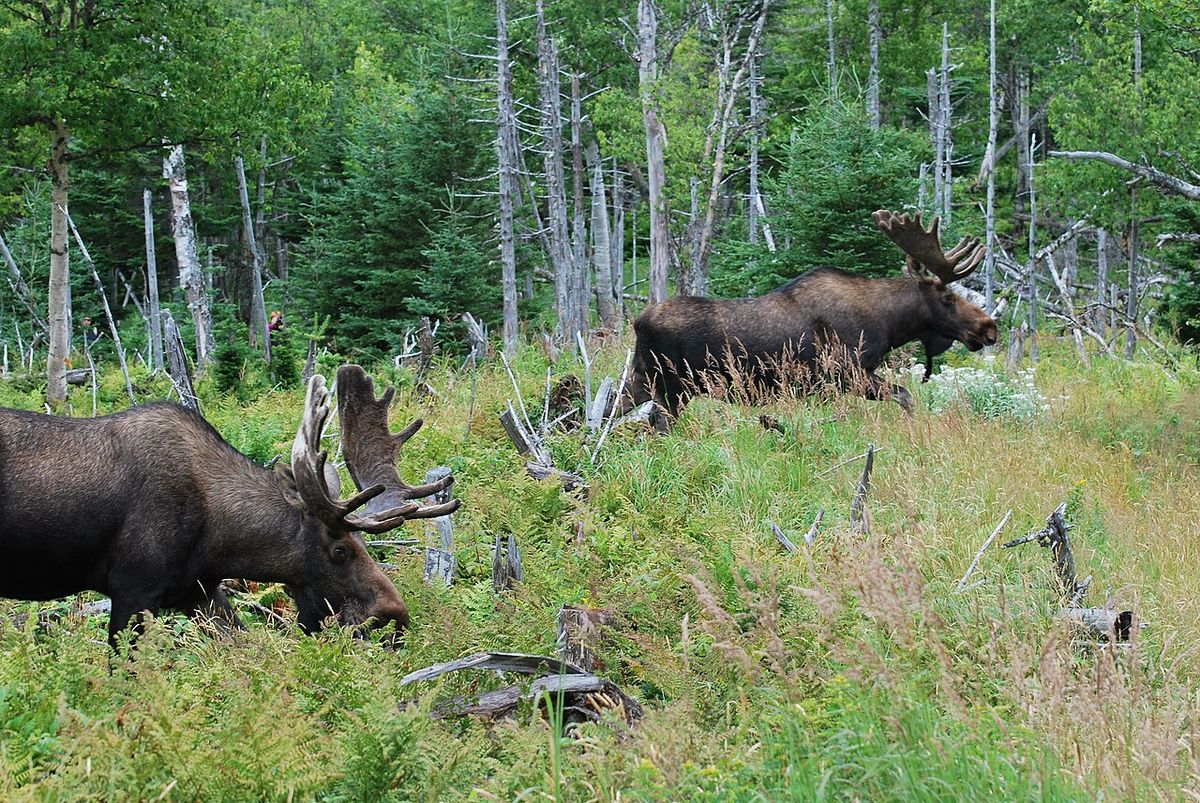
The park's varied habitats support a rich array of terrestrial and marine wildlife. Large mammals are a prominent feature, with eastern moose being particularly abundant. Introduced to Newfoundland from the Maritimes around 1900, moose densities in Gros Morne are five to 20 times higher than in comparable areas elsewhere in Canada, as found by Parks Canada studies. The park is also home to Newfoundland’s endemic caribou ecotype, the Newfoundland black bear, and the Canada lynx. Smaller mammals commonly observed include Arctic and red foxes, beavers, American red squirrels, river otters, and snowshoe hares. The park's mammalian community is a mix of species adapted to boreal forest, alpine, and coastal environments.
Marine life is abundant along the coast. Harbour seals are commonly seen in St. Pauls Inlet. Several cetacean species frequent offshore waters, particularly during the early-summer capelin run, which attracts whales to the area. Species that may be observed include Atlantic white-sided dolphins, fin whales, harbour porpoises, humpback whales, killer whales, minke whales, and pilot whales. The park is also an important area for birds, supporting many species from shorebirds along the coast to those inhabiting bogs and interior forests. Alpine areas provide specific habitat for rock ptarmigan and willow ptarmigan, which are well-adapted to the harsh conditions of the Long Range Mountains.
World Heritage Status and Recognition
Gros Morne National Park was inscribed as a UNESCO World Heritage Site in 1987 for both its exceptional scenery and its geological history. UNESCO specifically noted that the park provides a rare example of the process of continental drift, where deep ocean crust and the rocks of the earth's mantle lie exposed. This geology illustrates the concept of plate tectonics and has shed important light on geological evolution and its processes. In October 2022, the park's importance was further recognized when the Mohorovičić discontinuity at Gros Morne was included by the International Union of Geological Sciences in its assemblage of 100 'geological heritage sites' around the world. This listing directly respects the site's key role in the development of an understanding of plate tectonics, placing it among the most significant geological locations globally.
Hiking and Trails
Hiking is one of the most popular activities in Gros Morne, with approximately 20 marked day trails exploring coastal, forest, and alpine environments. Trails range from easy coastal walks to challenging mountain climbs. One of the more strenuous day hikes is the 16-kilometre trail over Gros Morne Mountain, which involves a significant ascent and rugged terrain. This trail is also known as the James Callaghan Trail, named in honour of the former British Prime Minister who visited in 1976 in recognition of his conservation efforts. A small controversy arose when Callaghan did not visit the trail named for him. For experienced backcountry hikers, the multi-day Long Range Traverse offers a challenging wilderness route between Western Brook Pond and Gros Morne Mountain, requiring advanced navigation skills and a permit from Parks Canada. This traverse allows access to the remote interior of the park, passing through alpine barrens and past pristine lakes.
Arts and Culture
Gros Morne National Park is a cultural hub, hosting several acclaimed arts festivals that draw visitors and performers from across Canada and beyond. These events celebrate the region's natural beauty and creative spirit through theatre, literature, and music. The park is home to the Gros Morne Theatre Festival, which stages professional productions in the summer months. Writers at Woody Point is an annual literary festival that brings authors and storytellers to the community. Gros Morne Summer Music features classical and contemporary concerts in stunning outdoor and indoor venues. The springtime Trails, Tales and Tunes festival combines hiking, storytelling, and live music, offering a unique blend of outdoor activity and cultural performance. These festivals contribute significantly to the cultural life of the park and the surrounding communities, embedding the arts within the landscape.
Park Establishment and Management
The area now known as Gros Morne National Park was first established as the Gros Morne National Park Reserve in 1973. This initial designation aimed to protect the region's significant natural and geological values while planning for its future. After more than three decades of development and management as a reserve, it was officially designated a full national park under the Canada National Parks Act on October 1, 2005. Parks Canada manages the park to protect its ecological integrity, provide visitor services, and facilitate scientific research into its unique geology and ecology. The park's geological wonders have also been featured in media, including as the subject of a short film in the 2011 National Parks Project, which highlights Canada's national parks through film and music.
Geological Formations and History
The rock formations of Gros Morne, made famous by geologists Robert Stevens and Harold Williams, tell a complex story spanning over a billion years. The park contains the eroded remnants of a mountain range formed 1.2 billion years ago. Specific formations include the Rocky Harbour mélange, a Lower-Middle Ordovician collection of greywacke, quartzite, dolomite shale, chert, and limestone blocks within a scaly shale matrix, occurring along the shore from West Brook Pond to Humber Arm. The western boundary of the Long Range Inlier, along Western Brook Pond, St. Pauls Inlet, and south of Portl Creek Pond, consists of Devonian and Ordovician thrust faults. These faults are zones where crystalline rocks have thrust over Cambrian-Ordovician carbonate rocks and the Lower Paleozoic Humber Arm Allochthon, providing clear evidence of tectonic collision and mountain building processes that shaped the region. The thrust faults and the mélange are key sites for understanding the geological assembly of the Appalachian Orogen in Newfoundland.
Questions about Gros Morne National Park
Where is Gros Morne National Park located?
Gros Morne National Park is a Canadian national park located on the west coast of Newfoundland. It is situated on the Great Northern Peninsula of Western Newfoundland, within the Humber Zone. The park is part of the Long Range Mountains, an outlying range of the Appalachian Mountains stretching along the island's west coast. Its landscapes include coastal areas, fjords like Bonne Bay, and the unique Tablelands plateau.
Why is Gros Morne a UNESCO World Heritage Site?
Gros Morne was designated a UNESCO World Heritage Site in 1987 for its exceptional natural beauty and its geological significance. The park provides a rare example of the process of continental drift, with exposed deep ocean crust and rocks from the Earth's mantle. This landscape has been crucial to the scientific understanding of plate tectonics. The site's value was further confirmed in 2022 when its Mohorovičić discontinuity was listed among the world's top 100 geological heritage sites.
What are the Tablelands in Gros Morne?
The Tablelands are a striking, barren plateau located between Trout River and Woody Point within the park. They are composed of ultramafic rocks, primarily peridotite and serpentinite, which originated in the Earth's mantle and were forced up during a plate collision several hundred million years ago. These rocks are nutrient-poor and toxic to most plant life, creating a unique desert-like environment. Their high iron content gives them a distinctive rusty brown colour on the surface, while the unweathered rock beneath is dark green.
What wildlife can be seen in Gros Morne National Park?
The park supports diverse wildlife, including large mammals like the abundant eastern moose, Newfoundland caribou, black bears, and lynx. Smaller mammals such as Arctic and red foxes, beavers, American red squirrels, river otters, and snowshoe hares are common. Harbour seals inhabit St. Pauls Inlet, and whales like humpbacks, fin whales, minkes, and orcas can be seen offshore, especially during the capelin run. The park is also home to many bird species, including rock ptarmigan and willow ptarmigan in alpine areas.
What are some popular hiking trails in Gros Morne?
The park offers about 20 marked day trails. A popular and challenging hike is the 16 km trail over Gros Morne Mountain, also called the James Callaghan Trail. The multi-day Long Range Traverse is a demanding backcountry route for experienced hikers between Western Brook Pond and Gros Morne Mountain. Numerous shorter trails provide access to coastal vistas, the Tablelands, and waterfalls like Pissing Mare Falls which flows into Western Brook Pond.
When was Gros Morne established as a national park?
The Gros Morne National Park Reserve was established in 1973. It was made a full national park on October 1, 2005. The park was designated a UNESCO World Heritage Site in 1987 for its geological history and exceptional scenery. It was also the subject of a short film in the 2011 National Parks Project.
Sources and further reading
- Gros Morne National Park (Wikipedia)
- Activities and experiences, Gros Morne National Park (parks.canada.ca)
- Gros Morne National Park (newfoundlandlabrador.com)
- Things to Do in Gros Morne National Park (happiestoutdoors.ca)
- Gros Morne | Everything Gros Morne National Park ... (grosmorne.com)
Checked by the Novello Desserts desk. Last updated 2026-10-31.