Hatley Park National Historic Site
Hatley Park National Historic Site is a 565-acre historic estate and public university campus located in Colwood, British Columbia, within Greater Victoria on southern Vancouver Island. The site is anchored by Hatley Castle, a grand 40-room Tudor Revival mansion built between 1906 and 1908 for Lieutenant Governor James Dunsmuir and his wife Laura. Designated a National Historic Site in 1995, the property is renowned for its meticulously planned Edwardian gardens, old-growth forest trails, and panoramic views of the Olympic Mountains. Today, the estate is home to Royal Roads University, which leases the grounds from the federal government and manages the site's preservation, while its historic character and cinematic appeal continue to draw visitors, filmmakers, and students from across Canada and beyond.
Historical Development and Ownership
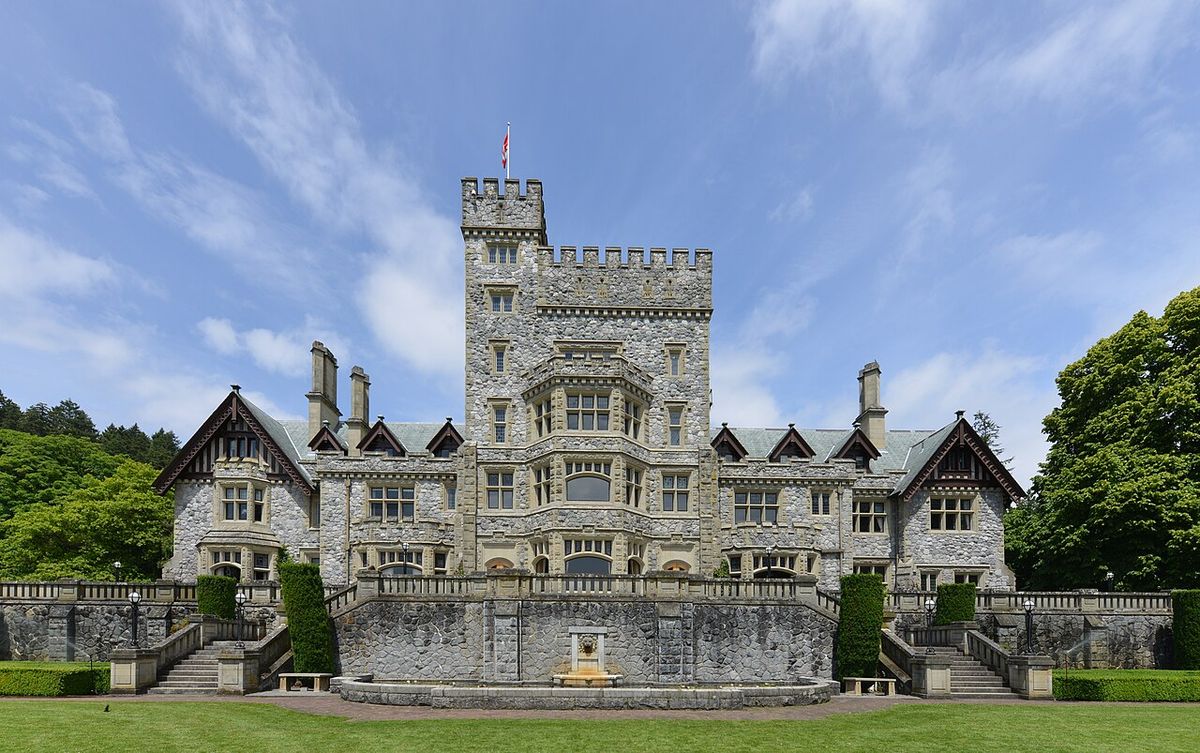
The history of Hatley Park is deeply intertwined with British Columbia's industrial and military heritage. In 1906, James Dunsmuir, a former Lieutenant Governor and heir to a coal and railway fortune, purchased the land to create a private estate. He commissioned renowned Canadian architect Samuel Maclure to design a Scottish baronial-style mansion, which was constructed with local stone and Saturna Island sandstone at a cost where Dunsmuir famously instructed, "Money doesn't matter, just build what I want." The castle, measuring 200 feet long and 86 feet wide with an 82-foot-high turret, was completed in 1908 and served as the Dunsmuir family home. Following the death of Laura Dunsmuir in 1937, the estate was sold to the Government of Canada in 1939 for $75,000, with the mansion's contents auctioned off in 927 lots. During the Second World War, the federal government briefly considered the castle as a potential royal residence for King George VI and his family should Britain be invaded, though the royal family ultimately remained in the United Kingdom. The property instead became the foundation for a new military training establishment, marking the end of its private estate era and the beginning of its institutional life.
The Estate Grounds and Gardens
The grounds of Hatley Park are a classic example of an Edwardian country estate, masterfully planned by the American landscape architects Franklin Brett and George D. Hall, who were students of Frederick Law Olmsted. Their 1912 design organized the 565-acre property into four distinct zones radiating out from Hatley Castle, progressing from formal gardens near the mansion to recreational spaces, then to agricultural lands, and finally to the surrounding forest. During the Dunsmuir era, the estate was a horticultural showpiece requiring the labour of approximately 100 gardeners and groundskeepers, and it featured a conservatory filled with imported orchids, a model dairy, extensive stables, and ten kilometres of internal roads. The military college period saw continued dedication to the grounds, with about 50 personnel employed for maintenance, and today Royal Roads University manages the property with a smaller team of five full-time gardeners, an arborist, a curator, and seasonal staff. The university focuses its efforts on three primary formal gardens due to budget constraints, as it receives no direct government funding for site maintenance, and the most prominent and carefully maintained areas are the Japanese, Rose, and Italian gardens. From 2006 to 2019, the university charged an admission fee to these main heritage gardens to help offset annual maintenance costs that exceeded $550,000, but the fee was cancelled in 2019 and access to the formal gardens is now complimentary from 10 a.m. to dusk. Beyond the cultivated gardens, the estate offers visitors extensive trails through mature stands of first and second-growth coastal forest, featuring large Douglas fir and western red cedar trees, with scenic views toward the Olympic Mountains across the Strait of Juan de Fuca.
Military College and University Transformation
The establishment of a naval training facility at Hatley Park in December 1940 marked a major shift in the site's purpose. Initially commissioned as HMCS Royal Roads, a training establishment for Royal Canadian Naval Volunteer Reserve officers, it trained some 600 officers during the war. In October 1942, it was reformed as the Royal Canadian Naval College, reviving the tradition of training regular force cadets. The castle itself served as a dormitory and mess hall for cadets and staff until a new grant block was completed in 1943. The institution evolved into a tri-service college in 1948, becoming the Canadian Services College Royal Roads, and was formally renamed Royal Roads Military College in 1968. It began granting its own degrees in 1977 following the passage of the Royal Roads Military College Degree Act in 1975, and the college's history includes cultural contributions such as the Royal Roads Military College band, which recorded an LP in 1983 to 1984. Bandmaster Petty Officer First Class Gabby R. Bruner composed "Hatley Park" as the college's official quick march and "Dunsmuir Castle" for a visit by Queen Elizabeth II in 1983. The federal government announced the closure of the military college in February 1994, and it ceased operations in 1995, the same year the Government of British Columbia enacted legislation to create Royal Roads University as a public, degree-granting institution. The province leases the campus from the Department of National Defence for a nominal fee of $1 per year, and Royal Roads University, which opened in September 1995, now holds stewardship responsibilities for the entire National Historic Site, including heritage preservation, site management, and public education about its history and natural resources.
Film and Television Location
Hatley Park and Castle have served as a versatile filming location for over 80 years, earning a reputation as a stand-in for prestigious academies, mansions, and other notable settings. The castle's distinctive Tudor Revival architecture and the estate's expansive, varied grounds have made it a favourite for Hollywood productions and television series. Its most famous recurring role is as Xavier's School for Gifted Youngsters in the X-Men film franchise, appearing in X2: X-Men United (2003), X-Men: The Last Stand, Deadpool, Deadpool 2, and influencing the design of the school in later series installments. The castle also gained lasting recognition as the Luthor Mansion in the television series Smallville and as the Queen family home in Arrow. The property's filmography is extensive and diverse, demonstrating its adaptability for many types of productions.
Hatley Park and Hatley Castle have been a venue for dozens of films and television shows for over 80 years. Notable productions include the Disney Descendants film series, where the castle serves as Auradon Prep. The concluding scenes of the 1979 film The Changeling were filmed inside Hatley Castle. The castle has also been featured as the San Francisco Legacy headquarters in the series Poltergeist: The Legacy and as the Shady Glen School in the 1997 film Masterminds. Other productions include the television film Generation X and episodes of series such as MacGyver, Seven Days, The Killing, and Supernatural.
- X2: X-Men United (2003) as Xavier's School.
- The Changeling (1979) for its interior conclusion scenes.
- Descendants film series (2015, 2017, 2019, 2024, 2026) as Auradon Prep.
- The Amazing Race Canada 6 (2018) as the season's starting line.
- Masterminds (1997) as the Shady Glen School.
Visitor Experience and Access
Hatley Park National Historic Site is a major tourist destination on Vancouver Island, offering a blend of history, horticulture, and natural beauty approximately 25 minutes from downtown Victoria. The site is open to the public year round, with complimentary access to the formal gardens from 10 a.m. until dusk. Visitors can explore the network of walking trails that wind through the old-growth forest, including Charlie’s Trail, which begins near the main entrance gate. The estate provides stunning oceanfront views and vistas of the Olympic Mountains, making it a popular spot for photography, picnics, and peaceful walks. The site is also a sought after venue for weddings and special events, with the university offering conference space and catering services. Access to the interior of Hatley Castle itself is restricted to guided tours, which must be booked in advance and provide insight into the Dunsmuir family's opulent lifestyle, the castle's architectural details, and its subsequent military and academic uses.
The castle now functions as the administrative heart of Royal Roads University, housing the offices of the president, vice president, and senior managers. For visitors planning their trip, parking is available inside the entrance gate, and the university recommends checking its website for the latest information on tour schedules and special events. The property's deep history includes its significance as a traditional gathering place for the Lekwungen speaking peoples, the Songhees and Esquimalt Nations, for thousands of years, adding an important layer of Indigenous heritage to the site. This combination of natural beauty, layered history, and ongoing academic life makes Hatley Park a unique and compelling destination for both local residents and tourists.
Architectural and Heritage Features
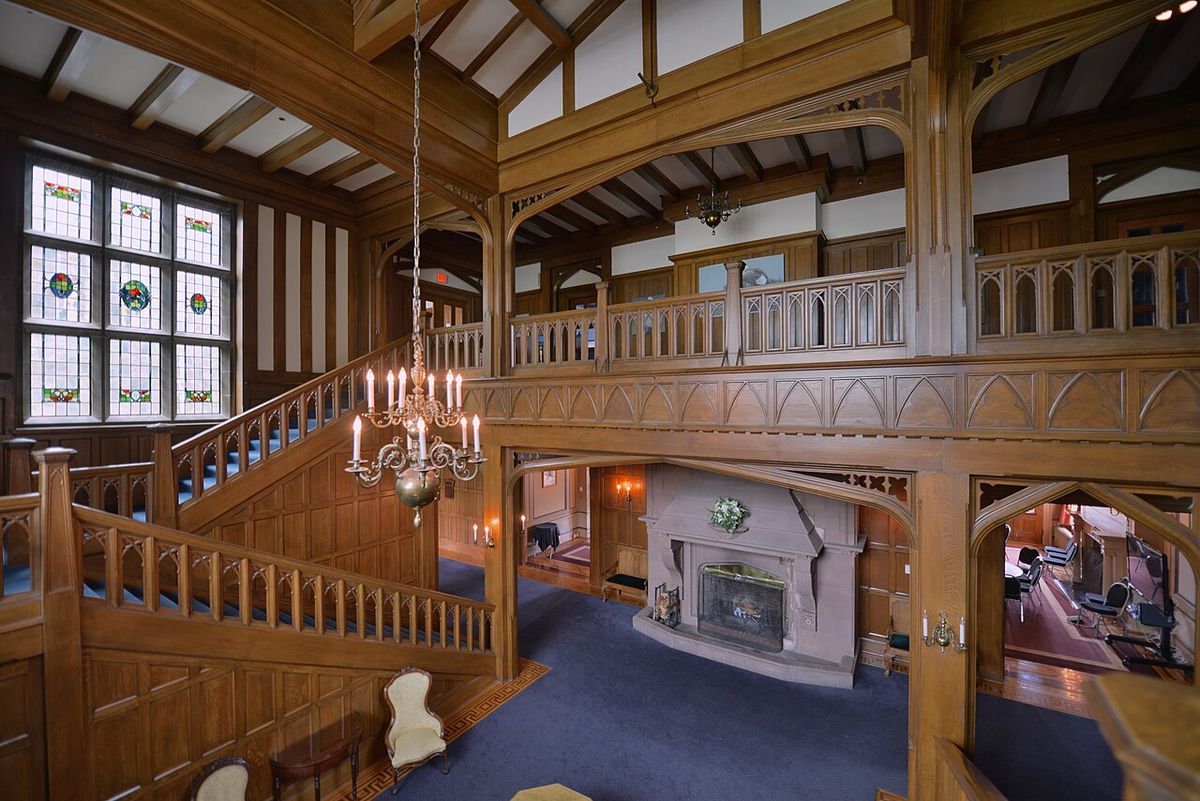
Hatley Castle is the architectural centrepiece of the historic site and is designated a Classified Federal Heritage Building. Designed by Samuel Maclure in the Scottish baronial style popular during the Edwardian era, the castle's construction made extensive use of local materials. The mansion's exterior of local stone and sandstone is matched by a lavish interior featuring oak and rosewood panelled rooms, a baronial fireplace, teak floors, and custom made lighting fixtures. The surrounding estate wall was also constructed from local stone at a cost exceeding $75,000, a significant sum for the time, and other original structures that remain on the property include the model dairy and the stables, built of solid brick and concrete. Many ancillary buildings from the Dunsmuir era, such as a refrigeration plant, slaughterhouse, silos, and a complex known as "Chinatown" that housed dozens of gardeners, have since been demolished.
The Government of Canada Heritage Buildings Register lists nine recognized buildings and one classified building (the castle) on the grounds. The historic site's official plaque from the Historic Sites and Monuments Board of Canada highlights its significance as a superb Edwardian park, noting the picturesque design of the mansion and the estate's progression from formal gardens to forests. The preservation of this essential Edwardian character, even through its adaptations for military and educational use, reflects the careful stewardship exercised by both the Department of National Defence and, subsequently, Royal Roads University. The university's management balances the operational needs of a modern campus with the rigorous demands of conserving a national historic treasure, ensuring the site remains a vital part of Canada's cultural heritage.
- Hatley Castle: Classified Federal Heritage Building, completed 1908.
- Model Dairy: Original estate building of brick and concrete construction.
- Stables: Original estate building of brick and concrete construction.
- Estate Wall: Built of local stone at a cost over $75,000.
- Conservatory: Original structure costing approximately $75,000, once filled with orchids.
- Nine additional buildings on the grounds are Recognized Federal Heritage Buildings.
Key Dates in the Site's History
Hatley Park was created as a private estate by James and Laura Dunsmuir, with the castle completed in 1908. The Dominion Government purchased the estate in 1940 for use as a naval training establishment. The military college that operated there was formally renamed Royal Roads Military College in 1968 and was closed in 1995. That same year, the castle and grounds were designated a National Historic Site of Canada, and Royal Roads University was created as a public university on the site.
- 1906: James Dunsmuir purchases the property and commissions Hatley Castle.
- 1908: Construction of Hatley Castle is completed.
- 1912: Landscape architects Brett and Hall complete their master plan for the estate.
- 1937: Laura Dunsmuir dies, leading to the estate's sale.
- 1940: The Government of Canada purchases the estate for $75,000 and establishes HMCS Royal Roads.
- 1968: The institution is formally renamed Royal Roads Military College.
- 1995: The military college closes. Royal Roads University is created. The site is designated a National Historic Site.
- 2006: The university begins charging admission fees for the formal gardens.
- 2019: Admission fees for the gardens are cancelled, making access free.
Questions about Hatley Park National Historic Site
Can you go inside Hatley Castle?
Public access to the interior of Hatley Castle is only available through pre booked guided tours. The castle currently serves as the administrative centre for Royal Roads University, housing executive offices. Visitors are welcome to explore the exterior of the castle and the surrounding formal gardens free of charge from 10 a.m. until dusk without a tour. The guided tours provide detailed historical information about the Dunsmuir family, the castle's architecture, and its subsequent uses as a military college and university.
Is there an admission fee for Hatley Park gardens?
No, there is no admission fee to visit the formal gardens at Hatley Park. The university charged a fee from 2006 to 2019 to help offset high maintenance costs, but this was discontinued. Access to the Japanese, Rose, and Italian gardens is now complimentary during opening hours from 10 a.m. to dusk. The university manages the 565 acre site without direct government funding for maintenance, so donations are welcomed to support the preservation of the gardens and historic grounds.
What movies and TV shows were filmed at Hatley Castle?
Hatley Castle and Park have been used in numerous film and television productions. The castle is famously known as Xavier's School for Gifted Youngsters in the X Men film series, including X2 and Deadpool. It also served as the Luthor Mansion in Smallville and the Queen Mansion in Arrow. Other notable appearances include the Disney Descendants movies, where it is Auradon Prep, The Changeling, Masterminds, and episodes of series like Poltergeist: The Legacy and The Killing. The estate's versatility has made it a persistent favourite for location scouts for over eight decades.
Who originally built Hatley Castle?
Hatley Castle was built for James Dunsmuir, a former Lieutenant Governor of British Columbia and a wealthy industrialist from the coal and railway fortune of the Dunsmuir family. He and his wife Laura commissioned the project in 1906. They hired architect Samuel Maclure to design the castle and the American landscape firm of Brett and Hall to plan the gardens. Construction was completed in 1908, and the Dunsmuir family resided there until 1937. James Dunsmuir was heavily involved in the design, insisting on the highest quality materials and craftsmanship regardless of cost.
What is the relationship between Hatley Park and Royal Roads University?
Royal Roads University is a public university established by the Province of British Columbia in 1995, following the closure of Royal Roads Military College. The university leases the entire Hatley Park National Historic Site campus from the Department of National Defence for a nominal $1 per year. In return, the university is responsible for all stewardship of the site, including heritage preservation, maintenance, operations, and public education. The castle functions as the university's administrative building, while the broader campus hosts academic programs, making it a unique fusion of a historic estate and a modern educational institution.
How large is the Hatley Park estate?
Hatley Park National Historic Site encompasses 565 acres (2.29 square kilometres) of land on the coast of Colwood, British Columbia. The property includes the historic castle, extensive formal gardens, recreational areas, former farmland, and significant tracts of mature coastal forest with old growth Douglas fir and western red cedar. The estate offers over ten kilometres of internal roads and trails for exploration. The scale of the original Dunsmuir estate was even larger, as some land was sold off by the federal government after its purchase in 1939 before the military college was established.
Sources and further reading
- Hatley Park National Historic Site (Wikipedia)
- Hatley Castle | National Historic Site, Victoria BC (hatleycastle.com)
- Hatley Park and Hatley Castle (attractionsvictoria.com)
Checked by the Novello Desserts desk. Last updated 2026-10-24.