Dominion
Dominion was a national supermarket chain that played a significant role in the development of grocery retailing in Canada. Founded in Toronto in 1919, it grew from a single store to a coast-to-coast operation before a complex corporate breakup in the mid-1980s. Its history is intertwined with major Canadian corporate figures and entities, including the Argus Corporation, Conrad Black, and the eventual consolidation of the industry under giants like Metro and Loblaw. The Dominion brand persisted in various forms until 2008, when the last of its stores were renamed, marking the end of an era for a once-familiar name in Canadian shopping.
Founding and Early Expansion
Dominion Stores began with a single Toronto location opened on May 23, 1919 by American businessmen Robert Jackson of New Hampshire and William J. Pentland of Connecticut. Pentland, who had been a manager for A&P stores in Connecticut, was hired by Jackson to help launch the venture. Their growth was remarkably swift, as they ended 1919 with a 20-store chain, 18 of which were acquired from the rival Loblaws company. Within a year, the chain had expanded to 61 stores, establishing a strong foothold in the Ontario market. This rapid expansion set the stage for Dominion to become a major national player in the decades that followed.
The company's ambitious growth was temporarily halted by the stock market crash of 1929, which ended an attempt to acquire a stake in Loblaws. The Great Depression took a severe toll on the founding leadership, with Robert Jackson facing bankruptcy and William Pentland being killed in an automobile accident in 1933. This period of instability lasted until 1939, when J. William Horsey assumed the presidency and provided new direction. Under Horsey's leadership, Dominion was sold to the powerful Argus Corporation, a move that would shape its corporate destiny for the next several decades. The Argus Corporation was a major Canadian holding company with interests across numerous industries, and its acquisition provided Dominion with the capital and stability needed for its next phase of growth.
National Growth and Modernization Under Argus
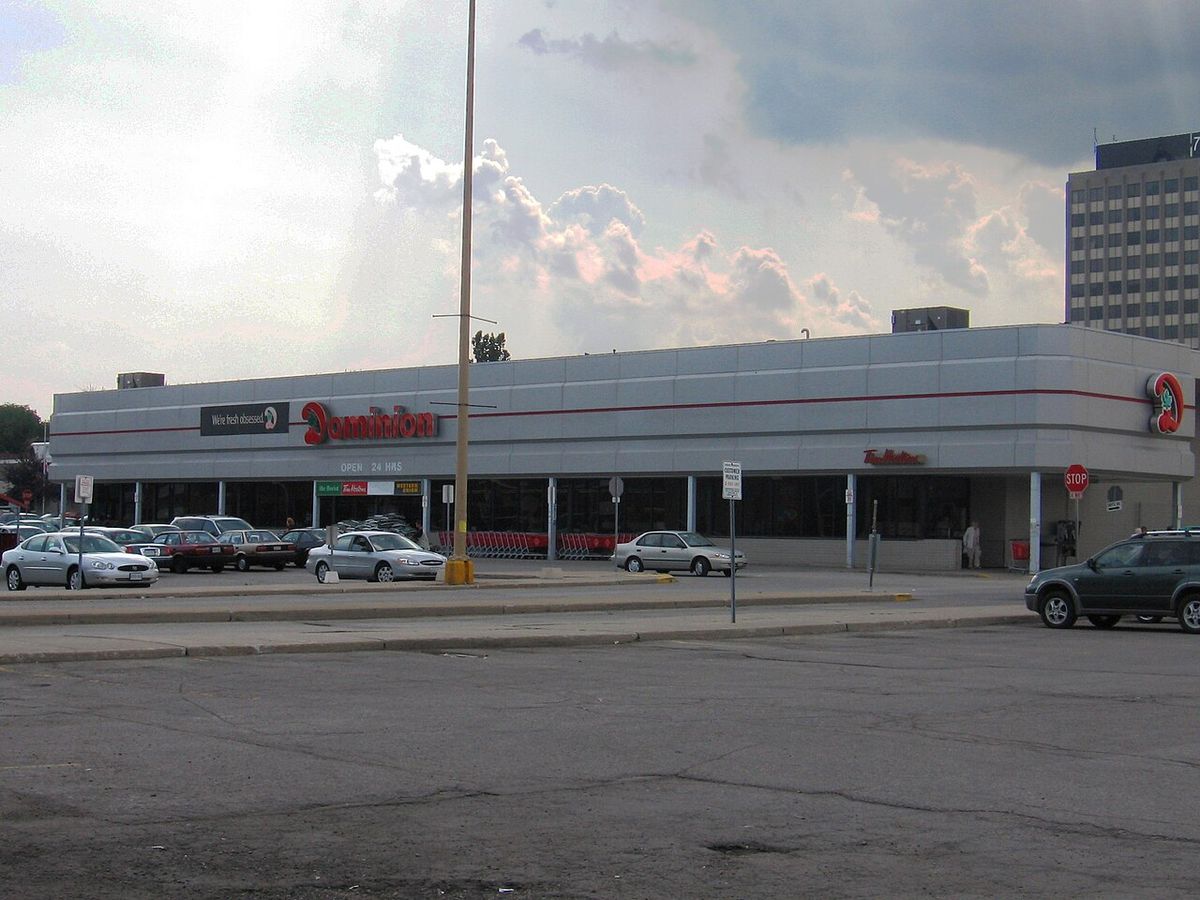
Following its acquisition by Argus Corporation, Dominion underwent a significant consolidation and modernization phase. The company streamlined its operations, reducing its store count from 574 to 195 by 1954, focusing on larger, more efficient locations. Throughout the 1950s, Dominion began building new, modern supermarkets characterized by airy ceilings and large glass frontages, a design that contrasted with older, smaller grocery formats. This era marked Dominion's transformation into a contemporary supermarket chain ready for suburban expansion, and it coincided with the post-war boom that saw families moving to new housing developments.
Dominion expanded its geographical footprint beyond its Toronto base, establishing a presence across Ontario and moving into Quebec, Alberta, Manitoba, Saskatchewan, and Atlantic Canada. This national expansion made Dominion a truly coast-to-coast grocery retailer, competing directly with other growing chains like Loblaw and Safeway. The chain's growth during this period was supported by the financial backing and corporate strategy of Argus Corporation, which was under the control of prominent financiers like John A. McDougald and E. P. Taylor. These figures were central to the Canadian business establishment, and their stewardship helped Dominion become a household name from Newfoundland to British Columbia.
The Corporate Breakup of the 1980s
The fate of Dominion changed dramatically after Conrad Black took control of Argus Corporation in 1978. Black moved Dominion's holdings into the Hollinger Inc. portion of Argus and began a process of stripping cash from the company's daily operations, which weakened its competitive position. This set the stage for the dissolution of the national chain. In 1985, A&P's Canadian division acquired 92 of Dominion's prime Ontario locations, along with the head office, warehouses, and the rights to the Dominion name from Hollinger. This sale was part of Black's broader sell-off of virtually all previous holdings of Argus Corporation, a strategy that reshaped several Canadian industries.
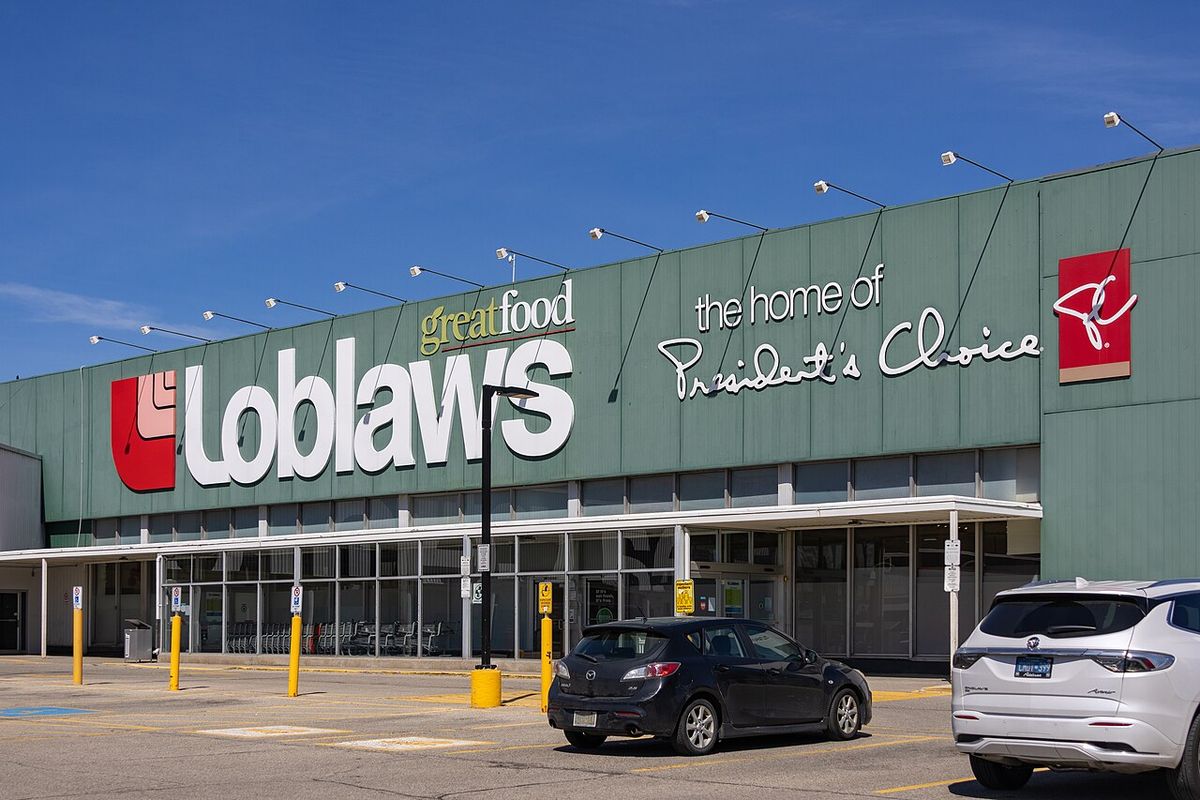
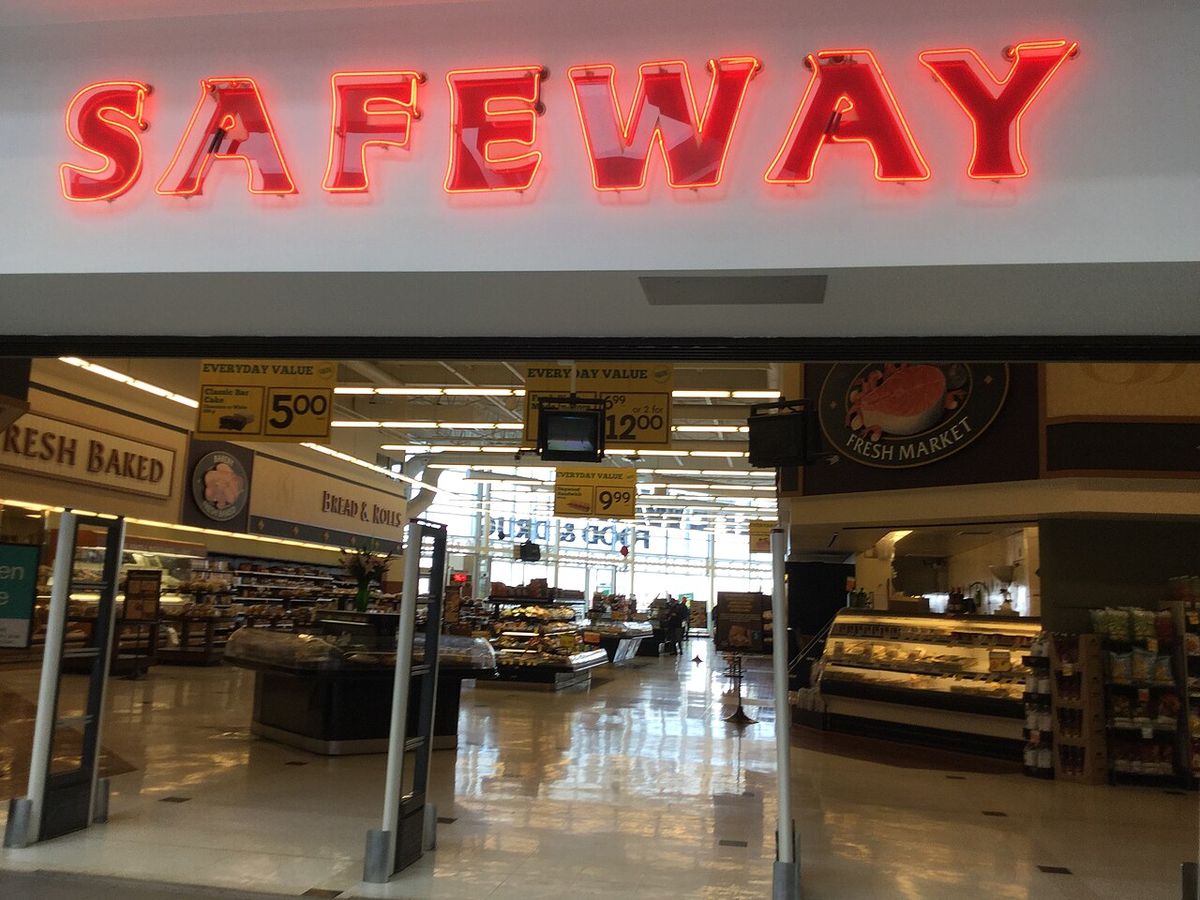
The remaining Dominion assets were sold piecemeal over the next two years to various competitors across the country. In northwestern Ontario, Safeway acquired at least two stores in Thunder Bay, and Safeway's continued presence in that city later prevented Metro from offering Air Miles loyalty points at its Thunder Bay locations. In Western Canada, many stores were simply closed, creating large vacancies in suburban shopping malls that sparked a wave of mall renovations. In Alberta, stores had been acquired by Safeway back in the late 1960s, so the 1980s closures affected other regions more directly. The remainder of the chain in eastern and central Canada was ultimately acquired by Loblaw Companies through several unrelated transactions, which consolidated the industry.
- Ontario: The Mr. Grocer franchise banner of 58 stores, mostly former Dominion stores converted prior to the breakup in an attempt to change them to non-union operation, were sold to Loblaw for $40 million and soon phased out.
- Newfoundland: Stores were sold to local owners, who then resold them to Loblaw in 1995, the only region where the Dominion name continued for a period.
- New Brunswick: Stores were sold to Food Group Inc. shortly after the A&P acquisition and operated under the Village banner until Food Group was sold to Loblaw and merged into its Atlantic Superstore unit in 1995.
- Nova Scotia: Locations were sold to Oshawa Group and became IGA stores, but after Sobeys purchased Oshawa in 1999, Loblaw took over IGA's Atlantic Canada locations.
- Quebec: Dominion stores in Quebec were sold to Provigo in 1981, a full four years before the main breakup. Provigo was itself acquired by Loblaw in 1998.
Legal and Labour Disputes
During the chain's breakup in 1985, a significant legal battle emerged over employee pension funds. The Argus-controlled company, which was renamed Domgroup Ltd. in April 1986, withdrew $37.9 million from its defined benefit pension plan, representing an actuarial surplus. Although the withdrawal had approval from the provincial regulator, the Pension Commission of Ontario, it was challenged by the employees' union, the Retail, Wholesale and Department Store Union. In September 1986, Justice Robert Reid of the Ontario Supreme Court of Justice ordered Domgroup to return the money, ruling the company had no right under the plan documents to remove the surplus. Domgroup eventually reached a settlement with the union to withdraw a portion of the surplus funds, concluding a contentious episode that highlighted the human impact of the corporate restructuring.
The A&P Era and Final Rebranding
After acquiring key Dominion assets in 1985, A&P Canada placed them under a subsidiary named New Dominion Stores Inc., initially operating them as "New Dominion" and later adjusting the branding to "Super Dominion." For a one-year transition period, these stores coexisted with the "old" Dominion stores still owned by Argus, leading to customer confusion. The head of A&P Canada said he called Conrad Black personally to ensure the Argus-owned stores' marketing adhered to the sale contract, as some advertisements had highlighted those stores as being Canadian-owned, whereas A&P was based in the U.S. and controlled by Germany's Tengelmann Group. Most of the remaining old Dominion stores ultimately closed in early 1986, ahead of A&P gaining exclusive rights to the name on April 30, which finally ended the confusing overlap.
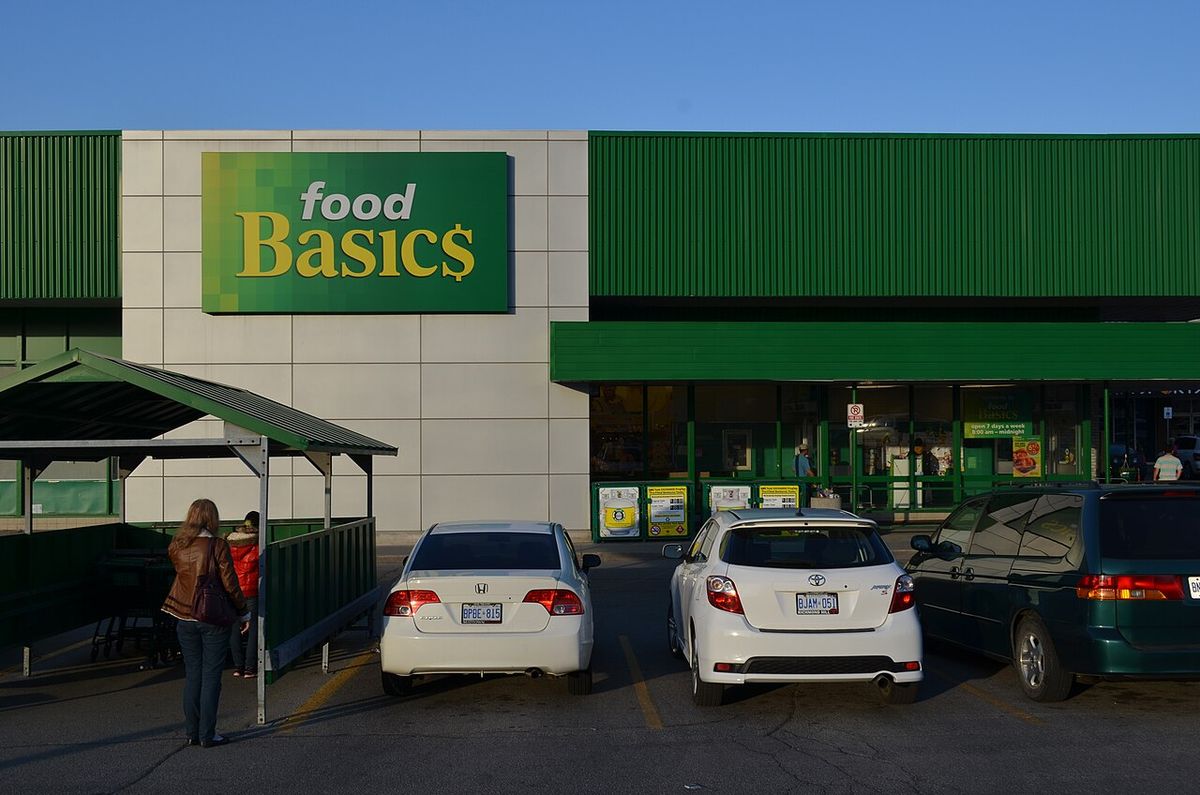
Beginning a few months after the acquisition and continuing into the 1990s, A&P rebranded all of its stores in the Greater Toronto Area as Dominion stores, absorbing the Miracle Food Mart banner in the process. Dominion locations elsewhere in Ontario took the A&P or Food Basics name, reflecting A&P's multi-banner strategy. The final operating territory for Dominion stores was approximately Toronto, York Region (excluding Stouffville), Mississauga and Oakville, and Pickering and Ajax. This marked the brand's retreat to a concentrated regional presence centred on the Greater Toronto Area, a far cry from its former national footprint.
Metro Inc., which had operated solely in Quebec and the Ottawa area, acquired A&P Canada from its U.S. parent effective August 15, 2005, with A&P retaining a minority ownership share for a time. On August 7, 2008, Metro announced it would invest $200 million consolidating the company's conventional food stores under the Metro banner. Over a period of 15 months, all stores were converted to the Metro name, beginning with the Dominion stores in the Toronto area. Dominion's distribution centres in Toronto and Mississauga retained the old Dominion banner until 2009, serving as the final operational remnants of the once-great chain.
Key Figures in Dominion's History
Several prominent business figures were central to the story of Dominion Stores. The co-founders, Robert Jackson and William J. Pentland, launched the chain with their rapid acquisition strategy in 1919. J. William Horsey became president in 1939, stabilized the company after the founders' departures, and oversaw its sale to Argus Corporation. John A. McDougald was a financier who held a controlling interest in Dominion from the 1940s through the 1970s as part of the Argus conglomerate, providing decades of continuity. E. P. Taylor was another key figure within the Argus group that controlled Dominion, though his focus was broader across the holding company's many assets. Conrad Black's control of Argus beginning in 1978 directly led to the corporate decisions that resulted in the chain's breakup and sale in the mid-1980s, a definitive chapter in its history.
The Dominion Name in Newfoundland and Legacy
Following the 1985 breakup, the Dominion stores in Newfoundland followed a unique path. They were not acquired by A&P but were instead sold to local owners, who then resold the Newfoundland locations to Loblaw in 1995. This transaction meant that the Dominion banner continued to operate in Newfoundland for a period under Loblaw's ownership, making it the only region in Canada where the name persisted after the dissolution of the national chain. This anomaly is noted in historical references to Dominion Stores, distinguishing the Newfoundland operations from the rest of the former empire, and it represents a final, isolated holdout of the brand.
The closure of Dominion stores in Western Canada during the chain's breakup left many suburban shopping malls with large, vacant sections. This event forced property owners to scramble to fill the empty spaces. Coupled with the subsequent collapse of several department store chains, it sparked a wave of mall renovations in many parts of the country. The situation illustrated how the dissolution of a major grocery chain had significant ripple effects on the broader retail and commercial real estate sectors.
Today, the Dominion name is primarily remembered through historical accounts and the memories of Canadians who shopped there. Its story is documented in books such as "Dominion Stores: The First Sixty Years 1919 to 1979" by Paul Nanton and "Dominion: Sixty Years of Dependability" by Ted Wood. The chain evolved from a single Toronto store in 1919 to a national powerhouse, before fragmenting and being absorbed by competitors. This history mirrors larger trends of consolidation in 20th century Canadian business, leaving a lasting imprint on the grocery industry.
Questions about Dominion
When was Dominion founded and by whom?
Dominion was founded on May 23, 1919, with a single store in Toronto. It was founded by two American businessmen: Robert Jackson of New Hampshire and William J. Pentland of Connecticut. Pentland had previously been a manager for A&P stores in Connecticut. Their venture grew rapidly, acquiring 18 stores from rival Loblaws by the end of 1919.
What happened to Dominion stores in the 1980s?
In the mid-1980s, the national Dominion chain was broken up following Conrad Black's takeover of its parent company, Argus Corporation. In 1985, A&P Canada acquired 92 prime Ontario locations and the rights to the Dominion name. The remaining stores across Canada were sold piecemeal to competitors like Safeway, Loblaw, and Provigo, or were simply closed, ending Dominion's status as a unified national supermarket chain. This process was part of Black's sell-off of virtually all Argus Corporation holdings.
Did any Dominion stores keep the name after the breakup?
Yes, but only in one region. The Dominion stores in Newfoundland were sold to local owners following the 1985 breakup, and those owners then resold the stores to Loblaw in 1995. The Newfoundland locations continued to operate under the Dominion banner for a time under Loblaw's ownership, making them the only ones to do so after the national chain was dissolved. Stores in all other provinces were rebranded or closed.
When and why did the last Dominion stores disappear?
The last Dominion stores, which were confined to the Greater Toronto Area under A&P Canada's ownership, were rebranded in 2008 and 2009. After Metro Inc. acquired A&P Canada in 2005, it announced a $200 million consolidation plan in August 2008 to rename all its conventional stores under the Metro banner. The conversion process took 15 months, finally retiring the Dominion name. The distribution centres in Toronto and Mississauga kept the Dominion name until 2009.
What was the pension surplus dispute about?
In 1985, during the chain's dissolution, the company (renamed Domgroup Ltd.) withdrew $37.9 million from its employee pension plan, claiming it was an actuarial surplus approved by the Pension Commission of Ontario. The employees' union, the Retail, Wholesale and Department Store Union, challenged this. In September 1986, Justice Robert Reid of the Ontario Supreme Court ordered the money returned, ruling the company had no right to the surplus under the plan documents. A settlement was later reached for Domgroup to withdraw only a portion of the funds.
Who were some of the major corporate figures associated with Dominion?
Key figures included co-founders Robert Jackson and William J. Pentland. J. William Horsey became president in 1939 and sold the company to the Argus Corporation. The chain was later controlled by Argus figures like financier John A. McDougald, who held a controlling interest for decades, and E. P. Taylor. Conrad Black's control of Argus beginning in 1978 led to the decisions that resulted in Dominion's breakup and sale in 1985.
Sources and further reading
- Dominion (Wikipedia)
- 10 Largest food chains in Canada in 2026 (scrapehero.com)
Checked by the Novello Desserts desk. Last updated 2026-10-24.