Loblaws
Loblaws Inc. is a major Canadian supermarket chain operating primarily in Ontario, with additional stores in Alberta and British Columbia under the Loblaws CityMarket banner. As a subsidiary of Loblaw Companies Limited, Canada's largest food distributor and retailer, Loblaws is a fundamental part of the national grocery landscape. The chain has a storied history dating back to 1919, when it pioneered the self-service supermarket model in Canada. Today, it is recognized for its extensive network, private-label brands like President's Choice and No Name, and its significant role in the Canadian economy through investment and employment.
Early history and expansion
Theodore Loblaw and John Milton Cork founded Loblaw Groceterias in 1919, opening the first Canadian self-service supermarket in Toronto that same year. This innovative model allowed customers to browse aisles and select their own goods, a significant departure from the clerk-assisted service common at the time. The company expanded rapidly throughout Ontario during the 1920s, and by the 1930s it operated 107 stores in Ontario and 50 in New York state. This period established Loblaws as a leading supermarket chain in the region. The company's growth attracted the attention of the Weston family, with Garfield Weston acquiring a significant block of shares in 1947. By 1953, George Weston Limited had secured majority control of the chain, integrating it into a broader food distribution empire.
Rebranding and revitalization
Loblaws stores were once present across Canada, but by the early 1960s most locations in western Canada were rebranded under other banners like SuperValu and later Real Canadian Superstore. The 1970s presented challenges as the chain's aging stores became less competitive, leading to declining sales. In response, the company initiated a major marketing and renovation strategy to revitalize its image. This included introducing new store colours and a refreshed Loblaws logo. During the 1990s, Loblaws experimented with the Super Centre hypermarket banner in Ontario, which featured large stores selling a wide array of merchandise including clothing. While initially successful, the concept was largely abandoned by the late 1990s due to growing competition, with many locations downsized or rebranded back to the Loblaws name.
Modern formats and CityMarket
The 21st century brought further evolution to the Loblaws banner. Beginning in 2008, some new and renovated stores adopted a "Loblaw Great Food" format, featuring a new store layout and dropping the traditional red-orange curved-L logo. This format also came with different collective agreement terms for unionized employees. A significant development came in 2013 with the introduction of the Loblaws CityMarket concept, first launched in British Columbia. These stores, now also found in Ontario and Alberta, represent a distinct format within the chain. The company has also made strategic decisions to close underperforming locations, announcing the closure of 52 non-profitable stores in 2015 as part of ongoing portfolio management.
Recent investment and expansion strategy
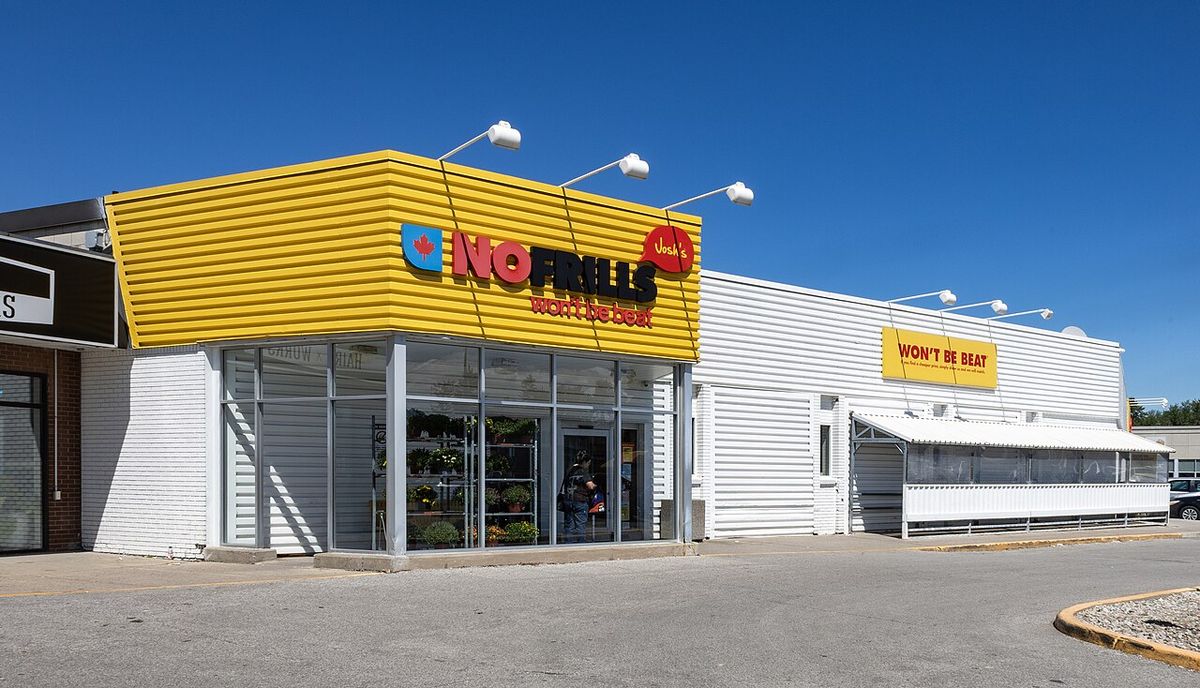
Loblaw Companies Limited has begun an aggressive, multi-year capital investment plan to expand and modernize its retail network. In 2026, the company increased its planned store openings for the year from approximately 70 to 75 new locations. This expansion is part of a broader $2.4 billion capital expenditure program for 2026, which is the second installment in a five-year plan to invest $10 billion in Canada by 2030. The 2026 investment is expected to create approximately 9,700 retail and construction jobs. The grocery expansion is heavily focused on the company's hard discount banners, No Frills and Maxi, reflecting consumer demand for value. By mid-2026, Loblaw had already opened 38 new grocery stores and pharmacies, including 21 grocery stores and 17 Shoppers Drug Mart locations. The capital program also includes renovations to more than 190 existing stores, ranging from refreshed food offerings to general improvements. President and CEO Per Bank stated that the investment is driven by strong customer response to new locations and confidence in the formats where the company is investing. The broader strategy aims to accelerate network expansion to reach more customers and meet evolving shopping habits, including a nearly 20 percent year-over-year increase in ecommerce sales reported in mid-2026.
Services and customer programs
Loblaws offers several key services designed for modern grocery shopping. Its PC Express service allows customers to order groceries online for pickup at designated store locations. The chain's loyalty program, PC Optimum, is one of Canada's largest reward programs with over 16 million active members, allowing points accumulation on purchases that can be redeemed for discounts. Loblaws is also a participant in the voluntary Scanner Price Accuracy Code managed by the Retail Council of Canada, which provides customer compensation for scanning errors. In a move to enhance delivery options, Loblaw Companies Limited partnered with the delivery network Skip in 2026, integrating its retail offerings into Skip's expanding service platform.
Bread price-fixing settlement
In December 2017, Loblaws and its parent company George Weston Limited disclosed to the Competition Bureau that they had participated in an industry-wide arrangement to fix the price of bread from 2000 to 2014. In an initial response, the company offered a $25 gift card to customers as a gesture of goodwill, but the offer was met with public criticism over its restrictions. The legal matter progressed to a class-action lawsuit. In July 2024, Loblaws and George Weston Limited agreed to pay $500 million to settle their portion of the lawsuit, while litigation continued against several other implicated retailers. This settlement marked a significant chapter in the company's history regarding competition law compliance.
Corporate position and brands
Loblaws operates as a subsidiary of Loblaw Companies Limited, which holds the position of Canada's largest food distributor, retailer, and private sector employer with over 220,000 employees. The parent company oversees a vast network of approximately 2,500 stores across various banners nationwide. Loblaws stores prominently feature the corporation's successful private-label brands, most notably President's Choice and the value-oriented No Name line. These in-house brands are a major component of the company's product strategy and customer appeal. The corporation's stated purpose is "helping Canadians Live Life Well," a philosophy that guides its business decisions and community investments.
Questions about Loblaws
Where are Loblaws stores located?
Loblaws supermarkets are located primarily in the province of Ontario. The chain also operates stores in Alberta and British Columbia under the Loblaws CityMarket banner. While Loblaws was once present across Canada, most of its western Canadian locations were rebranded decades ago to other banners like Real Canadian Superstore. The parent company, Loblaw Companies, operates other store banners nationwide.
Is Loblaws opening new stores?
Yes, Loblaw Companies Limited is in a significant expansion phase. In 2026, the company increased its plan to open approximately 75 new locations across its various banners, up from an initial target of 70. This includes new Loblaws, No Frills, Maxi, and Shoppers Drug Mart stores. The expansion is part of a $2.4 billion capital investment for 2026 and a broader five-year plan to invest $10 billion in Canada by 2030.
When was Loblaws founded and by whom?
Loblaws was founded in 1919 by Theodore Loblaw and John Milton Cork. The company opened the first Canadian self service supermarket in Toronto in June of that same year. During the 1920s, the company expanded throughout Ontario. By the 1930s, it had grown to 107 stores in Ontario and 50 in the state of New York.
What is the PC Optimum program?
PC Optimum is the rewards program used at Loblaws stores. It allows customers to accumulate points from purchases of certain items. These points can then be redeemed in increments of ten dollars on future purchases. This program is one of Canada's largest and best loved reward programs with more than 16 million active members.
What was the bread price fixing scandal involving Loblaws?
In December 2017, Loblaws and George Weston Limited disclosed they had arranged to fix the price of bread from 2000 to 2014. In response, the chain offered a $25 gift card to Canadian customers as a goodwill gesture. This offer was met with public backlash over its restrictions and perceived lack of remorse. In July 2024, the two companies agreed to pay $500 million to settle the related lawsuit.
What is Loblaws' investment plan for 2026 and beyond?
Loblaws has a significant capital investment plan underway. For 2026, the company expects to invest $2.4 billion, which is part of a five year plan to spend $10 billion by 2030. This investment will fund the opening of approximately 75 new locations and renovations at over 190 existing stores. The broader program is expected to create approximately 9,700 retail and construction jobs in 2026.
Sources: Wikipedia and current public reporting, checked by the Novello Desserts desk. Last updated 2026-10-20.