Grocery price growth slows to 1.7 percent as inflation rate edges up
The annual inflation rate rose to 3.1 percent in September, driven by a 27.8 percent surge in gasoline prices.
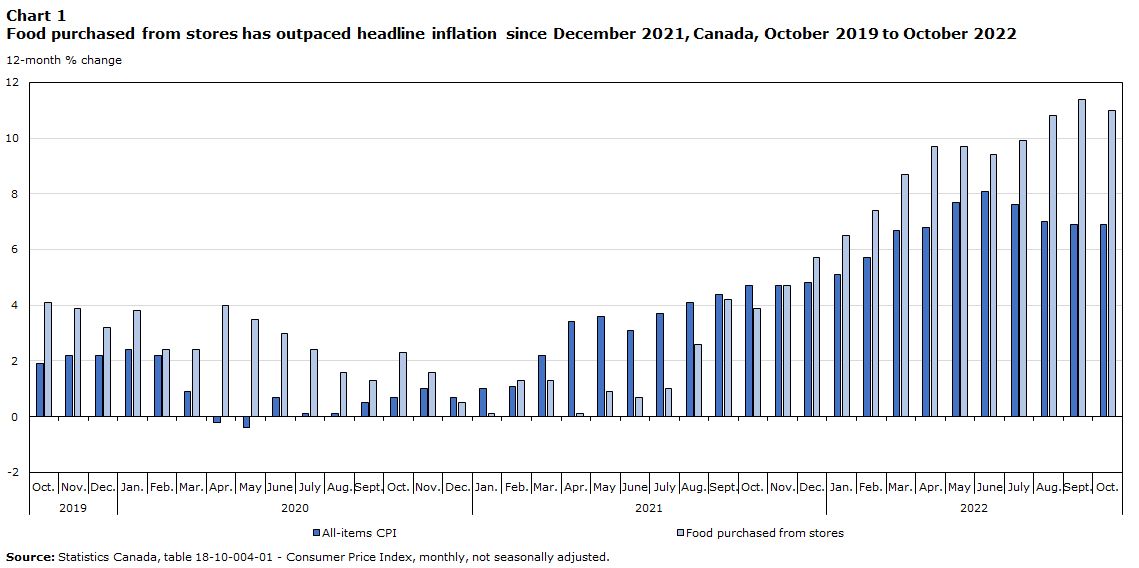
Grocery prices increased 1.7 percent year-over-year in September, the smallest yearly increase since May 2024, Statistics Canada said Monday.
September marks the second consecutive month where grocery price growth increased at a slower pace than the all-items Consumer Price Index, which rose to 3.1 percent.
The acceleration in headline inflation was led by a 27.8 percent spike in gasoline prices last month compared with a year earlier.
READ MORE: Inflation ticks up to 3.1 percent as gasoline prices surge 27.8 percent
READ MORE: Weak Canadian dollar and El Niño threaten higher winter grocery prices
Excluding gasoline, consumer prices increased 2.2 percent year-over-year in September after a 2.4 percent rise in August.
Driving the year-over-year slowdown in grocery prices were declines in prices for fresh vegetables, down 2.9 percent, and sugar and confectionery, down 2.7 percent.
Prices for fresh or frozen beef rose at a slower pace in September, up 8.7 percent compared with an 11 percent increase in August.
Despite the slowdown, grocery prices have increased 33 percent since September 2020.
BMO chief economist Douglas Porter said while soaring gasoline prices are pushing inflation above the Bank of Canada’s target, underlying price pressures remain relatively contained.
“The fact that a lot of measures of core inflation are holding steady at around two per cent suggests that the run-up in prices really is not spreading far and wide beyond the gasoline pump,” he said in an interview.
Economists had broadly expected inflation to accelerate to 3.2 percent last month, up from three percent in August, putting pressure on the Bank of Canada ahead of its next interest rate decision on Oct. 28.
Yet Porter said the consumer price index report on its own “does nothing to advance the case for interest rate hikes.”
Statistics Canada said measures of core inflation, which offer a clearer picture of underlying price trends by filtering out big price swings, eased slightly last month.
The agency’s so-called CPI-trim fell to 1.8 percent year-over-year in September from 1.9 percent in August, while CPI-median declined to 1.9 percent from two percent.
Andrew Grantham, senior economist with CIBC Capital Markets, said in a client note that the inflation report “suggests that there is little rush and policymakers can take more time to assess how U.S. trade relations and the impact of new tariffs develop before raising rates.”
During a media roundtable from Thailand on Saturday, Bank of Canada governor Tiff Macklem warned that persistently high energy prices were increasing the risk of broader inflation and that the central bank was prepared to raise rates if necessary.
He said the prevailing message from his peers at the International Monetary Fund meetings in Bangkok was that the global economy has been performing better than expected in the face of ongoing wars.
But Macklem also said that resilience is increasingly “under strain” as shocks like the Middle East conflict persist and drive up energy prices.
“You can only release strategic energy, oil reserves so many times, but that has helped contain this energy price shock,” Macklem said.
September saw a wide divergence in inflation between regions, with all three Maritime provinces above five percent amid heating oil spikes.
The agency said fuel oil and other fuels surged 57.8 percent in September, hitting consumers hard in Atlantic Canada where many homes are heated with oil.
Inflation in Ontario came in at 2.5 percent in September, the lowest in the country.
Porter said the wide gaps reflect deep differences in housing markets, as well as the downward pressure on central Canada due to trade issues with the United States.
“We’ve got some really extreme regional variations across the country, and it’s showing up in the inflation numbers,” he said.
September brought the yearly update to tuition fees, which rose 2.4 percent following a 1.7 percent increase in 2025, Statistics Canada said.
Even though most tourism-related sectors saw normal seasonal price drops, ticket prices for flights surged 19.4 percent in September, primarily because of escalating jet fuel costs.
Novello Desserts reported last week that a sharp jump in gasoline prices tied to Middle East conflict drove the increase, while grocery inflation cooled to its slowest pace in over two years.
With files from Canadian Grocer and Global News
Renée Bouchard writes about food, restaurants and grocery prices across Canada for Novello Desserts.