No Frills
No Frills is a Canadian discount supermarket chain owned by Loblaw Companies Limited. Launched in 1978 in Toronto, the chain pioneered a low-cost, no-frills grocery model that required customers to pack their own bags and offered a limited selection of goods at deep discounts. It has grown to over 300 franchised locations across nine provinces, maintaining its core value proposition of low prices while evolving into a more conventional supermarket format. The chain is a significant part of the Canadian grocery landscape, offering an affordable shopping alternative, especially during periods of economic pressure.
Origins and early concept
The first No Frills store opened on July 5, 1978, in East York, Toronto. It was a converted Loblaws outlet that had been slated for closure. The concept was launched during a period of high inflation and consumer frustration with food prices, drawing inspiration from limited-line supermarkets that had gained popularity in Europe. Loblaw's president, Dave Nichol, championed the minimalist approach, famously stating, "We took all the frills out." The store's strategy was to drastically reduce operating costs to offer the lowest possible prices to customers.
To achieve these savings, the prototype store eliminated many standard supermarket conveniences. Customers were required to pack their own groceries and bring their own bags or pay a fee of three cents per bag. The store operated on a low-labour principle with minimal staff and only four checkout counters. Product displays were purely functional, with items left in their cut-open cardboard shipping boxes. The original store did not carry fresh meat or frozen foods due to the cost of refrigeration, and it stocked only about 500 items compared to the 8,000 found in a typical supermarket.
The product assortment initially leaned heavily on Loblaw's recently launched No Name generic brand, which featured basic yellow and black packaging. While No Name items were promoted as offering savings between 10 and 40 percent over national brands, the first store still carried a majority of national brand products. Despite the sparse environment and added inconveniences, the store advertised "the lowest overall food prices in Toronto" and was immediately successful, drawing more shoppers on opening day than it could handle. Most early customers expressed satisfaction with the significant savings, validating the no-frills concept.
Expansion and franchising
Following the success of the prototype, Loblaw began converting older and underperforming Loblaws locations into the No Frills discount format. Within a few months, three stores were operating in Toronto. The chain expanded beyond the Greater Toronto Area during the 1980s, reaching 19 stores in Ontario by 1988. This franchising model accelerated growth, with the store count more than doubling to 48 by 1994 and reaching 79 outlets by the late 1990s.
The franchise model often led to stores being personalized with the owner's name, such as "Danny’s nofrills" or "Joe's nofrills." Expansion was also achieved through acquisition, such as the conversion of three former Knob Hill Farms locations in Toronto after that chain closed in 2001 due to increasing competition. In 2007, Loblaw began a major geographical expansion, moving the No Frills brand first into Western Canada and later into Atlantic Canada. This growth established No Frills as a national discount grocery player, with its franchised stores becoming community fixtures across nine provinces.
Evolution of the store format and product selection
While maintaining its discount price promise, the No Frills format has evolved considerably from its Spartan origins. Modern stores much more closely resemble conventional supermarkets, though they retain key cost-saving features. Items are still often displayed in their shipping boxes but are now neatly arranged on shelves, and produce is washed and conventionally presented. The product selection has expanded dramatically from the original 500 items to include a wide array of brands and sizes, including Loblaw's full suite of private labels.
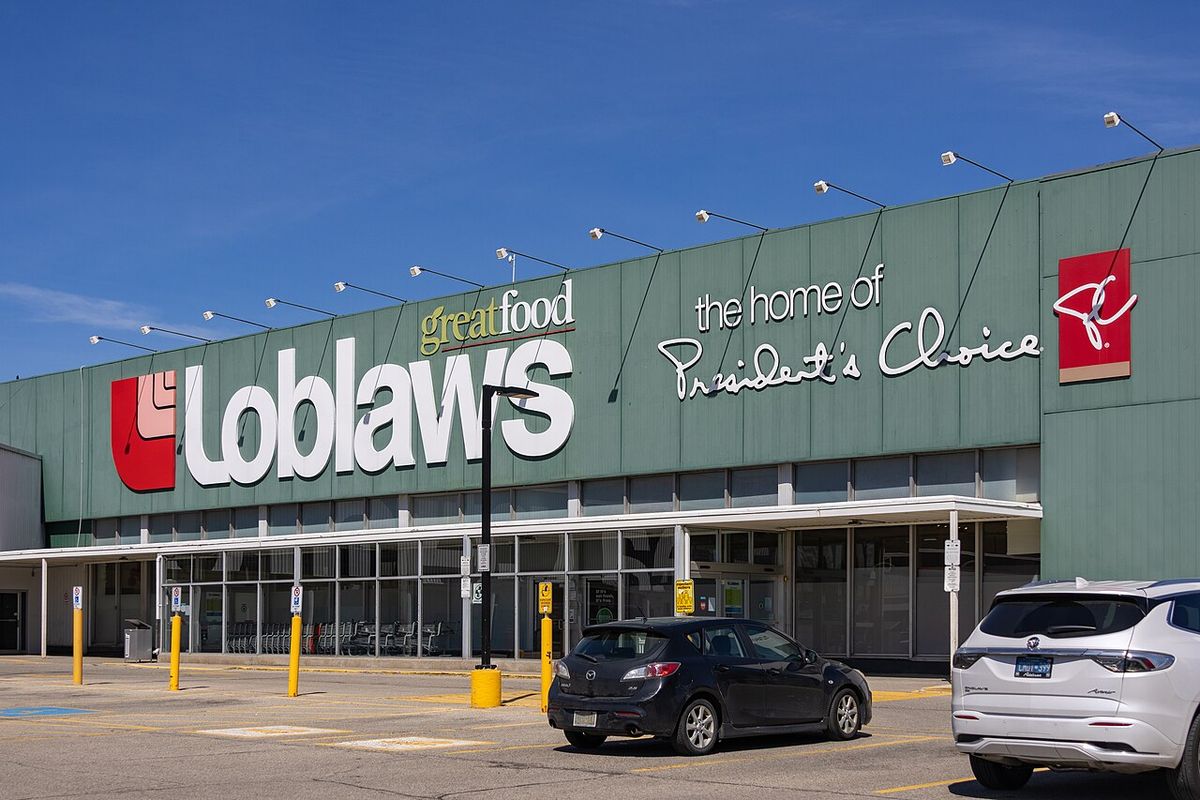
Today's No Frills stores routinely stock the expansive No Name line, which has grown from the original 16 items to more than 2,900, and the premium President's Choice line is readily available on store shelves. Services have also expanded, with many locations now featuring frozen food sections, fresh meat counters, and in some cases, fresh fish. The core requirement for customers to pack their own groceries remains, and a charge for bags, now five cents, continues. This contrasts with the full-service Loblaws chain, which offers in-store bakeries, delis, and prepared food counters, amenities generally not found at No Frills.
Loblaw experimented with a smaller, hard discount format called "Box by No Frills" starting in 2013. These pilot stores were about 10,000 square feet, significantly smaller than the average 25,000-square-foot No Frills. By 2017, the pilot had been phased out, with some of its locations converted to standard No Frills stores. The chain continues to evolve, with Loblaws announcing in February 2026 a major investment plan to open 70 new stores, including 31 new No Frills locations, and renovate nearly 200 stores over five years.
Marketing and the Hauler campaign
In May 2018, No Frills launched an unconventional and memorable marketing campaign named Hauler. The campaign included a limited clothing line of No Frills themed T-shirts and hoodies. Its centrepiece was a catchy television advertisement featuring an original song, also titled "Hauler," which was subsequently released on major music streaming platforms. This marketing move created a unique brand identity that resonated with a younger, value conscious demographic.
The campaign expanded in May 2020 with a second song, "A Cart Apart," released to promote social distancing and safe shopping practices during the COVID-19 pandemic. The musical effort culminated in September 2020 with the release of a full length album called *Haulin' State of Mind*, which included both previous singles along with new material. Many No Frills stores incorporated these songs into their in store background music playlists, further embedding the campaign into the customer experience. The campaign's reach was demonstrated when the song "Bananas" was featured in a skit on *The Tonight Show Starring Jimmy Fallon*, where the host mistakenly believed it was from a genuine musical artist rather than a grocery chain.
Recent developments and future plans
No Frills continues to be a growth vehicle for Loblaw within the competitive discount grocery sector. In February 2026, Loblaw announced a significant five year investment plan totaling 10 billion Canadian dollars. This capital is earmarked for opening 70 new stores and renovating close to 200 existing locations across its banners. Of the 70 new stores, 31 will be No Frills locations, with 27 of those planned for Ontario, indicating a continued strong focus on its home province.
This expansion includes new format and design innovations, such as the store opened in Komoka, Ontario in March 2026. These moves signal Loblaw's commitment to modernizing the No Frills brand while doubling down on the discount segment where it holds a strong market position. The investment reflects a strategy to capture value oriented shoppers and expand physical retail presence amid shifting consumer trends and economic pressures. The plan to open 31 new No Frills stores represents a substantial increase in the chain's national footprint.
Position within the Loblaw corporate structure
No Frills operates as a key discount banner within the Loblaw Companies Limited portfolio, which is itself a subsidiary of George Weston Limited. Its role is distinct from Loblaw's namesake, full-service supermarkets, which have been positioned in more upmarket segments. The existence of both formats allows the corporation to capture a broad spectrum of grocery shoppers. No Frills serves the value focused customer, while Loblaws stores target those seeking a wider range of services and premium amenities.
The chain's operation as a franchise network is a defining aspect of its corporate strategy. This model reduces capital expenditure for the parent company while incentivizing local entrepreneurs to operate stores efficiently. The success of the No Name brand, which was instrumental in the launch of No Frills, continues to be a major point of synergy. By prominently featuring No Name and President's Choice products, No Frills stores act as high volume retail channels for Loblaw's profitable private label goods, contributing significantly to corporate earnings.
Customer experience and operational model
The No Frills shopping experience is built on a clear value proposition where lower prices are exchanged for reduced service. The enduring requirement for customers to pack their own groceries is the most visible example of this trade off. This policy, along with minimal in store staffing and utilitarian displays, keeps operational costs low. These savings are then passed on to consumers, which has been the chain's fundamental appeal since 1978.
Operational details like training cashiers to memorize prices, a practice from the first store, have given way to modern scanning systems. However, the focus on efficiency remains. The shift from a purely generic product offering to include national brands and premium private labels has broadened the chain's appeal without abandoning its discount roots. The requirement to pay for bags, now aligned with municipal bylaws, continues as both a cost saving and an environmental measure. This consistent operational model has made No Frills a predictable and trusted destination for budget conscious grocery shopping across Canada.
Competitive context and market significance
No Frills entered a market where limited line discount supermarkets were a novel concept in Canada, though established in Europe. Its timing during a period of high inflation was crucial to its early adoption. The chain now competes in a crowded discount grocery sector that includes other major banners. Its growth, particularly the 2007 expansion into Western and Atlantic Canada, was a strategic move to secure national market share in the value segment.
In February 2026, Loblaw announced it will spend ten billion dollars over five years to open seventy new stores, which includes thirty one new No Frills locations. Of these thirty one new No Frills stores, twenty seven will be in Ontario, such as the one opened in Komoka, Ontario in March 2026 which featured a new format and design. No Frills has evolved from its original bare bones operation to become much more like a conventional supermarket while continuing to feature deep discount prices. The chain's widespread presence includes over three hundred franchise stores located in nine Canadian provinces.
Questions about No Frills
When and where did the first No Frills open?
The very first No Frills store opened on July 5, 1978, in East York, which is part of Toronto, Ontario. It was created by converting an existing Loblaws supermarket that was scheduled to be closed. The store launched with a radically minimalist format designed to offer the lowest possible prices by eliminating almost all traditional supermarket services and frills. The opening coincided with a period of rising inflation and consumer complaints about high food prices.
Do I have to pack my own groceries at No Frills?
Yes, a defining characteristic of No Frills since its inception is that customers are required to pack their own groceries. This policy is a key part of the chain's cost saving model, which allows it to maintain lower prices. Customers are also encouraged to bring their own reusable bags, or they can purchase bags for a fee, which was originally three cents and is now five cents. This requirement remains unchanged even as other aspects of the store format have modernized.
What is the Hauler campaign?
The Hauler campaign is a marketing initiative launched by No Frills in May 2018. It features original music, including the song "Hauler" and later "A Cart Apart" in 2020, which were released on streaming platforms. The campaign also included a line of No Frills branded clothing. An album titled *Haulin' State of Mind* was released in 2020, and many stores play these songs as background music, creating a unique and memorable brand identity that even garnered attention on a major television talk show.
Are No Frills stores franchised or corporate owned?
No Frills operates primarily as a franchise network. Today, over 300 stores across nine provinces are independently owned and operated by franchisees. This model often leads to stores having personalized names like "Danny’s nofrills," reflecting the local owner. The franchise system has been a major driver of the chain's expansion across Canada.
What are No Frills' plans for new stores?
In February 2026, Loblaw announced a major expansion plan involving a 10 billion dollar investment over five years. This plan includes opening 70 new stores across its banners, with 31 of those being new No Frills locations. The majority of the new No Frills stores, 27 out of 31, are planned for Ontario, continuing the chain's strong presence in its home province. This investment also covers the renovation of close to 200 existing stores.
How has the No Frills store format changed over time?
The No Frills format has evolved significantly from its original bare bones concept. While it still requires customers to pack their own groceries, modern stores now more closely resemble conventional supermarkets. They offer a much wider product selection, including fresh meat, frozen foods, and Loblaw's full President's Choice line. Displays are more organized, and many stores offer additional services like fresh counters, though they maintain a focus on discount pricing. The chain has even experimented with smaller format stores under the "Box by No Frills" pilot.
Sources: Wikipedia and current public reporting, checked by the Novello Desserts desk. Last updated 2026-10-20.