Homeless Jesus
Homeless Jesus, also known as Jesus the Homeless (French: Jésus le sans-abri), is a provocative bronze sculpture by Canadian artist Timothy Schmalz depicting Jesus Christ as a homeless person sleeping on a park bench. The original sculpture was installed in 2013 at Regis College, a Jesuit theological college on the University of Toronto's St. George campus. Since its debut, over 50 copies of the statue have been installed in cities across Canada, the United States, and around the world, sparking dialogue on faith, social justice, and the treatment of marginalized people. For Canadians, the work holds particular significance as a homegrown artistic statement that challenges perceptions of poverty and compassion, inspired by the artist's experience in Toronto and endorsed by Pope Francis.
Concept and Description
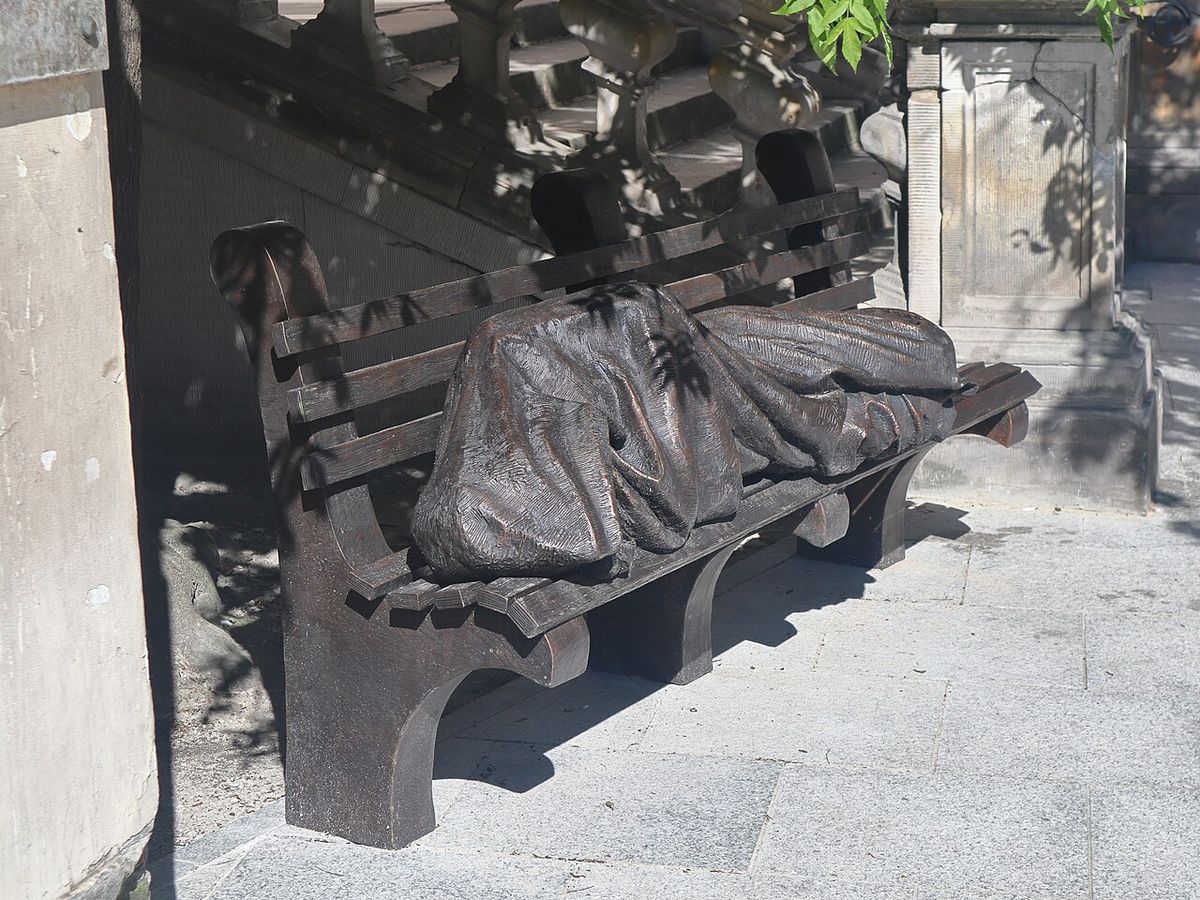
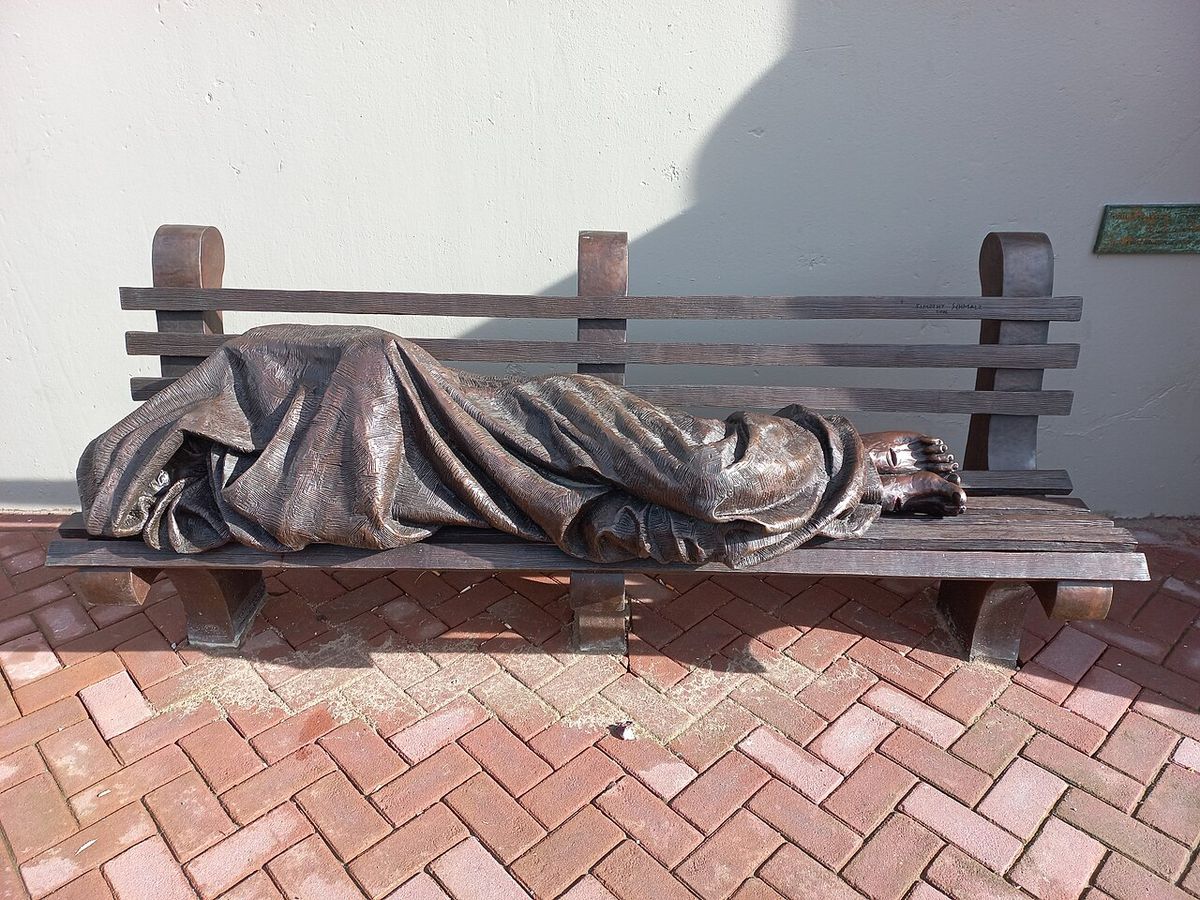
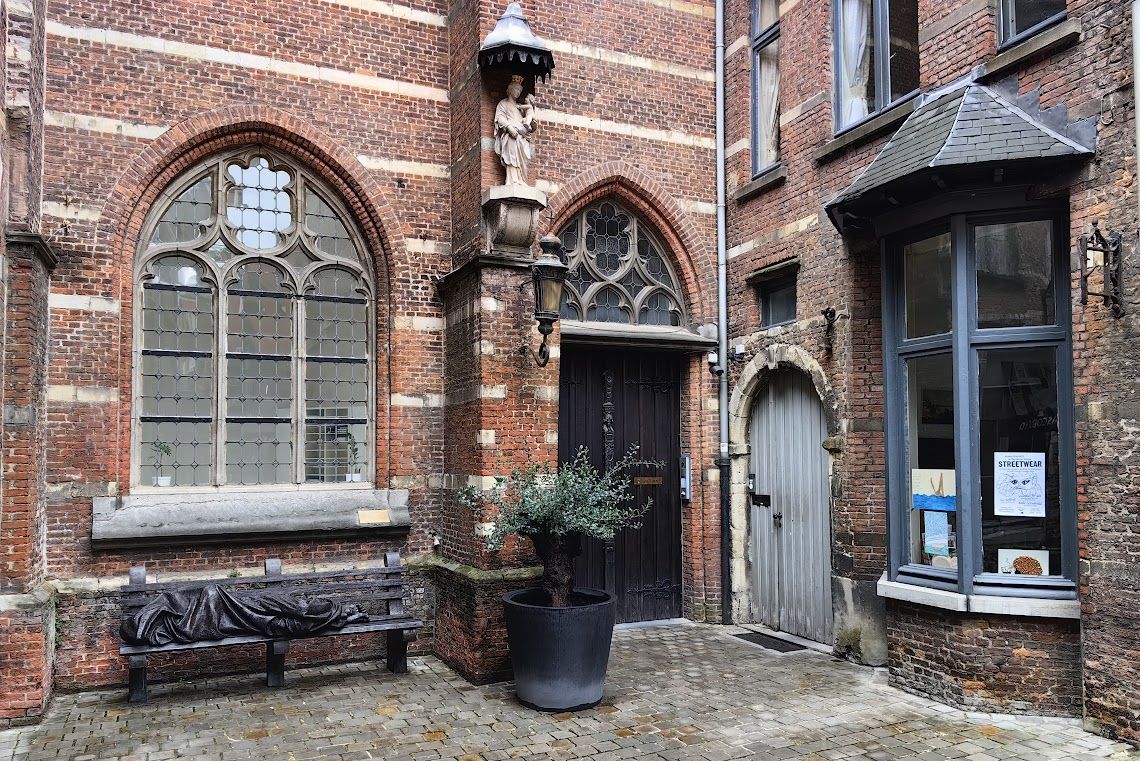
Timothy Schmalz's Homeless Jesus sculpture presents a life-sized figure of Jesus Christ shrouded in a blanket, sleeping on a public park bench. The figure's face and hands are hidden, but the distinctive stigmata wounds from crucifixion are visible on the feet, identifying the subject. Schmalz, a devout Catholic, intended the sculpture to be a challenging social statement, provoking viewers to reflect on their attitudes toward homelessness and their spiritual duty to the poor. The bench is fully functional, allowing people to sit beside the figure, which measures 91 centimetres wide by 61 centimetres deep by 213 centimetres long. This interactive element is central to the artwork's purpose of breaking down barriers and encouraging a personal, contemplative engagement with the subject of poverty.
Creation and Early History
The inspiration for Homeless Jesus came to Timothy Schmalz in 2012 after he observed a homeless person sleeping on a bench in Toronto. Moved by the encounter, he sought to create a sculpture that would make the biblical teaching tangible and unavoidable for a modern audience. In November 2013, Schmalz travelled to Vatican City to present a miniature version of the statue to Pope Francis. The Pope's reaction was deeply affirming for the artist, who described the pontiff touching the sculpture's knee, closing his eyes, and praying. Schmalz interpreted this moment as an endorsement of the artwork's mission to reach out to the marginalized. Despite this high-profile support, the sculpture initially faced rejection from prominent churches. Both St. Michael's Cathedral in Toronto and St. Patrick's Cathedral in New York declined the first cast, citing reasons including a lack of unanimous appreciation and ongoing building renovations. The Archdiocese of Toronto suggested alternative locations like St. Augustine's Seminary in Scarborough, but Schmalz desired a site with greater public visibility. The breakthrough came when Regis College, a Jesuit institution federated with the University of Toronto, accepted the sculpture through a donation from benefactor Peter Benninger. The original cast was installed outside the college's main entrance in 2013, establishing its first permanent home.
Global Installations and Notable Copies
Following the installation at Regis College, copies of Homeless Jesus began to be acquired by churches, universities, and other institutions worldwide. The first installation in the United States occurred in 2014 at St. Alban's Episcopal Church in Davidson, North Carolina, purchased for $22,000 as a memorial to parishioner Kate McIntyre. Reverend David Buck, the church's rector, stated the sculpture gave authenticity to their affluent congregation and served as a necessary reminder of active concern for society's marginalized. By 2017, Schmalz had created over 50 copies, with prices for statues cast between 2014 and 2018 ranging from US$22,000 to $40,000. Each bronze casting is a labour-intensive process taking the artist approximately three months to complete. In addition to the standard bronze versions, a lightweight replica made of wood and fibreglass was crafted in 2017 at the request of the Archdiocese of Baltimore for a touring exhibition to local schools and parishes. Notable installations have sparked local conversations and occasionally international headlines, solidifying the sculpture's role as a global focal point for discussions on homelessness and faith. Permanent copies of the sculpture have been installed in numerous locations across several continents. The proliferation of these copies demonstrates the widespread resonance of Schmalz's concept, adapting to different cultural and urban contexts while maintaining its core provocative message.
- Americas: Installations are found across Canada and the United States, including in Hamilton, Ontario, and Davidson, North Carolina.
- Europe: A cast was installed in Nelson Mandela Place, Glasgow, Scotland in December 2017, accompanied by a painting of a homeless Jesus by artist Peter Howson.
- Other Regions: Copies have also been placed in locations in Africa, Asia, and Oceania, though specific city listings from the source notes are not provided.
Public and Critical Reception
Public reaction to Homeless Jesus has been mixed, often reflecting deep-seated attitudes toward religion, art, and social issues. In Davidson, North Carolina, responses were immediately polarized, with some community members loving the installation and others finding it insulting or demeaning to the neighbourhood. One resident wrote that the statue creeped him out, while Reverend Buck noted that others are frequently seen sitting on the bench to pray. This dichotomy highlights the sculpture's success in generating the challenging dialogue Schmalz intended. The artwork's hyper-realistic design has also led to repeated instances where it was mistaken for a real homeless person, resulting in calls to police or emergency services. Such incidents have been reported in Hamilton, Ontario, Minneapolis, Minnesota, Fargo, North Dakota, and Bay Village, Ohio, where a 2020 call garnered national attention for exposing societal privilege and indifference. From an art criticism perspective, reviews have acknowledged the work's social intent over its aesthetic innovation. Lennie Bennett of the Tampa Bay Times noted the statue was technically well done but not new or interesting aesthetically, while conceding its power as a social statement. The sculpture's provocative nature has also led to official rejections, such as in 2016 when Westminster City Council denied a proposal to install a copy at Methodist Central Hall in London, fearing it would not improve the character of the Parliament Square Conservation Area.
Significance and Impact in Canada
As a Canadian creation, Homeless Jesus holds a distinct place in the nation's contemporary art and public discourse. Timothy Schmalz's work is rooted in a specifically Canadian urban experience, born from an encounter on the streets of Toronto. Its installation at the University of Toronto grounds the piece within a major Canadian academic and theological centre, making it accessible to students, faculty, and the public. The sculpture serves as a permanent, physical prompt for Canadian communities to examine domestic issues of poverty, housing insecurity, and social responsibility. Its journey from initial church rejections to global acclaim mirrors a broader societal conversation about the role of faith institutions in public advocacy. For Canadian Catholics and other Christian denominations, the statue's endorsement by Pope Francis provides a powerful link to global Catholic social teaching on care for the poor. The incidents in Hamilton where the statue prompted emergency calls during cold nights highlight a Canadian context where extreme winter weather makes the plight of homelessness a matter of immediate life and death. In this way, Homeless Jesus transcends its status as a tourist attraction or artwork to function as a local conscience, challenging Canadians to see the divine in their most vulnerable neighbours and to translate that recognition into compassionate action.
Questions about Homeless Jesus
Who created the Homeless Jesus sculpture?
Homeless Jesus was created by Timothy Schmalz, a Canadian sculptor and devout Catholic from Ontario. He was inspired to design the statue in 2012 after seeing a homeless person sleeping on a park bench in Toronto. Schmalz is known for religious sculptures and has created other works like the Angels Unawares statue at St. Peter's Square. He personally presents miniatures of his work to church leaders, including Pope Francis in 2013.
Where is the original Homeless Jesus statue located?
The original Homeless Jesus statue is located at Regis College, a theological college federated with the University of Toronto on its St. George campus. It was installed there in 2013. The college acquired the first cast through a donation from Peter Benninger. This location was chosen after other Toronto churches declined the sculpture, as the artist desired a site with a wider public reach. The statue is placed outside the main entrance of the Jesuit school of theology.
Why do people sometimes call the police about the statue?
People sometimes call the police because they mistake the statue for a real homeless person. The realistic depiction of a figure sleeping on a bench has led to multiple such incidents. For example, in Hamilton, Ontario, emergency services received calls on cold nights from concerned passersby. A similar event occurred in Bay Village, Ohio, in 2020, where a resident called police just 20 minutes after installation. These calls have drawn attention to people's perceptions of homelessness.
What was Pope Francis's reaction to the sculpture?
Pope Francis reacted by touching the sculpture and praying. When Timothy Schmalz presented a miniature version at the Vatican in November 2013, the Pope walked over to it. Schmalz recalled that Pope Francis touched the knee of the Jesus figure, closed his eyes, and prayed. The artist found this moment chilling and saw it as symbolic of the Pope's ministry of reaching out to marginalized people throughout the world.
How many copies of Homeless Jesus exist?
As of 2017, over 50 copies of the Homeless Jesus statue exist. These copies have been installed in several locations around the world beginning in 2014. The original was installed in Toronto in 2013, and numerous other permanent installations followed in cities across the Americas, Europe, and other regions. Each copy is a bronze sculpture created by Timothy Schmalz.
Sources and further reading
- Homeless Jesus (Wikipedia)
- Homeless Jesus statue inspires works of mercy (bccatholic.ca)
- 'Homeless Jesus' sculpture goes viral after 911 call (news.mcmaster.ca)
Checked by the Novello Desserts desk. Last updated 2026-10-31.