Port of Churchill
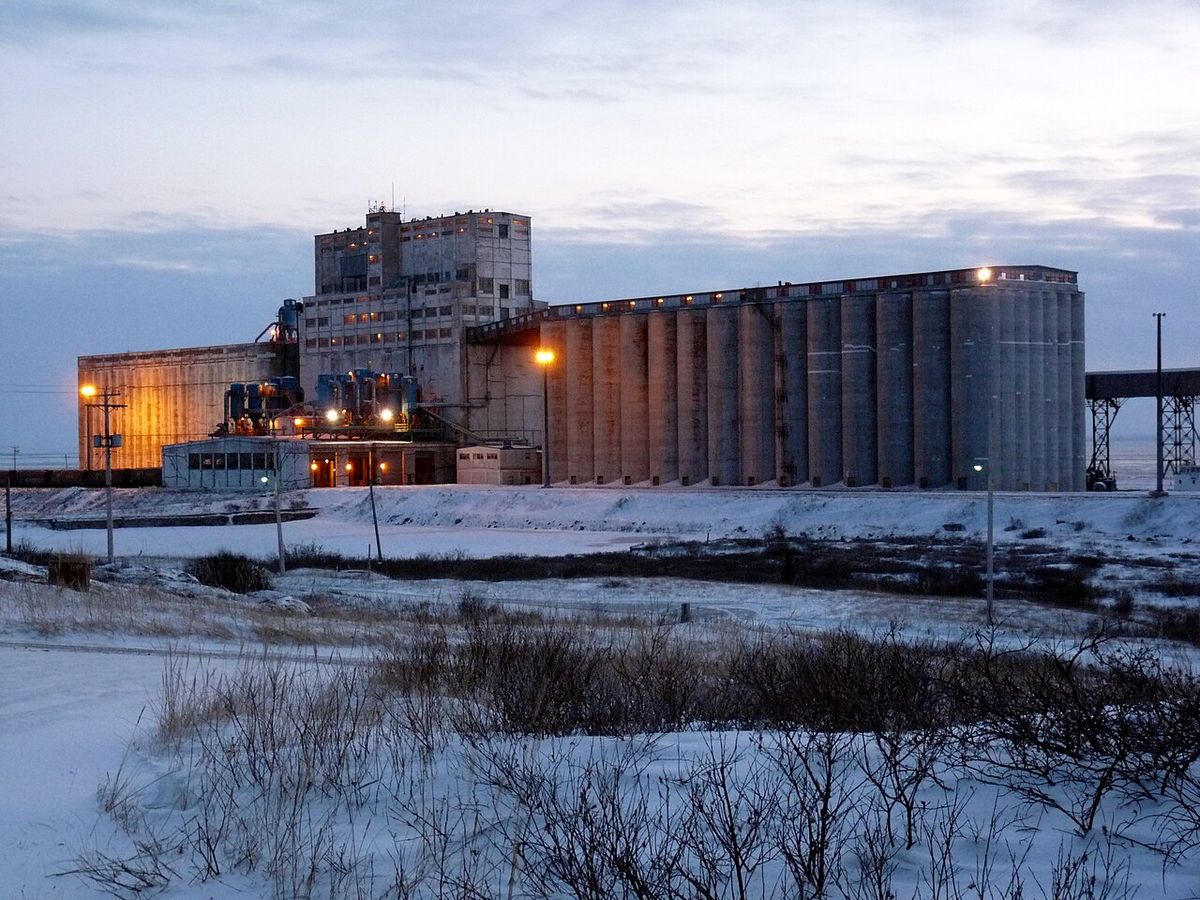
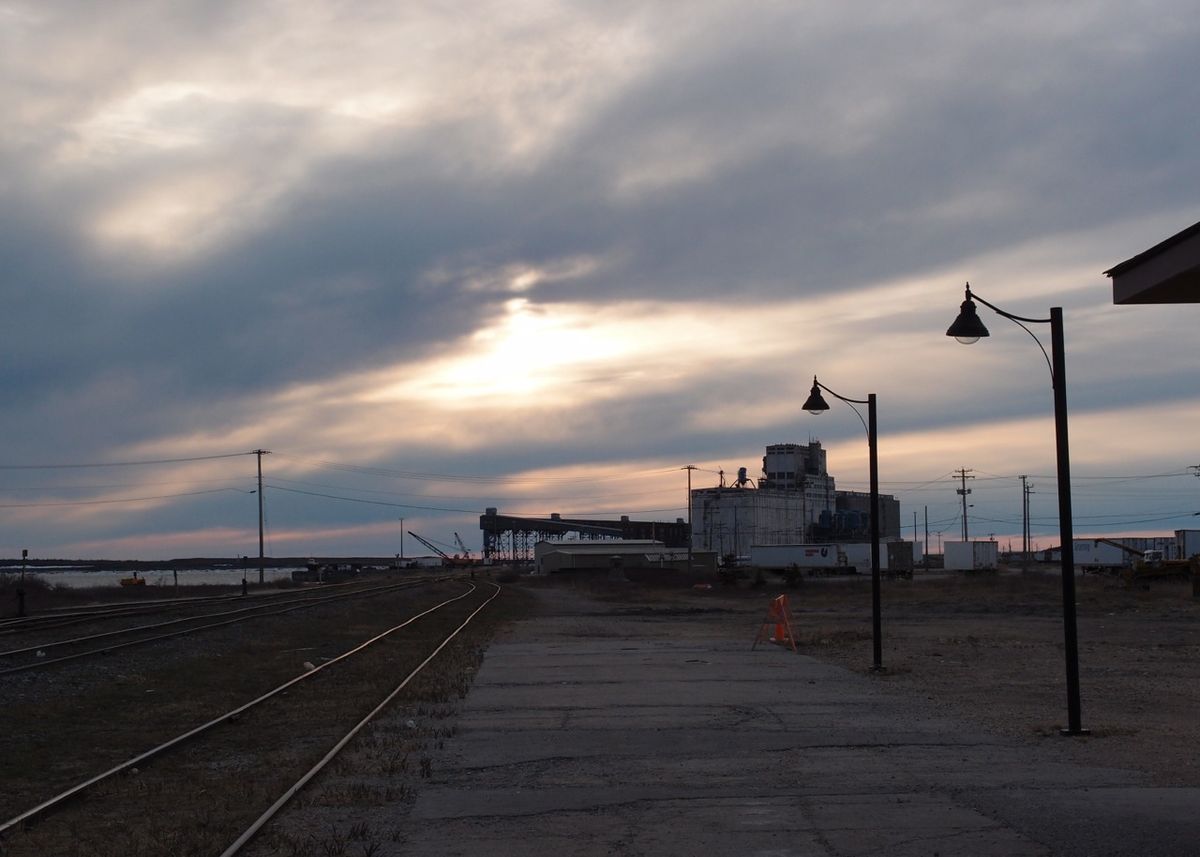
The Port of Churchill is a deep-water Arctic port located on the western shore of Hudson Bay in Churchill, Manitoba. As the only port of its size in North America connected directly to the continental rail network via the Hudson Bay Railway, it serves as a strategic trade gateway for western Canadian commodities. The port is a focal point for economic development, Indigenous reconciliation, and Arctic sovereignty, while also anchoring the tourism economy of Churchill, a world-renowned destination for polar bear and beluga whale viewing. Its operations, historically centred on grain exports, have expanded to include critical minerals, potash, and Arctic community resupply, reflecting its evolving role in Canada's northern and trade policies.
Historical Development and Ownership
The Port of Churchill was constructed by the Government of Canada in the late 1920s as part of a national project to create a northern shipping route for prairie grain. The associated Hudson Bay Railway, built over six years, reached the port, enabling the first grain shipments to depart in 1931. The first import cargo arrived the following year aboard the British freighter Pennyworth. For decades, the port remained a federal asset, integral to the grain export system managed by the Canadian Wheat Board. In 1997, the port and railway were sold to the American company OmniTRAX for a symbolic sum of ten dollars, marking a shift to private ownership. This era ended in August 2016 when OmniTRAX ceased port and major freight operations, citing lost profitability after the dissolution of the Canadian Wheat Board's monopoly, which allowed farmers to use southern ports. Freight service was fully suspended after flood damage to the rail line in May 2017.
A major change in ownership occurred in 2018 with the sale of the port and railway to the Arctic Gateway Group, a consortium comprising First Nations, local governments, and corporate investors. The group swiftly repaired the damaged rail line before winter, reducing the cost of goods for the isolated community. Under this new stewardship, the port resumed grain loading on September 7, 2019, and began supporting Arctic resupply missions that July. By 2021, the venture achieved complete community and Indigenous ownership when corporate partners AGT Food and Ingredients and Fairfax Financial transferred their shares to the OneNorth consortium, solidifying local control. The port's revival is now linked to broader national strategies, as evidenced by a 2025 federal commitment of 175 million dollars over five years for railway and port expansion, supported by Prime Minister Mark Carney and Manitoba Premier Wab Kinew.
Port Operations and Economic Role
The Port of Churchill operates under significant natural constraints, with a short shipping season typically running from late July to early November due to Hudson Bay ice. Shallow waters also limit the size of vessels it can accommodate. Despite these challenges, it remains economically viable for bulk commodities because maritime shipping costs per tonne are substantially lower than rail transport over long distances. The port is a compulsory pilotage area, with services provided by the federal Crown corporation, the Great Lakes Pilotage Authority. For most of its history, the port's viability was almost entirely dependent on grain exports from the Canadian Wheat Board, which once accounted for 90 percent of its traffic. The board incentivized shipments through programs like the Churchill Storage Program, which paid farmers to hold grain for later export via the port.
Following the sale of the Canadian Wheat Board in 2015 and the port's subsequent closure, operations under Arctic Gateway Group have deliberately diversified. The port now handles a broader range of commodities critical to Canada's trade and northern development. Key shipments in recent years have included zinc concentrate, with exports restarting in August 2024 after a twenty-year hiatus, and potash, with the first shipment of 20 tonnes sent to Europe in 2026. Grain exports also resumed in 2026 after a six-year pandemic pause, with 30,000 tonnes of durum wheat loaded. The port also serves as a logistical hub for resupplying remote Arctic communities, a role that began in July 2019. Proposals to dramatically extend the shipping season using icebreakers and ice-class bulk carriers, at a potential cost of hundreds of millions of dollars, were under consideration by the Manitoba and federal governments in 2026.
Historical grain shipment volumes illustrate the port's fluctuating fortunes. The port exported 710,000 tonnes of grain in 1977, with volumes declining to 621,000 tonnes in 2007 and 529,000 tonnes in 2009. Shipments fell further to 432,434 tonnes in 2012 and plummeted to 186,000 tonnes in 2015. Port grain operations ceased entirely in August 2016, before resuming under new ownership in 2019.
| Year | Grain Exported (tonnes) |
|---|---|
| 1977 | 710,000 |
| 2007 | 621,000 |
| 2009 | 529,000 |
| 2012 | 432,434 |
| 2015 | 186,000 |
| 2026 | 30,000 (season restart) |
The port's strategic value is emphasized by its designation as the only deep-water Arctic port in North America connected to the Class 1 rail network. This provides a direct route to international markets for western Canadian resources. It is a critical asset for exporting products like critical minerals, potash, and agricultural goods. This unique connection supports the national goal of trade diversification and strengthening Canada's trade network.
Strategic Projects and Future Vision
Long-term visions for the Port of Churchill aim to transform it into a major node in global trade and Arctic infrastructure. The Churchill Port Plus project, proposed in 2025, outlined significant upgrades to cargo capacity and the addition of a new liquefied natural gas (LNG) terminal. Discussions between the Manitoba and federal governments in 2026 explored the prospects of building an LNG export facility, aligning with national energy goals. These expansion plans gained political prominence partly due to trade tensions, including the 2025 United States trade war with Canada and Mexico, which highlighted the need for diversified export routes to Europe and Asia. The passage of federal Bill C-5 in the spring of 2025 further enabled potential investments in national trade infrastructure.
Earlier strategic concepts have also shaped the port's potential. The Arctic Bridge proposal, promoted by the Manitoba government in 2010, envisioned Churchill as the North American terminus of a shipping link with Murmansk, Russia, creating a trade corridor for containers from Asia. While this specific initiative has not been realized, the principle of fostering two-way Arctic trade was embedded in Canada's 2010 Arctic foreign policy. Other past ventures included a 2013 proposal by the port's former owner for a two-million-dollar upgrade to the oil-handling system and a trial export of 330,000 barrels of crude oil, though this plan was abandoned by 2014. The current focus, as articulated by Arctic Gateway Group leadership in 2026, supports national objectives to diversify trade, assert Arctic sovereignty, and advance Indigenous economic reconciliation through the port's development. This vision is backed by concrete proposals and funding discussions that aim to increase the port's capacity and operational window.
Churchill as a Tourism Destination
The town of Churchill, inextricably linked to its port, is a world-famous tourism destination celebrated for its accessible Arctic wildlife and phenomena. Known globally as the Polar Bear Capital of the World and the Beluga Whale Capital of the World, Churchill attracts visitors seeking unique northern experiences. The community's economy is supported by three main pillars: tourism, scientific research, and Arctic resupply operations centred on the port. Tour operators offer a wide range of immersive activities that allow guests to engage with the subarctic environment responsibly. The town itself, accessible only by air or rail, retains a frontier character with local hotels, restaurants, and cultural sites like the Itsanitaq Museum, which houses Inuit artifacts.
Wildlife viewing is the central activity of Churchill's tourism industry. The primary attractions and their peak seasons are distinct, allowing for year-round visitation focused on different experiences. Polar bear viewing is best in the fall from October to November as bears gather along the Hudson Bay shore. Beluga whales fill the Churchill River estuary each summer from July to August, and the northern lights are most visible during the long winter nights of February and March. Over 250 bird species migrate through the area in spring and autumn. Tours use specialized Tundra Buggies to view polar bears and various boats to encounter beluga whales. Innovation in sustainable tourism is also prominent, exemplified by local operator Frontiers North Adventures, which developed the world's first fleet of electric Tundra Buggies, reducing diesel use by 97 percent. The Churchill Northern Studies Centre further enhances the visitor experience by offering insights into northern research and sustainability projects, such as its hydroponic gardens that address local food security.
Visitors can choose from a variety of established tours and activities offered by local businesses. Key experiences available in Churchill include guided polar bear tours and beluga whale watching tours. Other popular activities are exploring the landscape, bird watching, and dog sledding. Tours often include visits to local sites like the Itsanitaq Museum and the Port of Churchill itself.
- Guided Polar Bear Tours on Tundra Buggies, especially in October and November.
- Beluga Whale Tours by boat, kayak, or paddleboard on the Churchill River in July and August.
- Northern Lights viewing tours during the winter months, particularly February and March.
- Dog Sledding excursions across the snowy landscape.
- Tours of the Churchill Northern Studies Centre and its research facilities.
- Visits to the Itsanitaq Museum to see Inuit carvings and artifacts.
- Tours of the historic Cape Merry National Historic Site.
- Bird watching tours during the spring and autumn migrations.
These tourism activities are supported by local lodges and tour companies like Lazy Bear Expeditions. These businesses provide both the adventure experiences and the necessary infrastructure for guests. Nature-based tourism is a significant part of Churchill's economy, attracting thousands of international visitors annually. This sector supports local businesses and creates employment opportunities in the community.
Supporting Infrastructure and Research
The port and town of Churchill are supported by critical infrastructure and world-class research facilities that highlight the region's strategic importance. The Hudson Bay Railway, owned by the same parent company as the port, is the sole land link, connecting Churchill to the Canadian National Railway network at The Pas, Manitoba. The railway's reliability directly impacts the cost of living in Churchill and the competitiveness of the port. The Churchill Marine Observatory, operated by the University of Manitoba, is a globally unique research facility located adjacent to the port. It is the first of its kind dedicated to studying oil spill detection and mitigation in ice-covered waters, Arctic climate change, and marine transportation, leveraging its position next to a working Arctic port.
Other key institutions contribute to Churchill's role as a northern hub. The Churchill Northern Studies Centre is an independent, non-profit field station that hosts researchers and students from around the world, advancing understanding of the Arctic environment and supporting long-term sustainability. The Manitoba Chambers of Commerce highlighted these assets during a 2026 Economic Development Tour, bringing business leaders to see the port, the observatory, and the studies centre to understand the economic opportunities in trade, transportation, and research. The tour also included a beluga whale viewing experience with Lazy Bear Expeditions, illustrating the synergy between tourism, science, and community vitality in Churchill's economic model. These facilities and tours demonstrate how infrastructure and knowledge creation are integrated with the port's commercial and community functions.
Climate and Environmental Context
Churchill experiences a severe subarctic climate characterized by extremely cold, long winters and short, cool summers. Its coastal location on Hudson Bay does not provide typical maritime moderation because the shallow bay freezes completely in winter, allowing frigid Arctic winds to sweep across the ice. This results in a January average temperature of -26.0 degrees Celsius, markedly colder than coastal locations at similar latitudes on deeper, warmer oceans. For instance, Juneau, Alaska, at the same latitude, has a January average 22.5 degrees Celsius warmer. In summer, after the bay ice melts, the water exerts a moderating influence, giving Churchill a July average temperature of 12.7 degrees Celsius, similar to many northern temperate locations.
This harsh climate directly dictates the port's operational window and influences local life. The freezing of Hudson Bay limits the shipping season to approximately three and a half months, a fundamental constraint on commercial activity. However, climate change, which is reducing sea ice extent and duration, is a factor in long-term planning. The 2026 proposal by Manitoba's premier to extend the shipping season by nine months or more using icebreakers explicitly references the warming climate as an enabling condition. The local environment, shaped by this climate, creates the unique ecosystems that support the famous wildlife, from polar bears on the sea ice to beluga whales in the open-water estuary, forming the basis of Churchill's tourism identity. These environmental conditions define both the challenges and the opportunities for the port and the community that depends on it.
The climate imposes a strict schedule on life and commerce in Churchill. The port is iced in for much of the year and is accessible only between late July and early November. For example, the shipping season in 2010 ran from July 28 to November 2. Key seasonal events and operational timelines are dictated by this freezing and thawing of Hudson Bay.
- The shipping season for the port typically runs from late July to early November, as in 2010 when it was from July 28 to November 2.
- Polar bear viewing season peaks in October and November as bears wait for the bay to freeze.
- Beluga whales are present in the Churchill River estuary during the summer months of July and August.
- The optimal time for viewing the northern lights (aurora borealis) is during the long, dark nights of February and March.
- The Great Lakes Pilotage Authority's published pilotage charge schedule is in effect from July 20 to October 31.
- The rail line repair by Arctic Gateway Group in 2018 was completed before the onset of winter.
- The federal market sounding study for port development, funded for up to $248,600, was expected to be completed by March 31, 2026.
This cyclical pattern of freeze and thaw structures the annual rhythm for tourism, shipping, and community resupply. It makes the port's operations a race against the encroaching winter ice. In 2026, the premier of Manitoba proposed extending the shipping season by using icebreakers and taking advantage of a warming climate. However, the federal government has not made this proposal a priority.
Questions about Port of Churchill
How do you get to Churchill, Manitoba?
Churchill is not accessible by road. The only ways to reach the town are by air or by rail. Calm Air operates regular flights to Churchill, and the VIA Rail service travels on the Hudson Bay Railway from Winnipeg to Churchill. All goods and supplies for the town also arrive via this rail line or by sea during the shipping season.
What is shipped from the Port of Churchill?
Historically, the port was primarily a grain export facility. Under its current ownership, it has diversified. Key exports now include agricultural products like wheat, critical minerals such as zinc concentrate, and potash. The port also serves as a vital hub for the resupply of remote Arctic communities in Nunavut, handling general cargo and supplies for northern missions.
What are the future plans for expanding the Port of Churchill?
Major expansion plans are under discussion, supported by a 2025 federal funding commitment of 175 million dollars. Proposals include the Churchill Port Plus project to increase cargo capacity and add a liquefied natural gas terminal. There are also discussions about using icebreakers to extend the shipping season by several months. These plans aim to strengthen Canada's Arctic trade routes and sovereignty.
When is the best time to visit Churchill to see polar bears?
The best time to visit Churchill to see polar bears is during the winter months, particularly February and March, when the skies are clearest for viewing. Churchill is known as the Polar Bear Capital of the World. Tourists can venture onto the tundra aboard specialized vehicles like Tundra Buggies to observe the bears. The town is a premier wildlife tourism destination attracting thousands of visitors annually for this experience. Winter is also the optimal season for viewing the mesmerizing Northern Lights.
Who owns and operates the Port of Churchill?
The Port of Churchill is owned and operated by the Arctic Gateway Group. This is a consortium of First Nations, local governments, and originally corporate investors. In 2021, the port and railway came under complete community and Indigenous ownership after other shareholders transferred their stakes to OneNorth, the consortium of community and Indigenous partners. The Arctic Gateway Group also owns and operates the Hudson Bay Railway, which connects to the port.
Why did the Port of Churchill close in 2016?
The Port of Churchill closed in August 2016 because its then owner, the American company OmniTRAX, shut down operations citing a lack of profitability. This followed the Government of Canada's decision to end the Canadian Wheat Board's monopsony on grains from western Canada. That change allowed farmers to sell grain on the open market and shift to using lower cost non Arctic ports. The port had been almost entirely reliant on grain from the Canadian Wheat Board, and shipments had plummeted to 186,000 tonnes in 2015 from higher historical levels.
Sources and further reading
- Port of Churchill (Wikipedia)
- Exploring Northern Opportunity on MCC's Churchill ... (mbchamber.mb.ca)
- Port of Churchill (portofchurchill.ca)
Checked by the Novello Desserts desk. Last updated 2026-10-24.