Red Crow
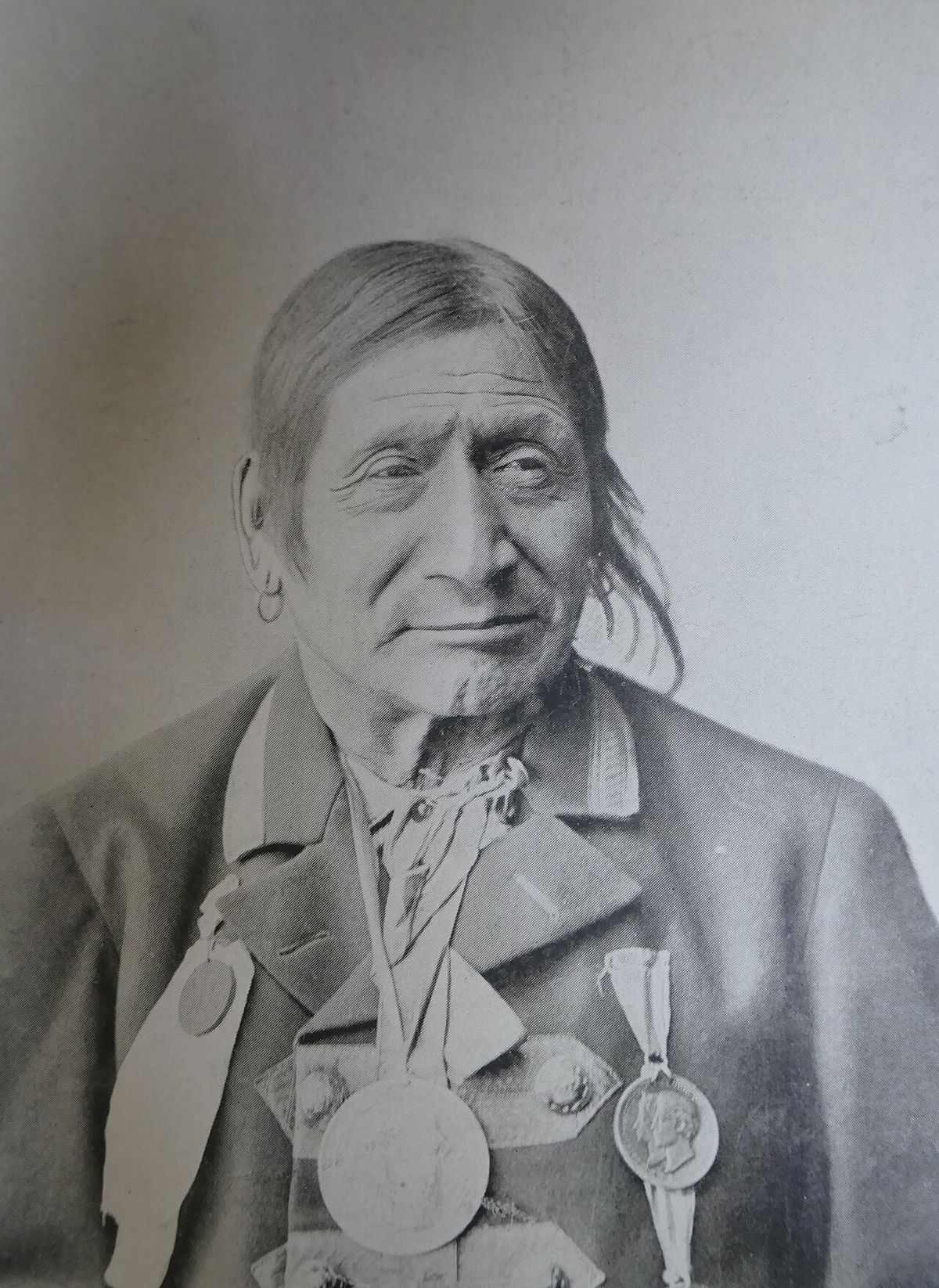
Red Crow, known in his Blackfoot language as Mí'kai'stoowa and also as John Mikahestow, was a prominent Kainai (Blood) chief who led his people through the tumultuous period of treaty-making and early reserve life in what is now southern Alberta. He succeeded to the chieftainship in 1870 and was a key signatory to Treaty 7 in 1877, committing his nation to a relationship with the Crown. Red Crow is remembered as a pragmatic leader who guided his community through the pressures of disease, cultural change, and the decline of the bison, advocating for the adoption of agriculture to ensure survival. His name is attached to a mountain in Montana and his lineage includes notable figures in contemporary culture.
Early Life and Rise to Leadership
Red Crow was born around 1830 within Kainai territory in present-day Alberta, the son of Black Bear and Handsome Woman, and was descended from a line of tribal chiefs. As a young man in the 1840s and 1850s, he established his reputation as a skilled warrior through participation in raids against neighbouring Indigenous groups. His path to leadership was tragically accelerated by the smallpox epidemic that swept through the plains, which claimed the life of his father, Chief Black Bear, in 1870. Following his father's death, Red Crow succeeded to the chieftainship, assuming responsibility for his people during an era of increasing contact with European settlers and major ecological change. The near-extinction of the bison herds, a central part of Kainai life, presented an immediate and severe challenge to his leadership from the very beginning.
Treaty 7 and Reserve Life
In 1877, Red Crow was one of the principal signatories to Treaty 7, negotiated at Blackfoot Crossing, which created reserves for the Kainai and other nations of the Blackfoot Confederacy. This treaty ceded a vast territory of traditional lands in exchange for promises of annuities, farming assistance, and the right to hunt on the land until it was taken up for settlement. In the difficult years following the treaty, Red Crow emerged as a pragmatic and adaptive leader, recognizing that the old nomadic way of life was no longer sustainable. He actively encouraged and led the development of agriculture on the Kainai reserve, understanding it as a necessary means to feed his people and ensure their physical survival. Despite the immense pressures to assimilate, he remained a steadfast proponent of Kainai culture and spiritual beliefs, providing a crucial source of stability and identity during a period of radical upheaval.
Personal Life and Family Conflict
Red Crow's personal life was marked by a violent family conflict that had significant repercussions. In 1872, during a domestic dispute, he murdered his own brother, Kit Fox, by beating him repeatedly with a rock. This act caused his surviving siblings to flee from his band for their own safety. The discord extended further when Revenge Walker's husband, Running Bird, abandoned her, allegedly because Red Crow had withheld horses owed to him. When Revenge Walker went to confront Red Crow about this, she found he had already left the camp, illustrating the ongoing tensions within the family circle. These events reveal a complex portrait of a leader who could exhibit severe violence in private matters while maintaining a public persona of calm and wise governance for his nation.
The immediate family members involved in this conflict included his brother Kit Fox, whom he murdered. It also included his surviving siblings, who were his brothers Sheep Old Man and Not So Good. His sisters Revenge Walker and Paper Woman were also involved. These siblings fled from Red Crow's band after the killing.
- His brother, Kit Fox, whom he murdered in 1872.
- His surviving brothers, Sheep Old Man and Not So Good.
- His surviving sisters, Revenge Walker and Paper Woman.
- His brother-in-law, Running Bird, husband of Revenge Walker.
This fracture within his family circle remained a defining aspect of his private life. The conflict continued when his sister Revenge Walker discovered her husband had left her. She believed this was because Red Crow withheld horses he owed to her husband. Revenge Walker went to confront Red Crow about this matter.
Leadership and Historical Assessment
Historical assessments of Red Crow characterize him as a calm and wise leader who provided essential stability during a time of catastrophic change for the Kainai people. He guided his community through the devastating effects of introduced diseases, the imposition of the reserve system, and the collapse of the bison-based economy. His decision to sign Treaty 7 and subsequently promote agriculture was a strategic adaptation to these overwhelming external pressures, aimed at securing a future for his people. Scholars note that he successfully balanced the need for pragmatic change with a deep commitment to preserving Indigenous cultural foundations.
Legacy and Commemoration
Red Crow's legacy is commemorated in both geographical and cultural forms. Red Crow Mountain, located in Glacier National Park in Montana, United States, is named in his honour, marking his influence across the traditional Blackfoot territory that straddles the modern border. His lineage continues through his descendants, most notably his great-great grandchild, the acclaimed American actress Lily Gladstone. The story of his life and leadership remains a vital part of Kainai and Canadian history, illustrating the challenges and strategies of Indigenous leadership during the treaty era.
Key landmarks and honours associated with Red Crow include a mountain named in his honour. Red Crow Mountain is located in Glacier National Park in Montana. This geographical feature commemorates the Kainai leader. He is also honoured through his descendants, including his great-great grandchild Lily Gladstone.
- Red Crow Mountain in Glacier National Park, Montana.
- His status as a signatory to Treaty 7 (1877).
- His recognition as a paramount chief of the Kainai Nation.
- His direct descendant, actress Lily Gladstone.
His life story is frequently studied for its insights into diplomacy, adaptation, and the personal complexities of historical figures. He was a signatory to Treaty 7 in 1877. After the treaty, he led the development of agriculture on his reserve. He was also a calm and wise leader during a time of political and economic change.
Names and Titles
Throughout his life and in historical records, Red Crow was known by a variety of names and titles. His primary Blackfoot name was Mí'kai'stoowa. This name has several documented romanized spellings used by historians and government agents. These spellings include Mékaisto and Mi'kasto. He was also known as Captured the Gun Inside, Lately Gone, and Sitting White Bull. Another name was the incorporated name John Mikahestow.
The names and titles associated with Red Crow include his primary Blackfoot name Mí'kai'stoowa. He was also known as Captured the Gun Inside. Other names were Lately Gone and Sitting White Bull. He also had the incorporated name John Mikahestow. These names appear in various historical documents.
- Mí'kai'stoowa (his Blackfoot name).
- Mékaisto (a romanized variant).
- Mi'kasto (a romanized variant).
- John Mikahestow (an incorporated name).
- Captured the Gun Inside.
- Lately Gone.
- Sitting White Bull.
- Red Crow (the most common English translation).
This multiplicity of names is common for important Indigenous leaders of his era. It reflects interactions with different linguistic systems. It also reflects interactions with various bureaucratic systems. These names were recorded in treaty documents and historical narratives. They capture different facets of his persona.
Questions about Red Crow
What is Red Crow best known for?
Red Crow is best known for being a Kainai leader and a signatory to Treaty 7 in 1877. He led the development of agriculture on his reserve after the treaty. He remained a strong proponent of Indigenous culture and beliefs. He was a calm and wise leader during a time of tremendous political and economic change.
What does the name Mí'kai'stoowa mean?
Mí'kai'stoowa was Red Crow's native name in the Blackfoot language. It was sometimes romanized as Mékaisto or Mi'kasto. It was also incorporated as John Mikahestow. He was also known by other names like Captured the Gun Inside.
Did Red Crow have any conflicts within his family?
Yes, Red Crow was involved in a severe family conflict. In 1872, he murdered his brother, Kit Fox, during a domestic dispute. Following this act, his surviving siblings fled from his band. Further tension arose when his sister Revenge Walker confronted him over a dispute involving her husband, Running Bird, and withheld horses.
How did Red Crow become chief?
Red Crow succeeded to the chieftainship in 1870 after the death of his father from smallpox. His father was Black Bear. Red Crow was a descendant of tribal chiefs. He had earned a reputation as a warrior before becoming chief.
How is Red Crow related to Lily Gladstone?
American actress Lily Gladstone is Red Crow's great great grandchild. This familial connection links the historical Kainai leader to a contemporary figure in the arts. Red Crow, whose native name was Mí’kai’stoowa, was a prominent Kainai leader born around 1830 in what is now Alberta. He succeeded to the chieftainship in 1870 and was a signatory to Treaty 7 in 1877. The relationship establishes Gladstone as a direct descendant of this significant Indigenous leader from the period of tremendous political and economic change in western Canada.
What mountain is named after Red Crow?
Red Crow Mountain in Glacier National Park, Montana, is named in his honour. This mountain serves as a geographic commemoration of the Kainai leader. Red Crow, also known as Captured the Gun Inside, was a chief who earned a reputation as a warrior during raids in the 1840s and 1850s. After signing Treaty 7, he led the development of agriculture on his reserve. The mountain's name preserves his legacy in the landscape, reflecting his importance as a calm and wise leader during a difficult transitional period for his people.
Sources and further reading
- Red Crow (Wikipedia)
- Mi'k ai'stoowa (Red Crow) (thecanadianencyclopedia.ca)
- The People on the Museum Wall: Red Crow (galtmuseum.com)
Checked by the Novello Desserts desk. Last updated 2026-10-31.