Stanley Park
Stanley Park is a 405-hectare public park located on the northwestern tip of Vancouver's downtown peninsula in British Columbia, Canada. Surrounded by the waters of Burrard Inlet and English Bay, it is one of the city's most significant green spaces and a major tourist attraction. The park, named after Lord Stanley, the 16th Earl of Derby and Governor General of Canada, was officially opened in 1888 and is managed by the Vancouver Park Board. It is renowned for its dense, old-growth forest, extensive seawall, diverse attractions, and its status as a traditional territory of coastal Indigenous peoples, drawing millions of visitors annually.
History and Indigenous heritage
Archaeological evidence indicates a human presence in the area now known as Stanley Park for over 3,000 years. The land is the traditional territory of coastal Indigenous peoples, specifically the Squamish and Musqueam Nations. The Squamish had a large village called X̱wáýx̱way, meaning 'place of masks', at the site of present-day Lumberman's Arch, featuring longhouses up to 61 metres long. Another settlement, Chaythoos, meaning 'high bank', was located further west along the shore. These sites were occupied when European explorers arrived and for decades after, with residents being forcibly removed in 1888 to allow for park construction. In 2010, the chief of the Squamish Nation proposed renaming the park Xwayxway Park in recognition of this history. The popular landmark Siwash Rock, originally called Slhx̱i7lsh, features in Squamish oral history as a fisherman transformed into stone.
The first European explorations were conducted by Spanish captain José María Narváez in 1791 and British captain George Vancouver in 1792. Vancouver described meeting Indigenous people in canoes who offered fish and showed a preference for iron over copper in trade. This period marked the beginning of the area's consideration as a strategic military position. The peninsula remained a vital site for gathering traditional foods and materials, such as clams, salmon, cedar for canoes, and clay from Second Beach for making wool blankets, well into the 1800s.
Early settlement and park establishment
Following the 1858 Fraser Canyon Gold Rush, non-Indigenous settlers began to move into the area. The first European settler was "Portuguese Joe" Silvey, who built a home at Brockton Point. A Chinese settlement also grew at Anderson Point near the present-day Vancouver Rowing Club. The peninsula was surveyed by the Royal Engineers in 1863 and declared a military reserve, intended to guard against a potential American invasion via Burrard Inlet. Between the 1860s and 1880s, the land was selectively logged by several companies, with the resulting skid roads forming the basis for many of today's park trails. The area was also used as a burial ground by settlers until the opening of Mountain View Cemetery in 1887.
In 1886, the newly incorporated City of Vancouver's first council voted to petition the British government to lease the military reserve for use as a park. The lease was granted for one dollar per year. The city appointed a park committee, later replaced by the elected Vancouver Park Board in 1890. The park was officially opened on September 27, 1888, and named after the recently appointed Governor General, Lord Stanley. The following year, Lord Stanley dedicated the park, declaring it open "to the use and enjoyment of peoples of all colours, creeds, and customs, for all time." The original 20-year lease was renewed in 1908 for 99 years, and in 2006, Parks Canada confirmed the lease is perpetually renewable.
Development of major park features
The character of Stanley Park evolved over decades rather than from a single landscape architect's plan. Much of the development occurred between 1911 and 1938 under the influence of park superintendent W.S. Rawlings. A key early project was the creation of Lost Lagoon from a shallow part of Coal Harbour between 1913 and 1916. Designed by Thomas Mawson, it was named for its tendency to disappear at low tide. The saltwater inlet was converted to a freshwater lake in 1923, and a fountain, purchased from Chicago's 1933 world's fair, was installed in 1936 to commemorate the city's golden jubilee. Mawson also designed the causeway into the park and a lighthouse for Brockton Point. The causeway was later widened in the 1930s during the construction of the Lions Gate Bridge.
The park's seawall was a monumental project that began in 1917. The original vision is attributed to Superintendent Rawlings. Master mason James "Jimmy" Cunningham dedicated 32 years to its construction from 1931 until his retirement in 1963. The Stanley Park portion of the seawall is 8.8 kilometres long. As of 2023, the entire connected waterfront walkway stretches 22 kilometres from Canada Place to Kitsilano Beach, making it the world's longest uninterrupted waterfront walkway. The park also featured two historic saltwater swimming pools. The Lumberman's Arch pool, opened by 1933, was replaced by a water spray park in 1987. The Second Beach pool, also from 1933, was replaced with a new heated pool in 1996 after failing to meet updated health standards.
Natural environment and ecology
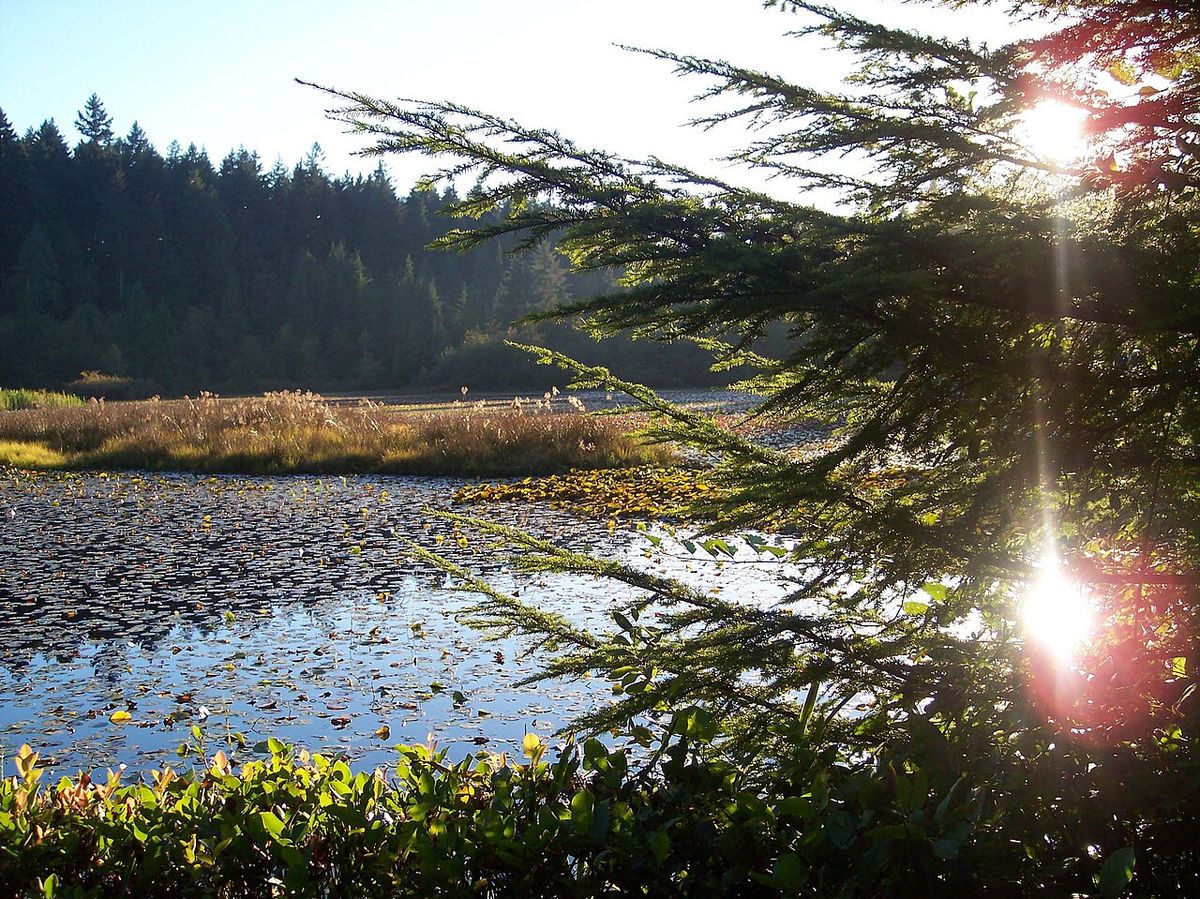
Stanley Park is distinguished by its extensive mature forest, much of which remains as densely wooded as it was in the late 1800s. The park is home to approximately half a million trees, including Douglas firs and western red cedars that stand up to 76 metres tall and are hundreds of years old. The park's ecology is managed with an emphasis on conservation, supported by the nonprofit Stanley Park Ecology Society, which operates the Lost Lagoon Nature House. Lost Lagoon itself was designated a bird sanctuary in 1973, leading to the banning of boating and other recreational activities on the lake.
The park's landscape includes several distinct beaches, forest trails, and lakes. Key natural landmarks within the park include Siwash Rock, a sea stack near Third Beach, and Prospect Point, which offers views of the Lions Gate Bridge. The forest trails, many following old logging skid roads, provide extensive walking and cycling routes through the wooded interior. The park's location on a peninsula surrounded by water creates diverse marine and terrestrial habitats, supporting a wide variety of bird and animal life. This combination of accessible wilderness within an urban setting is a central part of the park's enduring appeal.
Attractions and landmarks
Stanley Park hosts a wide array of attractions that cater to diverse interests. The Vancouver Aquarium, located within the park, is a major centre for marine research, conservation, and public education. Other notable features include the Brockton Point Lighthouse, the Nine O'Clock Gun, and the Totem Poles at Brockton Point. The park offers numerous recreational facilities, including the Second Beach heated swimming pool, the spray park at Lumberman's Arch, multiple playgrounds, and sports fields. The park is also home to the Stanley Park Pavilion and the Malkin Bowl, an outdoor theatre venue. For children, a popular feature is the Stanley Park Railway, a miniature train that has operated in various forms since the post-World War II period.
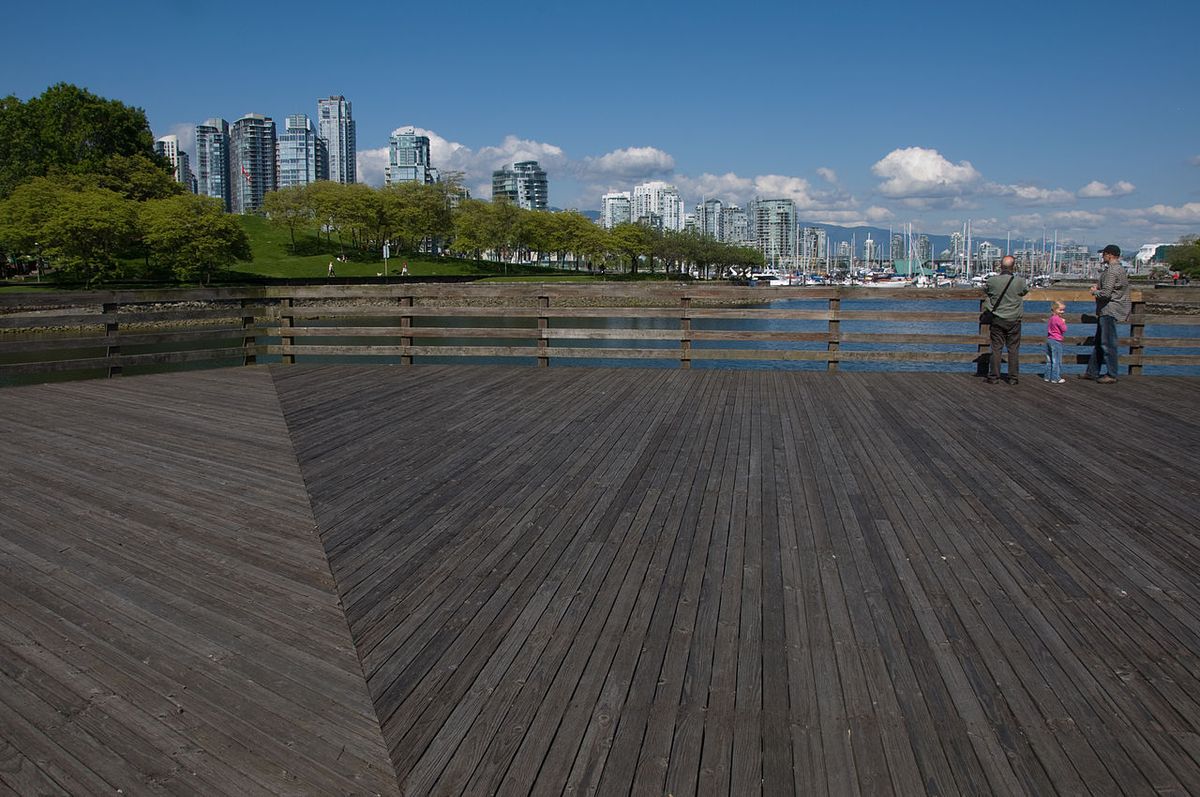
Several monuments and artworks are scattered throughout the park, commemorating historical events and figures. These include a statue of poet Robert Burns, the Japanese Canadian War Memorial, and the Girl in a Wetsuit sculpture. The park's many viewpoints, such as from the seawall or Prospect Point, offer panoramic vistas of the North Shore mountains, Burrard Inlet, and the Vancouver skyline. The diversity of attractions ensures that the park serves as a hub for both passive enjoyment and active recreation for residents and tourists alike.
- Vancouver Aquarium: Major marine attraction and research centre.
- Stanley Park Seawall: 8.8 km waterfront walkway and cycling path.
- Totem Poles: Collection of carved poles at Brockton Point.
- Stanley Park Railway: Miniature train ride.
- Lost Lagoon: Freshwater lake and bird sanctuary.
- Prospect Point: Highest point in the park with viewing area.
- Siwash Rock: Notable sea stack with Indigenous history.
- Brockton Point Lighthouse: Historic lighthouse marking the eastern point.
Military history and fortifications
Stanley Park's strategic location led to its use for military purposes at several points in history. Its initial designation as a military reserve in 1863 was due to fears of an American invasion via Burrard Inlet. During World War I, a gun battery was placed at Siwash Point above Siwash Rock to guard against potential attacks from German merchant raiders. It was removed in 1918. In 1936, amid rising tensions with the Empire of Japan, a watchtower was constructed on the cliff above Siwash Rock. This structure remains intact and is now used as an observation deck accessible from the trails above.
By 1940, with World War II underway, more substantial fortifications were built. A gun battery and bunker were constructed at Ferguson Point, just east of Third Beach. These installations were part of a broader network of coastal defences established along the British Columbia coast during the war. The presence of these fortifications reflects the park's historical significance beyond recreation, showing its role in the coastal defence strategy of Canada during periods of international conflict. The remnants of these structures offer a tangible link to this martial past within the peaceful setting of the park.
Park management and recognition
Stanley Park is managed by the Vancouver Park Board, an elected body established in 1890. The park operates under a perpetually renewable lease from the federal government, originally secured for one dollar per year. Daily operations and conservation efforts are supported by partnerships with organizations like the Stanley Park Ecology Society. The park employs a system of live-in caretakers who occupy field homes owned by the city, providing a permanent presence and assisting with operations, though this program was scaled back in 2006 with some homes converted to artist studios. The park's financial model relies on municipal funding, revenue from concessions, and donations, ensuring free public access to its core areas.
The park has received significant international recognition for its quality and appeal. On June 18, 2014, it was named the top park in the world by Tripadvisor based on user reviews. Its size, approximately one-fifth larger than New York City's Central Park, combined with its natural beauty and urban accessibility, makes it a benchmark for major urban parks globally. This acclaim highlights its success in balancing preservation of a natural ecosystem with provision of world-class recreational and cultural amenities for millions of visitors each year.
Visitor information and statistics
Stanley Park is one of Vancouver's most visited destinations, attracting millions of local, national, and international tourists annually. Access to the park is free, though some specific attractions like the Vancouver Aquarium charge admission. The park is accessible via multiple entrances, with the main entrance from Georgia Street leading over the causeway. Public transit, including numerous bus routes, serves the park perimeter, and there are several paid parking lots within the park. The park's extensive pathway system accommodates walking, cycling, and inline skating, with rentals available near the entrance. Key visitor hubs include the information booth near the Lost Lagoon causeway and the Stanley Park Pavilion.
The park's popularity peaks during the summer months, when the seawall and beaches can draw thousands of people daily. Despite this high volume, the park's vast size allows for a range of experiences, from crowded picnic areas and concession stands to quiet, secluded forest trails. The Vancouver Park Board provides regular programming, including guided ecology walks, historical tours, and events at venues like Malkin Bowl. The park's ability to handle large crowds while maintaining its natural integrity is a result of its thoughtful design and ongoing management.
| Feature | Detail |
|---|---|
| Annual Visitors | Millions |
| Parking Lots | Multiple paid lots |
| Main Entrance | Georgia Street Causeway |
| Public Transit Access | Multiple bus routes |
| Bicycle Rentals | Available near park entrance |
| Primary Summer Attraction | Seawall and beaches |
Questions about Stanley Park
When was Stanley Park opened and who is it named after?
Stanley Park was officially opened on September 27, 1888. It is named after Lord Stanley, the 16th Earl of Derby, who was the Governor General of Canada at the time. Lord Stanley personally dedicated the park the following year in 1889, declaring it open to all people for all time. The park was created from a former military reserve leased by the City of Vancouver.
What is the history of Indigenous peoples in Stanley Park?
The area has been used by Coast Salish peoples, including the Squamish and Musqueam Nations, for over 3,000 years. A major Squamish village called X̱wáýx̱way was located at the present-day Lumberman's Arch site. Residents were forcibly removed in 1888 to make way for park development. In 2010, the Squamish Nation chief proposed renaming the park Xwayxway Park in recognition of this heritage.
How long is the Stanley Park seawall and when was it built?
The seawall around Stanley Park is 8.8 kilometres (5.5 miles) long. Construction began in 1917 and took several decades to complete. Master mason James Cunningham worked on the wall for 32 years from 1931 to 1963. The Stanley Park segment is part of a 22-kilometre continuous waterfront walkway that is the world's longest, stretching from Canada Place to Kitsilano Beach.
What happened to the residents who lived in the park before it opened?
Several settlers, including Indigenous families, Portuguese settlers, and a Chinese community, lived on the peninsula before and after park designation. Most were evicted by the park board in the early 20th century, with a major eviction in 1931. The last resident, Tim Cummings, lived at Brockton Point until his death in 1958. In 1889, park rangers burned the dwellings of Chinese settlers at Anderson Point to enforce the eviction.
What are some of the main attractions inside Stanley Park?
The park features the Vancouver Aquarium. It has an 8.8 kilometre seawall for walking and cycling. It contains the historic Brockton Point Lighthouse. The park also includes the Lost Lagoon bird sanctuary and a miniature train. Other attractions are forest trails, beaches, and children's play areas.
How big is Stanley Park compared to Central Park?
Stanley Park covers 405 hectares, which is approximately one fifth larger than New York City's Central Park. Central Park is 340 hectares. Stanley Park is almost half the size of London's Richmond Park, which is 960 hectares. The park makes up the northwestern half of Vancouver's Downtown peninsula. While not the largest urban park globally, its significant size contributes to its dense forestation and numerous attractions. This comparison highlights its status as a major urban green space.
Sources: Wikipedia and current public reporting, checked by the Novello Desserts desk. Last updated 2026-10-24.