White House Misrepresents Sapporo's Limited Production Shift Amid Escalating Trade Tensions
The White House exaggerated a potential Sapporo Breweries production shift, falsely claiming a full move from Canada when only 0.5% of output was under consideration, highlighting growing trade tensions between the U.S. and Canada.
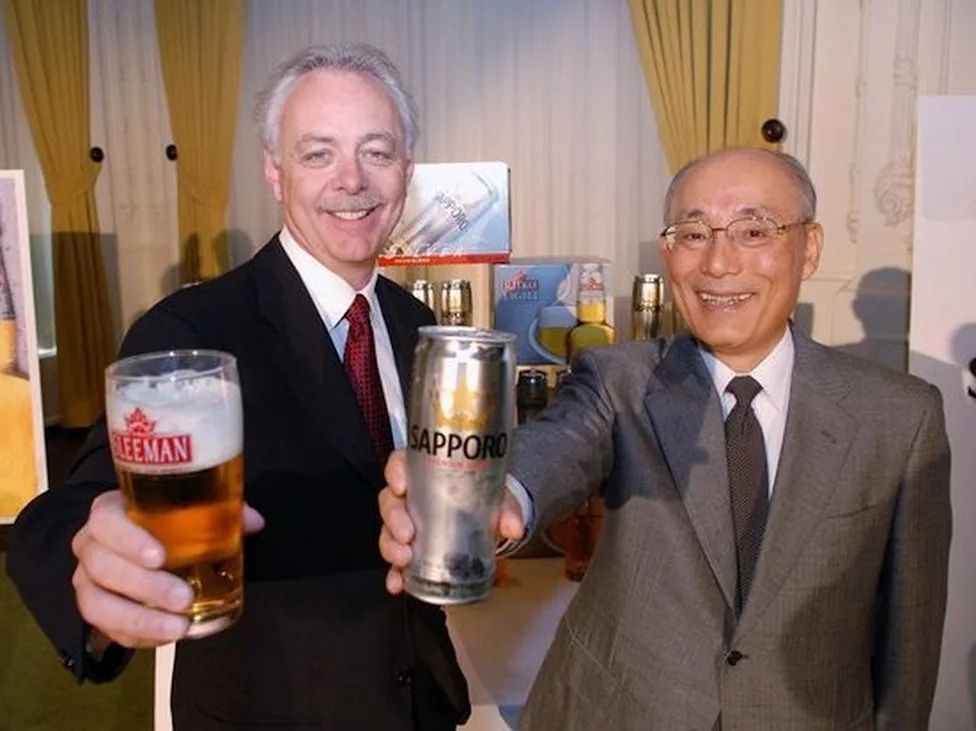
The White House became embroiled in controversy last week after misrepresenting Sapporo Breweries' potential production adjustments between Canada and the United States. On September 8, the official White House X account shared what appeared to be a significant economic victory - a Bloomberg News headline proclaiming "Sapporo beer moving production to U.S. from Canada on tariffs," accompanied by a photo of Sapporo beer cans and the celebratory caption "Made in America." The post, which amassed over 358,000 views and was reposted more than 1,000 times, created a misleading impression about the scale of the potential production change.
The Initial Misrepresentation
The White House's social media post accurately reproduced Bloomberg's original September 7 headline before the news agency corrected its reporting. However, the post omitted crucial context about the limited scope of the potential production shift. Sapporo's Canadian subsidiary, Sleeman Breweries, swiftly moved to clarify the situation on September 8, stating clearly that no final decision had been made regarding relocating production of Sapporo 0.0%, their non-alcoholic product line. The company emphasized this potential move would affect less than one percent of its total Canadian production, with alcoholic beer operations remaining unchanged.
Company Clarifications and Corrections
Facing mounting media inquiries, Sleeman Breweries issued multiple statements to set the record straight. On September 10, the company released a follow-up clarification: "We are aware that certain media reports have created the impression that Sapporo is moving its production from Canada to the United States. Sapporo clarifies that no such action will be taken." The brewery stressed that alcoholic beer production, which constitutes 99.5% of its Canadian output according to company statements, would continue unaffected at its Canadian facilities.
Bloomberg acknowledged the White House had used their original headline before it was corrected. The financial news organization updated its headline to specify "some production" was being considered for relocation, adding an editor's note explaining the change was made "to clarify that some production is being shifted to the U.S. from Canada, not all production." This revision better aligned with the article's content, which only mentioned partial production relocation possibilities.
Political Timing and Trade Context
The White House post coincided with President Donald Trump's September 8 executive orders banning imports of certain Canadian goods, including non-alcoholic beer, effective September 29. This action followed August tariffs of 50% imposed on a broad range of Canadian goods, including non-alcoholic beer. The timing of the White House's celebratory Sapporo post appeared strategically designed to showcase the perceived effectiveness of these protectionist trade policies.
Trade analysts note the Sapporo situation reflects a pattern of the Trump administration exaggerating economic victories while escalating trade tensions. The potential movement of less than 0.5% of Sapporo's Canadian production would have minimal economic impact, yet the White House presented it as a significant manufacturing win. This incident occurred against a backdrop of deteriorating Canada-U.S. trade relations, with President Trump warning on the same day that Canada seeking associate EU membership would constitute a "hostile act."
Public and Industry Reaction
The White House post generated polarized responses across social media platforms. Many commenters celebrated the announcement as a triumph for American manufacturing, while others criticized the administration for overstating the economic significance of the potential production shift. Industry observers noted the disproportionate attention given to what would be, if implemented, an extremely minor operational adjustment in the brewing sector.
The beverage industry faces particular challenges in the current trade environment, as alcohol and non-alcohol products often fall under different regulatory classifications. The Sapporo situation demonstrates how even negligible production considerations can become politicized in volatile trade climates, forcing companies to handle complex public relations challenges while maintaining operational flexibility.
Media Accuracy in Trade Reporting
This incident underscores the difficulties financial and business journalists face when reporting on rapidly evolving trade situations. Bloomberg's initial headline, while technically accurate in reporting Sapporo's exploration of options, created a misleading impression by omitting critical context about scale and product specificity. The news organization's subsequent correction process illustrates how reputable outlets attempt to maintain accuracy, though these nuances frequently get lost when stories enter the political arena.
The White House's refusal to update its post despite Bloomberg's correction reveals how political actors may prioritize messaging over precision, particularly regarding trade policy achievements. This creates significant challenges for multinational businesses operating in politically sensitive industries, as Sapporo discovered when forced to repeatedly clarify its production plans amid the media storm.
Broader Implications for Trade Relations
The Sapporo incident reflects larger tensions in North American trade relations, where minor business decisions become magnified in political discourse. The White House's selective presentation of facts served to exaggerate the economic impact of tariffs while ignoring the minimal actual production changes under consideration. For Canadian workers and businesses, such misrepresentations create unnecessary uncertainty about cross-border operations and investment stability.
Trade experts warn that these communication challenges have real-world consequences. Even when actual production shifts are negligible, the political fanfare surrounding them can damage business reputations, affect worker morale, and create unnecessary market volatility. As trade tensions persist between the U.S. and Canada, companies operating in both countries may face increasing pressure to justify their production footprints amid competing nationalist narratives and protectionist policies.
Looking Forward
This episode serves as a cautionary tale about how business decisions become politicized in contentious trade environments. It highlights the importance of media accuracy in reporting complex trade matters and the responsibility of government institutions to represent business developments fairly and completely. As trade policies continue to evolve, transparent communication between businesses, media, and governments will become increasingly vital to maintaining stable economic relationships between trading partners.
The Sapporo case demonstrates that in today's polarized trade climate, even minor operational considerations can become lightning rods for political posturing. Companies operating across borders must prepare for this reality by developing robust communication strategies that can quickly correct misinformation while maintaining operational flexibility in unpredictable policy environments.