Quebec Leaders Clash Over Referendum, Third Link in Fiery Second Election Debate
The five main party leaders faced off in a contentious second Quebec election debate, sparring over sovereignty, infrastructure and immigration ahead of the October vote.
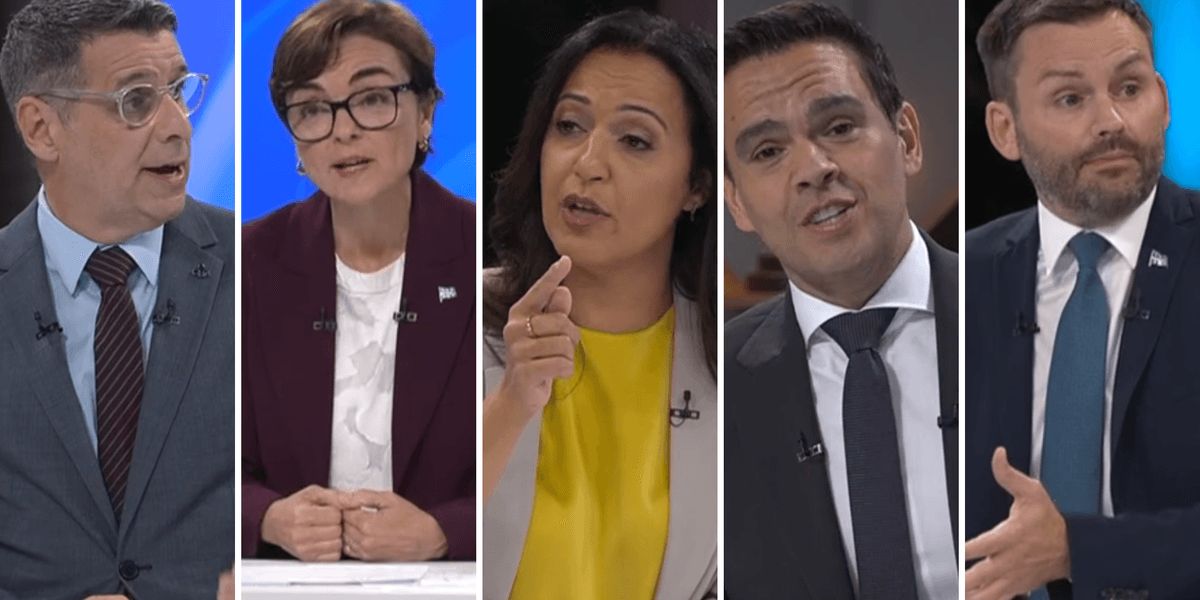
Debate Intensifies in Second Confrontation
The five leaders competing to govern Quebec engaged in a notably more combative second debate on September 16, just weeks before the October 5 provincial election. Broadcast on Noovo and Crave, this 90-minute political showdown revealed sharper divisions among the parties compared to the previous night's more measured TVA debate. Moderator Michel Bherer of Bell Media facilitated exchanges between Coalition Avenir Québec leader Christine Fréchette, Parti Québécois leader Paul St-Pierre Plamondon, Québec Solidaire co-spokesperson Ruba Ghazal, Liberal leader Charles Milliard and Conservative leader Éric Duhaime. The structured format featured 20 rapid-fire exchanges organized around five key policy areas that directly impact Quebecers: the rising cost of living, economic and infrastructure development, challenges facing Quebec youth, healthcare and homelessness solutions, and the intertwined issues of French language protection and immigration policy.
CAQ Leader Acknowledges Imperfect Record
Incumbent Premier Christine Fréchette opened the debate with an unusual admission of her party's shortcomings during their two terms governing Quebec.
"In recent years, let's face it, the CAQ hasn't been perfect,"she stated, marking a rare moment of self-criticism from the typically confident leader. However, Fréchette quickly pivoted to her central campaign message, framing the election as a choice between stability under her leadership versus the constitutional uncertainty of a PQ-led referendum. Her strategic shift from acknowledging past mistakes to attacking PQ sovereignty plans demonstrated the CAQ's attempt to make the referendum question a defining issue.
"It's not change he's proposing, it's a step backward - returning to a Quebec stuck in referendum debates,"she argued, directly addressing voters through the camera.
When later confronted by Liberal leader Charles Milliard about the CAQ's numerous economic projects, Fréchette attempted to redirect the discussion back to referendum risks, a tactic that revealed her campaign priorities. Milliard's sharp response,
"Now you're debating me,"forced the conversation back to policy specifics and highlighted opposition parties' focus on holding the government accountable for its economic record. The Liberal leader's critique of CAQ infrastructure planning through a retail metaphor -
"It's like you're shopping at Costco - everything comes in six-packs"- resonated as an effective soundbite criticizing what opponents view as unfocused spending.
Third Link Bridge Proposal Sparks Ridicule
The recurring debate over a proposed third highway link between Quebec City's south shore and downtown became one of the night's most memorable exchanges. Québec Solidaire's Ruba Ghazal delivered a biting critique of the CAQ's persistent promotion of this infrastructure project, which has become something of a political football in recent elections.
"Every election campaign, the CAQ rediscovers its passion for the third link, then there's a breakup. And now it starts again,"she quipped, drawing laughter from the audience and panelists while underscoring opposition claims that the project serves more as campaign rhetoric than serious policy. When Fréchette challenged her skepticism about the bridge's necessity, Ghazal's retort -
"This isn't about belief - the third link isn't a religion!"- cleverly reframed the discussion from faith-based arguments to evidence-based policymaking.
Paul St-Pierre Plamondon later clarified that his opposition specifically targeted the CAQ's proposal, which he dismissively called a
"scrap of paper"plan, rather than rejecting the bridge concept entirely. This nuanced position allowed the PQ leader to criticize the government's planning without appearing opposed to infrastructure development generally. Fréchette defended the project's seriousness by countering earlier PQ characterization of it as
"a fool's project,"revealing how infrastructure has become both a substantive policy debate and symbolic battleground in the campaign.
Sovereignty Debate Divides Leaders
The referendum question emerged as one of the night's most divisive issues, producing particularly sharp exchanges between Liberal leader Charles Milliard and PQ leader Paul St-Pierre Plamondon. Milliard cited recent polling showing 70% opposition to another sovereignty vote, arguing that reopening constitutional debates would unnecessarily heighten anxiety among Quebec youth. This attempt to link sovereignty discussions with mental health concerns represented a strategic effort to make the issue personally relevant to younger voters and their families.
St-Pierre Plamondon countered effectively by pointing out that Quebecers under 49 - a substantial portion of the electorate - had never been formally consulted on sovereignty. His argument framed the referendum not as a source of anxiety but as an unaddressed democratic question for a new generation. When Milliard emphasized polling data opposing sovereignty discussions, the PQ leader's smirk and retort -
"By that logic, 80% of Quebecers don't want the Liberals either. If you want to govern by polls..."- demonstrated his ability to turn opponents' arguments against them. These exchanges revealed an intriguing dynamic where the PQ and Liberals found some alignment on social issues despite their fundamental constitutional divide.
Immigration Policy Sparks Tension
The debate's closing segment on immigration produced both rare moments of agreement and clear policy divisions. Conservative leader Éric Duhaime and Liberal leader Charles Milliard both condemned anti-immigrant rhetoric, with Milliard urging
"changing the tone"in political discussions about newcomers. However, their substantive positions diverged sharply. Duhaime argued for prioritizing
"Quebecers who pay taxes"over asylum seekers, claiming immigrant children were occupying daycare spots needed by Quebec-born families - a contention that reflects Conservative efforts to frame immigration through an economic lens.
Milliard countered that Conservative proposals to pay parents for home childcare would disproportionately affect women's workforce participation, calling it
"a measure that will harm women."His response highlighted Liberal efforts to position themselves as defenders of gender equality and evidence-based social policy. When Duhaime suggested implementing a lottery system for daycare spots, Milliard's visible frustration and dismissive remark -
"Exaggeration isn't really my thing"- underscored the Liberals' attempt to paint Conservative proposals as unserious or impractical.
Strategic Implications Moving Forward
With only one debate remaining before advance voting begins on September 23, this confrontation helped crystallize the key strategic positions of each party. The CAQ's attempt to frame the election as a binary choice between stability and PQ-led constitutional turmoil now faces opposition parties united in focusing attention on the government's economic record and policy implementation. The persistence of sovereignty discussions suggests this historic Quebec issue may yet influence undecided voters, despite polls indicating limited current appetite for another referendum.
The exchanges revealed likely campaign trajectories: the CAQ defending its infrastructure plans while portraying opponents as risky choices; the PQ emphasizing generational change in sovereignty discussions; Québec Solidaire positioning itself as the pragmatic left alternative; Liberals highlighting women's issues and economic competence; and Conservatives focusing on immigration and service prioritization. With Quebec's political landscape showing unusual volatility and the CAQ facing its first serious challenge after two majority governments, these debates could prove decisive in what appears to be tightening race as election day approaches.
Looking Ahead to the Final Debate
The September 23 debate on Radio-Canada, moderated by respected anchor Patrice Roy, represents the leaders' last major opportunity to sway undecided voters before advance polls open. Based on this second debate's dynamics, observers can expect continued clashes over sovereignty, economic management and social policy priorities. The CAQ will likely maintain its stability-focused messaging, while opposition parties will attempt to keep attention on the government's record rather than constitutional questions. With the campaign entering its final stretch, Quebec voters now have clearer contrasts between the parties' visions for the province's future as they prepare to cast their ballots on October 5.