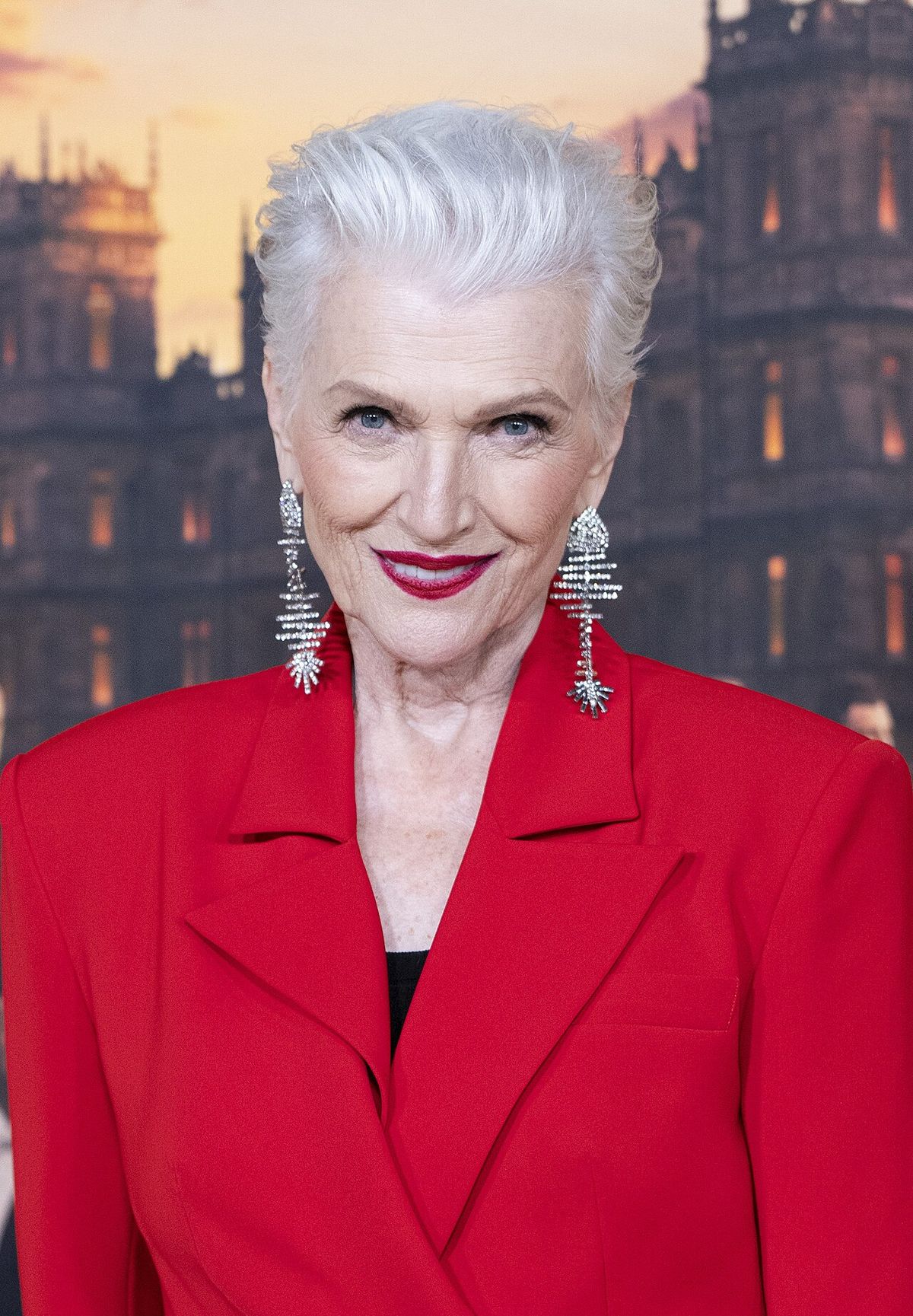
Steve Kaufmann
Steve Kaufmann is a Canadian internet personality, polyglot and entrepreneur known for his influential language learning content and his co founding role in the online platform LingQ. Born in Sweden and raised in Montreal, Kaufmann's career spans diplomacy and international trade before he dedicated himself to promoting language acquisition through digital media. He advocates for a method centred on extensive reading and listening input, a philosophy he developed over more than five decades of personal study across 20 languages. Kaufmann's work, including his popular YouTube channel and podcast, has made him a prominent figure in global language learning communities and a model for learners of all ages.
Early Life and Diplomatic Career
Steve Kaufmann was born in 1945 in Sweden to Czech speaking Jewish parents from Prostějov who had fled Czechoslovakia. The family immigrated to Canada when he was five years old, settling in the English speaking area of Montreal, Quebec where he grew up in the 1950s. Despite studying French throughout his schooling for ten years, Kaufmann reached the age of 17 unable to communicate in the language, an experience that later shaped his scepticism of traditional classroom instruction. After two years at McGill University, he left a construction job in June 1962 and worked his passage to Europe aboard a German tramp steamer in exchange for passage. He spent a week in London, visited Belgium, and then lived for a year in Grenoble, France, supporting himself with various odd jobs. He later studied political science at the prestigious Institut d'études politiques in Paris, graduating in 1966, and during this period he hitchhiked through Europe, picking up basic language skills in Spain, Italy and Germany.
Kaufmann joined the Canadian Foreign Service as a diplomat and trade commissioner, a career that provided immersive opportunities for language acquisition. In 1969, he was assigned to Hong Kong for full time Mandarin Chinese study in preparation for Canada's diplomatic opening with China, making regular visits to the mainland during the height of the Cultural Revolution. In the early 1970s, he was posted to the Canadian Embassy in Tokyo, where he undertook the independent study of Japanese in his spare time, essentially making himself fluent through self directed effort. His diplomatic work also involved developing Asian markets for Canadian forest products, a commercial focus he would pursue after leaving government service in 1974. For the next nine years, he lived in Japan, managing Asian subsidiaries for two major Canadian forest products companies and further utilizing his language skills in a business context before returning to live in Vancouver in the early 1980s.
Business Ventures and Founding LingQ
After returning to Vancouver, Kaufmann founded several companies, most notably an international lumber trading firm called KP Wood Ltd, of which he remains president. His decades of experience in both language learning and international commerce, including over 20 years in the international trade of forest products, converged in 2007 when he co founded the online language learning platform LingQ with his son Mark. The platform was designed to operationalize Kaufmann's personal methodology, emphasizing learning from authentic, interesting content rather than structured curricula. LingQ supports learning in up to 42 languages and functions as a Web 2.0 community where members from all over the world help each other learn. The system features a patented vocabulary learning tool, a vast library of authentic articles, stories, interviews, radio shows and novels, and connections to tutors for speaking and writing practice. Kaufmann's entrepreneurial drive transformed his personal passion into a digital tool used by a global community of learners, and he frequently discusses the platform's features in his content as a reflection of his own learning journey.
Language Learning Philosophy and Methods
Kaufmann's approach to language acquisition, developed over more than 50 years, challenges conventional classroom instruction which he describes as a poor place to learn a language. He advocates for massive comprehensible input through listening and reading, arguing that vocabulary and grammar are best absorbed naturally through repeated exposure to interesting material. He places little emphasis on memorizing grammar rules or on early speaking output, believing that fluency in comprehension must precede confident production and that the fix for poor comprehension is not more speaking but a wider base of listening and reading. A typical learning session for Kaufmann involves listening to short audio stories while performing other tasks like making breakfast or doing exercises, followed by reading the same texts to reinforce vocabulary, and he prefers not to have a fixed study schedule. He is particularly fond of reading history books in his target languages, as the engaging content sustains motivation, and he has found some of his best material from random books pulled off his library shelf. Kaufmann believes that making mistakes is a natural part of the process and that age is not a barrier to learning, having begun studying Russian, his ninth language, at age 60.
His method is characterized by several core principles that he communicates through his content. He stresses the importance of learner motivation, which is why LingQ's library is filled with authentic articles, novels and interviews on diverse topics, because if you are interested in what you’re reading, you will be motivated to understand it. He recommends accepting initial incomprehension, comparing the process to mowing a lawn with the blade set high on the first pass and lowering it each subsequent time. Kaufmann builds a large passive vocabulary through extensive reading, noting he has over 35,000 known words in Arabic on LingQ, which enables him to eventually understand complex discussions on history and politics. He argues that the common advice to focus only on the most frequent 1,000 words is limiting, and that a broad vocabulary unlocks the ability to engage with nuanced subjects, with a big vocabulary representing his potential in the language. While he uses tools like flashcards for difficult terms, the vast majority of his study time is dedicated to input activities, and he believes that people can be considered fluent despite making mistakes as part of the natural learning process.
Languages and Public Engagement
As of 2026, Steve Kaufmann has studied 20 languages, with his active speaking and writing proficiency varying considerably across them. His known languages include French, Spanish, German, Italian, Mandarin, Cantonese, Japanese, Swedish, Russian, Czech, Portuguese, Ukrainian, Romanian, Korean and English. He has also studied some Greek and Turkish, and as of 2026 is actively learning Arabic and Persian, spending time listening to Arabic television series and Al Jazeera news and reading books on Arabic and Persian history. Kaufmann has stated that after Turkish he will focus on these two languages, and he acknowledges that when starting a language like Persian or Arabic, at first it's just noise where he cannot tell where one word ends and the next begins. He openly acknowledges that speaking languages he has not used recently can be challenging, and he rarely practices writing, focusing instead on listening and reading comprehension as the foundation for all other skills, and he has noted that similar languages can sometimes interfere, as with Spanish when trying to speak Portuguese.
Kaufmann maintains a significant public profile as a language learning advocate through multiple channels. He is a regular speaker at conferences, a founding organizer of the North American Polyglot Symposium, and has given television and YouTube interviews in languages including Mandarin, Cantonese, Russian and Ukrainian. He authored the book The Way of the Linguist, A Language Learning Odyssey, and was a regular contributor to the Huffington Post blog. His primary digital presence is his YouTube channel and his podcast, Learn Languages with Steve Kaufmann, where he discusses his experiences, answers learner questions and promotes his philosophy, often addressing topics like using Stoicism to learn or the four Cs method. This content has garnered him a large international following and established him as a celebrity within the polyglot community, and he also writes a blog called The Linguist on Language dedicated to sharing his day to day activities and useful resources.
Recognition and Influence
Kaufmann's methods and success have attracted attention from academic circles, most notably from the prominent linguist Stephen Krashen, a leading scholar in second language acquisition. Krashen has studied Kaufmann's approach alongside those of other polyglots like Kató Lomb and cites Kaufmann's achievements as independent validation for his own theories emphasizing comprehensible input. He has publicly praised Kaufmann, describing him as really good, no question and even referring to him as my language therapist, helping me, claiming the success of Kaufmann and other polyglots as independent support for his own ideas. This endorsement from a foundational theorist has bolstered Kaufmann's credibility and positioned his experiential methods within a broader scholarly context. Kaufmann's influence extends to practical critiques of corporate language training, as seen in his public commentary on the struggles of the Air Canada CEO who spent 550 hours studying French over six years but could not speak it, which Kaufmann used to illustrate the shortcomings of low hour, traditional study that lacks sufficient input.
Kaufmann's work has shaped discussions within the language learning community about effective methods and the time required to achieve proficiency. His critique of the Air Canada CEO's routine of roughly 1.9 hours per week highlighted his belief that significant, consistent exposure is necessary, a point he contrasts with the experience of dedicated learners who may spend an hour or more per day. He argues that traditional mixed approaches in classrooms often fail to deliver fluency, a perspective some view as marketing for the input focused LingQ platform. Regardless, his demonstration that older adults can successfully learn languages has inspired many learners who felt discouraged by age related stereotypes. His philosophy that learning can be fun and effective with the right approach and attitude resonates with a global audience seeking alternatives to rigid academic curricula.
Personal Life and Family
Steve Kaufmann is married and lives in Vancouver, British Columbia with his wife, and together they have two sons and five grandchildren. His son Mark Kaufmann is his business partner in LingQ and is also a former ice hockey player, co founding the platform with his father in 2007. His other son, Eric Kaufmann, is a professor of politics at Birkbeck, University of London and a noted political scientist who writes on demographics, nationalism and religion. Kaufmann enjoys history, travel, music, good food and wine, and sports, interests that he finds are enriched by his language abilities and which he enjoys with friends and family. He has stated that since the age of 55 he has put more effort into learning languages and this has enriched all other activities, making language learning a central passion in his later life that connects his diverse interests.
Key Languages and Learning Milestones
Steve Kaufmann's language journey began as a monolingual teenager who spoke only English until age 17. Key milestones include achieving fluency in French after formal study in Paris and at the Institut d'études politiques. His progression continued with formal diplomatic training, where he learned Mandarin Chinese full time in Hong Kong in 1969 and Japanese while posted in Tokyo in the early 1970s. He later applied his self directed study methods to learn many more languages, such as Russian starting at age 60. His journey demonstrates the application of his methods across different life stages and professional contexts.
- French: Studied unsuccessfully in school for 10 years. Achieved fluency after high school through immersion in France during his university years and graduation from a Parisian institute.
- Mandarin Chinese: Learned full time in Hong Kong in 1969 as a Canadian diplomat preparing for postings in China, with regular travel to the mainland during the Cultural Revolution.
- Japanese: Acquired independently while serving at the Canadian Embassy in Tokyo in the early 1970s, using spare time for study while involved in trade development.
- Russian: Began studying as his ninth language at age 60, demonstrating his belief that older adults can successfully learn new languages.
- Arabic and Persian: Current focus languages as of 2026, using listening to news and television series and reading history books as primary methods.
- Spanish, German, Italian, Swedish, Czech, Portuguese, Ukrainian, Romanian, Korean, Cantonese: Additional languages studied to varying degrees of proficiency over five decades, often through reading and listening to authentic content.
- Greek and Turkish: Languages he has studied to some extent, with Turkish study preceding a planned deeper focus on Arabic and Persian.
His acquisition of over 20 languages reflects a lifelong commitment to exploration and intellectual curiosity. Each language is connected to personal, professional, or intellectual pursuits, such as his diplomatic career or his interest in regional history. His approach involves consistent, incremental exposure through listening and reading, which he compares to snow slowly covering the ground. He believes in adding language skills gradually through immersion and enjoying the process without a rigid study schedule.
Content and Community Impact
Steve Kaufmann produces a substantial volume of educational content that reaches millions of learners worldwide. His YouTube channel, often under the name lingosteve, features videos where he discusses language learning techniques, answers questions, and sometimes speaks in his target languages, such as in his series on how to finally learn a language in 2026 using the four Cs method. His podcast, Learn Languages with Steve Kaufmann, releases episodes where he talks about his experiences, his approach, what he enjoys about learning languages and all manner of other topics related to language, aiming to encourage those who love languages or think they would if they hadn't been discouraged by past experiences. In these forums, he addresses common learner dilemmas, such as the challenge of understanding spoken language better than one can speak, or the difficulty of learning similar languages like Portuguese after knowing Spanish, and he often asks his audience reflective questions to engage them. He frames his advice to encourage learners who may have been discouraged by past experiences, consistently messaging that anyone can learn a language with the right attitude and approach, and he shares tools and resources he finds useful for successful learning through his blog.
Beyond digital media, Kaufmann engages directly with the polyglot community through events and writing. As a founding organizer of the North American Polyglot Symposium, he helps create spaces for language enthusiasts to connect and share knowledge. His book, The Way of the Linguist, provides a narrative of his personal odyssey through nine languages and the system he developed, detailing how speaking many languages brought him personal success and enjoyment. His blog posts and former Huffington Post contributions further disseminate his ideas on successful learning strategies, and he has written for other outlets like Possibility Change. This multi platform presence has cemented his role as a bridge between experiential learning and a global audience, making the process of language acquisition feel more accessible and less intimidating for people of all backgrounds and ages.
Questions about Steve Kaufmann
How many languages does Steve Kaufmann speak?
As of 2026, Steve Kaufmann has studied 20 languages. His proficiency varies across them, with about half a dozen spoken quite fluently. The languages include French, Spanish, German, Italian, Mandarin, Cantonese, Japanese, Swedish, Russian, Czech, Portuguese, Ukrainian, Romanian, Korean and English. He is currently focusing on learning Arabic and Persian, and has also studied some Greek and Turkish.
What is Steve Kaufmann's language learning method?
Kaufmann's method prioritizes massive input through listening and reading interesting, authentic content. He believes in absorbing language naturally rather than focusing on grammar drills or early speaking. Learners should build a large vocabulary through repeated exposure, accept initial incomprehension, and let comprehension develop before forcing output. His platform, LingQ, is built around this philosophy, providing tools to learn vocabulary from a vast library of real world texts and audio.
What is LingQ and when was it founded?
LingQ is an online language learning platform and community. It was co founded by Steve Kaufmann and his son Mark in 2007. The platform offers a library of authentic content in many languages and includes tools for vocabulary learning, writing, and tutoring. It is designed to reflect Kaufmann's methodology of learning through interesting content and measurable input.
What was Steve Kaufmann's career before language learning?
Before focusing on language learning advocacy, Steve Kaufmann had a career as a Canadian diplomat and trade commissioner. He served in Hong Kong and Tokyo, where he learned Mandarin and Japanese. After his diplomatic service, he worked for nine years in Japan in the international wood products trade. He is also the president of KP Wood Ltd, a lumber trading company.
How does Steve Kaufmann view age and language learning?
Kaufmann firmly believes that age is not a barrier to learning a new language. He often cites his own experience of beginning to learn Russian at age 60 as evidence. He argues that older learners can be just as successful as younger ones, provided they have the right attitude and approach focused on consistent, engaging input. This perspective is a central theme in his advocacy, aimed at encouraging adult learners.
Where did Steve Kaufmann go to university?
Steve Kaufmann attended McGill University in Montreal for two years before graduating from the Institut d'études politiques in Paris in 1966. He first studied at this elite Paris School of Political Science after hitchhiking to Europe. During his time in France, he supported himself with odd jobs. This period of study was crucial for his immersion in the French language and culture. His educational background in political studies preceded his entry into the Canadian Foreign Service.
Sources and further reading
- Steve Kaufmann (Wikipedia)
- CEO studied French for 6 years and still can't speak it. ... (forum.lingq.com)
- Learn languages online from The Linguist, Steve Kaufmann (thelinguist.com)
- Steve Kaufmann: books, biography, latest update (amazon.ca)
- Learn Languages with Steve Kaufmann, Podcast (podcasts.apple.com)
Checked by the Novello Desserts desk. Last updated 2026-10-27.