Carling Black Label
Carling Black Label is a globally distributed lager brand with deep roots in Canadian brewing history. It was originally introduced as Carling's Black & White Lager in the 1920s before being renamed Black Label in 1927 as part of a corporate re-branding under new president J. Innes Carling. Known for its distinctive black label and strong marketing, the beer has held significant cultural importance in markets like the United Kingdom, South Africa, and its native Canada. In a major 2026 revival, the brand was reintroduced in the UK with a new premium recipe and look, following its initial introduction there in 1952.
Origins and Canadian History
The story of Carling Black Label begins with the Carling Brewing Company, founded in London, Ontario. Although initially focused on ale production, the company adapted to changing tastes by constructing a dedicated lager plant at its main brewery in 1877. Its first lager was simply called Carling's Lager, which later underwent several name changes including Carling's Bavarian Stock Lager. In the 1920s, the company introduced a product called Carling's Black & White Lager, which was renamed Black Label Lager in 1927 as part of a corporate rebranding under new president J. Innes Carling. The name was chosen to contrast with the company's popular Red Cap Ale, establishing a clear identity for its lager offering. This entity would eventually become the world's largest brewing company, and under this new ownership, Black Label was promoted as the flagship brand of the entire empire, setting the stage for its international expansion and making it one of the first beers to be produced and marketed on a mass global scale. In Canada, the brand was supported by memorable advertising, including a campaign around 1990 that used the phrase "The Legend is Black" to reinforce its established status.
Expansion into the United States
Following the repeal of Prohibition in 1933, the American rights to Carling's formulas and trademarks were acquired by the Peerless Motor Car Company. Seeking to diversify during the Great Depression, Peerless converted a plant in Cleveland, Ohio, into the Brewing Corporation of America with help from Canadian technicians. The venture initially struggled selling only Carling's Red Cap Ale, but found success with the introduction of Black Label lager. The brand's philosophy in the U.S. market was to offer a high-quality, nationally available lager brewed locally to keep costs competitive, a strategy that proved highly effective and led to decades of growth and expansion for the brewery. A major twenty-year marketing campaign featured the slogan "Hey Mabel, Black Label!" with a model named Mabel, portrayed by Jeanne Goodspeed, which cemented the brand in American popular culture. The beer was even available to American GIs during the Vietnam War, albeit in steel cans that often arrived rusted and warm. Facing intense competition from Miller and Anheuser-Busch, the Carling operations in the U.S. were sold to the Heileman Brewing Company of La Crosse, Wisconsin, in 1979. Today, the brand is owned globally by Molson Coors and, while no longer widely distributed in the United States, it remains available in select markets like metro Detroit and holds the unofficial title of the official beer of Beer Frisbee.
Success in the United Kingdom
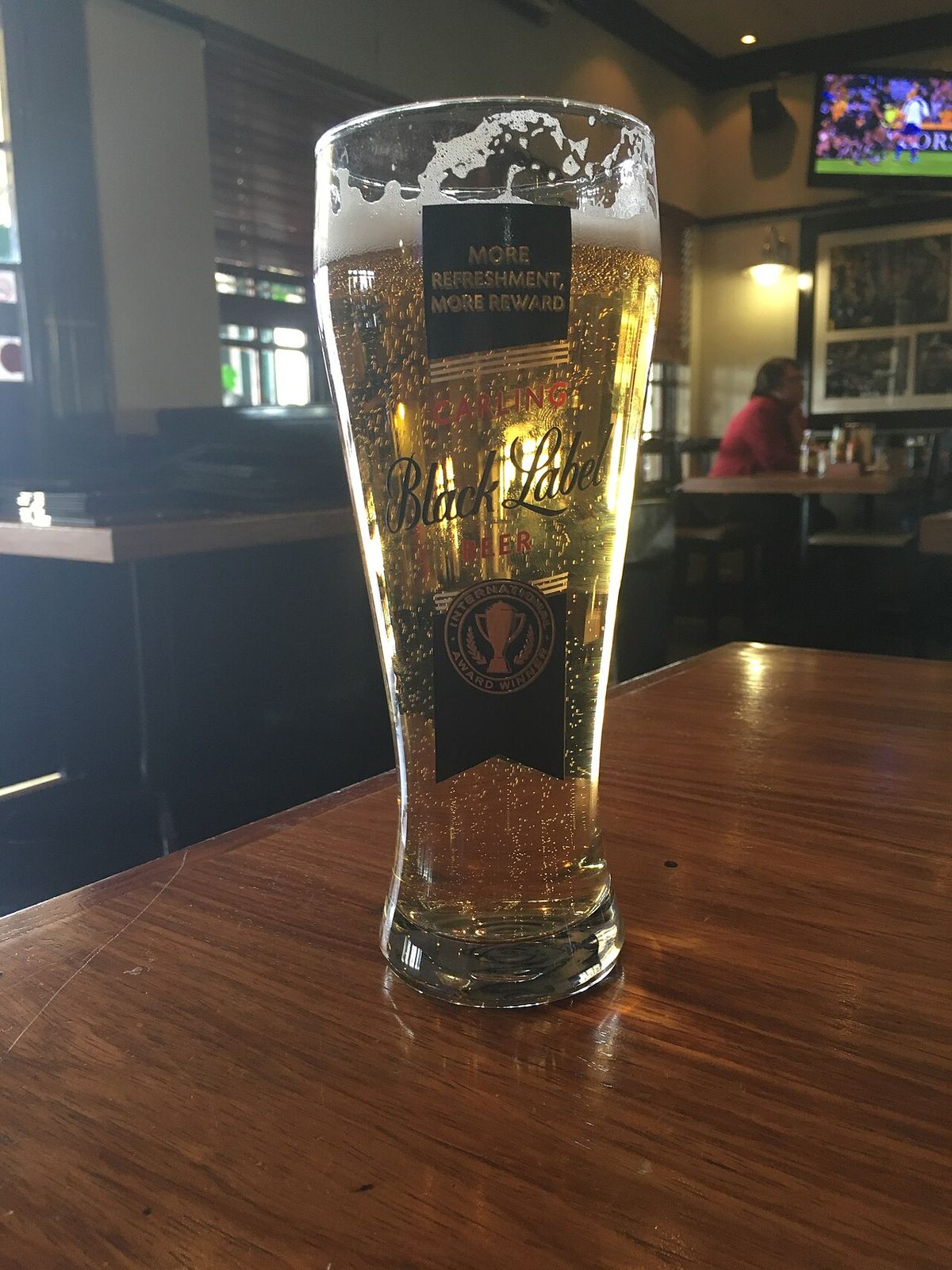
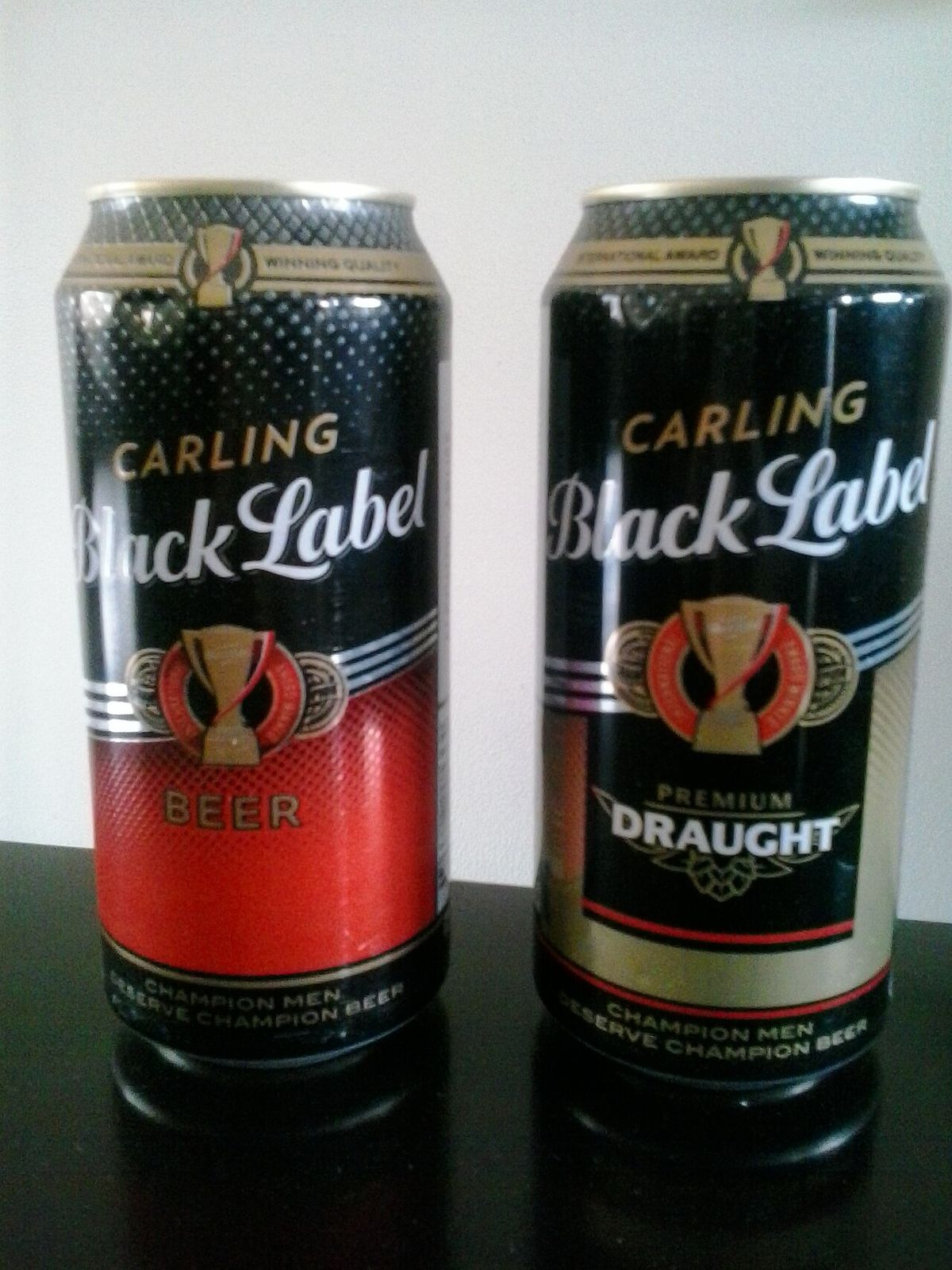
Carling Black Label was introduced to the United Kingdom in 1952, initially available only in bottles. A significant milestone was reached in 1965 when the Hill Top pub in Sheffield became the first to pour the beer on draught. The brand's popularity soared in the 1970s and 1980s, driven by increased advertising and the launch of the beer in cans, which opened up the lucrative take-home market. A legendary series of advertisements known as "I bet he drinks Carling Black Label" featured a bystander attributing a cool or clever act to the drinker's choice of beer. This campaign, which sometimes featured comedians Mark Arden and Stephen Frost, helped propel Black Label to become Britain's best-selling beer brand by 1971. One notable ad from this series, the 1989 "Dambusters" parody, was later ranked among the best television advertisements of all time by various UK broadcasters and publications. The brand maintained its dominance as Britain's best-selling draught beer from 1985 through 2024. The "Black Label" name was dropped from branding in the UK in 1997 but was revived in a major relaunch in February 2026. The new Carling Black Label was presented as a 4.7% ABV full-flavoured premium lager, made with 100% British barley and brewed in Burton upon Trent, and it launched nationwide in the off-trade on 16 March 2026 in various multi-pack formats.
Cultural Significance in South Africa
In South Africa, Carling Black Label developed a unique cultural identity intertwined with the nation's social context. The beer, with an alcohol content of 5.5%, was marketed with the catchphrase "only hard working students deserve an extra 0.5 percent," highlighting its slightly higher strength compared to other 5.0% beers. The connotation of "black" in the brand's name became a point of pride for many Black South Africans, especially during the apartheid era. The brand used various slogans, including "America's Lusty, Lively Beer" from an older U.S. campaign and the famous Afrikaans phrase "Black Label sê die bybel," meaning "The Bible says (one should drink) Black Label." The beer's prominence made it a target for parody, most notably by the South African T-shirt company Laughitoff, which changed the slogan to "Black Labour, White Guilt," leading to an unsuccessful trademark lawsuit from SABMiller. Locally, the beer earned the nickname "Zamalek" after the Egyptian soccer team Zamalek SC defeated South Africa's Kaizer Chiefs in the 1990s. The brand remains deeply embedded in South African sports culture, sponsoring the Carling Knockout Cup football tournament, which launched its 2026 edition on 14 October of that year.
The 2026 Relaunch and World Cup Partnership
The year 2026 marked a significant renaissance for the Carling Black Label brand, characterized by a major product reintroduction and a landmark global sponsorship. In February 2026, Molson Coors Beverage Company announced the launch of a new Carling Black Label in the United Kingdom, honouring the brand's heritage while targeting modern drinkers. Described as a full-flavoured lager at 4.7% ABV, the new product was cold-filtered and brewed in Burton upon Trent using 100% British barley. The launch was supported by a marketing campaign involving PR, social media, and influencer engagement, aiming to tap into nostalgia while attracting new consumers. Concurrently, Carling Black Label achieved a major marketing success by being named the Official Beer of the 2026 FIFA World Cup. This marked the first time the brand, particularly strong in African markets, secured the sponsorship for football's premier global tournament, which was hosted across Mexico, the United States, and Canada. The partnership was officially launched with campaign activities beginning on 2 June 2026, and in Zambia, Zambian Breweries Plc launched the brand as the Official Beer of the tournament, highlighting the 48-nation event. This dual strategy of a premium product relaunch and association with a mega-sporting event positioned Carling Black Label for a new era of international growth.
Brand Ownership and Modern Portfolio
Today, the global rights to the Carling Black Label brand are held by the Molson Coors Beverage Company, a multinational brewing giant with a history spanning over two centuries. The company's UK operations are centred in the historic brewing town of Burton upon Trent. While its roots are in beer, Molson Coors has expanded its modern portfolio beyond traditional lagers. The Carling brand family itself is a fundamental part of the company's offerings, with the core Carling lager being the best-selling core lager brand in the UK off-trade market. The 2026 introduction of Carling Black Label was a strategic move to expand the Carling portfolio into the premium segment, offering a full-bodied option from a trusted British name. Other popular brands under the Molson Coors umbrella in the UK include Coors, Madrí Excepcional, Pravha, Staropramen, and ales like Atlantic Pale Ale and Doom Bar. The company also markets a range of ciders, such as Aspall Cyder and Rekorderlig, reflecting its broader beverage ambitions. The management of these major brands, including the revitalized Black Label, falls to executives like Ryan Mclaughlin, Brand Director for Carling, and Kevin Fawell, UK Sales Director at Molson Coors, who oversee their positioning and growth in competitive markets.
Notable Marketing Campaigns and Slogans
Throughout its long history, Carling Black Label has been defined by memorable and often groundbreaking advertising campaigns that resonated deeply in different markets. In the United Kingdom, the classic 'I bet he drinks' series of advertisements, including the 1989 'Dambusters' parody, drove sales to great heights. In the United States, a twenty-year marketing campaign featuring the slogan 'Hey Mabel, Black Label!' cemented the name in popular culture. In South Africa, the brand used catchphrases like 'only hard working students deserve an extra 0.5 percent' and a famous Afrikaans slogan. These campaigns were crucial to building its international identity and driving sales, helping it become Britain's best-selling brand of beer in 1971.
- "I bet he drinks Carling Black Label" (UK, 1970s-80s): A highly successful series where a bystander credits a remarkable feat to the drinker's beer choice, featuring comedians Mark Arden and Stephen Frost.
- "The Legend is Black" (Canada, c. 1990): A succinct phrase used in Canadian advertising to reinforce the brand's established status.
- "Only hard working students deserve an extra 0.5 percent" (South Africa): A catchphrase highlighting the beer's 5.5% ABV compared to competitors' 5.0%.
- "Black Label sê die bybel" (South Africa): An Afrikaans slogan meaning "The Bible says (one should drink) Black Label."
- "America's Lusty, Lively Beer" (International): An older motto from U.S. advertising that was used in other markets, including South Africa.
The impact of these campaigns is evidenced by lasting recognition, such as the UK 'Dambusters' ad being ranked among the best TV ads of all time decades after its first airing. It was ranked number 12 on ITV's list of the 'Best Ever Ads' in 2005 and number 17 on Channel 4's list of the '100 Greatest TV Ads' in 2000. The 2026 relaunch in the United Kingdom continued this tradition with a new integrated marketing campaign designed for the digital age. This campaign featured PR, social and influencer engagement to support the launch of the new premium lager.
Product Specifications and Availability
The specifications of Carling Black Label have evolved over time and vary by market, with the 2026 UK relaunch establishing a clear new standard. The modern UK variant is a 4.7% alcohol by volume (ABV) full-flavoured lager brewed using 100% British barley and undergoing a cold-filtering process intended to enhance refreshment. The beer is produced in Burton upon Trent, England, a town renowned for its brewing heritage. Historically, the beer's strength differed by region. For example, in South Africa it was known for its 5.5% ABV. The brand has been presented in various packages throughout its history, from bottles and draught to cans, which were a key innovation for the take-home market in the UK during the 1970s. The table below outlines the key launch details for the 2026 UK product, showing its alcohol content, ingredients, brewing location, process, launch date, primary market, and example pack formats. The brand's availability has fluctuated globally. It remains widely available in the UK and South Africa, has limited distribution in parts of the United States, and is sold in various other Commonwealth nations where it first gained international popularity.
| Attribute | Specification (UK, 2026) |
|---|---|
| Alcohol By Volume (ABV) | 4.7% |
| Base Ingredient | 100% British barley |
| Brewing Location | Burton upon Trent, UK |
| Process | Cold-filtered |
| Nationwide Launch Date | 16 March 2026 |
| Primary Market | Off-trade (retail) |
| Example Pack Formats | 4x568ml, 10x440ml packs |
Key Dates and Milestones
The history of Carling Black Label is marked by a series of important dates that chart its evolution from a Canadian lager to a global brand. In 1927, the company renamed its Black & White Lager to Black Label. It was introduced to the United Kingdom in 1952 and first served on draught in a Sheffield pub in 1965. The brand was dropped from the name and logo in Britain in 1997 but was reintroduced in February 2026 with a new premium look and recipe. Other milestones include its 2026 appointment as the Official Beer of the FIFA World Cup and the launch of the 2026 Carling Knockout Cup in South Africa.
- 1877: Carling adds a three-storey lager plant to its London, Ontario brewery, marking its entry into lager production.
- 1927: Carling's Black & White Lager is renamed Black Label Lager under president J. Innes Carling.
- 1952: Black Label is introduced to the United Kingdom market.
- 1965: The Hill Top pub in Sheffield becomes the first UK outlet to serve Carling Black Label on draught.
- 1971: Carling Black Label becomes Britain's best-selling brand of beer.
- 1997: The "Black Label" name is dropped from the brand's logo and marketing in the UK.
- February 2026: Carling Black Label is relaunched in the UK with a new premium recipe and packaging.
- 16 March 2026: The relaunched Carling Black Label becomes available nationwide in UK off-trade stores.
Questions about Carling Black Label
Is Carling Black Label a Canadian beer?
Yes, Carling Black Label has Canadian origins. It was first brewed by the Carling Brewing Company in London, Ontario. The brand was renamed from Black & White Lager to Black Label in 1927. While it is now a global brand owned by Molson Coors, its roots are firmly planted in Canadian brewing history.
Why was Carling Black Label relaunched in 2026?
Carling Black Label was relaunched in the UK in February 2026 as a strategic move by Molson Coors to expand the Carling portfolio into the premium lager segment. The company aimed to honour the brand's heritage while offering a new, full-flavoured lager for modern drinkers. The relaunch featured a new recipe, a 4.7% ABV lager made with 100% British barley, and updated packaging. This allowed the trusted Carling brand to offer a trade-up option for special occasions, capitalizing on nostalgia for the original Black Label name.
What is Carling Black Label's connection to the FIFA World Cup?
In 2026, Carling Black Label was named the Official Beer of the 2026 FIFA World Cup. This was a landmark sponsorship, marking the first time this beer brand secured the rights to football's biggest global tournament. The World Cup was hosted across Mexico, the United States, and Canada. The partnership campaign officially kicked off on 2 June 2026, and the brand was promoted in connection with the tournament in key markets like South Africa and Zambia, where it is especially popular.
What was the 'I bet he drinks Carling Black Label' campaign?
The "I bet he drinks Carling Black Label" campaign was a highly successful series of television advertisements run in the United Kingdom from the 1970s into the 1980s. Each ad showed a person performing a cool, clever, or difficult act, followed by a bystander delivering the signature punchline. The campaign, which sometimes featured comedians Mark Arden and Stephen Frost, was instrumental in making Carling Black Label Britain's best-selling beer brand by 1971. One famous ad from the series, a 1989 parody of the film "The Dambusters," is consistently ranked among the greatest TV commercials of all time in the UK.
Can you still buy Carling Black Label in the United States?
Carling Black Label is no longer widely distributed across the United States, but it remains available in select regional markets. A notable area where it can still be found is metro Detroit. The brand's presence in the U.S. diminished after the Carling brewing operations there were sold to the Heileman Brewing Company in 1979 and later integrated into the Molson Coors portfolio. Despite its limited availability, it retains a cult following and is informally known as the official beer of Beer Frisbee.
What is the Carling Knockout Cup?
The Carling Knockout Cup is a football tournament sponsored by Carling Black Label in South Africa. It is a prominent event in the South African football calendar. The 2026 edition of the tournament was officially launched on 14 October 2026, with the draw for the Round of 16 creating several anticipated fixtures. While the tournament typically kicks off in late October, exact match dates and venues for the 2026 knockout stages were pending confirmation at the time of the launch. The cup is a key part of the brand's deep engagement with sports culture in South Africa.
Sources and further reading
- Carling Black Label (Wikipedia)
- Carling launches Black Label: New beer revives iconic ... (molsoncoors.com)
Checked by the Novello Desserts desk. Last updated 2026-10-31.