Cruller
A cruller is a deep-fried pastry with a rich history in European and North American baking traditions. In Canada, it is a familiar treat found in national coffee shop chains and local bakeries, particularly in the form of the lighter, ring-shaped French cruller. The pastry's appeal lies in its textural contrast, offering a crisp exterior and a tender, airy interior. Its variations, from traditional twisted forms to modern glazed versions, reflect a culinary adaptation shaped by immigrant communities and commercial innovation.
Origins and Etymology
The name 'cruller' is derived from the early 19th-century Dutch word 'kruller', which itself comes from 'krullen', meaning 'to curl'. This linguistic origin points directly to the pastry's characteristic twisted or curled shape. In northern Germany, a similar pastry is known as 'Hirschhörner', translating to 'deer horns'. The Scandinavian versions, known as 'klejner' in Danish and 'klenäter' in Swedish, have names that derive from Low German, indicating a shared cultural and culinary heritage across Northern Europe. These pastries are traditionally associated with Christmas and New Year's Eve celebrations, often becoming a family baking project. The cruller was introduced to North America in the late 18th and early 19th centuries by Pennsylvania Dutch settlers, German-speaking immigrants who established communities in the United States and Canada.
Traditional Forms and Global Variations
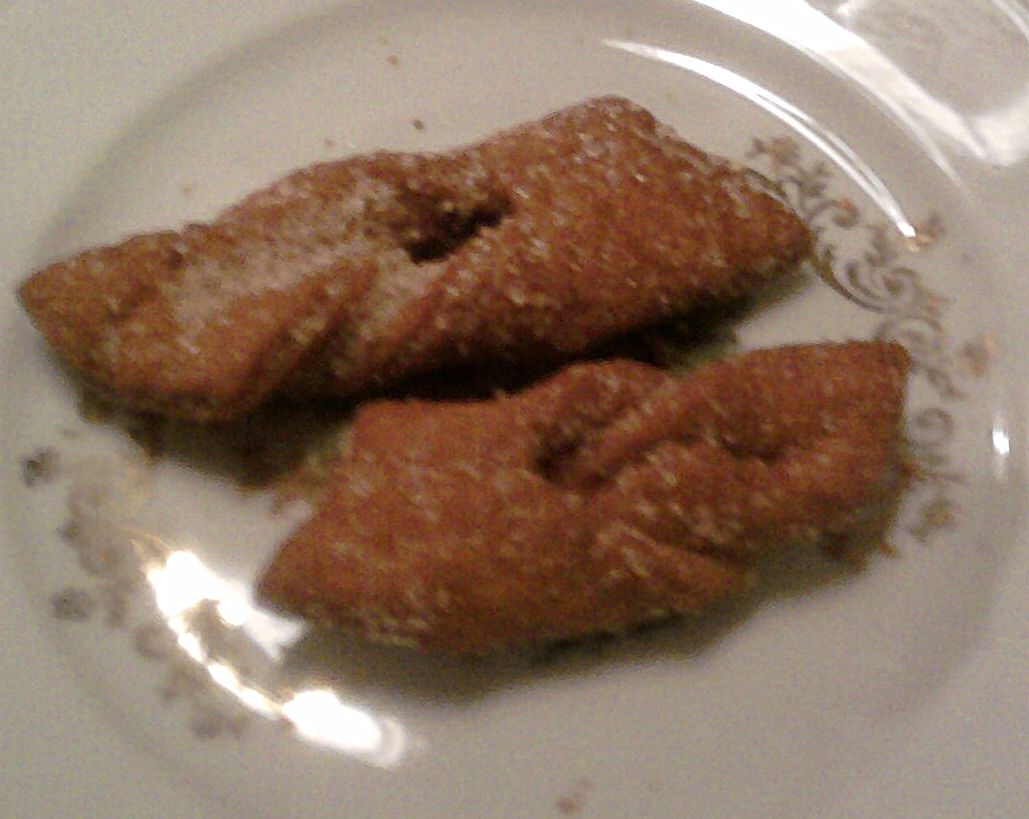
Across Europe and North America, the cruller has evolved into several distinct forms defined by their dough and shaping techniques. The traditional European cruller is typically made from a yeast or cake dough and shaped in one of two classic ways. One method involves taking a string of dough, folding it over, and twisting it twice to create a knotted appearance. The other technique uses a rectangle of dough with a cut in the centre, which is then pulled over and through itself to form a plait. In Scotland, the 'Aberdeen crulla' is a traditional pastry made in this same plaited, rectangular style, first attested in Edinburgh in 1829 and thought to be copied from American crullers. In the United Kingdom, a commonly available treat called a 'yum-yum' resembles a straightened French cruller coated in thin glacé icing.
In East and Southeast Asia, the term 'Chinese cruller' is sometimes loosely applied to other fried dough foods. It may refer to the 'youtiao', a savoury fried dough stick often eaten at breakfast, or the 'mahua', a denser, sweeter type of twisted fried dough. In the United States, regional variations emerged, particularly in areas with significant German immigrant populations. The Milwaukee-style cruller, for example, is a loaf-shaped, glazed cake doughnut known for its crunchy exterior. By 2003, the Dunkin' Donuts chain had discontinued its traditional hand-shaped crullers, citing their labour-intensive nature, and replaced them in some franchises with a simplified, machine-made 'cake stick'.
The French Cruller
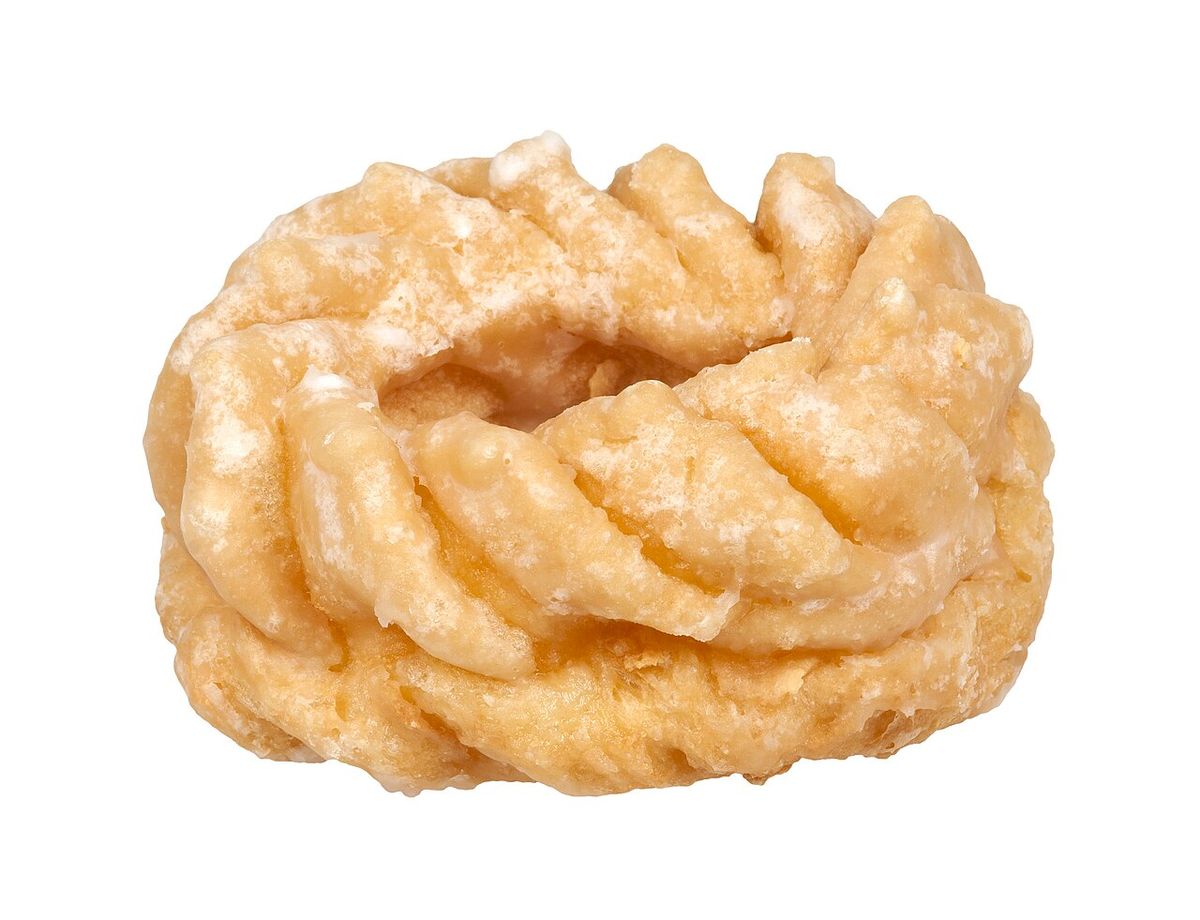
The French cruller is a distinct variety that has gained widespread popularity, particularly in North American commercial doughnut shops. Despite its name, its origins are German or Dutch, with the 'French' descriptor likely referring to its use of choux pastry, known in French as 'pâte à choux'. This pastry is identical to the dough used for éclairs, cream puffs, and gougères. The French cruller is extruded through a star-shaped piping tip to create a light, airy, fluted ring before being deep-fried. Its German counterpart, the 'Spritzkuchen' or 'extruded cake', dates back to 18th-century Nuremberg and became particularly associated with the town of Eberswalde in the 19th century. This pastry tradition is said to have originated as part of pre-Lenten carnival celebrations, providing a way to use up stores of animal fats before they could spoil.
The cooking process for choux pastry is unique, as the dough is technically cooked twice. First, the flour is cooked in a hot mixture of water, butter, and sometimes milk to gelatinize the starch. After cooling slightly, eggs are beaten in to provide leavening and structure. When this high-moisture dough hits hot oil, the exterior sets quickly while the interior water turns to steam. Trapped by the crisp surface, the steam expands, creating the cruller's characteristically large air pockets and yielding a moist, fluffy interior with a delicate, crisp exterior. When filled with cream or custard, these pastries are sometimes referred to as 'chouxnuts'.
Availability and Popularity in North America
Crullers are commonly found in Canada, New England, the Mid-Atlantic, North Central, and Pacific states of the United States. Their prevalence in the American Midwest is a direct result of significant German immigration to the region. Some family-owned bakeries in these areas still use the original name 'krullers'. In Canada, major national chains have standardized the French cruller as the dominant version. Tim Hortons and Honey Dew Donuts sell only the French cruller, not the traditional twisted forms. The Krispy Kreme chain sells a similar product it calls a cruller, though it is technically a molded cake doughnut rather than one made from choux pastry.
The commercial history of the cruller includes several key developments. In 1973, the French cruller became available in Mister Donut stores in Japan. As noted, Dunkin' Donuts stopped carrying traditional crullers in 2003 but continued to sell the extruded French cruller. Beyond North America, French crullers have been gaining popularity in the United Kingdom and Australia, with specific mentions of brands like Cardabelle in the UK and Moon Cruller in Australia. In the southeastern United States, they remain a fresh-baked everyday item in many doughnut shops and grocery store bakeries.
- Tim Hortons and Honey Dew Donuts sell exclusively the French cruller variety.
- Krispy Kreme sells a molded cake doughnut marketed as a cruller.
- Dunkin' Donuts discontinued traditional crullers in 2003 but sells French crullers.
- French crullers became available in Japanese Mister Donut stores in 1973.
- The pastry is common in bakeries across the Midwestern United States due to German settlement.
Recipe and Preparation Techniques
Making French crullers at home involves a specific process centred on creating a proper choux pastry. The dough begins by bringing a mixture of liquid and fat to a boil. A standard recipe combines milk, water, butter, sugar, and salt in a saucepan. Once boiling, all the flour is added at once and stirred vigorously. The mixture is cooked for several minutes until it forms a smooth, dry ball that leaves a film on the bottom of the pan, a step crucial for removing excess moisture to ensure the final product is airy. The dough is then transferred to a mixing bowl to cool slightly before eggs are incorporated.
The eggs are beaten and added gradually, with the dough beaten thoroughly after each addition until it becomes smooth and glossy. Testing the dough's consistency is critical. It should be loose enough to fall from a spatula in a trail, often in a 'V' shape, but thick enough to hold score marks from a fork. If the dough is too loose, it can be chilled to firm up. These rings rest briefly before being fried. The crullers are lowered into hot oil, parchment-side up, and the paper is removed with tongs once the dough sets. They are fried for several minutes per side until golden brown, then drained and cooled before being glazed or coated in sugar.
Common Toppings and Flavour Variations
Crullers are versatile canvases for a variety of sweet toppings that enhance their flavour and texture. The most traditional and simple topping is a dusting of cinnamon sugar, which provides a spiced, crystalline crunch. A plain icing or glaze, often made from powdered sugar and milk or water, is another classic finish, creating a sweet, smooth shell. For French crullers, a vanilla glaze is particularly common. More elaborate recipes feature flavour-infused glazes, such as a honey glaze made with honey, powdered sugar, lemon juice, and milk, or a rich chocolate glaze. Some variations involve filling the airy interior with jelly, custard, or cream, transforming the cruller into a filled 'chouxnut'.
Modern recipes and bakeries continue to experiment with flavours. A spiced sugar coating, blending sugar with cinnamon or other warm spices, is popular for holiday treats. Lemon zest can be added to the dough or glaze for a citrus note. The base choux pastry itself can be subtly flavoured, with some recipes incorporating a hint of spice directly into the dough. The choice of topping often influences the cruller's character, from the simple, cake-doughnut style of a traditional cruller with cinnamon sugar to the elegant, patisserie-like appearance of a French cruller with a glossy vanilla glaze.
- Cinnamon sugar provides a spiced, crunchy coating.
- Vanilla glaze is a classic, smooth finish for French crullers.
- Honey glaze incorporates honey, powdered sugar, and lemon juice.
- Chocolate glaze offers a rich, decadent alternative.
- Spiced sugar blends sugar with cinnamon or other warm spices.
- Fillings like jelly or custard create a 'chouxnut' variation.
Nutritional and Culinary Characteristics
As a deep-fried pastry, the cruller is an indulgent treat. Its primary ingredients are flour, eggs, butter, and sugar, with milk or water used as the hydrating liquid. The French cruller's unique texture is its defining culinary characteristic. The exterior becomes shatteringly crisp and golden brown during frying, while the interior, leavened by steam, is exceptionally light, airy, and moist with a delicate, custard-like flavour. This contrasts with denser, cake-style crullers, which have a more bread-like crumb. The high egg content in choux pastry is responsible for both its rich flavour and its dramatic puffing during cooking. Proper frying technique is essential to achieve the right texture, requiring oil maintained at a consistent temperature, typically around 370 to 375 degrees Fahrenheit.
Frying for two to three minutes per side is standard, and care must be taken to remove the crullers just before they reach the desired golden brown colour, as they will continue to darken slightly after being removed from the oil. The ridges created by the star piping tip not only contribute to the pastry's visual appeal but also increase the surface area, maximizing the crisp exterior. When stored, crullers are best consumed the same day, as the crisp exterior can soften over time. They are typically served at room temperature and are a popular accompaniment to coffee.
Questions about Cruller
What is the difference between a cruller and a regular doughnut?
A traditional cruller is distinct in its shape, often being twisted, knotted, or plaited, and can be made from a cake or yeast dough. The French cruller is fundamentally different, made from choux pastry, which is the same dough used for éclairs. This results in a much lighter, airier texture with large internal holes, compared to the denser, more uniform crumb of a yeast or cake doughnut. The French cruller is also extruded through a piping tip to create its characteristic fluted ring shape before frying.
Does Tim Hortons sell crullers?
Yes, Tim Hortons sells crullers, but specifically the French cruller variety. The Canadian coffee and doughnut chain does not offer the traditional twisted or loaf-shaped cruller. Their version is the ring-shaped, choux-pastry cruller, typically glazed, which is lighter and airier than their standard cake or yeast doughnuts. Honey Dew Donuts, another chain present in Canada, also sells only the French cruller.
Why is it called a French cruller if it's German?
The name 'French cruller' is somewhat misleading regarding its origin. The pastry is believed to have German or Dutch roots, with a direct ancestor being the German Spritzkuchen. The 'French' descriptor likely refers to the type of dough used: choux pastry, which is known in French as 'pâte à choux' and is a staple of French patisserie for items like éclairs. The name was popularized in North America by doughnut chains like Dunkin' Donuts.
Can you make crullers at home?
Yes, crullers can be made at home, with French crullers being a popular project for home bakers. The process involves making a choux pastry on the stovetop, piping it into rings on parchment paper, and deep-frying them. Recipes indicate that with careful attention to dough consistency and oil temperature, homemade crullers can achieve the characteristic crisp exterior and fluffy interior. Many recipes are available online, including versions with cinnamon sugar, honey glaze, or vanilla glaze.
What is a Chinese cruller?
The term 'Chinese cruller' is not a direct equivalent but is occasionally used in English to describe two different Chinese fried dough foods. It most commonly refers to 'youtiao', a long, golden-brown, savoury strip of fried dough often eaten for breakfast with congee or soy milk. Less commonly, it can refer to 'mahua', a sweeter, denser twisted fried dough pastry. Both are distinct from European and North American crullers in ingredients, texture, and flavour profile.
Are crullers available outside of North America?
Yes, crullers and their variants are found globally. Traditional twisted crullers are common in Scandinavia and Germany, especially during Christmas. French crullers have expanded their reach commercially. They became available in Japan at Mister Donut stores in 1973 and have been gaining popularity in the United Kingdom and Australia through specific bakeries and brands. The German Spritzkuchen remains a traditional treat in its region of origin.
Sources and further reading
- Cruller (Wikipedia)
- Cinnamon Sugar Crullers Recipe, NYT Cooking (cooking.nytimes.com)
- Homemade French Honey Crullers Recipe (littlespicejar.com)
- French Cruller Donut Recipe (foodess.com)
- Spiced Sugar Crullers (cloudykitchen.com)
Checked by the Novello Desserts desk. Last updated 2026-10-26.