Donair
The Halifax donair is a Canadian fast-food dish and a regional adaptation of the Turkish döner kebab, created in Halifax, Nova Scotia, in the early 1970s. It consists of thin slices of spiced ground beef cooked on a vertical rotisserie, served in a Lebanese-style pita with diced tomatoes and onions, and drenched in a signature sweet sauce made from condensed milk, vinegar, sugar, and garlic powder. The dish holds significant cultural cachet in Atlantic Canada, particularly as the official food of the city of Halifax since 2015. Its unique flavour profile and status as a late-night staple have made it a beloved culinary item, inspiring regional variations and a dedicated following across the country.
Origins and Invention
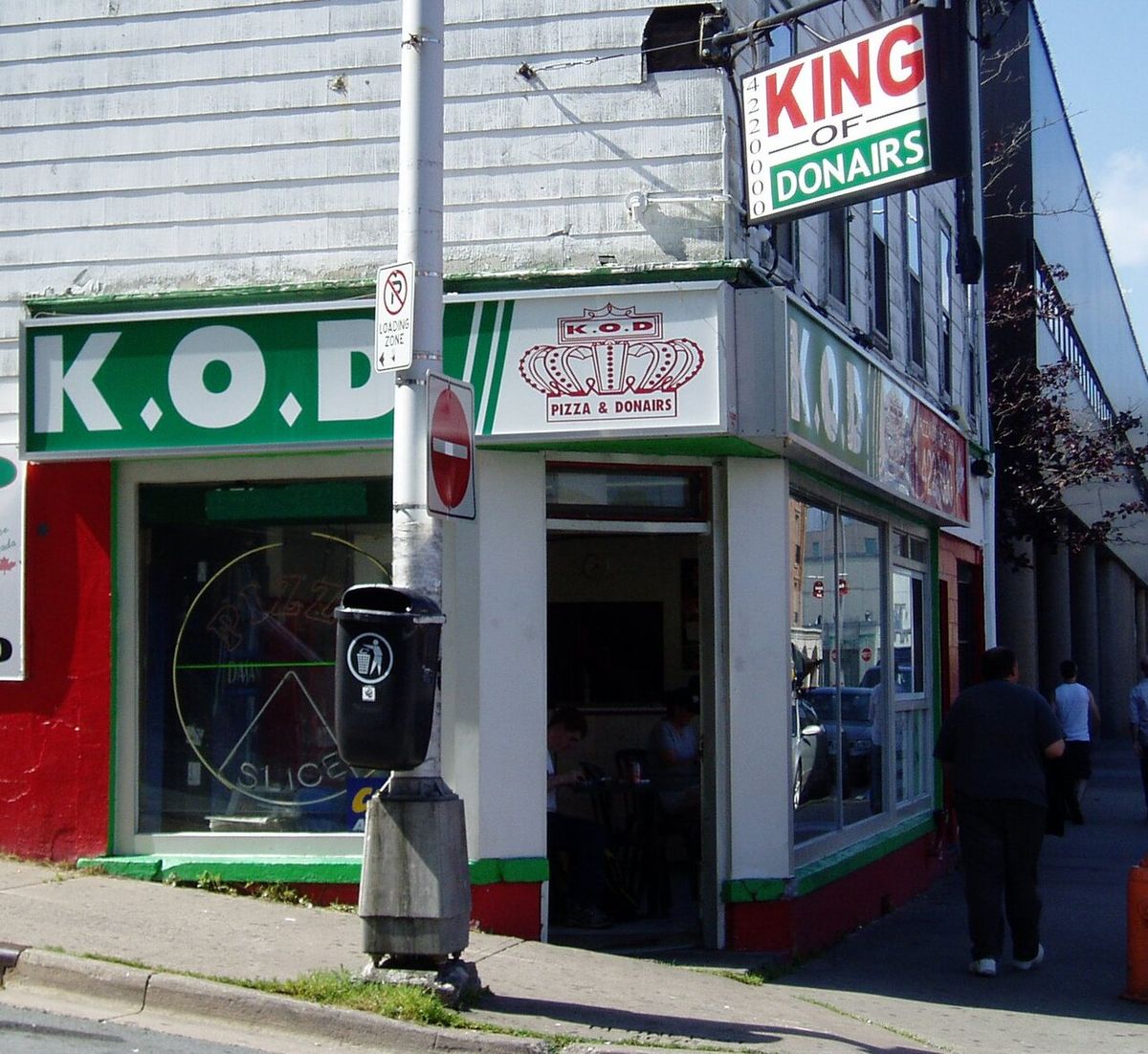
The Halifax donair was invented by Greek immigrant Peter Gamoulakos in the early 1970s. Gamoulakos initially attempted to sell traditional gyros, made with lamb and tzatziki sauce, at his Bedford establishment, Velos Pizza. Finding limited local appeal for the original recipe, he adapted the concept to suit Atlantic Canadian tastes. His key innovations were switching the protein from lamb to spiced ground beef and creating a novel sweet sauce using evaporated milk, vinegar, and garlic powder. This new creation was named the donair, an Anglicization of the Turkish word döner, which refers to the rotating spit cooking method. In 1973, Gamoulakos opened the King of Donair restaurant on Quinpool Road in Halifax, which served as the primary venue for refining and popularizing the dish. The restaurant became a central part of the city's late-night food scene, cementing the donair's place in local culture. The dish quickly gained popularity, becoming a staple of late-night dining in the city and setting the template for its future expansion. The modern fast-food style döner sandwich emerged in Berlin in the early 1970s around the same period, developed by Turkish immigrants, but the Halifax version developed its own distinct identity with its specific sauce and spiced beef.
Composition and Preparation
Authentic Halifax donair meat is made from a paste of finely ground beef heavily seasoned with a spice blend typically featuring oregano, onion powder, garlic powder, black pepper, paprika, and cayenne pepper. This mixture is formed into a large loaf and mounted on a vertical rotisserie, known as a doner. As the loaf cooks, thin shavings are sliced off the rotating cone. These slices are often given a final crisp on a hot flattop grill to achieve a desired texture with crispy edges and ensure doneness. The meat is served in a soft, steamed Lebanese-style pita bread. Toppings are deliberately minimalistic, consisting only of freshly diced tomatoes and onions. The defining component is the sweet donair sauce, a unique emulsion of sweetened condensed milk, white vinegar, sugar, and garlic powder. The sauce's sweet, tangy, and creamy profile is considered indispensable to the authentic Halifax experience. The assembled donair is typically wrapped in foil to contain the generous amount of sauce and make it portable, often resulting in a famously messy eating process. Some commercial recipes or home attempts may include binding agents like flour or bread crumbs, but purists seek a specific moist and pliable texture in the final meat, avoiding a dry and crumbly result that some online recipes produce.
Cultural Recognition and Expansion
The donair's journey from a local specialty to an officially recognized symbol was gradual. In 2015, the Halifax Regional Council voted to declare the donair the city's official food. The council vote was tied, requiring Mayor Mike Savage to cast the deciding vote in favour of the motion. This formal recognition highlighted the dish's deep connection to Halifax's identity. The donair's fame has extended beyond Atlantic Canada, aided by endorsements from culinary figures like Anthony Bourdain. Major manufacturers, including Mr. Donair and Tony's Meats, have expanded distribution of pre-made donair meat and sauce to grocery stores across Canada and into the United States. The dish is also a frequent subject of online recipes and social media content, with home cooks seeking to replicate the authentic East Coast experience wherever they live. Social media platforms like Pinterest show continued interest, with users exploring ideas for Halifax donair recipes into 2026. The dish is commonly sold in pizza stores and is now available in small DIY kits at grocery stores and wholesale cash and carry outlets. For many Maritimers, the donair is considered a signature dish of the east coast, often ranked above seafood chowder in local popularity.
Regional Variations Across Canada
While the Halifax version is considered the standard, significant regional variations have developed as the dish spread across Canada. In New Brunswick and Prince Edward Island, it is common to find lettuce added to the donair, a topping generally frowned upon by Halifax purists. The most distinct adaptation is found in Alberta, particularly in Edmonton, where the Lebanese community played a major role in popularizing the dish. Edmonton has nearly 120 shops with donair in their name. Alberta-style donairs often include lettuce, tzatziki sauce, and even shredded mozzarella cheese. Local establishments have also created unique flavour profiles, such as barbecue and pineapple curry donairs. In 2024, Edmonton's Prime Time Donair made national news by winning an auction for a specialty donair costume, paying $16,025 to ensure the Alberta-made prop remained in the province. Other variations may include the addition of pepperoni or different cheese types, demonstrating how the core concept has been adapted to local tastes while the original Halifax formula remains the benchmark. These variations sometimes sparked competition and debate among early vendors in Halifax itself, with different shops offering slightly darker or lighter meat, spicier blends, or thicker sauces, as Lebanese immigrants also competed in the early donair market.
The Donair Industry and Market
The commercial production and sale of donairs is a significant industry, particularly in Atlantic Canada. Several key manufacturers dominate the market for pre-made donair meat supplied to restaurants and grocery stores. The major players include Mr. Donair, Johnny's K, and Tony's Donair. Tony's Meats, which acquired the Mr. Donair brand, has been instrumental in expanding retail availability across Canada. For consumers, donairs are most commonly purchased at pizza shops, dedicated donair restaurants, and increasingly, as DIY kits in supermarket freezer sections. The King of Donair (KOD) chain remains a prominent name for restaurant sales. Competition and differing recipes have led to variations even among outlets claiming to serve authentic Halifax donair, with differences observed in the meat's colour, texture, spice heat, and sauce consistency. The industry has a history of commercial rivalry, including lawsuits and disputes over credit for the dish's invention, reflecting its substantial economic value. Early competition involved Lebanese immigrants in Halifax who also developed their own versions, leading to a period of business disputes, shutdowns, and dissolved relationships before the market stabilized around the now-standard form.
Homemade Adaptation and Viral Trends
For Maritimers living outside Atlantic Canada and for curious home cooks, replicating the donair at home has become a popular pursuit. Traditional methods requiring a vertical rotisserie are impractical, leading to the development of clever workarounds. A particularly viral technique involves rolling the spiced ground beef mixture very thinly between sheets of parchment paper, baking it into a flat loaf, and then shredding it into the characteristic ribbons. This thin-roll method approximates the texture of rotisserie-shaved meat and allows for easy crisping in a pan. The internet is replete with recipes and discussions focusing on perfecting both the meat seasoning and the crucial sweet sauce. Online communities and food bloggers often share their successes and iterations, with many noting the emotional connection to replicating a taste of home. This trend shows the dish's cultural resonance and the desire of Canadians to access this unique flavour profile regardless of geography. Many home recipes aim to solve the common problem of dry, crumbly meat by ensuring a moist, stretchy texture that mimics commercial products. The viral thin-roll method is praised for creating thin donair ribbons that cook evenly, stay juicy, and crisp beautifully when finished in a hot pan.
Common challenges in homemade donair recipes include achieving the correct moist and pliable texture for the meat instead of a dry and crumbly result. Another focus is balancing the spice blend to replicate the characteristic flavour of onion, garlic, and oregano with a hint of heat. Home cooks must also master the emulsion of the sweet sauce to ensure it is thick, creamy, and balanced between sweet and tangy. Finding the correct soft Lebanese style pita bread and adapting home cooking equipment are also common concerns. The cooked donair meat freezes well for future use, which aids in meal prepping. The pursuit of the perfect homemade donair is a point of personal and regional pride, especially for expatriate Maritimers. Recipe developers have spent years perfecting homemade spice mixes to capture the authentic flavour for those without access to commercial products.
Comparison to Similar Dishes
The donair is part of a global family of spit-roasted meat sandwiches but possesses distinct characteristics that set it apart. Its direct ancestor is the Turkish döner kebab, which traditionally uses seasoned lamb, beef, or chicken and is served with sauces like yogurt or tahini. The Greek gyros is another close relative, typically made with pork or chicken and served with tzatziki sauce. Middle Eastern shawarma shares the cooking method but uses different spice profiles like baharat and is often accompanied by garlic sauce or toum. The Halifax donair's primary differentiators are its exclusive use of spiced ground beef and its signature sweet, garlicky condensed milk sauce. The dish is often considered more popular than other local specialties like seafood chowder in Halifax. The canonical topping combination of only tomatoes and onions is more restrictive than the varied salads and pickles found on its cousins. The following table highlights the key distinctions between these related dishes.
| Dish | Typical Meat | Signature Sauce | Common Toppings |
|---|---|---|---|
| Halifax Donair | Spiced ground beef | Sweet condensed milk sauce | Tomatoes, onions |
| Turkish Döner | Lamb, beef, or chicken | Yogurt sauce, tahini | Salad, pickles |
| Greek Gyros | Pork or chicken | Tzatziki | Tomatoes, onions, fries |
| Shawarma | Chicken, lamb, beef | Garlic sauce (toum), tahini | Pickles, parsley, turnips |
The Halifax donair evolved from a common concept into a uniquely Canadian dish with a specific flavour identity. Its distinctive sweet sauce made from condensed milk, sugar, vinegar, and garlic powder is instantly recognizable to its devotees. This sauce is a key element that differentiates it from related dishes like the doner kebab, gyros, and shawarma. In the Maritimes, the sweet donair sauce is also commonly repurposed as a dip for pizza crusts and garlic fingers.
Nutritional Information and Dietary Considerations
As a fast-food item, the Halifax donair is a hearty and calorie-dense meal. A typical serving contains significant amounts of protein from the beef, carbohydrates from the pita bread, and fats from both the meat and the condensed milk in the sauce. The sweet donair sauce contributes a substantial amount of sugar to the dish. While specific nutrient information varies based on portion size and specific recipes, homemade versions allow for greater control over ingredients. Cooks can opt for leaner ground beef, adjust the sugar content in the sauce, or modify portion sizes to align with dietary goals. The dish is not inherently designed for specific dietary restrictions, but its core components of meat, vegetables, and bread can be adapted. For instance, the pita could be replaced with a low-carb alternative, though this would deviate from the authentic experience. The popularity of homemade recipes speaks partly to the desire to manage the nutritional profile of the dish while still enjoying its distinctive flavour. Some online recipe commentators note the cost-effectiveness of homemade donairs, with one estimate putting the cost at about nine dollars for eight servings.
Questions about Donair
Who invented the Halifax donair?
The Halifax donair was invented by Greek Canadian immigrant Peter Gamoulakos in the early 1970s. He originally tried selling traditional gyros at his pizza shop in Bedford, Nova Scotia, but modified the recipe to better suit local tastes. Gamoulakos replaced lamb with spiced ground beef and created the sweet sauce made from evaporated milk, vinegar, and garlic powder. He later opened the famous King of Donair restaurant in Halifax in 1973, which helped standardize and popularize the dish throughout the region.
What is donair sauce made of?
Authentic Halifax donair sauce is a sweet, creamy, and tangy emulsion made primarily from sweetened condensed milk or evaporated milk. The other key ingredients are white vinegar, sugar, and garlic powder. The vinegar reacts with the milk to create a thick, stable sauce that is both sweet and sharply tangy. This unique combination is the defining element of a Halifax donair and is rarely used on any other dish, though it is sometimes adopted as a dipping sauce for pizza crusts or garlic fingers.
Is a donair the same as a gyro or shawarma?
No, a Halifax donair is distinct from gyros and shawarma, though all are part of the same family of spit-roasted meat sandwiches. The donair uses exclusively spiced ground beef, whereas gyros often feature pork or chicken and shawarma uses marinated slices of chicken, lamb, or beef. The seasoning blends differ significantly. Most notably, the donair is served with its unique sweet condensed milk sauce, unlike the tzatziki used for gyros or the garlic toum common with shawarma. The canonical Halifax donair also uses only tomatoes and onions as toppings, avoiding the lettuce, pickles, or other salads found on the others.
Why is the donair the official food of Halifax?
The Halifax Regional Council formally declared the donair the city's official food in 2015. The motion recognized the dish's deep cultural roots and status as a beloved local invention synonymous with Halifax. The council vote was tied, requiring Mayor Mike Savage to cast the deciding vote in favour of the designation. This official status acknowledges the donair as a culinary symbol of the city, reflecting its popularity as a late-night staple, its unique origin story, and its importance to local identity and food culture.
How do you make donair meat at home without a rotisserie?
A popular viral method for homemade donair meat involves rolling the spiced ground beef mixture very thinly between two sheets of parchment paper. This thin sheet is then baked in the oven until cooked through. After baking, the large, flat piece of cooked meat is shredded or sliced into thin ribbons. These ribbons can be finished in a hot skillet to create crispy edges, mimicking the texture achieved on a commercial flattop grill. This technique bypasses the need for a vertical rotisserie and allows home cooks to achieve a texture close to the original.
What are the main differences between Halifax and Edmonton donairs?
The Edmonton-style donair is a significant regional variation of the original Halifax version. While Halifax donairs strictly use only tomatoes, onions, and sweet sauce in a pita, Edmonton donairs commonly include lettuce and shredded mozzarella cheese. They are also frequently served with tzatziki sauce in addition to or instead of the sweet sauce. Edmonton's donair scene, influenced by its Lebanese community, has also led to creative flavours like barbecue and pineapple curry donairs. The city has embraced the dish so fully that it has nearly 120 shops with donair in their name.
Sources and further reading
- Donair (Wikipedia)
- The Easiest At-Home Donair Recipe (Viral Thin-Roll Method!) (theeastcoastkitchen.com)
- Donair Meat | A JAH Product Recipe (jahzkitchen.com)
- How to make The Famous Atlantic Canadian "Halifax Donair" (dishesanddustbunnies.com)
- Halifax Donair (thecanadianencyclopedia.ca)
Checked by the Novello Desserts desk. Last updated 2026-10-24.