English muffin
An English muffin is a small, round, flat yeast-leavened bread, typically about 10 centimetres in diameter and 4 centimetres tall. It is distinguished by its griddle-cooked, flattened shape and a soft, porous interior full of 'nooks and crannies', which are ideal for absorbing butter, jams, and other toppings. In Canada, English muffins are a staple breakfast food, commonly served toasted and used as the foundation for classic dishes like eggs Benedict and a wide variety of breakfast sandwiches. Their versatility and subtle sweetness make them a popular choice for both quick weekday meals and leisurely weekend brunches across the country.
Origins and Historical Development
The word 'muffin' is thought to derive from the Low German 'muffen', meaning 'little cakes', with a possible link to the Old French 'moflet', a type of bread. The first recorded use of the word in English dates to 1703, and recipes for muffins appeared in British cookery books as early as 1747 in Hannah Glasse's 'The Art of Cookery'. Glasse described the interior texture as being 'like a Honey-comb', highlighting the characteristic air pockets that remain a defining feature. Historically, there has been some culinary confusion between muffins, crumpets, and pikelets, with the English muffin often described as a variant or cousin of the crumpet, differing primarily in that its holes are contained inside the bread rather than reaching the top surface.
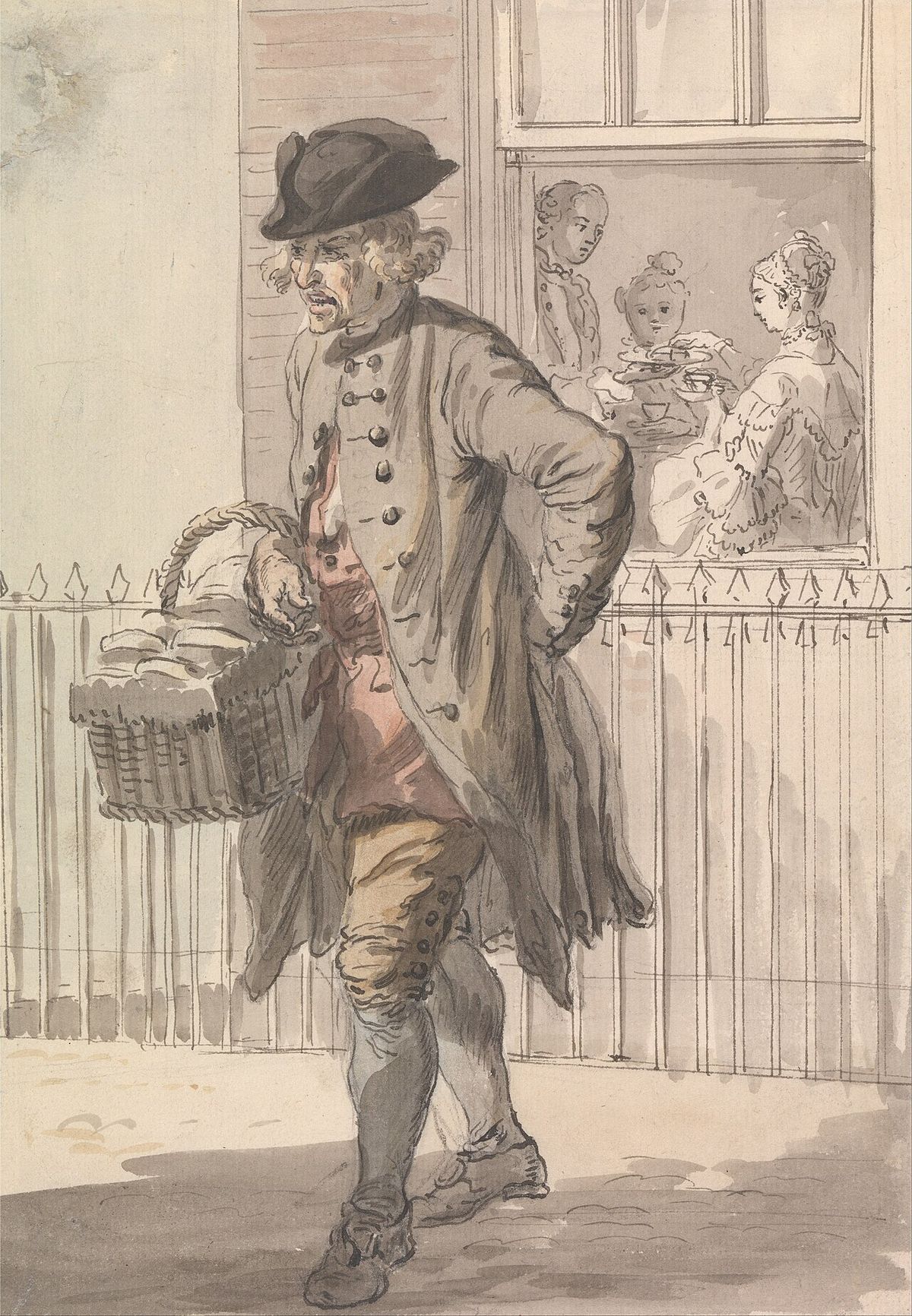
By the mid-18th century, the popularity of these flatbread muffins in Britain led to the rise of 'muffin men', itinerant hawkers who would travel door-to-door selling them as a snack bread, often ringing a handbell to announce their presence. The bell-ringing became so pervasive that in 1839 the British Parliament passed a bill to prohibit it, though the practice continued. In 1861, muffins from street sellers were commonly sold for a halfpenny each, while crumpets cost about a penny. The tradition of the muffin man, a figure immortalized in a nursery rhyme from at least 1820, persisted until the Second World War and is remembered as a joyous sound of Victorian childhood, akin to the modern ice cream truck.
Introduction to North America and Commercial Production
While flatbread muffins were known to American colonists, often called 'mush muffins' or 'slipperdowns' in New England, their popularity waned with the advent of sweet, cupcake-shaped quickbread muffins. The English muffin was reintroduced to the American market by English immigrant Samuel Bath Thomas, who founded his bakery in Manhattan, New York, in 1880. Thomas initially marketed his product as 'toaster crumpets', positioning them as a more elegant alternative to toast for fine hotels. His second bakery, opened at 337 West 20th Street, became known as 'The Muffin House'. The Thomas' brand remains a dominant force in the market today, now owned by Bimbo Bakeries USA, a parent company that also owns Entenmann's, Boboli, Stroehmann, Oroweat, and Arnold.
Fred Wolferman of Kansas City, Missouri began making denser English muffins at his family grocery in 1910, using empty tin cans as molds. Foster's sourdough English muffins was a popular brand originally from San Francisco. They were a signature menu item at Foster's restaurants from the 1940s to the 1970s, and continued to be produced as a packaged brand until 2008. References to English muffins appear in United States newspapers starting in 1859. Detailed descriptions of them and recipes were published as early as 1870.
Characteristics and Preparation Methods
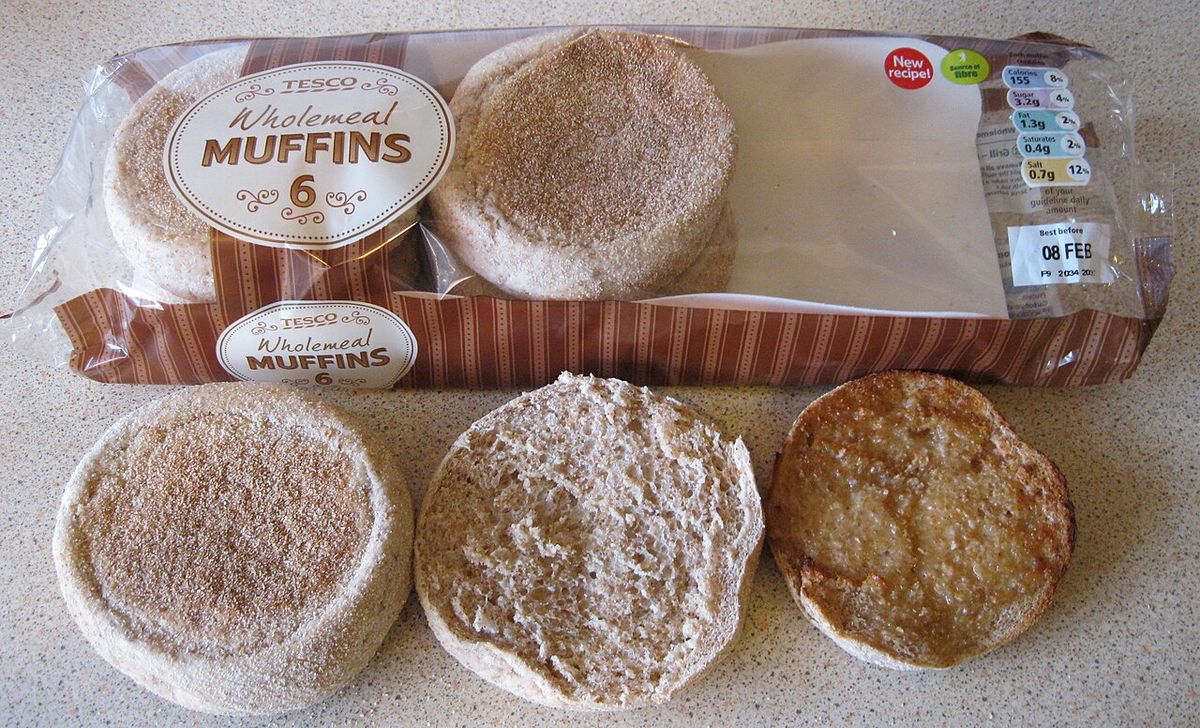
An English muffin is an unsweetened, yeast-leavened bread, sometimes made with sourdough. Its defining physical characteristic is its method of cooking. Rather than being baked entirely in an oven, it is griddle-fried on a stovetop and flipped, resulting in a flat, golden-brown exterior with a distinctively soft and chewy interior full of air pockets. This texture is traditionally achieved by splitting the muffin horizontally with a fork, not a knife, to preserve the craggy surface ideal for holding toppings. Standard English muffins are round and measure approximately 10 centimetres in diameter and 4 centimetres in height, and they are available in varieties including whole wheat, multigrain, cinnamon raisin, cranberry, and apple cinnamon.
Specialized bakeware has been associated with muffin preparation for centuries. Muffin rings, which are thin metal circles about one inch high, were used for oven-baking or griddle-cooking the muffins to maintain their shape. In the 19th century, a 'muffineer' could refer to a silver or silver-plated dish with a domed lid and a compartment for hot water, used to keep toasted muffins warm before serving. Originally, the term 'muffineer' described a sugar shaker with a perforated top, resembling a large salt cellar, for dusting powdered sugar on sweeter cakes.
Culinary Uses and Popularity in Canada
English muffins are celebrated for their culinary versatility, serving as a foundation for an extensive range of sweet and savoury dishes. They are a fundamental component of eggs Benedict, featuring a toasted muffin half topped with Canadian bacon, a poached egg, and hollandaise sauce, often garnished with dill and scallions. Their use extends to countless breakfast sandwich variations, a format popularized by fast-food chains like McDonald's with their McMuffin. The bread's sturdy yet absorbent texture makes it ideal for holding ingredients like fried eggs, cheese, bacon, sausage, and various sauces without becoming soggy, and recipes frequently highlight its role as a lighter, lower-calorie alternative to richer breads like brioche.
Contemporary Canadian home cooking and food media from 2026 illustrate the muffin's adaptability with numerous recipe ideas. Popular formats include English muffin breakfast sandwiches cooked entirely in one pan by frying bacon, toasting the muffins in the rendered fat, and frying eggs alongside. Other ideas feature breakfast pizzas topped with deli ham, cooked bacon, crumbled sausage, and shredded cheese, and strata-like breakfast casseroles that layer split muffins with back bacon, spinach, mustard, and Gruyere cheese. Sweet applications are equally popular, such as transforming them into French toast by soaking halves in a batter of milk, cream, eggs, sugar, and vanilla, then frying them until golden brown to create a texture reminiscent of funnel cake.
- Eggs Benedict with Canadian bacon and hollandaise sauce.
- Breakfast sandwiches with egg, cheese, and bacon or sausage, sometimes with a dash of hot sauce.
- Breakfast pizzas with toppings like ham, bacon, and shredded cheese.
- French toast, fried and served with powdered sugar and maple syrup.
- Smoked salmon and cream cheese on a toasted sourdough muffin with fresh dill.
- Avocado, a poached or hard-boiled egg, and spinach, seasoned with sea salt and red pepper flakes.
- Peanut butter and jam, or peanut butter with banana slices and cinnamon.
- BBQ pulled chicken with coleslaw for a savoury lunch sandwich.
English muffins are used in recipes designed for efficiency, such as freezer-friendly breakfast sandwiches and make-ahead casseroles. Food writers share ideas for English muffin pairings, such as cheddar cheese with fig jam and arugula. Another suggested pairing is hummus with cucumber and Everything But the Bagel Seasoning. These examples illustrate the bread's capacity to pair with a wide spectrum of flavours from savoury to sweet.
Terminology and Global Context
Nomenclature for this bread varies internationally, leading to occasional confusion. In the United Kingdom, the term 'muffin' can refer to both the flat, yeast-leavened English muffin and the sweet, cupcake-shaped American-style quickbread. To distinguish the former, terms like 'English muffin', 'breakfast muffin', or 'toasting muffin' are used, with legislation sometimes specifying 'American muffins' for the latter type. In the United States and Canada, 'English muffin' is the standard term for the griddle-cooked bread, while 'muffin' alone almost always denotes the sweet, baked variety. They are commonly consumed with tea or coffee and can feature in afternoon tea services in UK hotels.
English muffins are similar to the Portuguese bolo do caco. A well-known reference to English muffins is in Oscar Wilde's 1895 play The Importance of Being Earnest. The traditional English nursery rhyme "The Muffin Man" dates from 1820 at the latest. This rhyme traces to the custom of muffin men, who were hawkers selling English muffins door to door.
Nutritional Profile and Dietary Adaptations
As a bread product, the classic English muffin provides a source of carbohydrates for energy. Its relatively simple ingredient list of flour, yeast, water, and salt means a plain version is low in sugar and fat compared to many pastries or sweet muffins, making it a favoured choice for those seeking a less rich breakfast base. Many commercial and homemade varieties cater to diverse dietary preferences and nutritional goals. Whole wheat and multigrain versions offer additional fibre, while flavoured options like cinnamon raisin, cranberry, or apple cinnamon provide sweetness without the need for heavy toppings. The muffin's structure makes it highly adaptable for various dietary applications, serving as the centrepiece for high-protein breakfasts or a vehicle for healthy fats and vegetables.
The English muffin's neutral flavour profile allows it to pair with many ingredients. It can be served with savoury toppings like aged cheddar and mustard or sweet toppings like fig jam. Creative recipes use it as a base for combinations like fresh mozzarella, tomato, basil, and balsamic glaze. Its utility is shown in efficient recipes, such as sheet-pan eggs with bacon and spinach tucked into muffins for freezing.
Recipe Development and Cultural Integration
The evolution of English muffin recipes in home cooking often stems from practicality and spontaneous innovation, as illustrated by the creation of English muffin French toast. This recipe originated from a lack of traditional bread, leading to the discovery that soaked and fried English muffin halves yield a texture and flavour similar to funnel cake, especially with a heavy-handed addition of vanilla to the batter. This kind of adaptation highlights the muffin's role as a versatile pantry staple that can substitute in for other breads in a pinch. Recipe developers in 2026 continue to create new applications, such as breakfast cups made by baking eggs and milk in the nooks of split muffins, or casseroles that use cubed English muffins as a base.
English muffins appear in digital meal-building guides and recipe roundups focused on easy breakfast solutions. These resources present flexible formulas for combining the muffin with ingredients like eggs, cheese, jams, and vegetables. The muffin is featured in cookbooks and food blogs dedicated to hearty, satisfying meals. It is a familiar component of breakfast and brunch traditions.
Questions about English muffin
What is the difference between an English muffin and a regular muffin?
An English muffin is a small, round, flat yeast-leavened bread that is cooked on a griddle. It is unsweetened and typically served toasted with toppings. A regular muffin, often called an American muffin, is a sweet, cupcake-shaped quickbread baked in an oven. It is leavened with baking powder or soda and is essentially an individual-sized cake.
Why are English muffins full of holes inside?
The characteristic holes inside an English muffin are created by the action of yeast during the proving process. The yeast produces carbon dioxide bubbles that become trapped in the dough. When the dough is cooked on a hot griddle, the heat sets these air pockets in place. This creates the porous, honeycomb-like texture perfect for absorbing spreads.
What is the best way to split an English muffin?
The traditional method for splitting an English muffin is to use a fork, not a knife. Inserting the tines of a fork around the circumference of the muffin and pulling it apart preserves the textured surface. Cutting with a knife compresses the delicate nooks and crannies. A fork helps maintain the absorbent surface that holds toppings well.
Can you make English muffins at home?
Yes, English muffins can be made at home with simple ingredients like flour, yeast, water, and salt. The process involves making a soft dough, allowing it to rise, and shaping it into rounds. The muffins are then cooked on a lightly greased griddle or skillet over medium heat. Many modern recipes emphasize ease, with some requiring no kneading and no oven.
What are some popular ways to eat English muffins for breakfast?
Popular breakfast preparations include toasting them and serving with butter and jam or honey. They are famously used as the base for eggs Benedict and breakfast sandwiches with egg, cheese, and meat. Creative recipes include turning them into French toast or using them as mini pizza bases. They are also baked into savoury breakfast casseroles or individual breakfast cups.
How should English muffins be stored to stay fresh?
English muffins are best stored in a cool, dry place. For short-term storage, keeping them in their original packaging or an airtight container at room temperature for a few days is sufficient. For longer storage, they freeze exceptionally well. Place them in a freezer-safe bag, removing as much air as possible, and freeze for up to several months. Individual frozen muffins can be toasted directly from frozen, making them a convenient breakfast option.
Sources and further reading
- English muffin (Wikipedia)
- 13 English Muffin Breakfast Ideas (katheats.com)
- Breakfast Recipe: English Muffin French Toast (thekitchn.com)
- English Muffin Breakfast Sandwiches (dontgobaconmyheart.co.uk)
Checked by the Novello Desserts desk. Last updated 2026-10-25.