Kraft Dinner
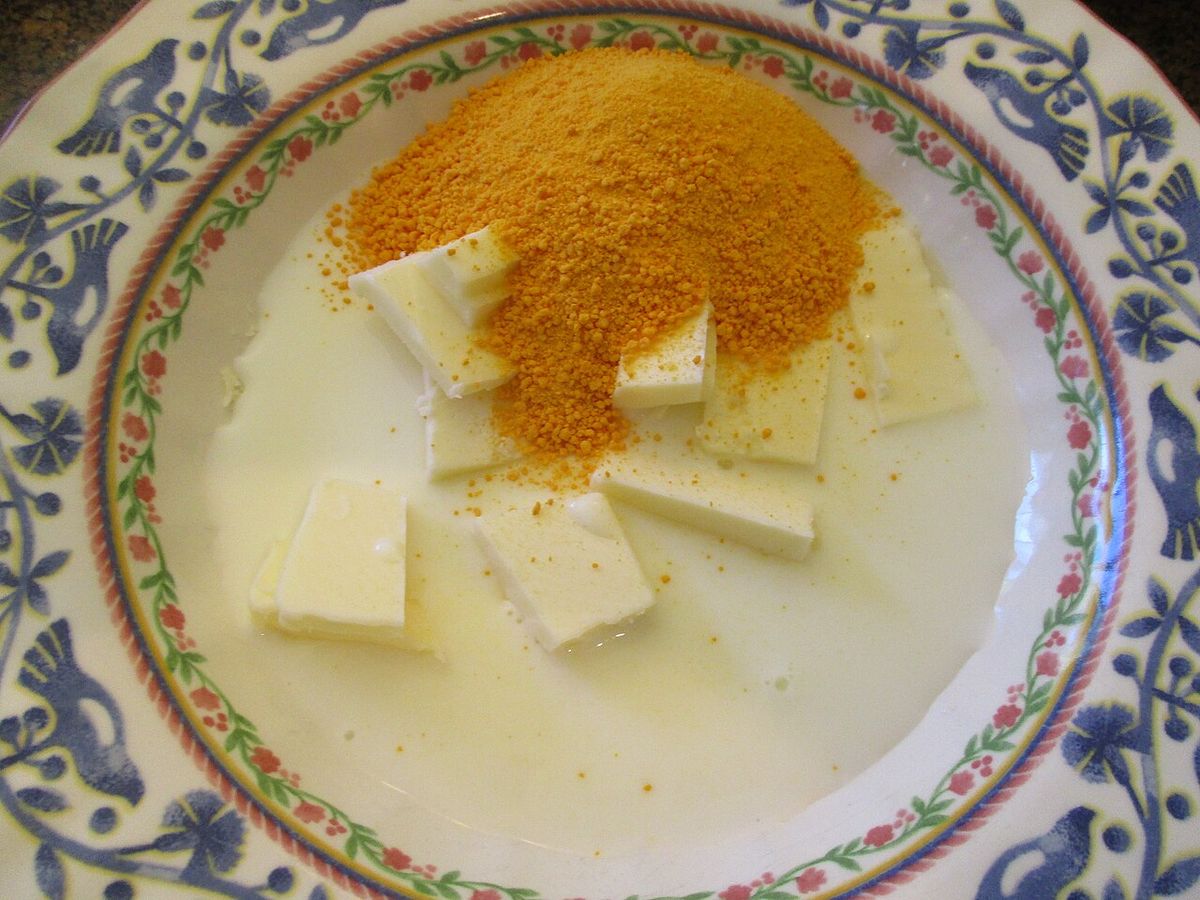
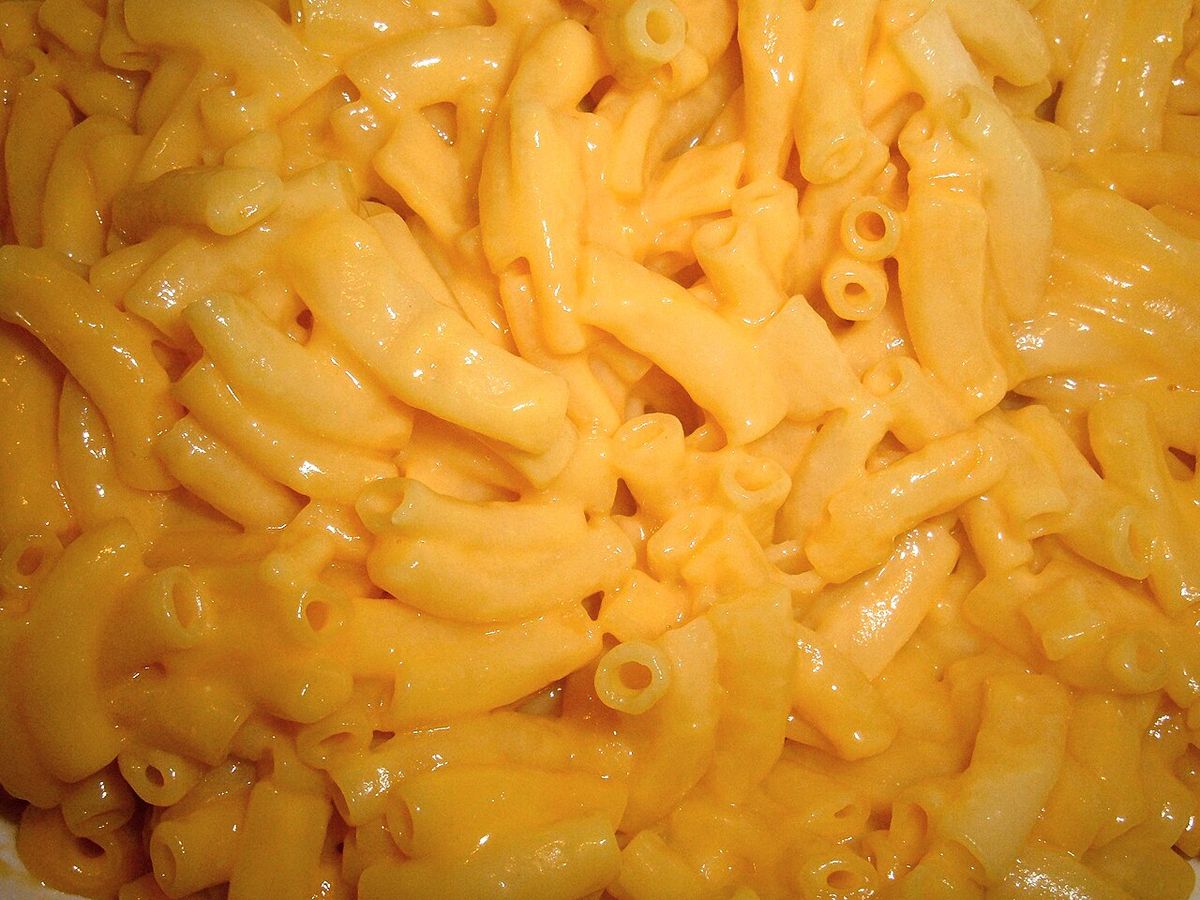
Kraft Dinner, known in Canada by its initials KD, is a nonperishable packaged macaroni and cheese mix produced by Kraft Heinz. First marketed in Canada in late 1937, the product consists of dried pasta and a packet of processed cheese powder, prepared by adding milk and butter. It has achieved a distinct status as a de facto national dish, with Canadians consuming an average of 90 million boxes annually, accounting for 55 percent more per capita consumption than in the United States. Its affordability, convenience, and distinctive blue box packaging have cemented its place in Canadian pantries and popular culture.
Origins and Historical Development
The invention of processed cheese, patented by Fort Erie, Ontario native James Lewis Kraft in 1916, provided the shelf-stable foundation for Kraft Dinner. The specific concept of packaging macaroni and cheese together originated with a St. Louis salesman from Dundee, Scotland, Grant Leslie, who initially attached grated cheese to pasta boxes with a rubber band. Kraft Foods first marketed the combined product in the United States in 1936, advertising it as a dinner for four in nine minutes for an everyday price of 19 cents. The product launched in Canada the following year. Its timing proved fortuitous, as World War II rationing of dairy and meat, coupled with more women entering the workforce, created massive demand for a hearty, shelf-stable meal. During the war, Canadian consumers could obtain two boxes for one food ration stamp, and 50 million boxes were sold, aided by a shelf life of ten months when many homes lacked refrigerators. The packaging colour changed from yellow to the now-familiar blue in 1954, leading to the "Blue Box" advertising campaign where children were encouraged to ask for the product by that name.
Product evolution continued through the latter half of the 20th century. Spiral-shaped noodles debuted in 1975, and Velveeta Shells & Cheese were introduced in 1984. A significant innovation came in 1999 with Easy Mac, a single-serving product designed for microwave preparation, which was later rebranded as Mac & Cheese Dinner Cups in 2006. In the 2000s, Kraft responded to health trends by introducing organic pasta in its cheddar and white cheddar versions in 2006 and switching to 50 percent whole grain noodles in 2007. A major formulation change was announced in 2015, eliminating artificial preservatives, flavours, and dyes like Yellow 5 and Yellow 6 from the entire North American line after January 2016, replacing them with colour from paprika, annatto, and turmeric. These changes were a direct response to consumer feedback and differing international regulations, as European varieties containing Yellow 5 required warning labels about potential effects on children.
Product Variations and Formats
Kraft Dinner is sold in several distinct formats, each catering to different preparation preferences and occasions. The Original Recipe consists of roughly 172 grams of dry elbow macaroni and a 70-millilitre packet of powdered cheese sauce, requiring the addition of milk and butter. The Deluxe variety replaces the powder with a prepared, processed cheese sauce in a foil pouch and uses a different elbow macaroni shape. A now-discontinued Homestyle Deluxe line, added in 2010, included seasoned breadcrumbs and came in three flavours: cheddar cheese, four-cheese sauce, and Old World Italian, but was withdrawn due to lack of demand. The single-serving market is served by Dinner Cups, the successor to Easy Mac, which is prepared solely in a microwave. A fully prepared frozen commercial version is supplied to restaurant chains like Burger King and Applebee's. In 2018, Kraft Heinz introduced the KD Shaker, a plastic bottle containing just the powdered cheese for use as a condiment.
In March 2010, Kraft launched the KD Smart sub-brand in Canada, featuring noodles blended with ingredients like cauliflower or flax seed and containing no artificial flavours, colours, or preservatives. It was relaunched with new packaging and two new varieties, Flax Omega-3 and High Fibre, in June 2011. The product line has also expanded through limited-edition pasta shapes, including alphabet, numbers, and shapes based on pop culture characters, as well as organic and whole-grain versions. In the summer of 2021, Kraft Heinz released Flavour Booster packets in the Canadian market to stir into prepared KD, offering six varieties: Jalapeño, Butter Chicken, Poutine, Buffalo Wings, Ghost Pepper, and Cotton Candy. A more upscale line, called Kraft Mac & Cheese Restaurant Edition, was announced in April 2026, described as a way to bring the best reservation in town to the home kitchen.
- Original Recipe: Dry pasta with cheese powder, requiring milk and butter.
- Deluxe: Pasta with a foil pouch of prepared cheese sauce.
- Homestyle Deluxe: Discontinued line with breadcrumbs and premium sauces.
- Dinner Cups: Single-serving microwaveable cups, formerly Easy Mac.
- KD Smart: Health-focused line with added vegetables or grains, made in Mount Royal, Quebec.
- Flavour Boosters: Stir-in packets like Poutine and Buffalo Wings.
- Restaurant Edition: Upscale line launched in 2026.
- KD Shaker: Bottle of powdered cheese for use as a condiment.
Cultural Significance in Canada
Kraft Dinner holds a deeply rooted position in Canadian food culture, often described as a de facto national dish. Canadians purchase 1.7 million of the 7 million boxes sold globally each week, and the meal is the most popular grocery item in the country. The product's name itself is distinctively Canadian, marketed as Kraft Dinner or KD, whereas in the United States it is called Kraft Mac & Cheese and in the United Kingdom it is marketed as Cheesey Pasta. This cultural bond has been frequently noted by commentators and artists. Author Douglas Coupland observed that Canadians have an intense relationship with Kraft products, similar to Australians with Vegemite, noting KD precisely targets favoured Canadian food groups: fat, sugar, starch and salt. Pundit Rex Murphy included KD in a trinity of quick Canadian foods alongside Tim Hortons doughnuts and the A&W Teen Burger. Immigrants often cite Kraft Dinner when asked for examples of Canadian cuisine, and its Facebook page for a contest attracted 270,000 fans despite offering no prizes.
The product frequently appears in Canadian popular discourse and political life. Former Prime Minister Paul Martin called it his favourite food, though he confessed an inability to prepare it. Former Prime Minister Stephen Harper stated he cooked it for his children and liked to add wieners. Kraft Dinner is a staple of university student diets and has been used as a symbolic prop in protests over tuition hikes and government funding cuts. A 2012 article in The Walrus magazine by Sasha Chapman examined the paradox of a manufactured product from an American company being embraced as Canada's true national dish, questioning what it means for a national dish to be formulated by scientists in Illinois.
Marketing and Promotions
Marketing for Kraft Dinner has evolved significantly since its early days, with distinct strategies developed specifically for the Canadian market. The original U.S. slogan from 1936 promoted it as a meal for four in nine minutes for 15 cents. From 1991 until the late 2000s, the brand mascot was Cheesasaurus Rex, a friendly orange tyrannosaurus rex who loved noodles and cheese and lived in Noodletown, and he can still be seen in some commercials and select Kraft product boxes. In 2010, Kraft launched a $50 million nostalgia-themed multimedia campaign aimed at adults to promote all varieties. The company also runs advertising programs intended to make the meal appealing to newly arrived immigrant groups in Canada.
Promotional tie-ins have frequently involved children's entertainment, with pasta shapes modelled after characters from Looney Tunes, Super Mario Bros., and Star Wars. One notable promotion in April 2010 saw Kraft sponsor the demolition of Texas Stadium to introduce its Cheddar Explosion variety. Kraft paid $75,000 to local charities and donated another $75,000 in products, and an 11-year-old essay contest winner from Terrell, Texas, pushed the button to initiate the demolition. More recently, marketing has embraced playful culinary experimentation. Brian Neumann, Head of Brand and Creativity at Kraft Heinz, stated the launch was a playful way to remind Canadians that the KD flavour need not be limited to dinner time.
Nutritional Information and Health Considerations
The nutritional profile of prepared Kraft Dinner is dominated by carbohydrates, which constitute 71 percent of its calories, with protein at 11 percent and fat at 5 percent. A standard 100-gram serving of the prepared product provides 382 calories. The dish is notably high in sodium, with a serving containing 56 percent of the Daily Value. It also provides 25 percent of the Daily Value for iron and 15 percent for calcium. The formulation changes implemented in 2015, which removed artificial colours and preservatives, also aimed to reduce sodium and saturated fat content while increasing whole grains. These changes were prefigured in 2013 when Kraft announced that new pasta shapes for children in the U.S. would decrease sodium and saturated fat and add six more grams of whole grains. The KD Smart line represents a concerted effort to offer a product with added functional ingredients like fibre and omega-3s, appealing to health-conscious consumers while maintaining the familiar taste.
| Nutrient |
|---|
| Calories |
| Carbohydrates |
| Fat |
| Protein |
| Sodium |
| Iron |
| Calcium |
The nutritional content of Kraft Dinner is based on a 2000-calorie diet. Prepared Kraft Dinner is 71% carbohydrates, 11% protein, and 5% fat. The Homestyle Deluxe variant contained more sodium than the Original or Deluxe versions because it included a seasoned breadcrumb topping. This product is a frequent staple of Canadian university student diets. In response to consumer feedback, Kraft has shifted towards simpler ingredients, such as removing artificial preservatives and using paprika, annatto, and turmeric for colouring.
Preparation and Recipe Culture
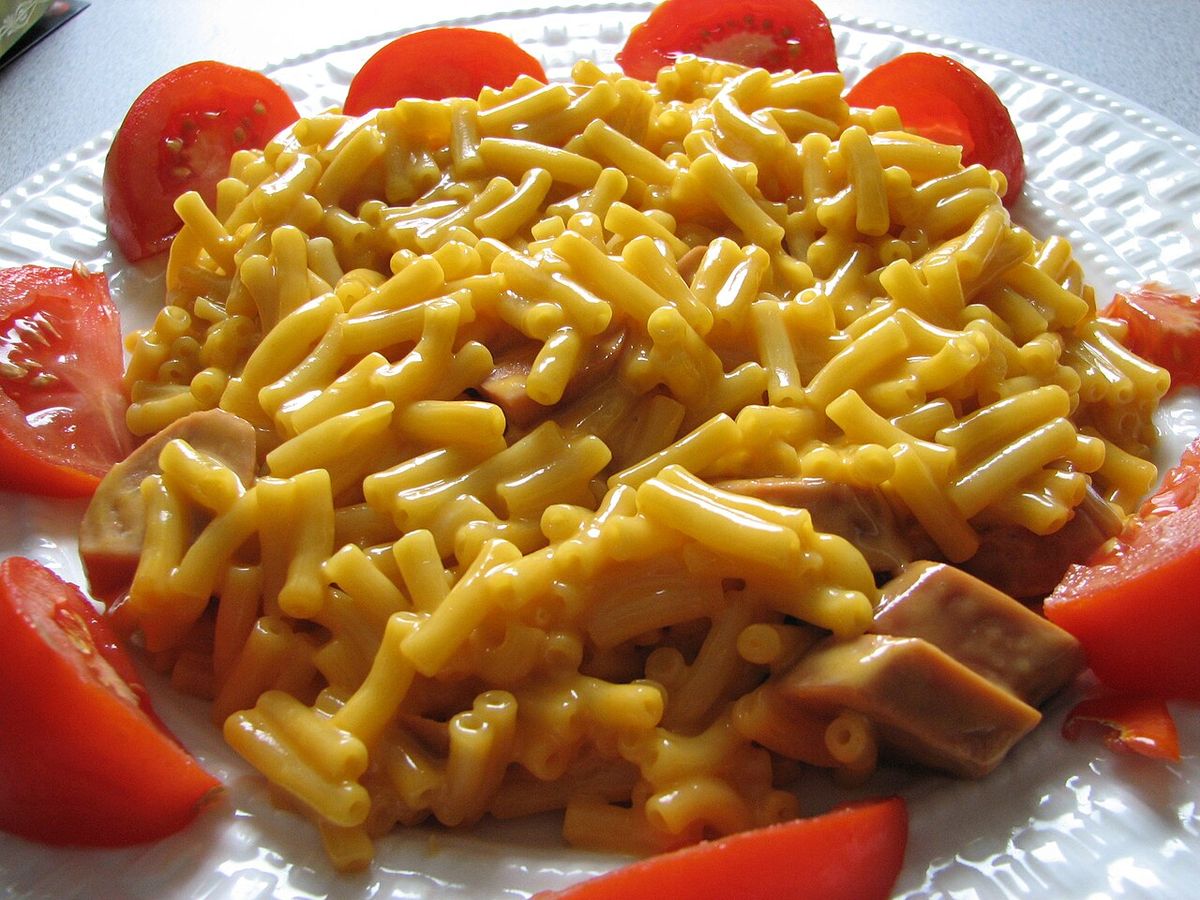
While the basic preparation involves boiling the pasta and mixing in the cheese powder with milk and butter, a vast subculture of customized recipes exists, highlighting the product's role as a versatile kitchen staple. Many Canadians routinely ignore the package instructions, adding ingredients like wieners, extra shredded cheese, or vegetables to create heartier meals. Popular online recipes include Buffalo Chicken Macaroni and Cheese, loaded casseroles, and tuna casseroles. A notable recipe tradition is Grandma's Kraft Dinner, which uses two standard boxes of original KD, evaporated milk, butter, heavy cream, and grated American cheese to create a richer, creamier sauce than the standard version. This recipe specifies using original elbow noodles, not spirals or character shapes, and emphasizes using real butter and Land O Lakes American cheese grated from a deli chunk. This adaptive approach is encouraged by Kraft Heinz through the publication of creative recipes, such as one for Kraft Dinner Stuffed Double Meatloaf. The 2021 launch of Flavour Booster packets institutionalized this trend, offering official shortcuts to flavours like Buffalo Wings and Butter Chicken. The company's website also features numerous fast dinner ideas that start with a box of mac and cheese, reinforcing its position as a base for home cooking.
Manufacturing and Economic Impact
Kraft Dinner is packaged in Canada using Canadian wheat and milk, with other ingredients sourced from both Canada and the United States. A major production facility is located in Mount Royal, Quebec, which manufactures the KD Smart line. The product's economic footprint is significant, given that Canadians eat an average of 90 million boxes each year. Its status as the most popular grocery item in the country means it is a consistent volume driver for retailers. The product's shelf-stable nature and high sales volume contribute to its efficiency in the supply chain and its widespread availability even in remote communities. The brand's distinct Canadian marketing platform is developed domestically and, according to company statements, cannot be easily adapted for the United States market, representing a dedicated investment in Canadian consumer engagement.
The global scale of the operation is evident in the weekly sales of 7 million boxes, of which the Canadian market accounts for nearly a quarter. The product's longevity and consistent sales have made it a staple brand for Kraft Heinz, surviving numerous corporate changes, including the international split that saw former parent company Mondelez manage the brand outside North America before it returned to Kraft Heinz. Innovations like the Restaurant Edition line launched in 2026 demonstrate the company's ongoing investment in extending the product's market reach and premium perception. The product's foundational role during the Great Depression and World War II established a consumer habit that has endured for generations, making it a reliable economic performer for its manufacturer.
Questions about Kraft Dinner
Why is Kraft Dinner so popular in Canada?
Kraft Dinner's popularity in Canada stems from its long history, affordability, and convenience, which resonated deeply during World War II rationing when milk and dairy were scarce and many homes lacked refrigerators. Canadians consume 55 percent more per capita than Americans, buying 1.7 million of the 7 million boxes sold globally each week. It has achieved a distinct status as a de facto national dish, frequently referenced in politics, music, and media, creating a unique cultural bond that distinguishes it from its marketing in other countries. Its packaging in Quebec with Canadian wheat and milk also reinforces a domestic connection.
What is the difference between Kraft Dinner and Kraft Mac & Cheese?
Kraft Dinner is the name used in Canada for the product, often shortened to KD. In the United States, Australia, and New Zealand, the same core product is marketed as Kraft Mac & Cheese, and in the United Kingdom as Cheesey Pasta. The Canadian marketing and advertising platform is developed specifically for the domestic market and cannot be easily adapted elsewhere. The packaging in Canada has featured the familiar blue box since 1954, and the word 'Dinner' appears more prominently than on U.S. versions, which used small type until a 2022 rebrand.
Does Kraft Dinner contain artificial colours or preservatives?
As of January 2016, the standard Kraft Dinner line in North America no longer contains artificial flavours, colours, or preservatives. This change was made in response to consumer feedback. Artificial dyes like Yellow 5 and Yellow 6, which previously required warning labels in Europe, were removed and replaced with colouring from paprika, annatto, and turmeric. The changes also included reductions in sodium and saturated fat. The KD Smart line also has no artificial ingredients.
What are some popular ways to customize Kraft Dinner?
Canadians commonly customize Kraft Dinner by adding ingredients like wieners, extra shredded cheese, vegetables, or seasoned ground beef. Popular online recipes include casseroles and versions with buffalo chicken. In 2021, Kraft Heinz released official Flavour Booster packets for stir-in varieties such as Poutine, Jalapeño, and Butter Chicken. A cherished homemade version known as Grandma's Kraft Dinner uses evaporated milk, butter, heavy cream, and grated American cheese for a richer sauce, explicitly avoiding the package directions.
What was the Cheesasaurus Rex?
Cheesasaurus Rex was the mascot for Kraft Dinner in Canada from 1991 until the late 2000s. Depicted as a friendly orange tyrannosaurus rex who loves noodles and is covered in cheese, he was featured in commercials and on select boxes. The character lived in a fictional place called Noodletown and was a central figure in advertising aimed at children during that era. The mascot can still be seen in some commercials and select Kraft product boxes.
Has Kraft Dinner released any dessert products?
Yes, Kraft Dinner has released dessert products. The brand launched a limited-edition Mac & Cheesecake that was available at select bakeries across Canada. Kraft published the recipe for this dessert online, allowing fans to recreate the Mac & Cheesecake at home. This innovation is part of a broader trend of creative recipe expansions for the product, which is known as a versatile base for meals. Other user creations have included ideas like Kraft Dinner Stuffed Double Meatloaf, demonstrating the product's adaptability beyond its traditional form.
Sources and further reading
- Kraft Dinner (Wikipedia)
- Grandma's Kraft Dinner (thetipsyhousewife.org)
- Kraft Dinner 'Mac & Cheesecakes' now available across Canada (canoe.com)
Checked by the Novello Desserts desk. Last updated 2026-10-26.